What a Plain Lagged Pulley Is and Where It Fits
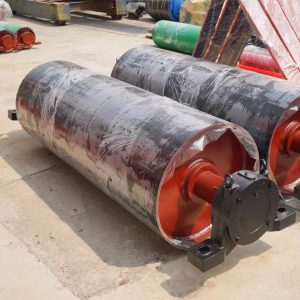
A plain lagged pulley is a conveyor pulley whose cylindrical shell has been covered with a smooth, unpatterned rubber or polymer layer. This surface, known as plain lagging or flat lagging, provides a consistent friction interface between the pulley face and the conveyor belt. Unlike patterned lagging such as diamond or herringbone, the plain version does not rely on grooves or raised profiles to generate grip. Instead, it depends on the rubber compound, thickness, and bond quality to transmit torque and reduce belt slip under load.
In many conveyor layouts, this component appears as a head pulley, tail pulley, tension pulley, or bend pulley. Each position brings different demands. A head pulley driving a loaded belt needs reliable traction; a tail pulley may guide the belt on its return; a tension pulley maintains belt tension; a bend pulley changes direction without driving. The plain lagged pulley can serve these roles, but the lagging surface and shell construction should match the specific duty. The term “conveyor pulley” is often used as a general description, while “idler roller” typically refers to smaller, non-drive rollers that support the belt. A plain lagged pulley is therefore not an idler roller, even though both may appear on the same conveyor.
Construction Details That Matter
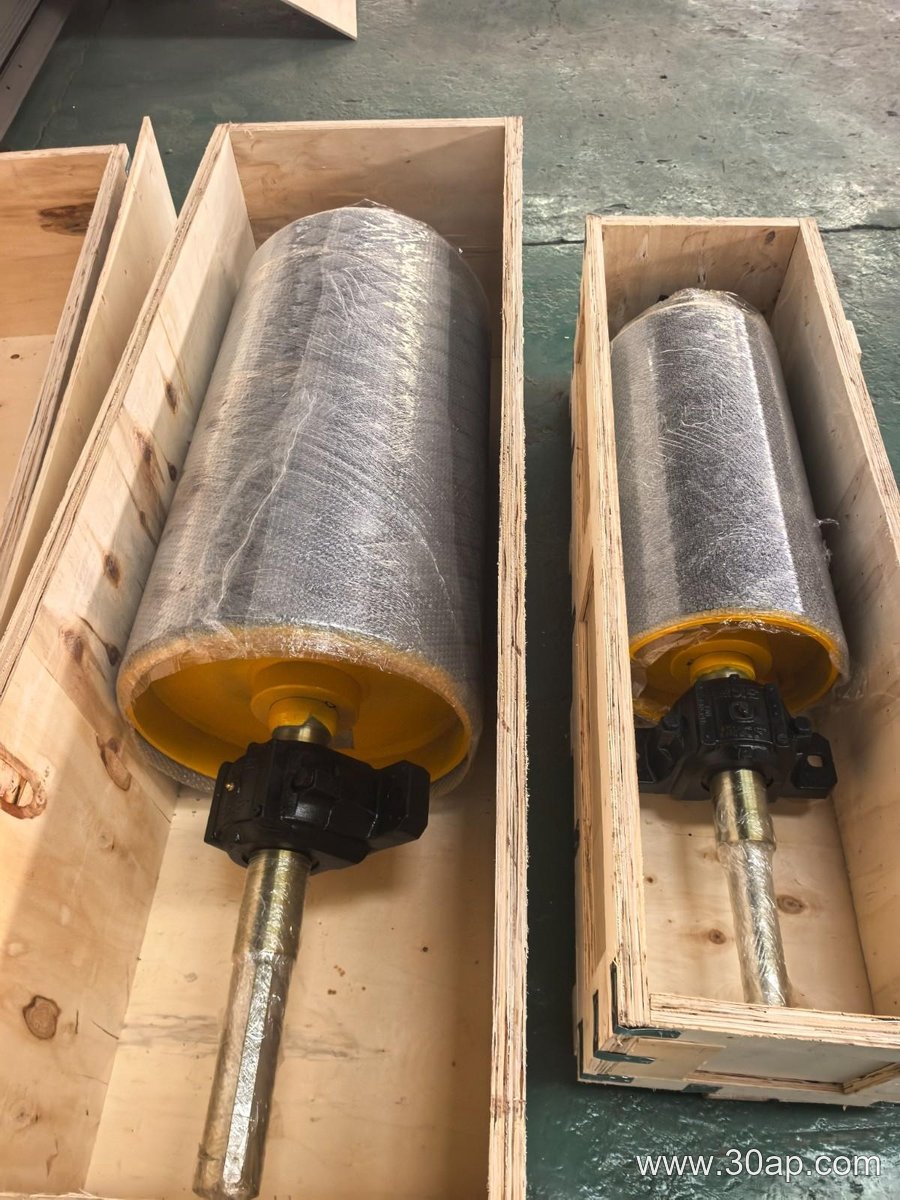
The base of a plain lagged pulley is a steel shell, usually seamless pipe or rolled plate, with end discs and a shaft. The shaft may be keyed for coupling to a gearbox or driven directly. After machining, the shell receives the lagging. Plain lagging is applied in several ways: hot vulcanized rubber, cold bonded rubber, or cast polymer. Thickness commonly ranges from 8 mm to 20 mm, with 10 mm and 12 mm being frequent choices for general conveying. The rubber may be natural, styrene-butadiene, or a blend selected for abrasion resistance and cut growth resistance.
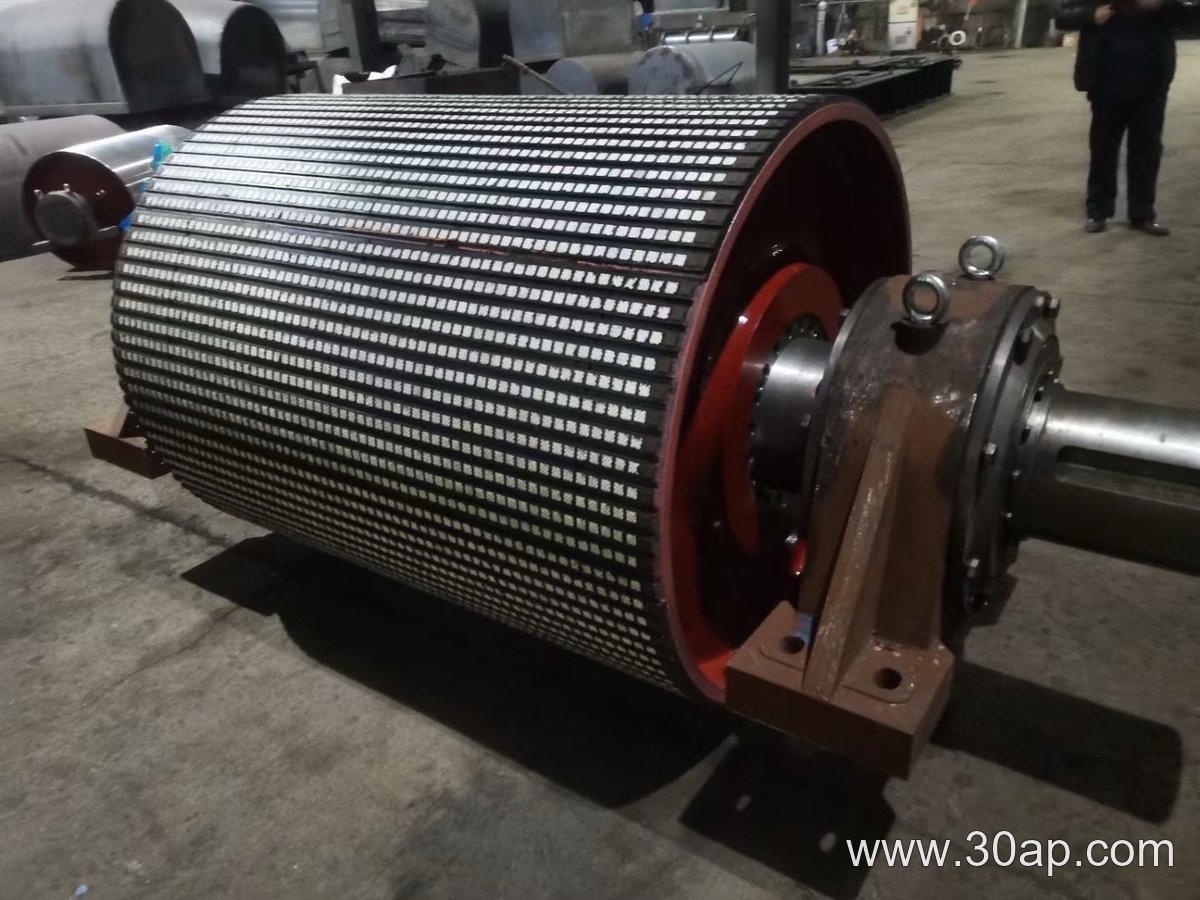
Because the surface is smooth, a plain lagged pulley does not self-clean as aggressively as a grooved or diamond pattern. In dry, clean conditions this is rarely an issue. In wet or sticky service, however, material can build up on the smooth face and reduce friction. That is one reason why some operators choose patterned lagging for drive pulleys handling wet coal or fine ore. For many other positions, the plain surface offers simplicity, easier belt tracking, and less risk of belt edge damage from aggressive patterns.
Applications Across Bulk Handling
You will find plain lagged pulleys in a wide range of bulk material systems. In a quarry or limestone mine, they often appear on the tail or tension position of a primary conveyor, where the belt is relatively clean and the main need is steady guidance. In a sand and gravel line, a plain lagged pulley may serve as a bend pulley after a screen, changing belt direction without driving. In a coal preparation plant, a plain lagged pulley can work as a tension pulley on a return strand, while a drive pulley might use a patterned surface for extra grip.
Other common settings include cement clinker handling, where heat-resistant rubber grades may be specified; fertilizer plants, where chemical resistance matters; and grain silos, where smooth surfaces help prevent product accumulation. In each case, the plain lagged pulley is chosen for its predictable friction and its ability to run with a conveyor belt without introducing unnecessary wear. It is not interchangeable with a drive pulley or tail pulley by name alone; the position determines the load, the belt wrap angle, and the required lagging performance.
Selecting Diameter, Width, and Shaft
Belt width and pulley diameter are related but not locked together. A B800 belt might run on a Ø500 plain lagged pulley in one conveyor and a Ø630 pulley in another, depending on belt tension, speed, and the required wrap angle. Common diameters for plain lagged pulleys include Ø200, Ø250, Ø315, Ø400, Ø500, Ø630, Ø800, Ø1000, and larger sizes up to Ø1800 for heavy-duty applications. The shell face width is usually greater than the belt width: for example, a B650 belt often uses a pulley face around 750 mm, and a B1200 belt may use a face near 1400 mm. These are reference relationships, not fixed rules.
Shaft diameter is determined by torque and bending load, not by belt width alone. A small B500 conveyor may use a Ø60 shaft, while a heavily loaded B1400 pulley might require Ø160 or Ø200. The designer calculates the shaft based on the transmitted power, belt tension, and bearing span. Buyers should provide the belt width, belt speed, power, and duty cycle so the supplier can propose a suitable shaft and bearing assembly.
Plain lagging thickness is another variable. Thicker lagging (15 mm or 20 mm) can extend service life in abrasive conditions, but it also increases pulley diameter and may affect belt tracking. A 10 mm plain rubber lagging is a common balance for general use. The bond between rubber and shell must be continuous; voids or weak adhesion can lead to lagging separation and belt slip.
Buyer Checklist Before Ordering
- Confirm the pulley position: head, tail, tension, bend, or take-up. Each has different traction and wrap requirements.
- Specify belt width and desired face width. Remember that face width is usually wider than the belt.
- State the required diameter based on belt tension and speed, not just belt width.
- Choose lagging thickness and rubber grade according to material abrasiveness, moisture, and temperature.
- Provide shaft diameter or the torque and load data so the supplier can verify the shaft.
- Ask about balancing, bearing type, and locking elements if the pulley runs at high speed.
- Check that the plain lagging surface is smooth and free of defects that could damage the conveyor belt.
A plain lagged pulley is a straightforward component, but its performance depends on matching the lagging, shell, and shaft to the conveyor duty. By treating it as part of the whole system rather than a standalone item, buyers can avoid slip, premature wear, and unplanned downtime.