What an EP Rubber Conveyor Belt Is
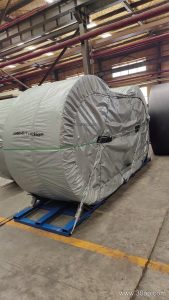
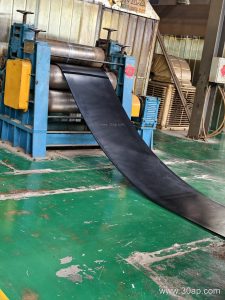
An EP rubber conveyor belt is a fabric-reinforced belt built around polyester-polyamide (EP) carcass plies. The EP fabric gives the belt high tensile strength, low elongation under load, and good resistance to repeated flexing, while the rubber covers protect the carcass from abrasion, moisture, and impact. Because it balances strength with flexibility, this belt is a common choice for Rubber Conveyor Belt duty in mines, cement plants, power stations, ports, and aggregate yards.
The same product is also described as an EP Conveyor Belt or EP fabric core belt. It is not the same as an NN nylon belt, a steel cord belt, or a PVC/PVG belt, although each has its place on a conveyor line.
How the Belt Is Built
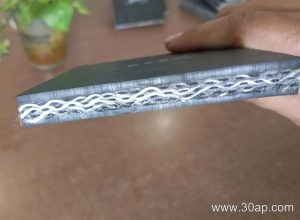
The carcass normally consists of two to six EP plies, bonded with skim rubber and covered on both faces with abrasion-resistant rubber. A buyer will usually see the cover thickness expressed as a pair, such as 4+2 mm or 6+2 mm, meaning top cover plus bottom cover. The top cover carries the material; the bottom cover runs against the idler rollers and pulleys.
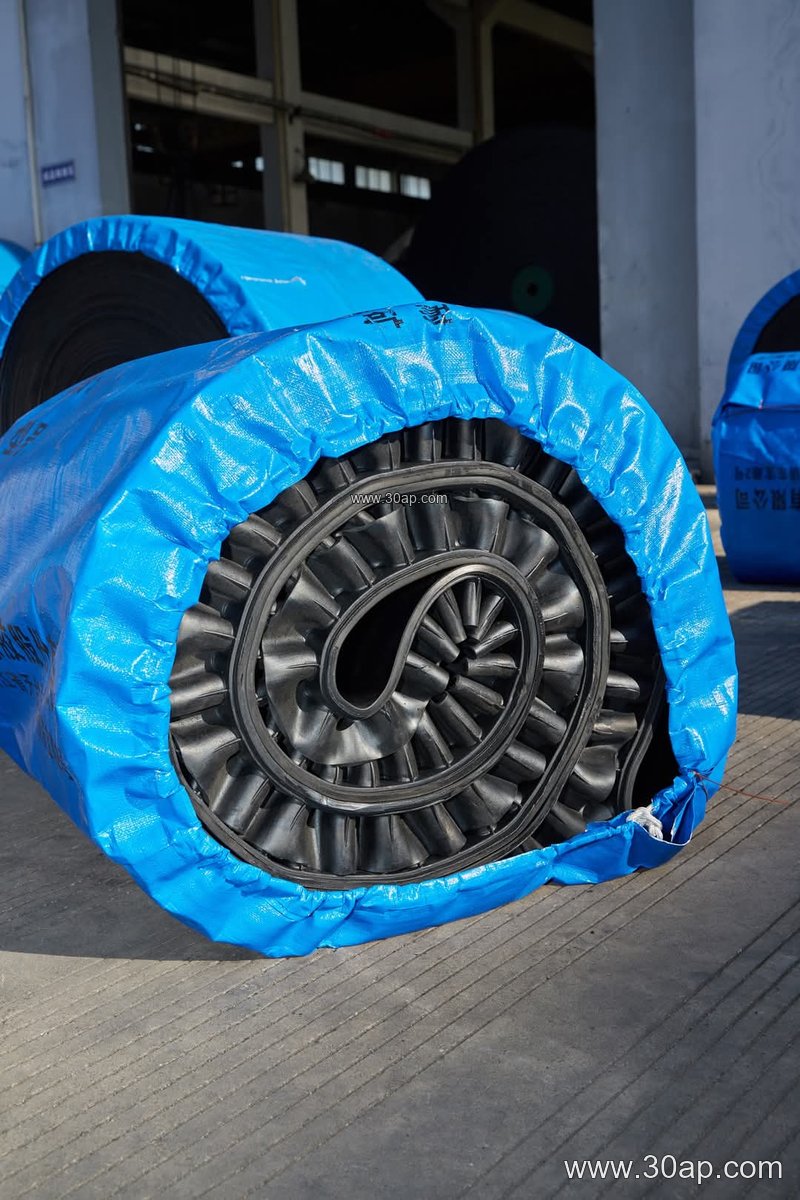
- Carcass: EP fabric plies, typically 2 to 6 layers depending on the required strength.
- Covers: natural or synthetic rubber compounds, chosen for abrasion, heat, oil, flame, or cold conditions.
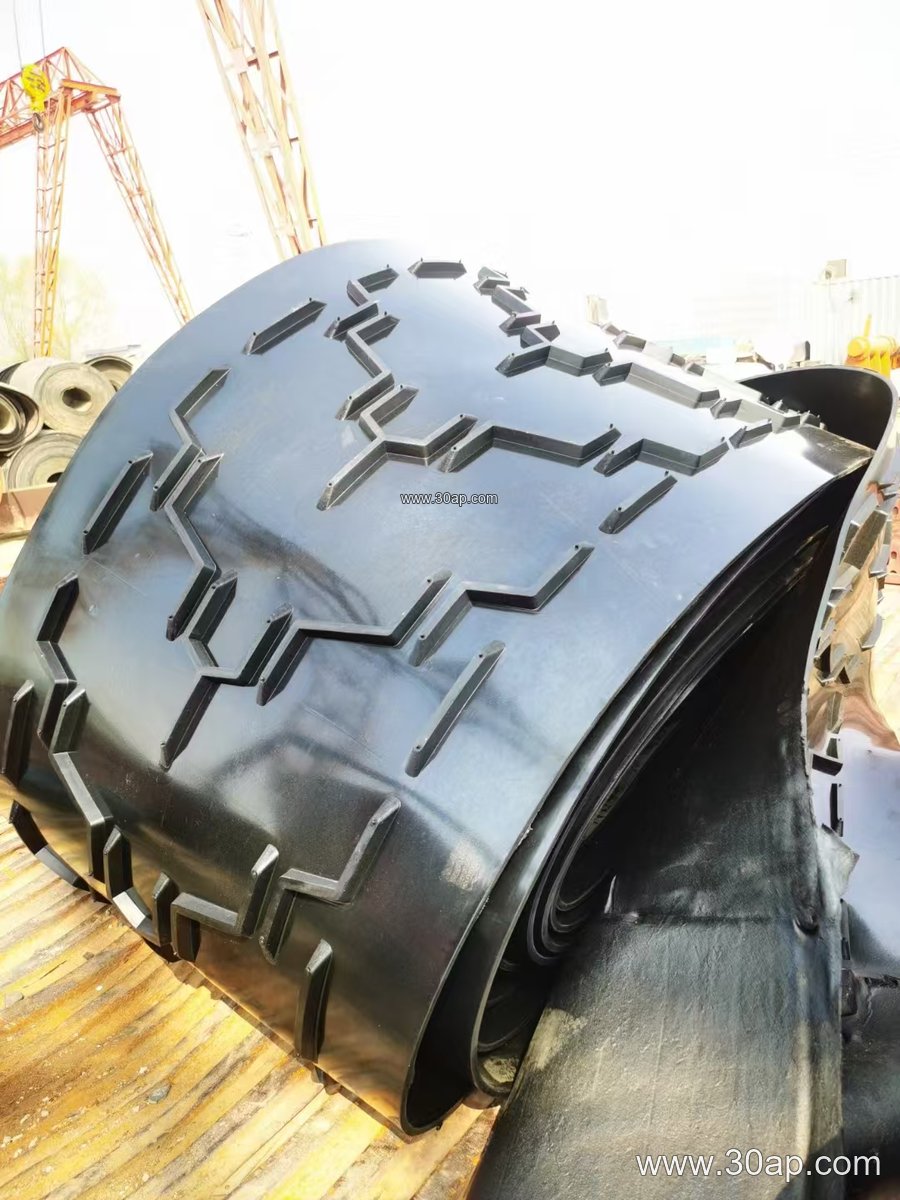
- Edges: cut or molded, with the option of a chevron or corrugated sidewall profile when the conveyor needs to handle steep inclines or contain loose material.
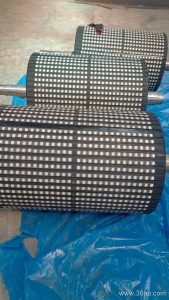
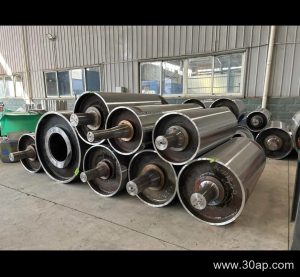
When the belt runs around a conveyor pulley at the drive, tail, or bend position, the carcass must flex without cracking. That is why ply count and rubber grade are selected together, not separately.
Common Strength Grades and Sizes
EP belts are often identified by a tensile grade, such as EP200, EP400, EP630, EP1000, or EP1250. Widths commonly range from 500 mm to 2000 mm, with wider belts used on high-capacity trunk conveyors. The table below is a reference guide, not a fixed supply list; actual values should be confirmed with the manufacturer for each project.
| Item | Typical Range | Notes |
|---|---|---|
| Strength grade | EP200 to EP1600 | Selected by tension and safety factor |
| Belt width | B500 to B2000 | Matched to throughput and pulley face width |
| Cover thickness | 3+1.5, 4+2, 5+2, 6+2, 8+3 mm | Top cover usually thicker for abrasive loads |
| Ply count | 2 to 6 | Higher plies for higher tension |
| Surface form | Plain, chevron, sidewall | Chosen for incline and material containment |
A 1000 mm or 1200 mm belt is common on medium-capacity mining and cement lines, but belt width alone does not determine pulley shaft diameter. Drive, tail, and bend pulleys are different components with different loads, and each must be engineered separately.
Where It Fits on the Conveyor
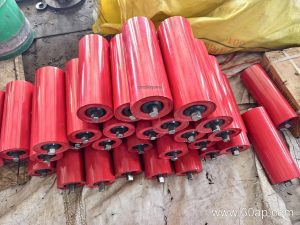
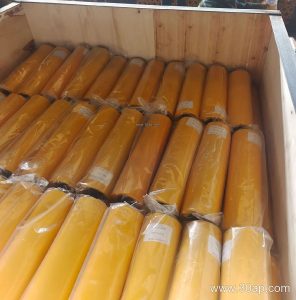
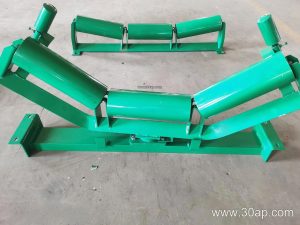
An EP rubber belt is widely used in Mining Conveyor Belt service, including coal handling, ore transport, and quarry aggregate lines. It also appears in cement plants, steel works, power plant coal yards, and port ship-loading systems. In these settings, the belt runs over idler rollers, wraps around conveyor pulleys, and is supported by conveyor brackets along the structure.
For abrasive stone or ore, an abrasion resistant grade reduces cover wear. For hot clinker or sinter, a heat resistant compound is used. Underground coal operations often require a flame retardant belt, and oil-soaked environments call for an oil resistant cover. These are cover-grade choices within the EP family, not different product categories.
Buyer Checklist
- Confirm the required tensile grade and the maximum working tension, not just the belt width.
- Match cover thickness to the material: sharp rock needs a thicker top cover than sand or grain.
- Check pulley diameters with the belt manufacturer, because a thick, multi-ply belt needs a larger minimum pulley than a thin one.
- Specify the environment: heat, oil, flame, cold, or static electricity.
- Ask for the splice method and edge condition, since these affect belt life on long conveyors.
For a reliable quotation, provide the conveyor layout, material type, capacity, and the pulley and idler roller arrangement. A belt that matches the duty will last longer than one chosen by width alone.