What an Ore Conveyor Idler Does on the Line
An ore conveyor idler is the rotating support that carries the loaded conveyor belt between the head and tail of a bulk handling system. In hard-rock mining, quarrying, and mineral processing, the idler roller must cope with sharp lump ore, abrasive dust, and uneven loading rather than the gentle duty found on a packaged-goods line. The idler does two jobs at once: it holds the belt in a stable trough so material stays centered, and it lets the belt roll with low resistance instead of dragging over a fixed support.
Because the belt is the most expensive wear part on the conveyor, the quality of the idler train has a direct effect on belt life, drive power demand, and downtime. A seized roller can wear through a belt cover in a short time, so buyers treat the idler as a critical consumable rather than a simple accessory.
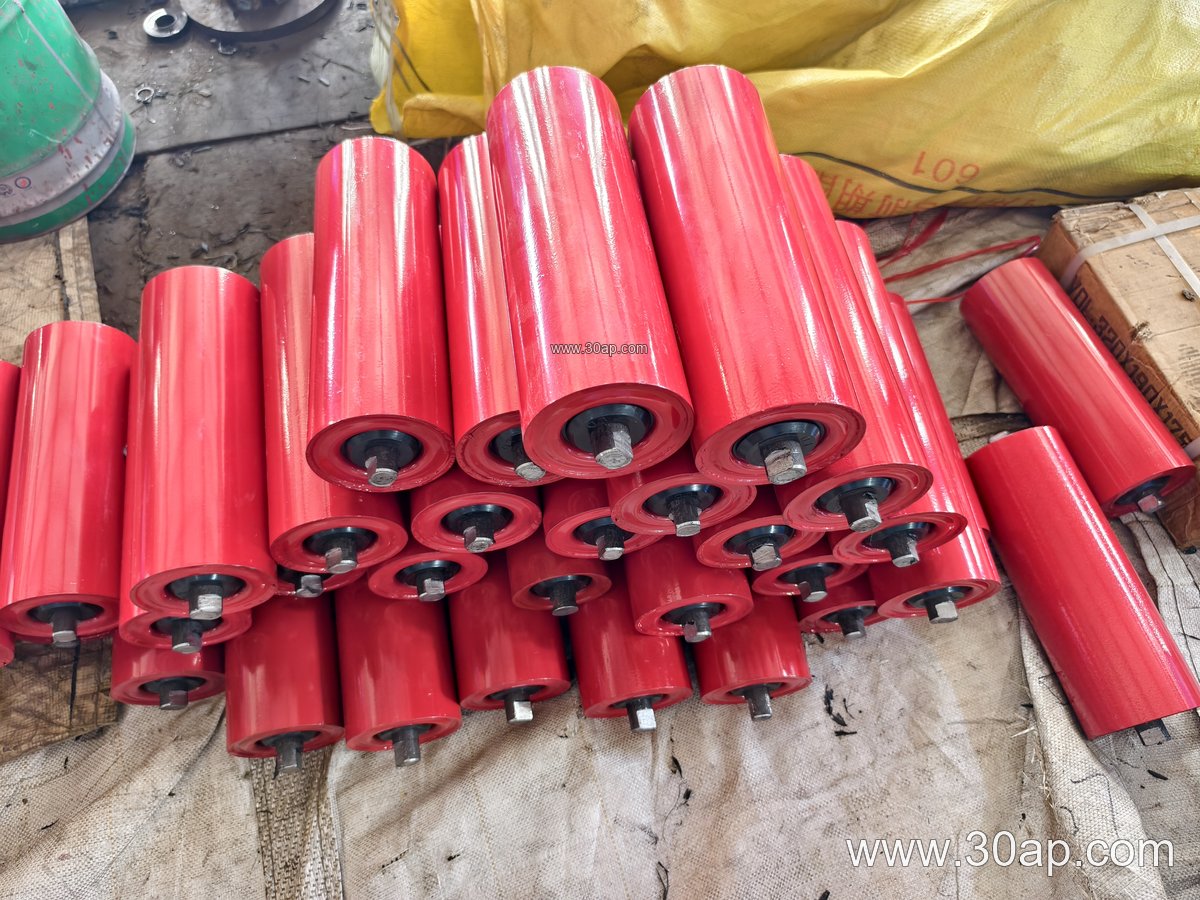
How an Ore Conveyor Idler Is Built
The common construction is a steel tube shell fitted over a through shaft, with a bearing assembly at each end and a sealing arrangement to keep out fines and water. The shell may be plain steel, nylon-coated, ceramic-faced, or fitted with rubber rings for impact zones. Sealing is where ore duty differs most from light duty: fine dust and washdown water attack bearings, so labyrinth seals, multi-stage seals, and grease retention features matter more than a low purchase price.
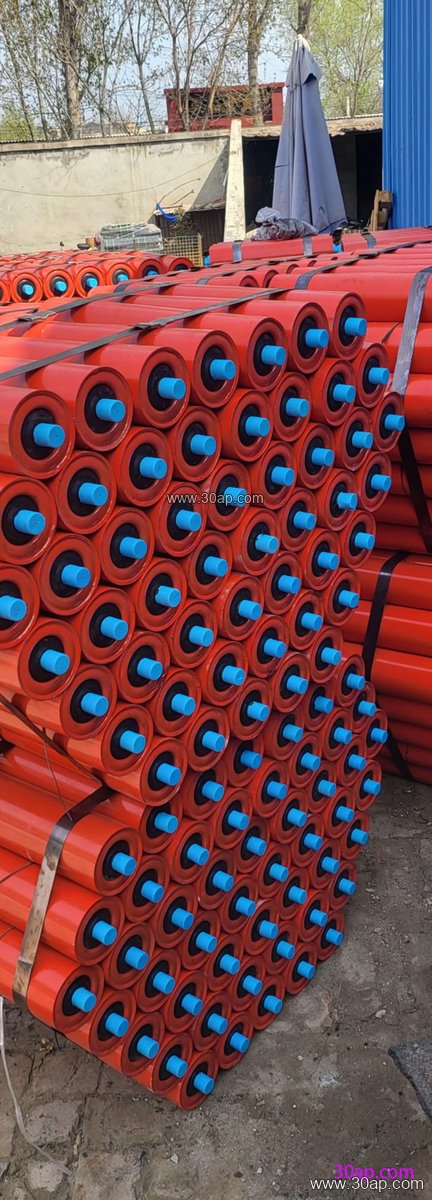
Typical reference data for ore duty
Dimensions below are common industry reference values, not a fixed specification. Final roller diameter, length, and bearing choice should follow the conveyor design and the actual belt width and load.
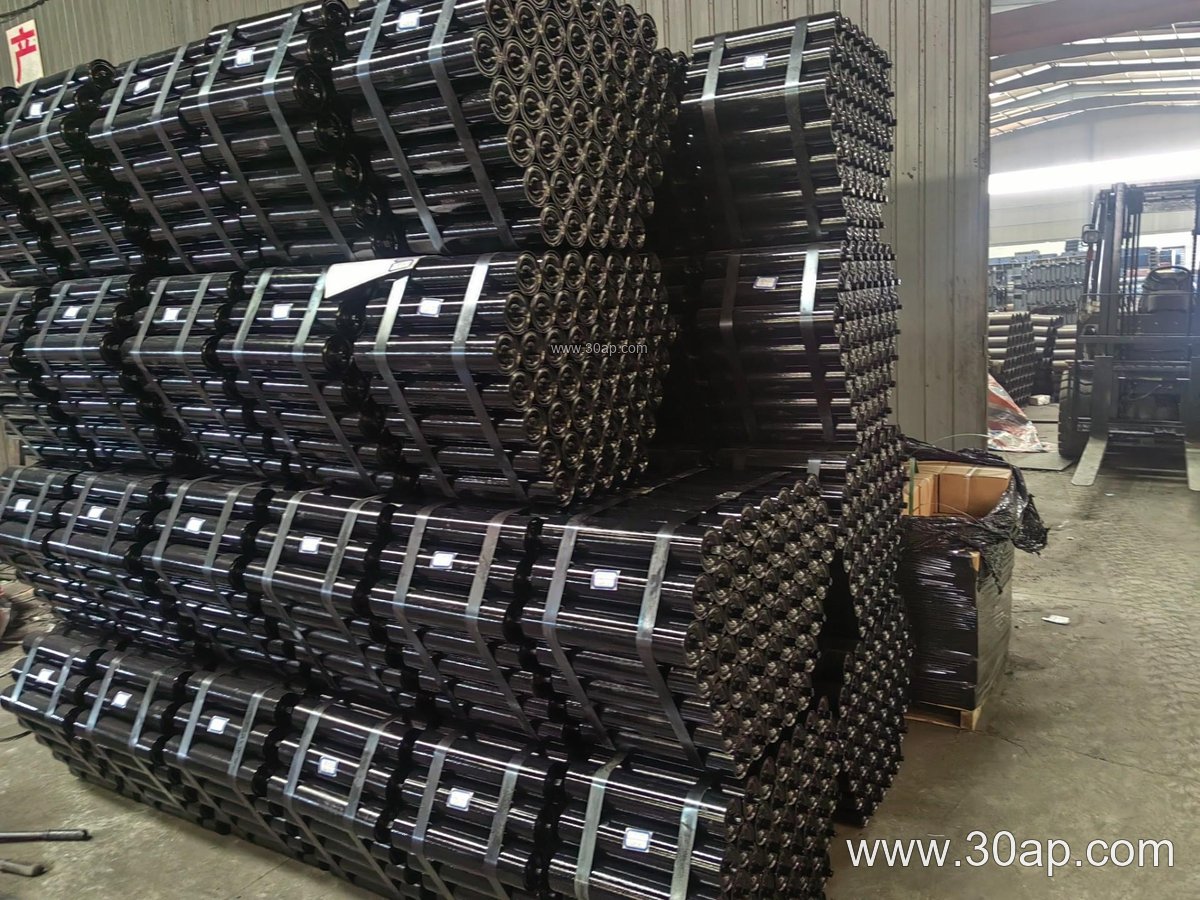
| Item | Common reference range | Notes |
|---|---|---|
| Roller diameter | Ø89, Ø102, Ø108, Ø127, Ø133, Ø159, Ø178, Ø194, Ø219 mm | Larger diameters suit higher belt speeds and heavier loads |
| Belt width | B650, B800, B1000, B1200, B1400, B1600, B1800, B2000 mm | Match to the conveyor, not to a catalog default |
| Trough angle | 20°, 30°, 35°, 45° | Affects material cross-section and belt training |
| Roller length (three-roll trough, common example) | B800 about 315 mm; B1000 about 380 mm; B1200 about 465 mm; B1400 about 530 mm; B1600 about 600 mm | Side rolls and center rolls can differ |
| Bearing | 6204, 6205, 6305, 6306, 6308, 6310 | Selected by load and shaft, not by belt width alone |
Roller length varies with belt width, trough angle, and roll arrangement, so the figures above are examples only. There is no rule that one belt width can only use one pulley diameter or one shaft size; those choices come from the conveyor designer.
Types Used Along an Ore Conveyor
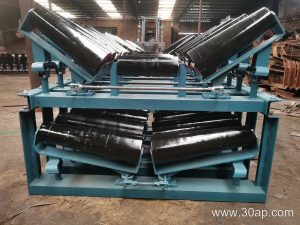
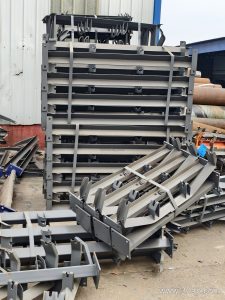
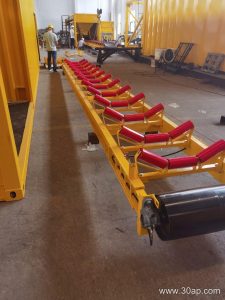
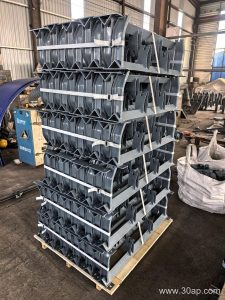
The carry side usually uses three-roll trough idlers at 30° or 35° to form the belt into a deep trough for lump ore. Transition idlers with a shallower angle are placed near the head and tail to avoid stressing the belt edge. On the return side, flat return idlers or V-return idlers support the empty belt, and V-return rollers help keep the belt tracking straight. Impact idlers with rubber rings are fitted under the loading point where ore drops onto the belt, while self-aligning idlers correct minor misalignment on long runs.
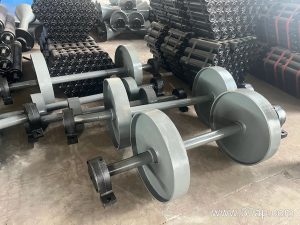
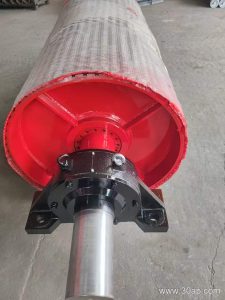
These are different duties, not interchangeable parts. A trough idler cannot replace a return idler, and a bend pulley or drive pulley is a separate item from the idler train. The ore conveyor idler family also includes spiral rollers for sticky material and comb-type rollers where fines tend to build up on the shell.
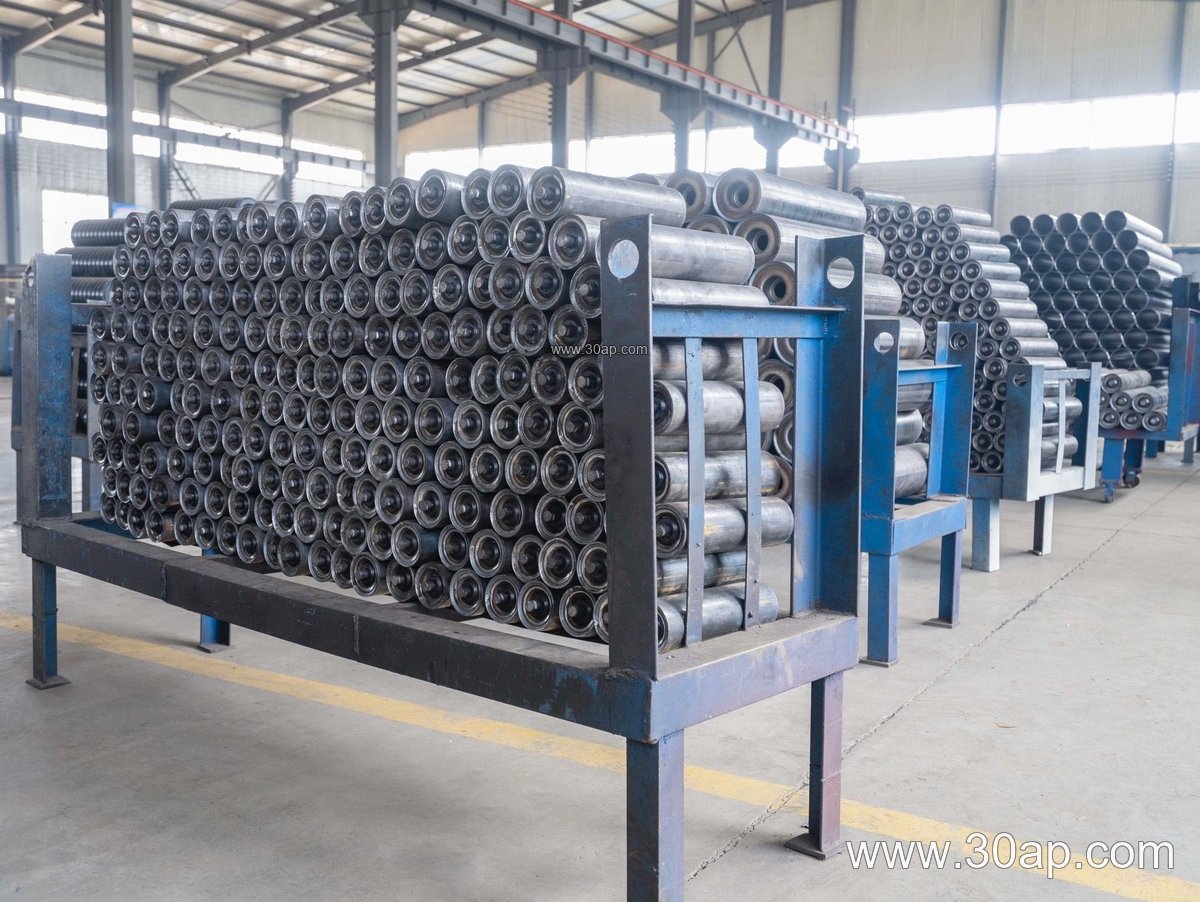
Where Ore Idlers Are Used
In a copper or iron ore concentrator, ore idlers run on coarse ore conveyors between the crusher and the stockpile, often in dusty, wet conditions. In a coal preparation plant, they carry washed coal on conveyors that see fine slurry and frequent washdown, so sealing quality is a frequent buying concern. Aggregate quarries and cement plants use the same idler families on limestone and clinker lines, while port terminals and sinter plants apply them to high-tonnage transfer conveyors.
What a Buyer Should Check
- Confirm the belt width, trough angle, and roll arrangement before ordering, and state whether the position is carry, return, impact, or transition.
- Ask for the shell thickness, bearing designation, and seal type; these three items separate a long-life idler from a short-life one.
- Check that the roller diameter suits the belt speed and load, and that the shaft and bracket interface match the existing conveyor bracket.
- For impact zones, specify rubber-ring or cushion rollers rather than standard trough idlers.
- Plan a spare ratio for high-wear positions, since a failed idler roller can damage the conveyor belt before it is noticed.
Good ore conveyor idler practice is less about finding the cheapest roller and more about matching seal, bearing, and shell to the real operating environment. When the specification is clear, the idler train runs quietly, the belt tracks well, and the conveyor pulley and drive see less shock load.