What a Conveyor Bracket Is and Why Its Price Varies
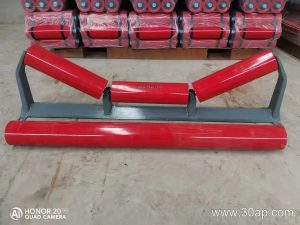
A conveyor bracket is the steel support that holds idler rollers in the correct position under the belt. In a quarry, a coal handling line, or a cement plant, these brackets are easy to overlook, yet they set the belt’s trough profile, keep the rollers aligned, and carry the load path into the frame. When buyers ask about conveyor bracket price, the honest answer is that it depends on geometry, material, and finish rather than on a single catalogue number. A light upper bracket for a B650 line and a heavy return bracket for a B1800 iron ore conveyor are simply not the same product, and they should not be quoted as if they were.
The same steel part may be called a idler support bracket, a roller frame bracket, or simply a bracket, but its job stays the same: locate the roller, hold the angle, and survive the duty cycle.
How the Bracket Is Built
Most brackets are fabricated from angle steel, channel steel, or folded steel plate. Welded brackets are common for troughing positions, while bolt-together designs make replacement easier on long overland lines. Surface treatment matters in wet or corrosive settings, so galvanizing or painting can move the price noticeably. Holes are punched or drilled to match the roller shaft, and the hole spacing changes with belt width and trough angle, so it is never a fixed figure across a product family.
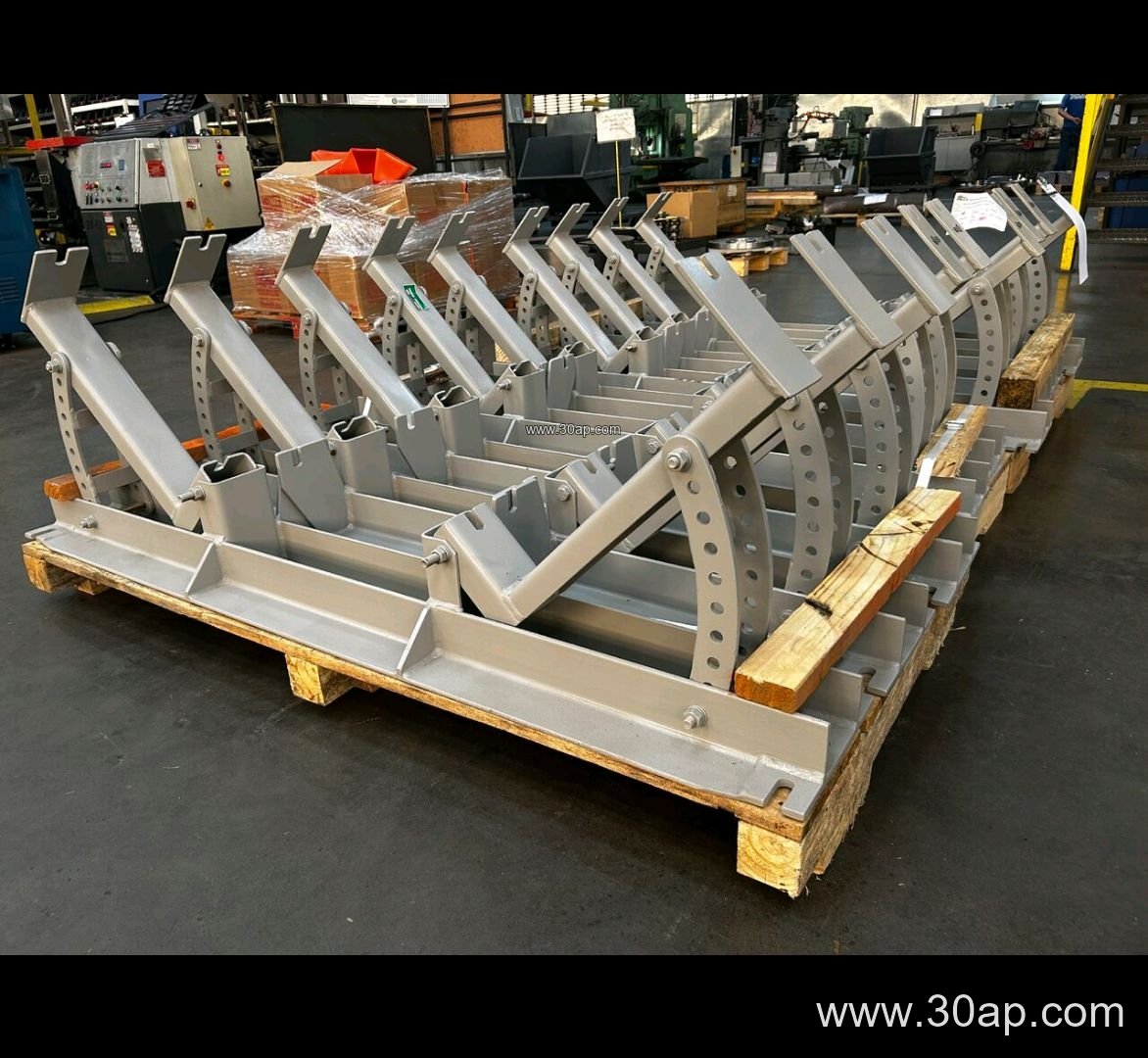
Common bracket references
- Troughing bracket, upper side, 20 to 45 degree trough angles
- Transition bracket near the tail or head pulley
- Return bracket, flat or V-shaped
- Impact bracket under the loading point
- Self-aligning and forward-tilted brackets
- Suspended and adjustable brackets
| Parameter | Typical range | Notes |
|---|---|---|
| Belt width | B500 to B2200 | Bracket length follows the frame design |
| Trough angle | 20, 30, 35, 45 degrees | Adjustable versions can be reset on site |
| Roller diameter | Ø89, Ø108, Ø133, Ø159, Ø194 | Matched to load and belt speed |
| Material | Angle, channel, folded plate | Thickness chosen by duty |
A combination such as B800 with a 35 degree trough and Ø108 rollers is common, and B1200 with 45 degrees and Ø133 also appears in heavy bulk service. These are examples, not rules, and no single belt width locks a buyer into one angle or one roller size.
Where Brackets Are Used
You will find them on a stone crushing line feeding a screen, on a power plant coal conveyor, and on a fertilizer or grain silo discharge belt. In a limestone mine, the transition bracket protects the belt as it opens from the tail pulley; in a steel plant sinter line, the return bracket keeps the belt from sagging between stands. The bracket works together with the conveyor belt, the idler roller, and the conveyor pulley, so a price comparison only makes sense when all four are specified together.
What Drives the Price
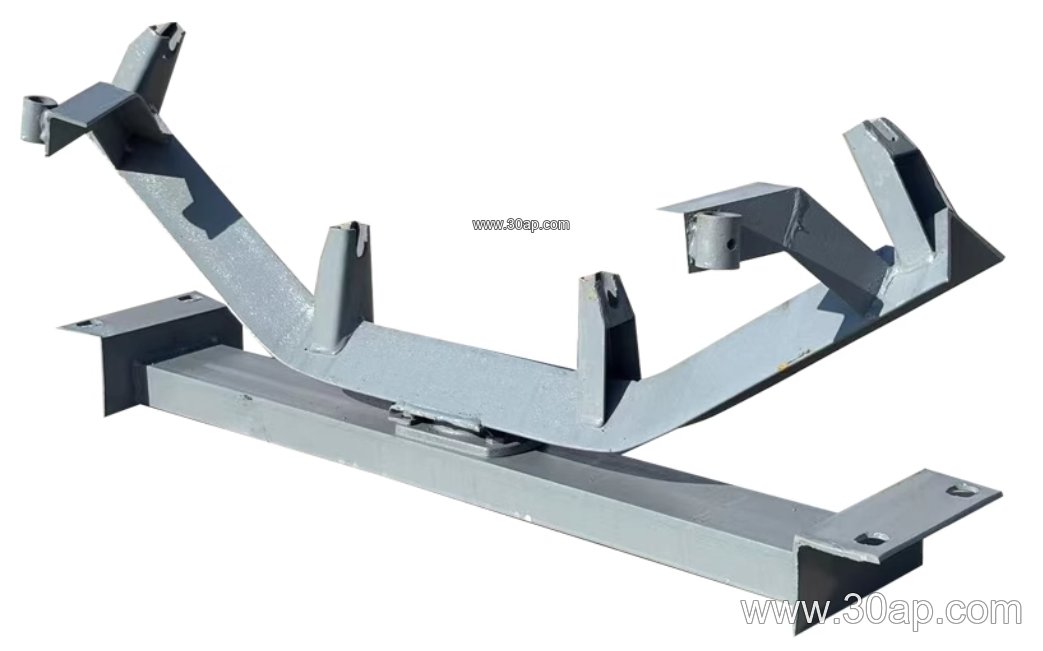
Several factors move the quotation up or down. Steel grade and plate thickness are the first, since a heavy-duty mining conveyor bracket carries more load than a light aggregate unit. Welding hours and hole accuracy come next, followed by coating. Adjustable brackets cost more than fixed ones because of the extra slots and hardware. Small batch orders usually carry a higher unit cost than repeat production runs. Freight also matters, because brackets are bulky relative to their value.
Buyers should ask for a drawing with hole pitch, overall length, and angle before comparing offers. A cheap bracket that does not fit the existing frame will cost more in downtime than it saves at purchase. It also helps to confirm which roller diameter the bracket accepts, since a Ø159 roller will not sit in a mount drilled for Ø108.
Practical Buying Notes
- State the belt width, trough angle, and roller diameter together.
- Say whether the position is carrying, return, impact, or transition.
- Confirm the frame hole pattern and whether slots are needed.
- Ask about coating if the site is wet, dusty, or coastal.
- Order spares for the loading zone, where wear is fastest.
On a coal mining conveyor belt or a quarry conveyor belt, a handful of spare brackets in the warehouse prevents a small failure from stopping the whole line. The conveyor bracket price is therefore best judged per year of service, not per piece alone.