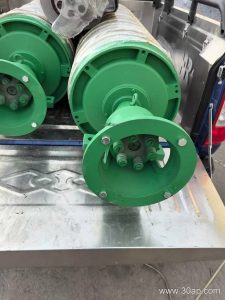
What a High-Friction Lagged Pulley Does
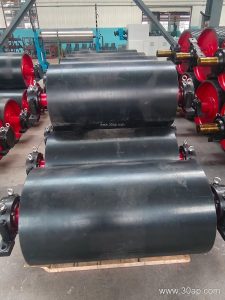
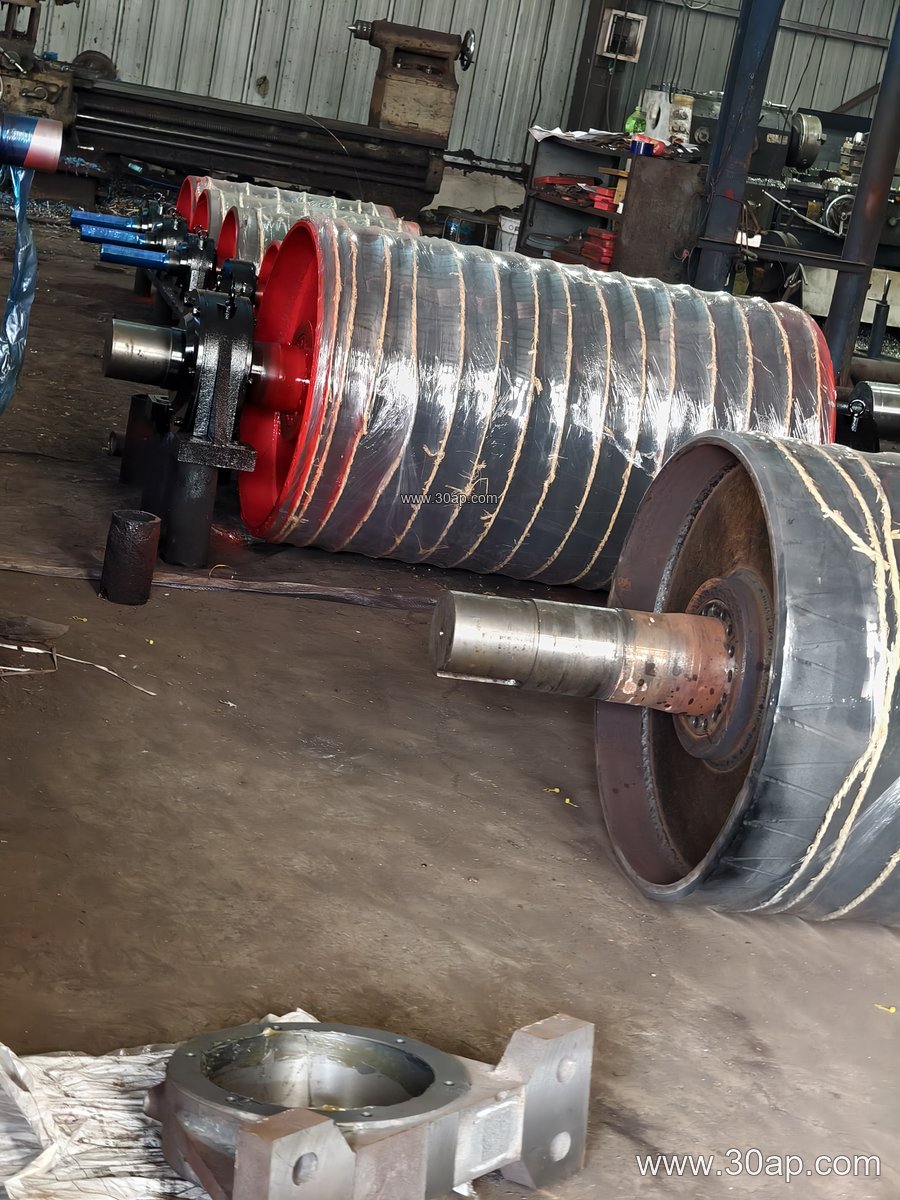
A high-friction lagged pulley is a conveyor pulley whose shell is covered with a rubber or ceramic lagging that raises the coefficient of friction between the pulley face and the conveyor belt. This extra grip matters most at the drive position, where torque must be transferred without slip. In quarry, cement, and power plant conveyors, a standard smooth pulley can lose traction when the belt is wet or dusty. The lagged version keeps the belt moving evenly and reduces the risk of belt damage from slippage.
The product is also called a rubber-lagged pulley or friction-lagged drum. It is not the same as a bend pulley or tail pulley, which mainly guide or return the belt. A drive pulley with high-friction lagging is selected when starting loads are heavy or when the belt runs in damp, dirty conditions.
Construction and Surface Options
The base is a welded steel drum with shafts, hubs, and bearing housings. Lagging is applied in several forms, and the choice affects grip, wear life, and material buildup.
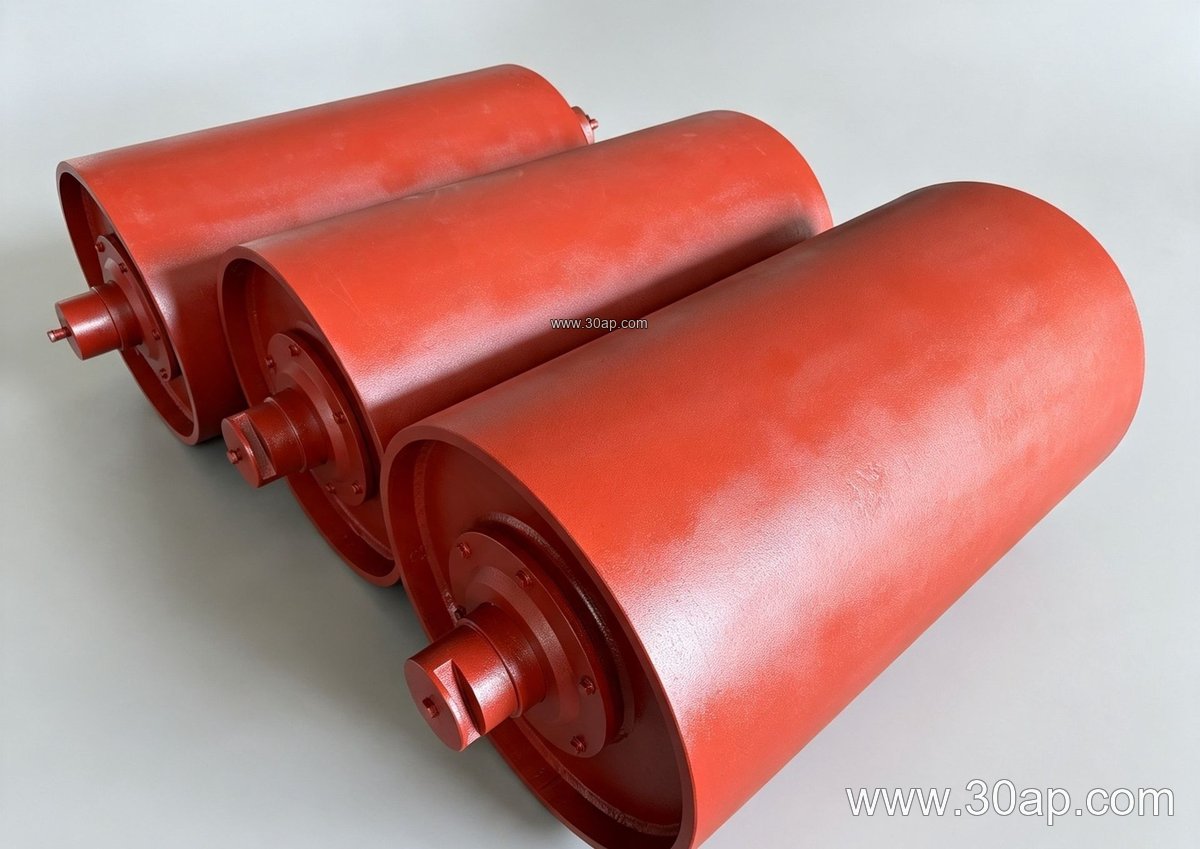
- Hot-sulphur rubber lagging – strong bond, common for heavy-duty drives.
- Cold-bonded rubber – easier to replace in the field.
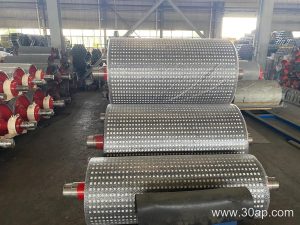
- Diamond or herringbone pattern – improves water drainage and grip.
- Ceramic lagging – high abrasion resistance for crusher and ore conveyors.
- Plain rubber sheet – general purpose where buildup is not severe.
Lagging thickness is usually 8, 10, 12, 15, or 20 mm, depending on belt tension and duty. The pulley face width is normally wider than the belt; for example, a B800 belt often runs on a pulley face around 950 mm, and a B1200 belt on about 1400 mm. These are common references, not fixed rules. Shaft diameter is determined by torque and load, not by belt width alone.
Where It Fits in the Conveyor
A high-friction lagged pulley is most often the drive or head pulley. In a coal mining conveyor, it may be the drive on a coal mining conveyor belt that carries damp coal from the seam. In a sand and gravel line, it can be the head pulley of a crusher conveyor belt handling abrasive aggregate. The lagging helps the belt start under load and keeps the belt centered when the surface is contaminated.
It can also serve as a tension pulley in some layouts, but the drive position is the main use. A tail pulley or bend pulley usually has plain or lightly lagged surface because its job is guidance, not power transmission.
Matching the Pulley to the Belt
Selection starts with the belt type and tension. A heavy steel cord conveyor belt or a multi-ply fabric belt needs a drive pulley sized for the resulting torque. Common combinations include B800 × Ø500, B1200 × Ø1000, and B1400 × Ø800, but many other pairings are possible. The table below shows reference dimensions for lagged pulleys; final values should be confirmed by the conveyor designer.
| Belt width (reference) | Typical pulley face width | Common diameter range | Lagging thickness |
|---|---|---|---|
| B500 | ≈600 mm | Ø250–Ø400 | 8–12 mm |
| B650 | ≈750 mm | Ø315–Ø500 | 8–15 mm |
| B800 | ≈950 mm | Ø400–Ø630 | 10–15 mm |
| B1000 | ≈1150 mm | Ø500–Ø800 | 10–20 mm |
| B1200 | ≈1400 mm | Ø630–Ø1000 | 12–20 mm |
| B1400 | ≈1600 mm | Ø800–Ø1250 | 15–20 mm |
Shaft sizes such as Ø80, Ø100, Ø120, or Ø160 are common, but they must be calculated from the actual load. A larger belt width does not automatically require a specific shaft diameter.
Buyer Checklist
Before ordering a high-friction lagged pulley, confirm the belt width and type, the maximum belt tension, the pulley position, and the environment. In a cement plant or a quarry conveyor belt line, dust and moisture may call for grooved or ceramic lagging. In a food or clean application, a different surface may be needed. Also check the conveyor bracket and bearing size so the pulley fits the existing frame. Ask for the lagging hardness and pattern, and specify whether field replacement is expected. A well-matched lagged pulley protects the belt and keeps the idler roller train running smoothly.