A Large Pulley at the Heart of the Conveyor
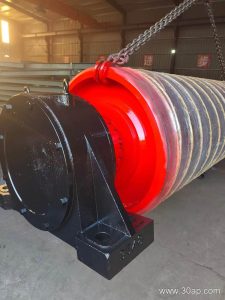
A 1400mm diameter conveyor pulley is one of the larger drum sizes used in bulk handling conveyors. Its role depends on where it sits in the system: a drive pulley transmits torque to the belt, a tail pulley returns it, and a bend pulley changes its path. This drum diameter is usually chosen when belt tensions and wrap angles are high, or when the conveyor must carry a wide, heavy belt through a transfer point. You will often see it in mining conveyor belt circuits, cement plant clinker lines and power plant coal handling, where reliability matters more than saving a few kilograms of steel.
Construction and Key Dimensions
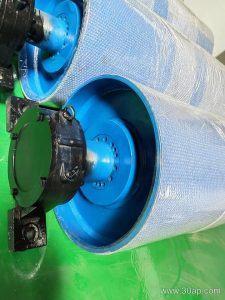
The drum is normally built from a rolled steel shell, welded end discs, a hub and a through shaft. Shell thickness, hub design and shaft diameter are determined by the calculated torque and radial load, not by belt width alone. A common mistake is to assume a fixed shaft size for every 1400mm drum; in practice the shaft may be Ø160, Ø180, Ø200 or larger, depending on the drive arrangement and bearing loads.
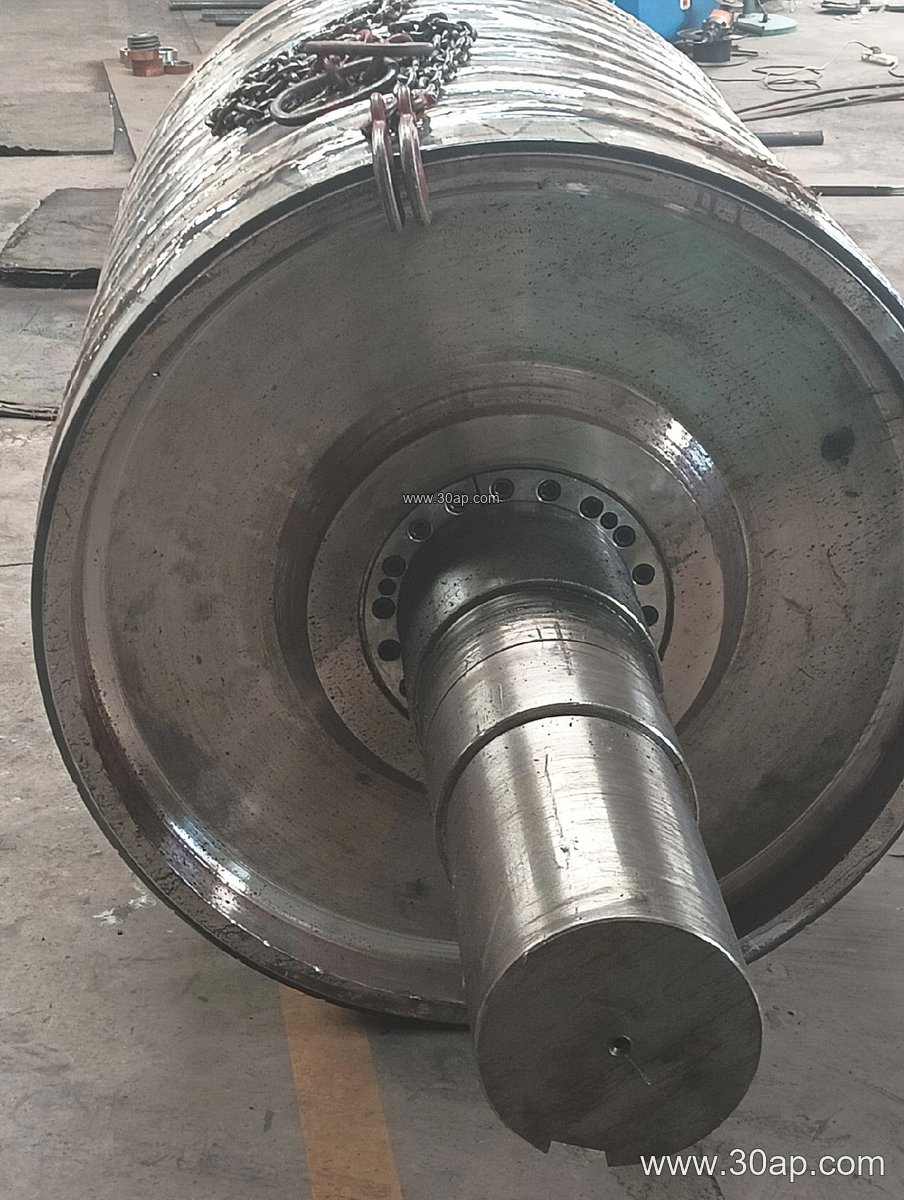
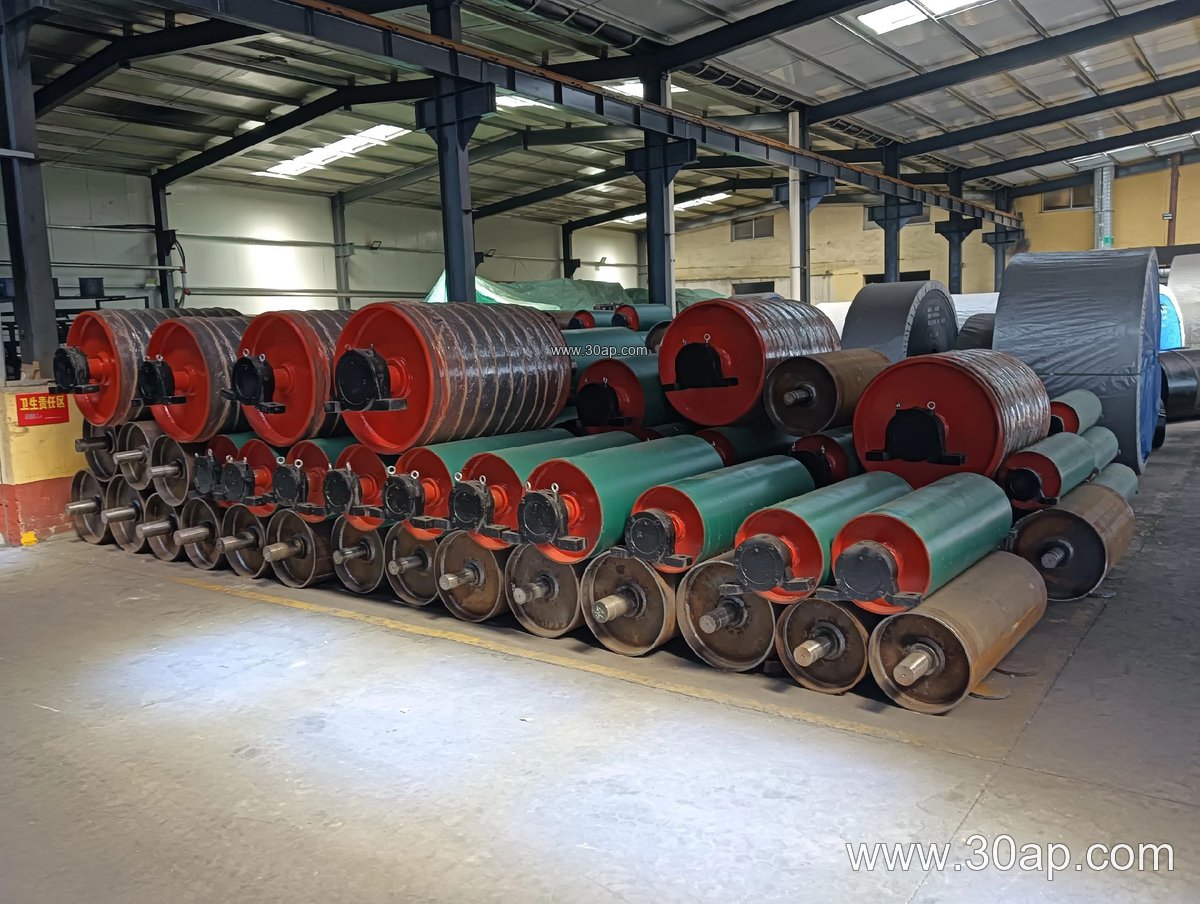
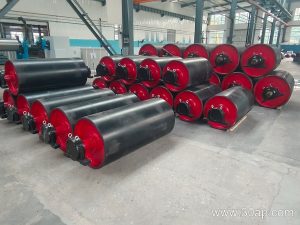
Surface finish is another decision point. Plain shells suit some non-drive positions, while rubber lagging improves grip at the drive. Hot vulcanized rubber, cold-bonded rubber, diamond grooving and ceramic lagging are all used, with lagging thickness commonly 8, 10, 12, 15 or 20 mm. For a drum of this size, the face width is usually greater than the belt width; for example, a B1200 belt may run on a face around 1400 mm, while a B1400 belt typically needs a wider face near 1600 mm. The exact figures come from the conveyor design, not from a catalogue rule.
| Parameter | Typical Reference |
|---|---|
| Drum diameter | Ø1400 mm |
| Belt width range | B1000 to B1600, depending on design |
| Face width | Usually wider than belt, e.g. about 1600 mm for B1400 |
| Lagging thickness | 8, 10, 12, 15, 20 mm |
| Shaft diameter | Ø160, Ø180, Ø200 and up, by torque calculation |
| Common surface forms | Plain, rubber lagging, diamond lagging, ceramic lagging |
Where It Fits in a Plant
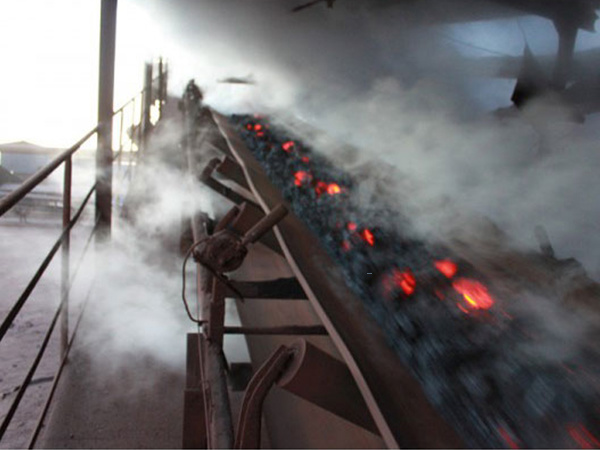
In a quarry or sand and aggregate line, a 1400mm diameter conveyor pulley may serve as the head drive on a primary discharge belt, handling crushed rock from a crusher. In a coal preparation plant or underground coal mining conveyor, flame retardant and anti-static belt grades are common, and the pulley is expected to keep grip in damp, dusty conditions. The same drum size can appear as a bend or tension pulley in a long overland route, where its large diameter reduces belt bending stress and helps the conveyor belt run smoothly around the curve.
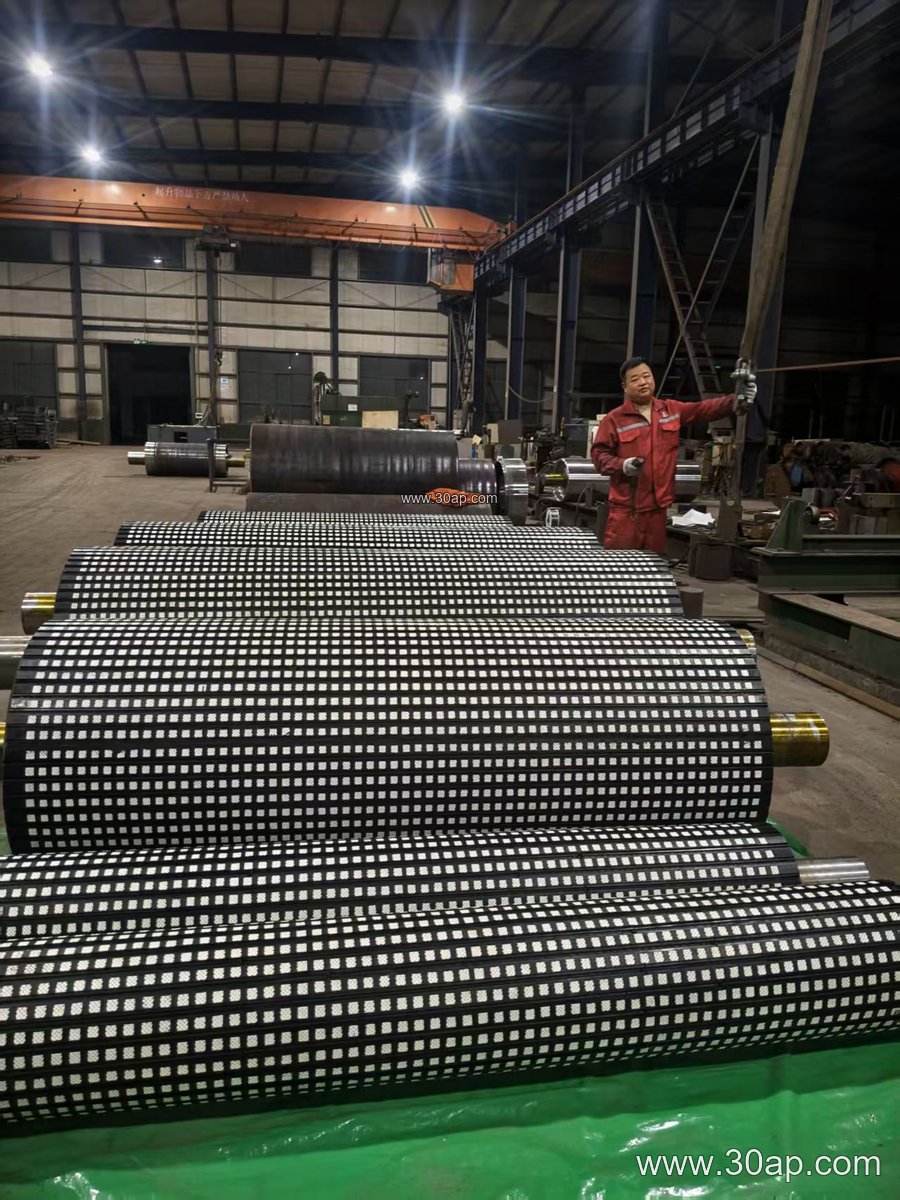
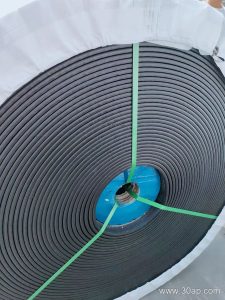
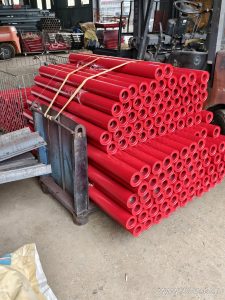
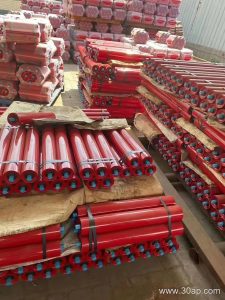
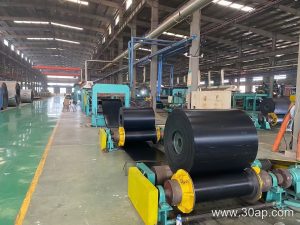
Heavy-duty mining conveyor belts, steel cord conveyor belts and thick multi-ply fabric belts all benefit from a generous drum diameter because the belt carcass is subjected to less reverse bending. On the return side, a conveyor pulley of this size may be paired with idler rollers and a sturdy conveyor bracket to keep alignment stable under load.
Buyer Checklist
- Confirm the pulley position: drive, tail, bend, take-up or snub. These are not interchangeable, and the duty differs greatly.
- Provide belt width, belt type and belt tension so the supplier can size the shell, shaft and bearings.
- State the lagging preference and thickness, plus whether grooving or ceramic tiles are needed for wet or oily conditions.
- Check the shaft diameter against the actual torque and bearing load rather than copying a value from another conveyor.
- Ask for the balancing grade, bearing type and locking arrangement, since a 1400mm drum carries significant rotating mass.
- Match the drum to the belt: an abrasion resistant conveyor belt on a gritty stone line may need different lagging than a smooth EP conveyor belt in a cement plant.
Finally, plan for maintenance access. A drum this size is heavy, so lifting points, bearing housings and the surrounding conveyor bracket should allow safe removal during lagging replacement. When specified around the real belt and load data, a 1400mm diameter conveyor pulley gives long service in demanding mining, cement and power applications.