What a Mining Equipment Idler Does on the Line
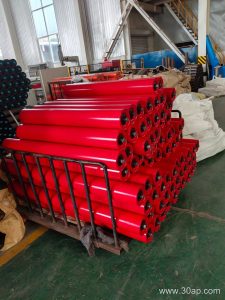
A mining equipment idler is the rotating roller assembly that supports and shapes the conveyor belt along its run. In a quarry, a coal preparation plant, or an ore transfer house, these rollers carry the loaded belt, guide it back after discharge, and absorb the impact of falling rock. The idler roller is a simple component, but it sets the tone for belt life, energy draw, and how often maintenance crews have to walk the line.
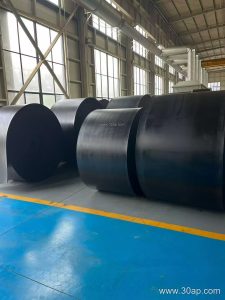
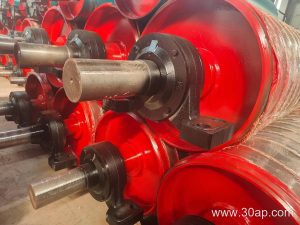
The idler works together with the conveyor belt, the conveyor pulley at each end, and the conveyor bracket that fixes the assembly to the frame. Drive, tail, and bend pulleys are separate components with their own duties; they are never substitutes for an idler, and an idler never replaces them.
How the Roller Is Built
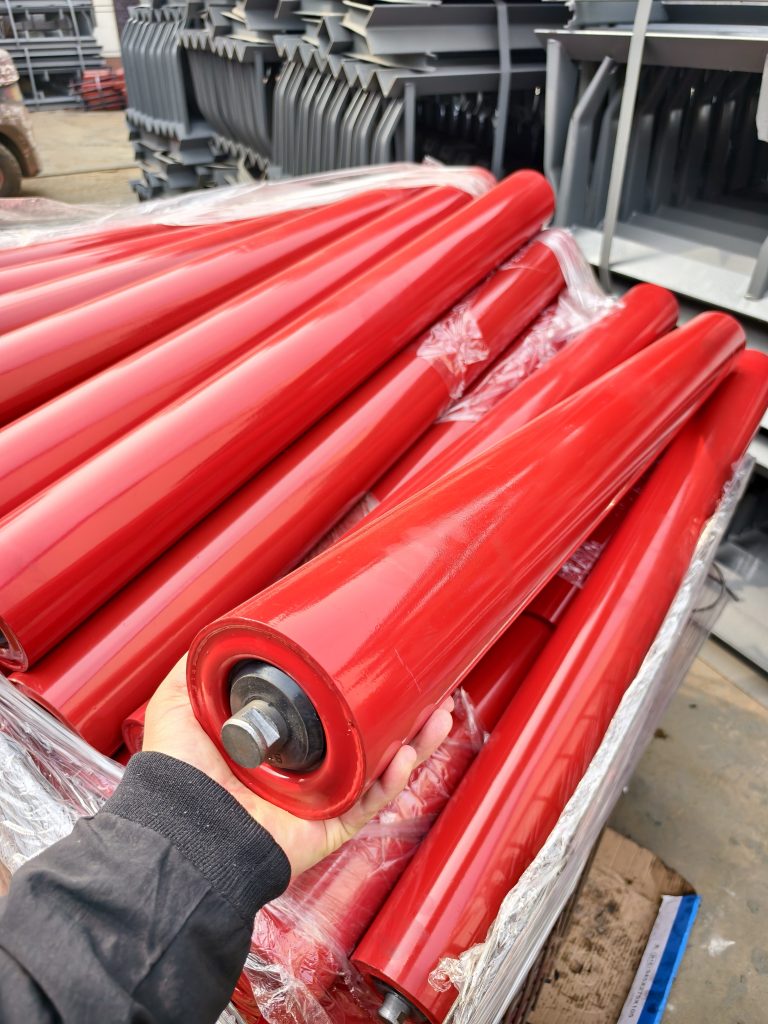
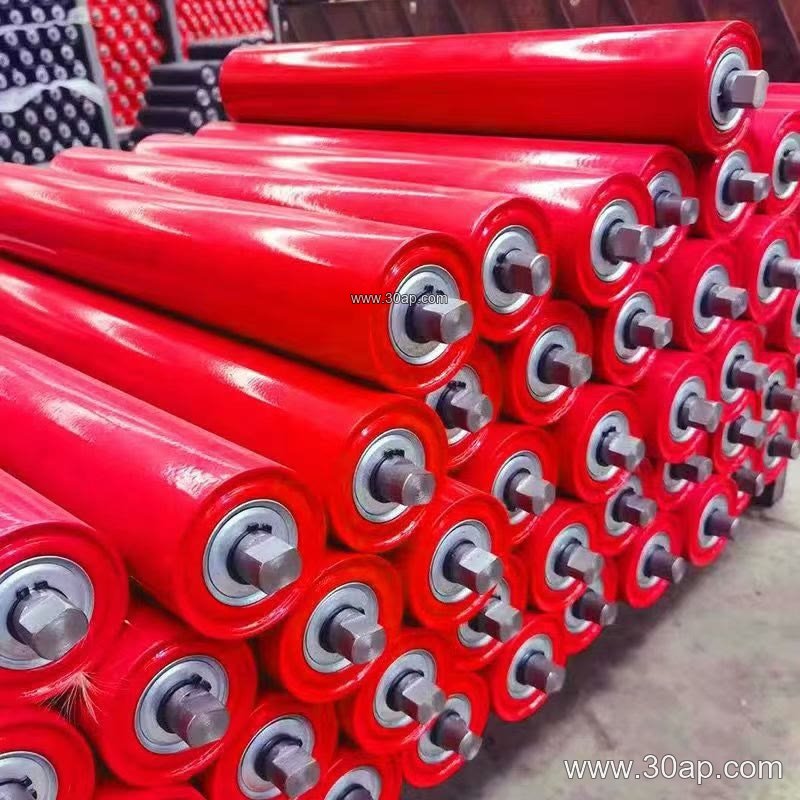
Most rollers share a common structure: a steel tube shell, a shaft, bearing housings at both ends, and a sealing arrangement to keep dust and water out. The shell may be plain steel, nylon, ceramic, or fitted with rubber rings. Bearings are commonly 6204, 6205, 6305, 6306, 6308, or 6310, selected by load and speed rather than by roller diameter alone.
Sealing matters in gritty service. A labyrinth seal combined with a contact lip is typical for stone crushing and aggregate lines, where fine dust is constant. The bearing fit, grease space, and end cap design determine how long the roller turns freely before it needs attention.
Common Idler Types and Where They Sit
The carrying side usually uses three-roll troughing sets with a trough angle of 20, 30, 35, or 45 degrees. A two-roll or single-roll arrangement may appear on narrow belts or special layouts. The return side uses flat or V-shaped return rollers. Transition idlers sit near the pulleys to ease the belt from flat to troughed. Impact idlers with rubber rings go under the loading point, while self-aligning idlers with a slight forward lean of about 1.5 to 2 degrees help correct belt drift.
- Troughing idler: carries the loaded belt, three rolls common.
- Impact idler: rubber rings absorb lump impact at the chute.
- Return idler: supports the empty belt, flat or V form.
- Self-aligning idler: friction or tapered rolls steer the belt back.
- Spiral idler: used where sticky material tends to build up.
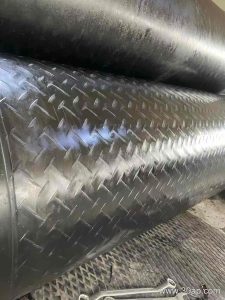
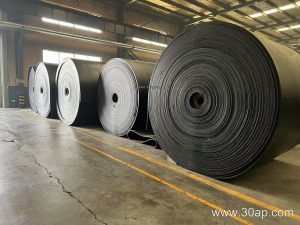
A heavy-duty mining conveyor belt may need a denser idler spacing than a light aggregate line, and the belt tension, lump size, and belt speed all feed into that decision.
Matching Roller Diameter, Belt Width, and Roll Length
Roller diameter and belt width are often discussed together, but they are not locked in a one-to-one pairing. A Ø89 roller can appear on a B650 belt, while a Ø159 roller may serve a wider, heavier line. Roll length changes with belt width, trough angle, and roll position within the set. The figures below are common examples, not fixed supply rules.
| Belt width | Common roll length, three-roll troughing | Typical roller diameters |
|---|---|---|
| B500 | about 200 mm | Ø63 to Ø89 |
| B650 | about 250 mm | Ø76 to Ø108 |
| B800 | about 315 mm | Ø89 to Ø127 |
| B1000 | about 380 mm | Ø102 to Ø133 |
| B1200 | about 465 mm | Ø108 to Ø159 |
| B1400 | about 530 mm | Ø127 to Ø178 |
| B1600 | about 600 mm | Ø133 to Ø194 |
| B1800 | about 670 mm | Ø159 to Ø219 |
| B2000 | about 750 mm | Ø178 to Ø219 |
Side rolls and center rolls can differ in length, so the table is a starting point for layout discussion rather than a specification sheet. Shaft diameter follows the load calculation and the bearing chosen, not the belt width by itself.
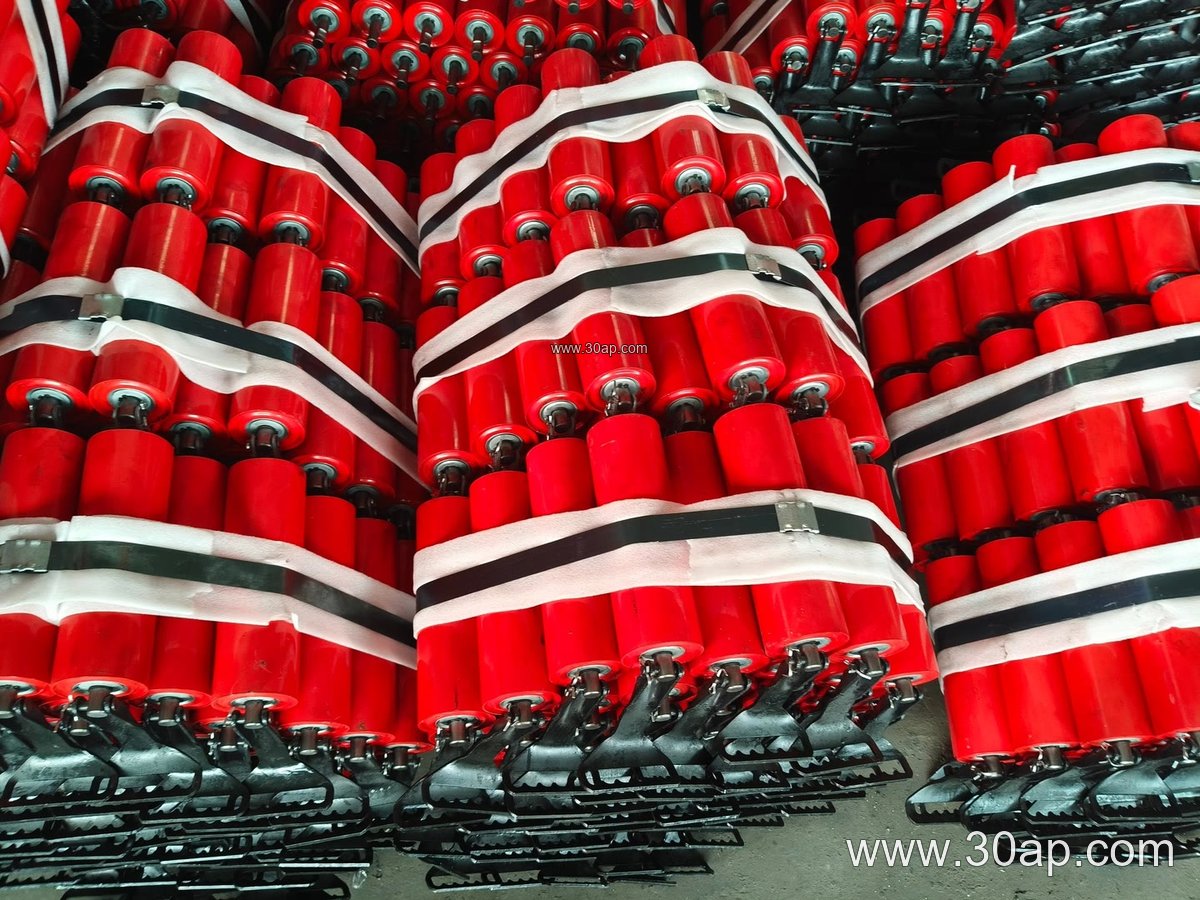
Where These Rollers Are Used
You will see them in an iron ore stockyard, a limestone crushing circuit, and a power plant coal handling gallery. Cement plants rely on them under clinker and raw meal belts, while a sand and gravel pit uses them on every transfer. In a coal mine, flame retardant and anti-static properties of the belting often govern the whole conveyor design, and the idler must suit that environment too.
What a Buyer Should Check
Ask for the roller diameter, shell thickness, bearing number, seal type, and roll length separately. Confirm the trough angle and the number of rolls in the set. Check that the roller finish suits the material: rubber rings for impact, ceramic or nylon where wear is aggressive. Ask how the bracket fits the existing frame, and whether the shaft ends match the current mounting.
Spare parts planning is easier when the same roller specification is used across a circuit. Keep a small stock of the most common sizes, and record the installation date so that slow-turning or seized rollers are found early. A worn idler roller can damage the belt edge and raise power consumption, so periodic inspection pays back quickly.
Maintenance Notes
Listen for squealing bearings, watch for belt wander, and check for material build-up on return rolls. Replace rollers that no longer turn freely. Keep the sealing area clean, and avoid over-greasing sealed-for-life units. On a quarry conveyor belt or a crusher conveyor belt, the loading zone deserves the closest look because impact and spillage shorten roller life there.