What a Self-Aligning Idler Bracket Does
A self-aligning idler bracket is the mounting frame that holds a training idler assembly and lets it pivot or swivel slightly so the idler can steer a drifting conveyor belt back toward the center line. It is not a fixed support in the usual sense: the bracket works with the idler, the belt tension and the load to create a small corrective movement. In a quarry, a coal handling plant or a cement kiln feed line, this small correction can prevent edge damage, spillage and uneven wear along the whole conveyor.
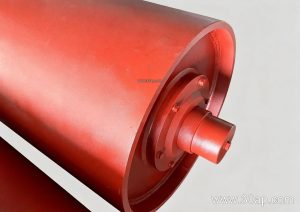
The product is often called a self-aligning idler frame or self-tracking idler bracket. It is a distinct accessory from the standard troughing bracket and should not be confused with a drive pulley bracket, tail pulley bracket or bend pulley bracket, which locate pulleys rather than training idlers.
How the Bracket Is Built
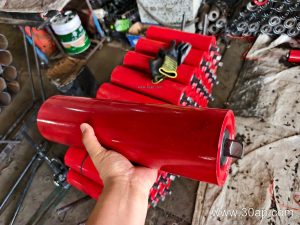
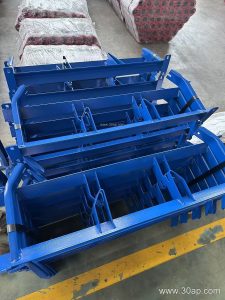
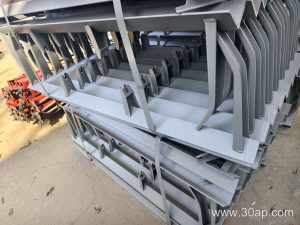
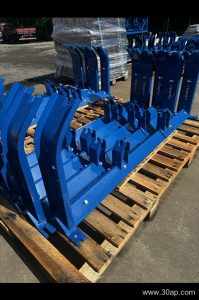
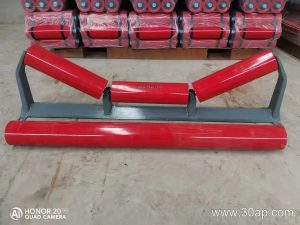
Most self-aligning idler brackets are fabricated from angle steel, channel steel or folded steel plate. The frame carries a pivot point, a mounting base and one or more idler seats. The pivot allows the idler to rotate in the horizontal plane, while the idler’s own contact with the belt generates the aligning force. A typical design uses two or three idlers in a trough or a pair of rollers in a V arrangement, depending on the belt width and the duty.
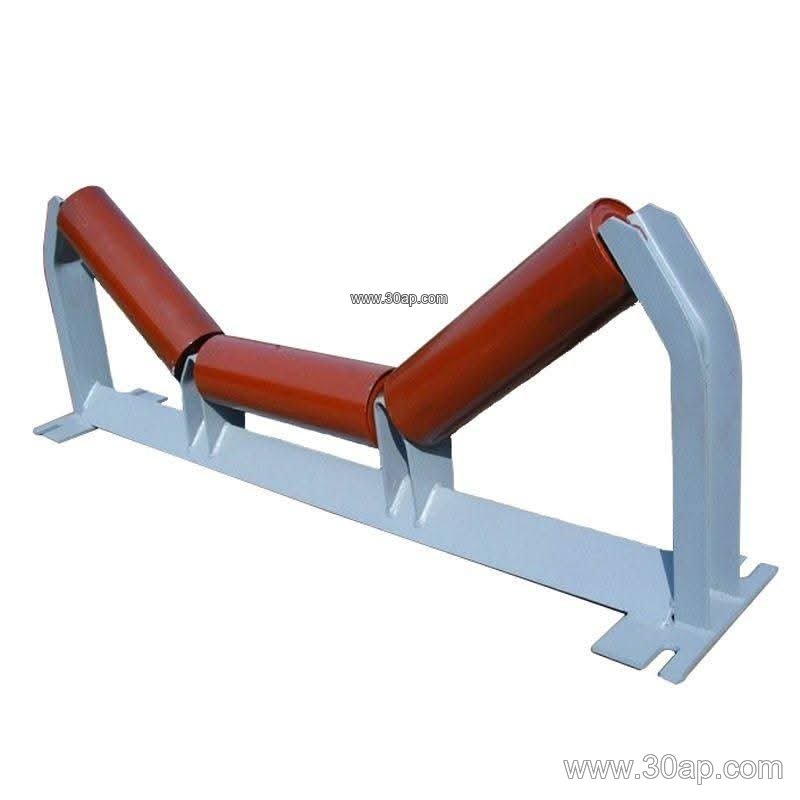
Common construction details include:
- Pivot pin or bearing seat that allows a small swivel angle
- Reinforced mounting pads for bolting to the conveyor stringer
- Adjustable or fixed idler seats, depending on the model
- Corrosion protection suited to dusty or wet environments
The bracket must match the idler diameter and the belt width. A B800 belt, for example, may use a 30 degree or 35 degree trough with Ø108 or Ø133 idlers, but the final geometry is set by the conveyor design rather than by the belt width alone.
Where Self-Aligning Idler Brackets Are Used
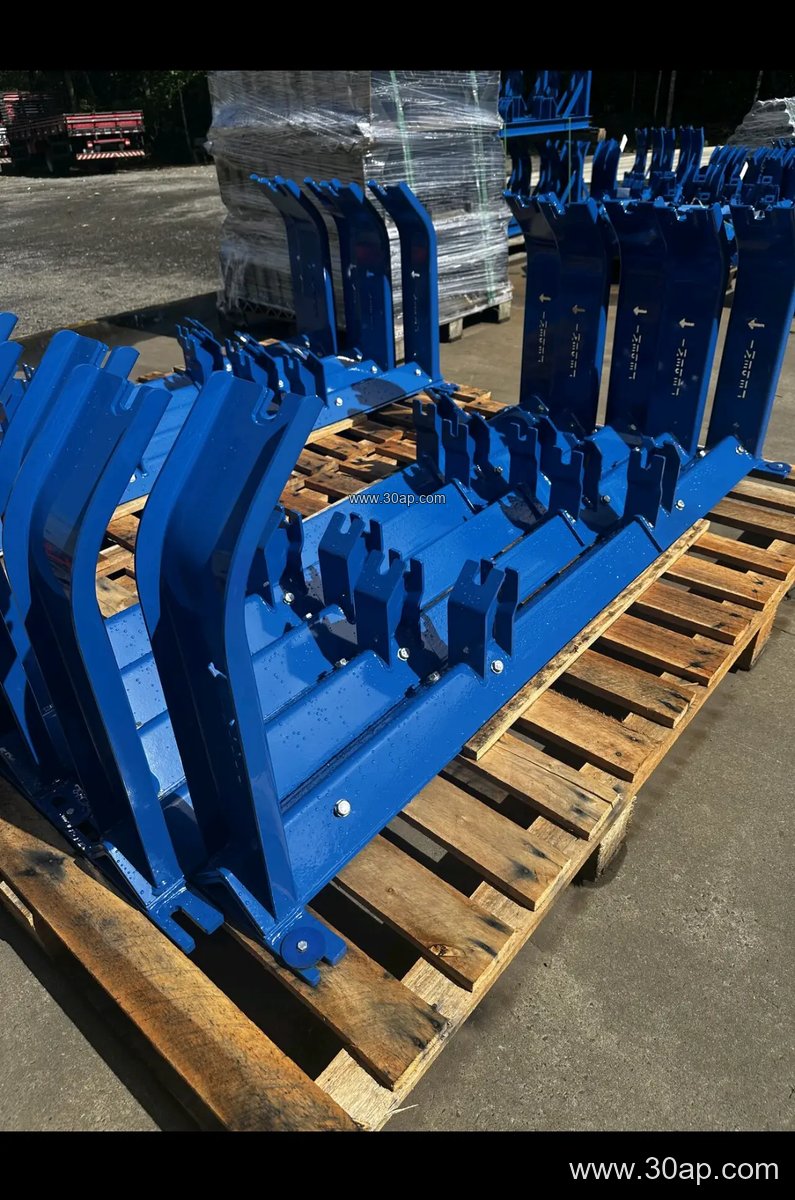
These brackets appear wherever belt training is critical. In a limestone quarry or a sand and gravel line, a self-aligning idler bracket is often fitted on the carrying side after the feed point and before the head end. In a coal washing plant or a power station coal yard, they help keep a loaded belt centered through transitions and curves. In a cement plant, they are common on clinker and raw material conveyors where dust and uneven loading cause the belt to wander.
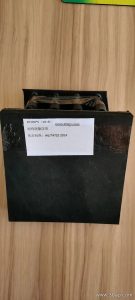
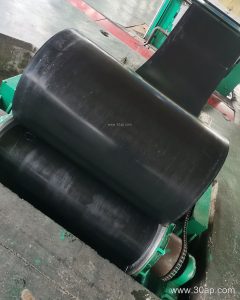
They also suit bulk material handling in a steel plant sinter line, a fertilizer granulation plant and a grain silo gallery. The bracket is usually paired with a conveyor idler and a suitable Rubber Conveyor Belt, and it works alongside the conveyor pulley at the discharge end without replacing it.
Common Reference Sizes
The table below gives typical reference ranges, not fixed supply commitments. Actual mounting hole spacing and beam length change with belt width, trough angle and idler diameter.
| Belt Width | Trough Angle | Idler Diameter | Typical Use |
|---|---|---|---|
| B500 | 20–30 degrees | Ø89 | Light duty, small aggregate lines |
| B650 | 30 degrees | Ø89–Ø108 | Sand and gravel, grain |
| B800 | 30–35 degrees | Ø108–Ø133 | Quarry and cement plant conveyors |
| B1000 | 35 degrees | Ø108–Ø133 | Coal handling, power plant |
| B1200 | 35–45 degrees | Ø133–Ø159 | Heavy bulk material |
| B1400 | 35–45 degrees | Ø133–Ø159 | Iron ore, large tonnage |
| B1600 | 35–45 degrees | Ø159–Ø194 | Mining and port loading |
| B1800 | 35–45 degrees | Ø159–Ø194 | High capacity stockyard |
| B2000 | 35–45 degrees | Ø159–Ø194 | Extra-wide bulk conveyors |
Adjustable brackets can be set among 20, 30, 35 and 45 degree trough angles. Forward-leaning training idlers commonly use about 1.5 to 2 degrees of lead, which is a design choice rather than a universal rule.
Buyer Checklist
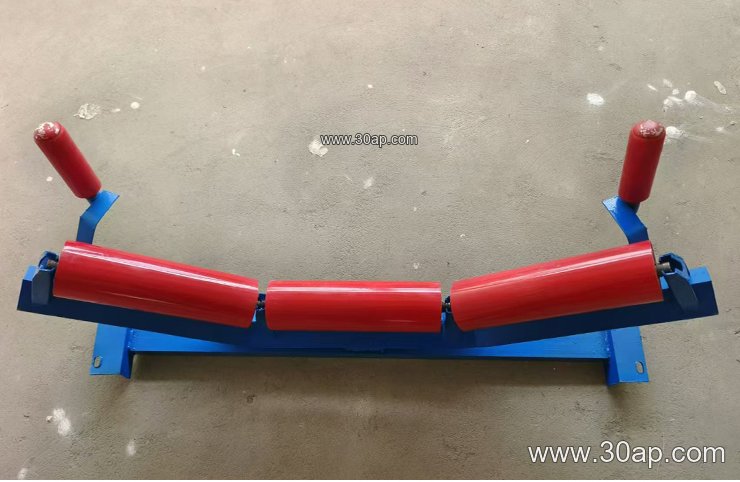
Before ordering a self-aligning idler bracket, confirm the belt width, the idler diameter, the trough angle and the mounting interface on the conveyor stringer. Check whether the frame is fixed or adjustable, and whether the pivot is intended for a two-roller V return or a three-roller carrying arrangement. Ask for the drawing that shows hole spacing and overall height, because two brackets for the same belt width can differ if the idler size or trough angle changes.
Also consider the environment. A dusty quarry or a wet coal yard may call for heavier plate and better paint, while a food or grain application may need a cleaner finish. When the conveyor uses a Steel Cord Conveyor Belt or a Heat Resistant Conveyor Belt, the bracket still serves the same training function, but the idler and frame must suit the belt’s stiffness and operating temperature. Matching the bracket to the conveyor bracket family already in use avoids alignment surprises during installation.
A correctly chosen self-aligning idler bracket is a small part of the conveyor, yet it protects the belt, reduces edge wear and keeps material on the line in demanding sites such as mines, cement works, power stations and aggregate plants.