What a Three-Roll Idler Bracket Does
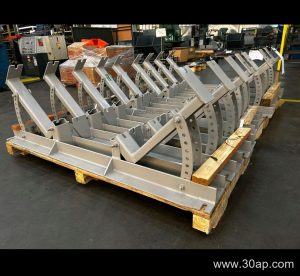
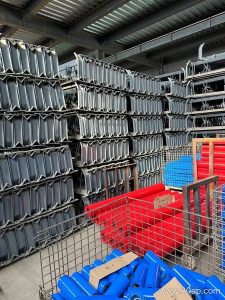
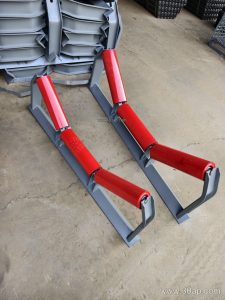
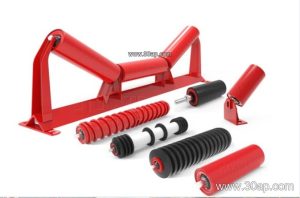
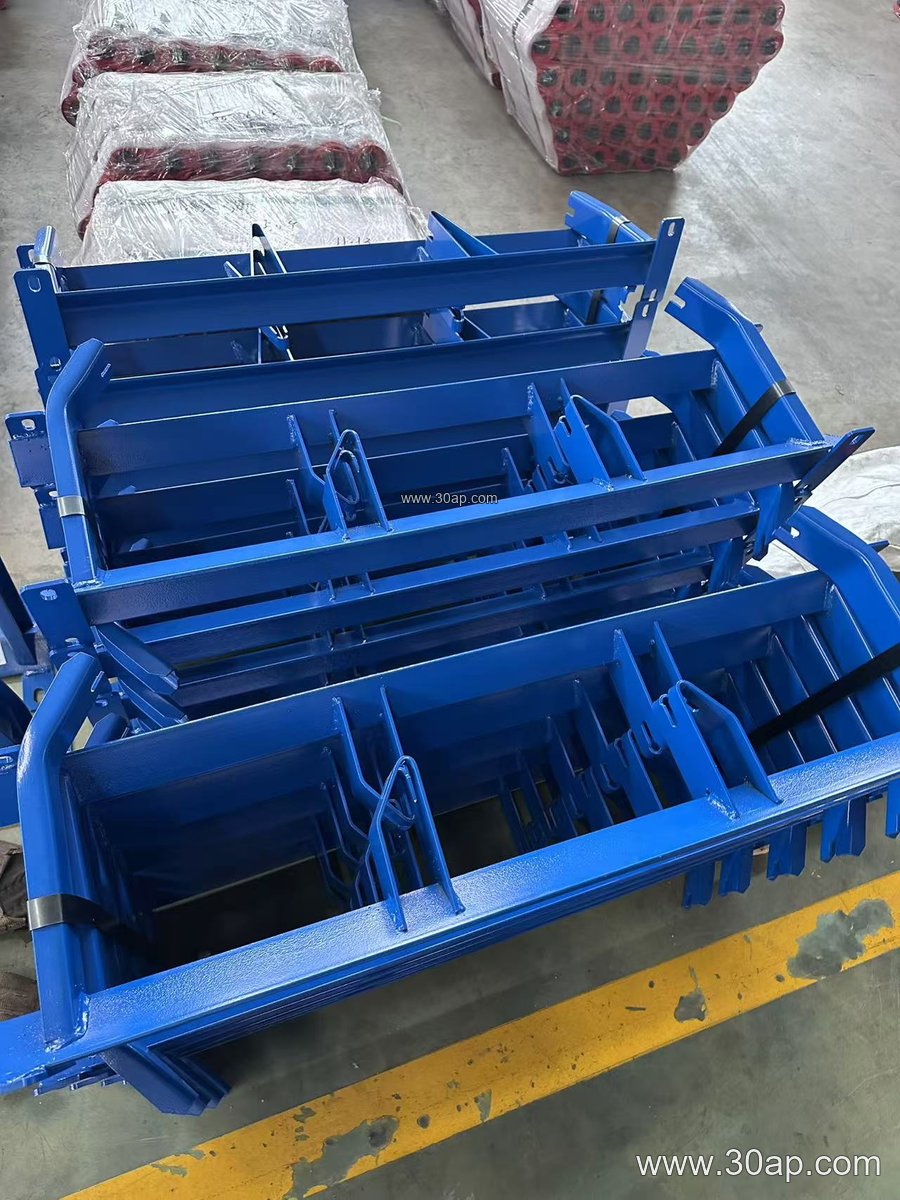
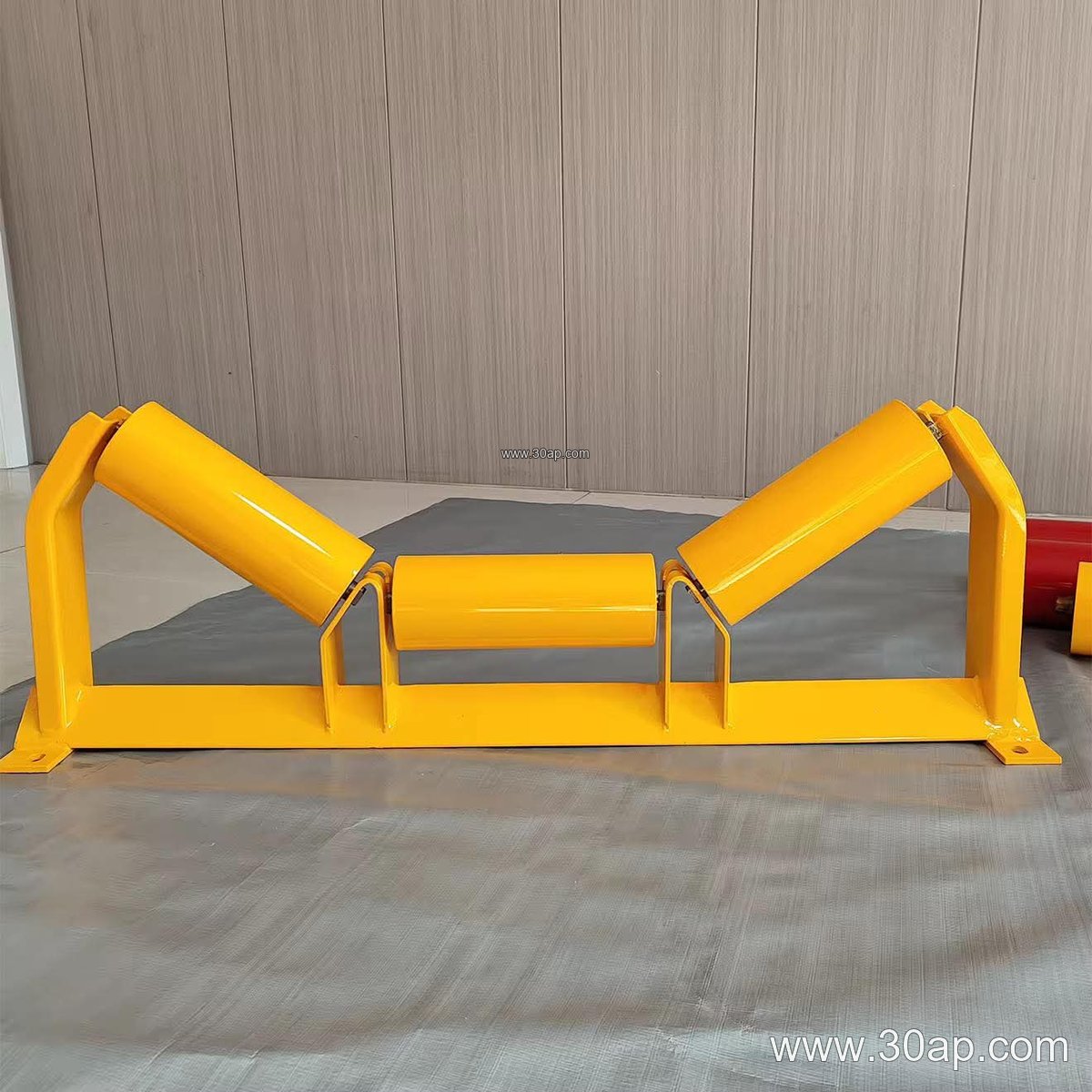
A Three-Roll Idler Bracket is the support frame that holds three idler rollers in a trough shape under a loaded conveyor belt. It sits across the conveyor stringer and carries the centre roller flat or slightly raised, with two side rollers angled upward to cup the belt. That cupped profile keeps bulk material centred and reduces spillage on the carrying side. The same component is often called a troughing idler bracket or troughing set frame, and those names describe the same assembly rather than a different product. In a cement plant or a limestone quarry, this bracket is usually the first thing a maintenance team checks when a belt starts tracking badly.
Construction and Mounting
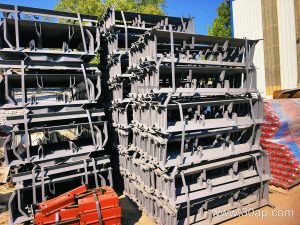
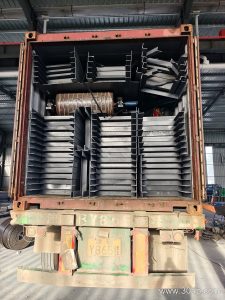
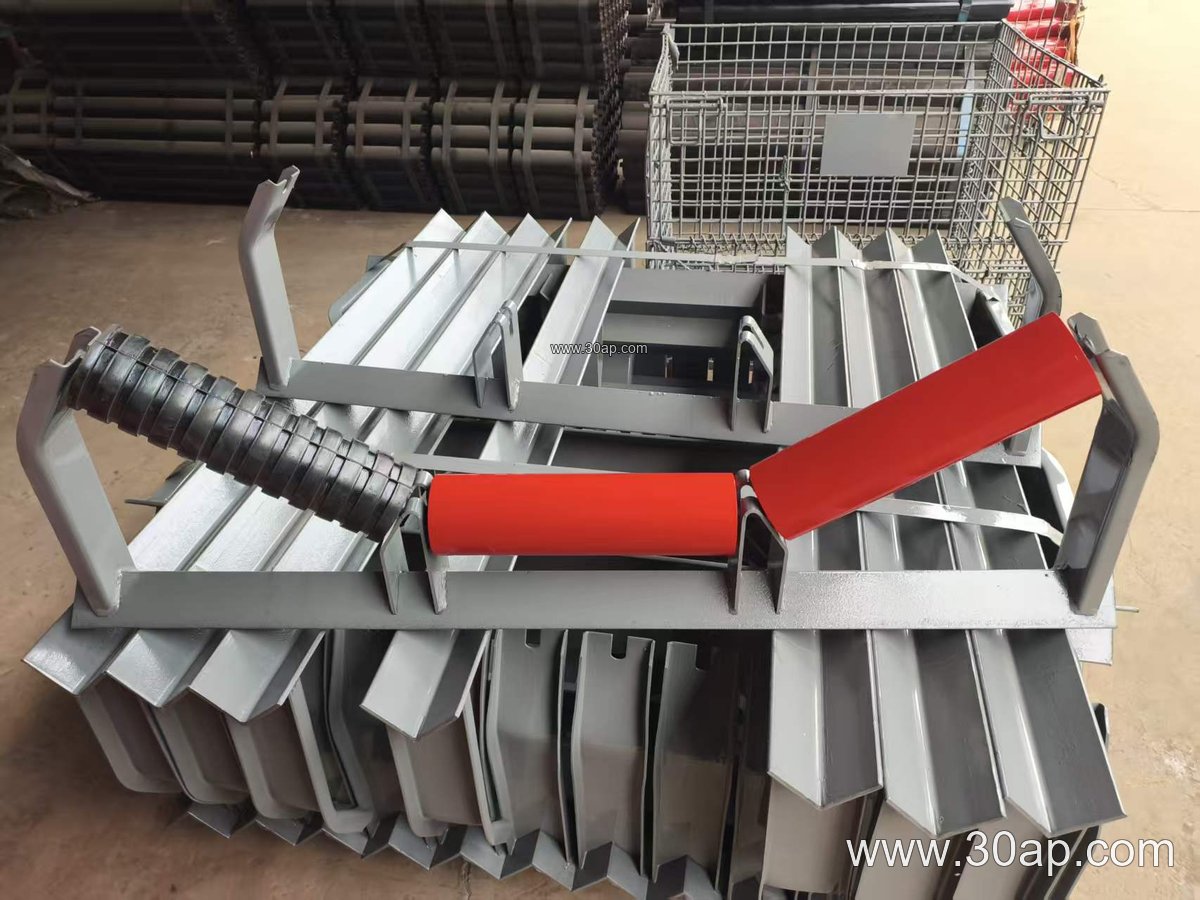
Most brackets are fabricated from angle steel, channel steel, or folded steel plate. The frame has two end plates or hooks that locate the side idler shafts, plus a centre seat for the middle roller. Mounting feet bolt to the conveyor stringers, so hole spacing and crossbeam length follow the belt width and trough angle rather than a single universal figure. A common arrangement is a B800 belt running at 35 degrees with Ø108 idlers, while a wider B1200 line at 45 degrees may use Ø133 rollers. These are typical combinations, not fixed rules, and the final geometry is set by the conveyor design.
Trough Angle and Roller Diameter Choices
Trough angles of 20, 30, 35, and 45 degrees cover most bulk handling duties. A shallow angle suits fragile or large lump material, while a deeper trough holds a larger load cross-section on high-capacity lines. Adjustable brackets let crews change the angle between these positions during commissioning or when the material changes. Roller diameters such as Ø89, Ø108, Ø133, Ø159, and Ø194 are selected against belt width, speed, and load, and a wider belt does not automatically dictate one roller size. Forward-leaning side rollers, usually around 1.5 to 2 degrees, are a separate feature used to help belt training.
| Item | Common Options |
|---|---|
| Belt width | B500, B650, B800, B1000, B1200, B1400, B1600, B1800 |
| Trough angle | 20°, 30°, 35°, 45° |
| Roller diameter | Ø89, Ø108, Ø133, Ø159, Ø194 |
| Frame material | Angle steel, channel steel, folded plate |
Where It Fits on the Conveyor
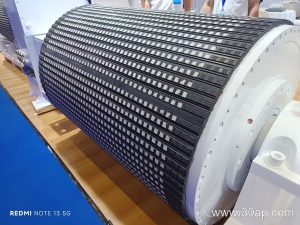
The bracket belongs to the carrying run, and it works together with the conveyor belt and the idler rollers to form the trough. On a coal mining conveyor or a power plant coal handling line, several dozen of these frames may be spaced along the same stringer. They are not the same as the return bracket under the belt, nor are they a substitute for a bend pulley or a drive pulley. A transition bracket near the head or tail is a related subtype, used to guide the belt from flat to troughed. When the belt is a heavy-duty mining conveyor belt or a flame retardant conveyor belt, the bracket still performs the same support role; the belt grade affects load and safety requirements, not the frame’s basic function.
Buyer Checklist
- Confirm belt width and required trough angle before ordering.
- Match roller shaft ends to the bracket hooks or seats.
- Check stringer hole spacing and crossbeam length against the drawing.
- Decide between fixed and adjustable frames based on how often the duty changes.
- For dusty or wet sites, confirm that the frame drains and does not trap material.
- Ask how the bracket pairs with the selected idler roller and conveyor pulley layout.
In a sand and gravel line, a crusher discharge point may need impact-resistant idlers in the same bracket, while a grain silo or fertilizer plant may prefer a lighter frame. The bracket itself is a simple steel part, but getting the angle, roller fit, and hole pattern right is what keeps a troughing conveyor running straight.