What a 1000mm Drive Pulley Does
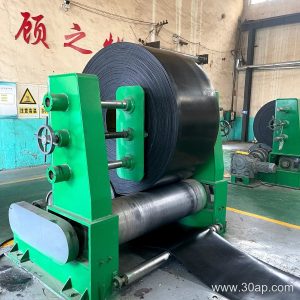
A 1000mm drive pulley is the power-transmitting drum at the head end of a belt conveyor. Its 1000mm diameter gives a large contact arc with the conveyor belt, which helps maintain traction when moving heavy bulk material. In a quarry, cement plant, or coal handling system, this drum is often the component that determines how smoothly the entire line starts, stops, and stays on track.
Unlike a tail pulley or a bend pulley, a drive pulley is connected to the gearbox and motor, so it must handle both torque and belt tension. The 1000mm diameter is a common size for medium-to-heavy duty conveyors where belt widths of around 1000mm to 1400mm are used. It is not a universal match for every belt width, but a practical reference point for engineers designing head-end drives.
Construction and Surface Options
The drum body is typically fabricated from rolled steel plate with welded end discs and a machined shaft. For a 1000mm drive pulley, the shell thickness and shaft diameter are determined by the calculated torque and radial load, not by belt width alone. Common shaft diameters for this size range include Ø120, Ø140, Ø160, and Ø180, but each project should be verified by the conveyor designer.
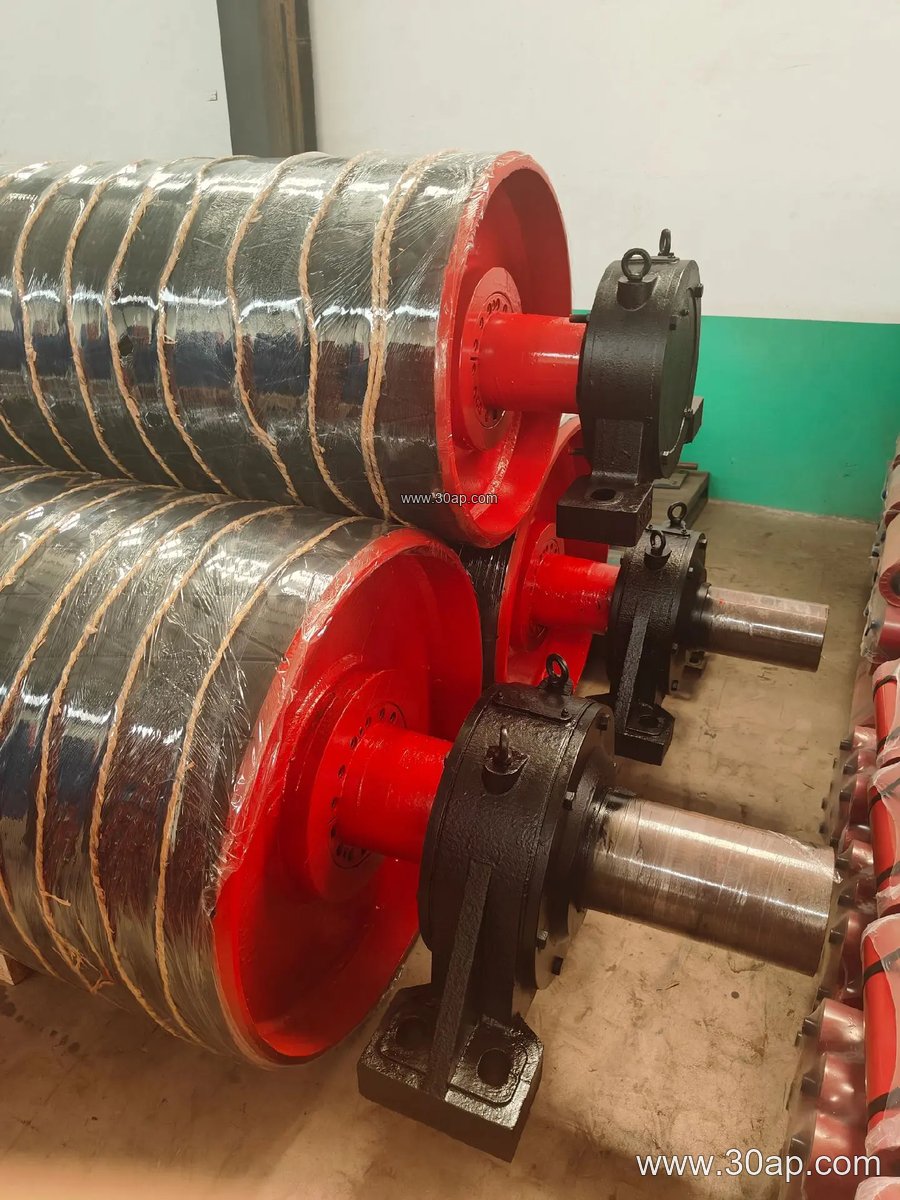
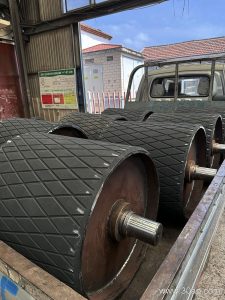
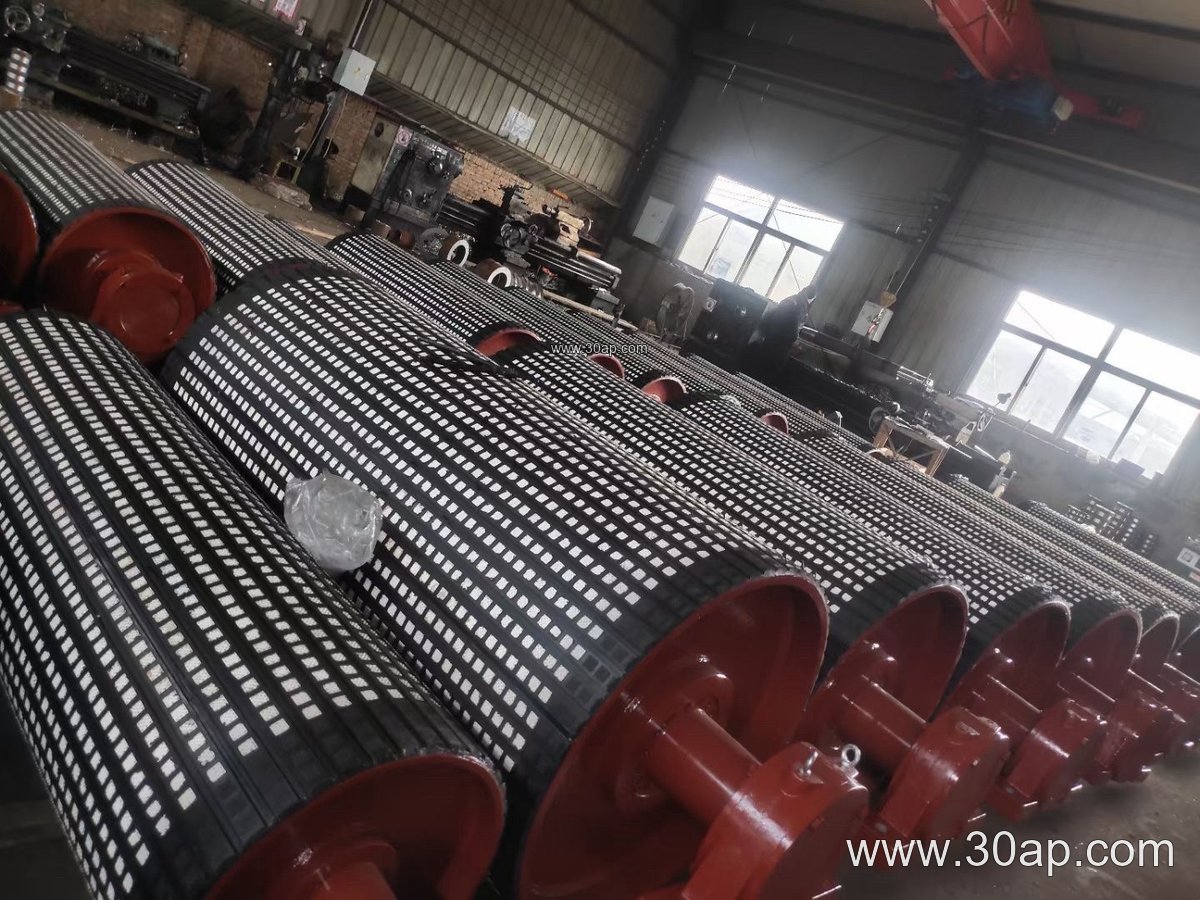
Surface treatment directly affects grip and belt life. Plain steel is used in some light-duty cases, but most drive pulleys are lagged. Rubber lagging in 8mm, 10mm, 12mm, 15mm, or 20mm thickness can be cold-bonded or hot-vulcanized. Diamond groove lagging improves water shedding in wet conditions, while ceramic lagging offers high abrasion resistance for crusher discharge and ore handling. The pulley face width is usually slightly wider than the belt, for example about 1150mm for a B1000 belt or about 1400mm for a B1200 belt.
Where It Fits in the Plant
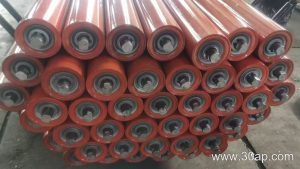
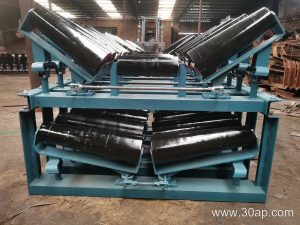
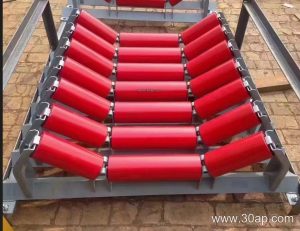
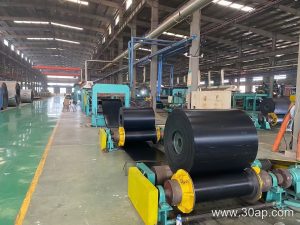
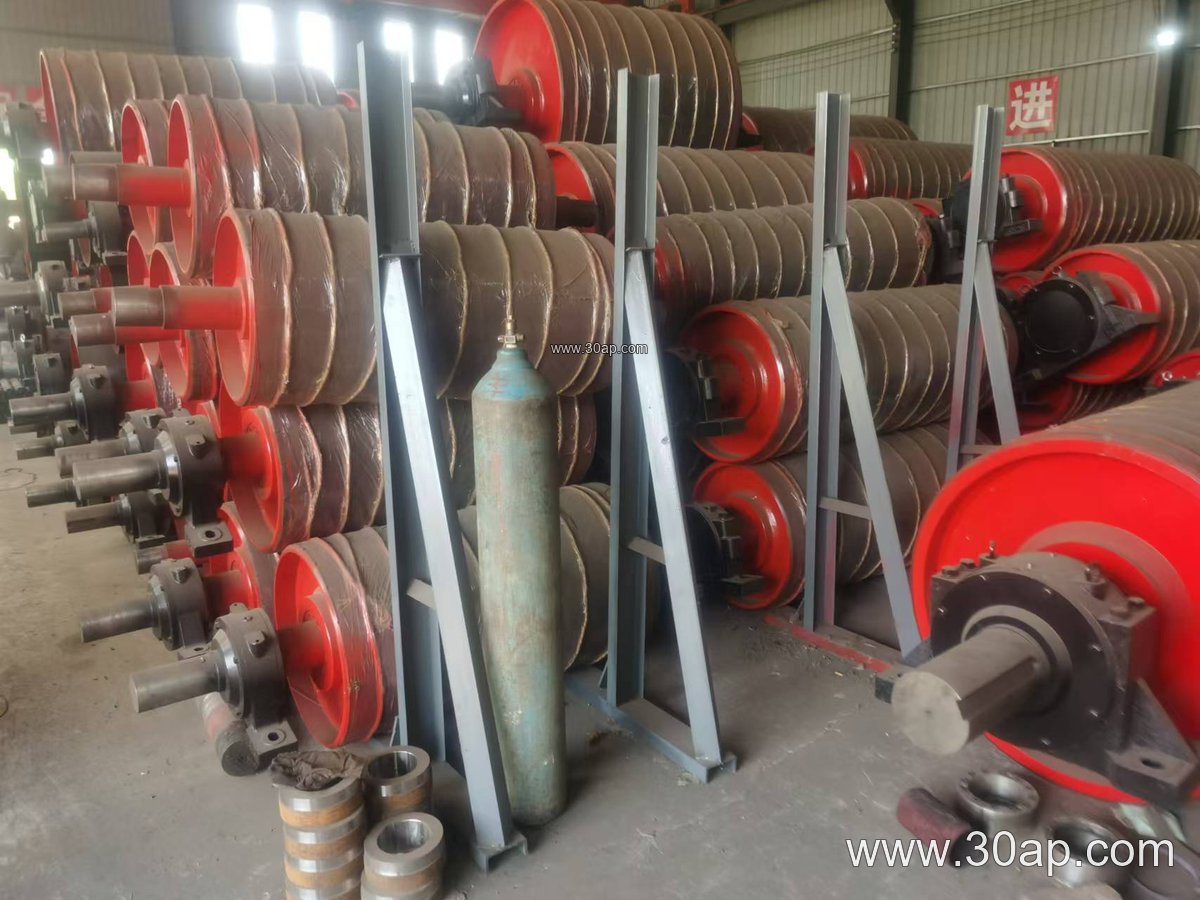
You will find a 1000mm drive pulley in primary and secondary crushing circuits, aggregate transfer points, and power plant coal conveyors. In a sand and gravel line, it may drive the main discharge belt after screening. In a cement plant, it can be the head drum on clinker or raw material conveyors. The drum works together with conveyor idlers, conveyor brackets, and the belt itself, so alignment and tension control are just as important as the pulley specification.
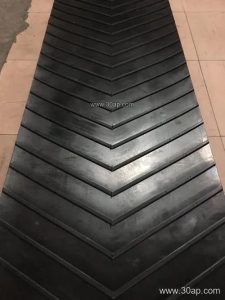
For abrasive applications, pairing the drive pulley with an abrasion resistant conveyor belt reduces slip and wear. In underground coal mining, a flame retardant conveyor belt is often required, and the drive pulley lagging should be selected to match the fire safety strategy of the whole system. The drive pulley is not a substitute for a tail or bend pulley; each position has a different load profile and design focus.
Key Parameters Buyers Should Confirm
When specifying a 1000mm drive pulley, buyers should provide the belt width, calculated torque, shaft diameter, lagging type, and bearing arrangement. The table below shows common reference combinations, but these are not fixed rules. A B1000 belt does not automatically require a Ø1000 drum, and a Ø1000 drum can be used with other belt widths depending on the conveyor design.
| Reference Item | Common Range or Example |
|---|---|
| Pulley diameter | Ø1000 mm |
| Belt width examples | B800, B1000, B1200, B1400 |
| Pulley face width | About 950mm for B800; about 1150mm for B1000; about 1400mm for B1200 |
| Lagging thickness | 8, 10, 12, 15, 20 mm |
| Lagging pattern | Plain, diamond, herringbone, ceramic |
| Shaft diameter examples | Ø120, Ø140, Ø160, Ø180 |
| Bearing type | Spherical roller bearing, pillow block or flange |
Also confirm the belt speed, starting frequency, and environmental conditions. A drum that is correctly sized for steady operation may need additional lagging or a larger shaft if the conveyor starts loaded frequently. For high-temperature materials such as cement clinker, a heat resistant conveyor belt and a suitable lagging compound should be considered together.
Maintenance and Selection Notes
Check lagging wear regularly, especially on the drive pulley where slip generates heat. Worn diamond grooves or glazed rubber reduce friction and can lead to belt tracking problems. Keep the pulley clean and verify that the conveyor belt is not over-tensioned. When replacing a 1000mm drive pulley, match the shaft keyway, bearing centers, and lagging profile to the original design, or ask the conveyor engineer to recalculate the drive.
For more information on related conveyor components such as conveyor pulley, Rubber Conveyor Belt, and conveyor idler, review the full product range and confirm specifications with your supplier. A well-matched drive pulley keeps the belt running true and protects the entire conveyor system from unnecessary downtime.