What a Large-Diameter Conveyor Pulley Does
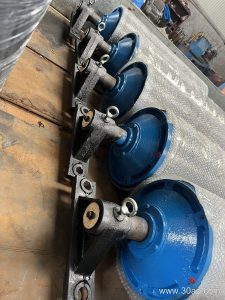
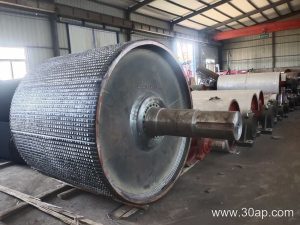
A large-diameter conveyor pulley is the main rotating component that drives or redirects a conveyor belt in heavy-duty bulk handling. Its larger shell diameter reduces belt bending stress, improves traction, and extends the service life of the conveyor belt. While standard pulleys may range from Ø200 to Ø630, large-diameter units typically start around Ø800 and can reach Ø1800 or more, depending on the application. This article focuses on the drive, tail, and bend positions where a large-diameter pulley is most often specified.
Construction and Surface Options
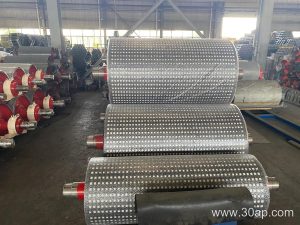
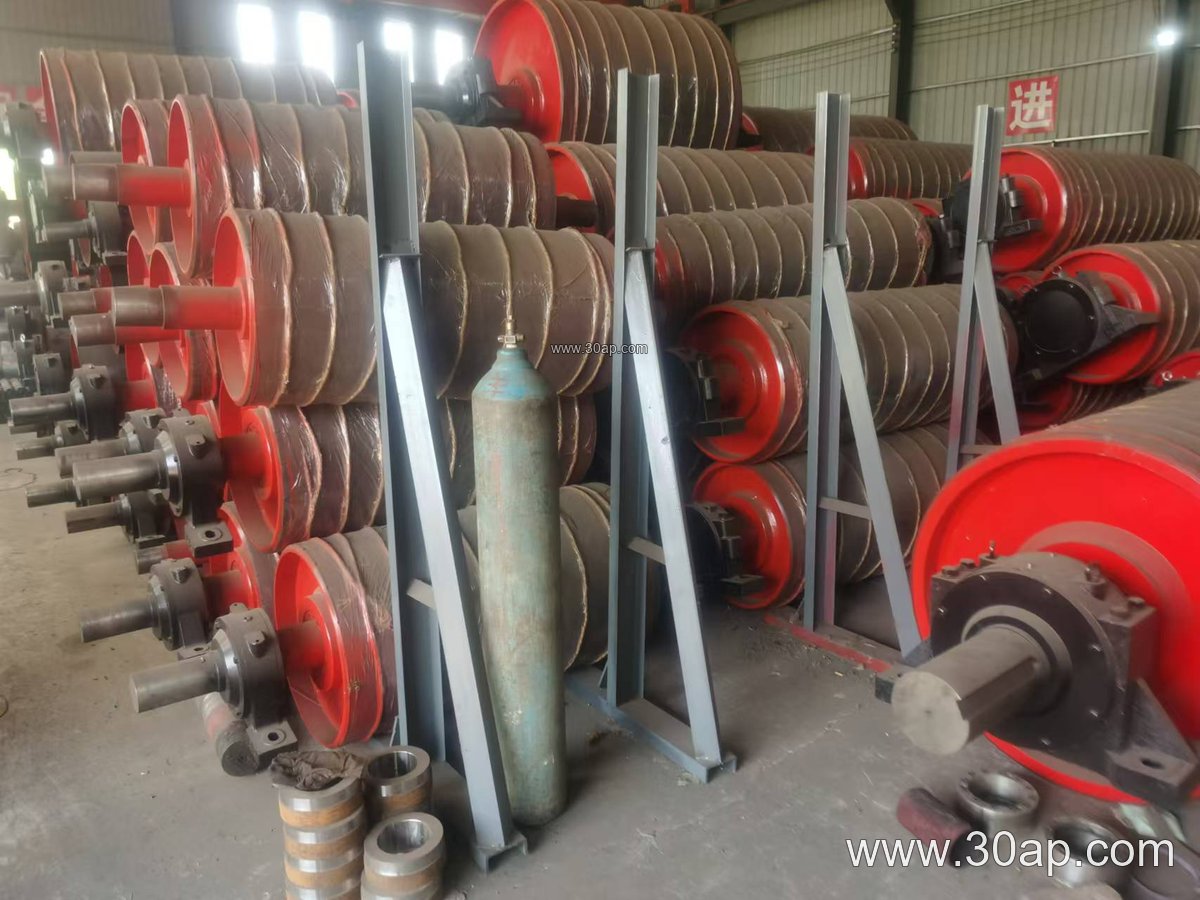
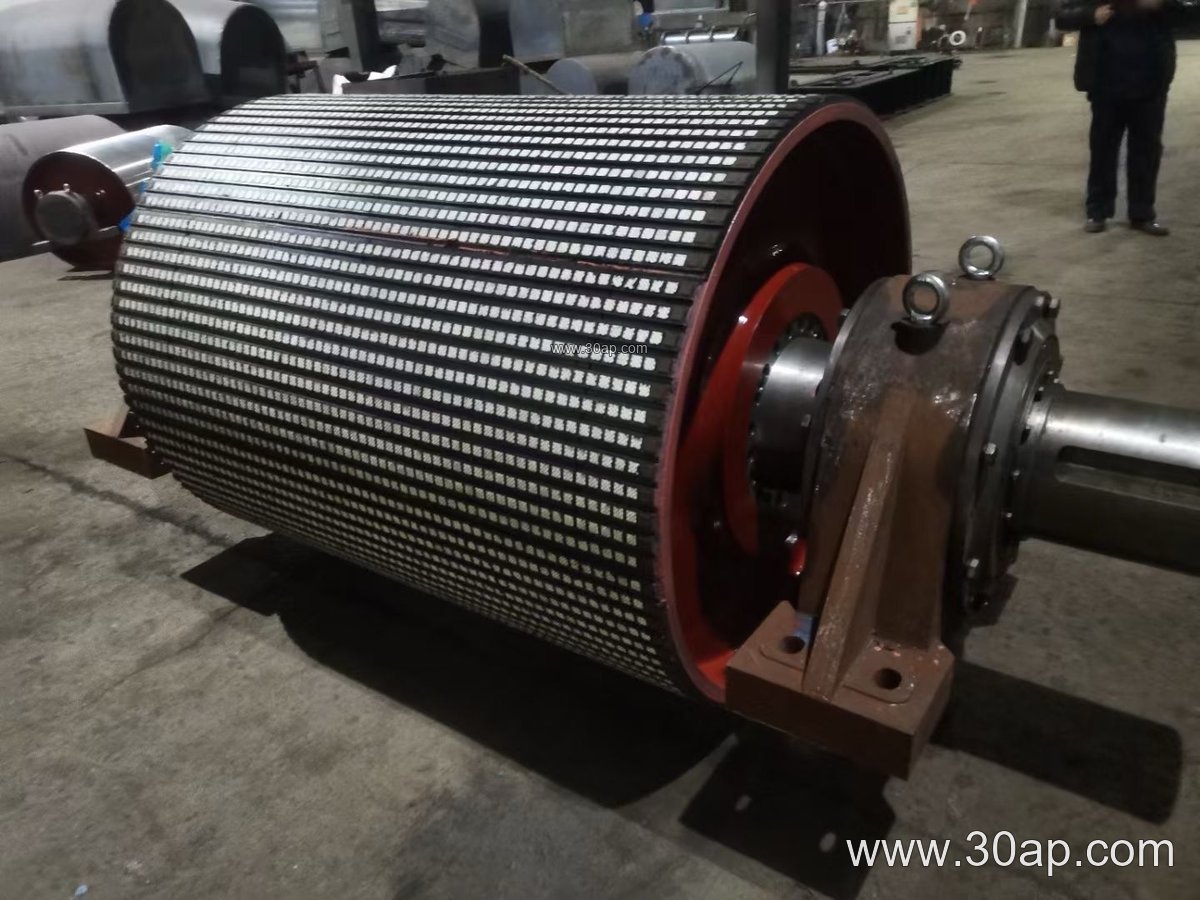
These pulleys are built with a robust shell, welded end discs, and a heavy shaft. Common shaft diameters include Ø100, Ø120, Ø140, Ø160, Ø180, and Ø200, selected by torque and load rather than belt width alone. The shell surface is often left plain or covered with rubber lagging to increase friction. Lagging options include hot vulcanized rubber, cold-bonded rubber, diamond pattern, herringbone, and ceramic lagging, with thicknesses of 8, 10, 12, 15, or 20 mm. For abrasive conditions such as limestone or iron ore, ceramic lagging offers excellent wear resistance.
Where Large-Diameter Pulleys Are Used
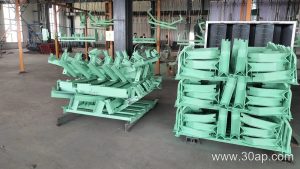
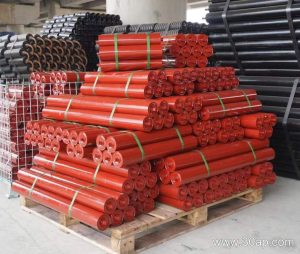
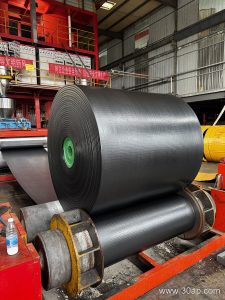
You will find these pulleys in primary crushing circuits at a quarry, in coal handling systems at a power plant, and in cement plant clinker transport. They are also common in port bulk terminals, steel sinter plants, and tunnel muck removal. In these settings, the pulley works together with the conveyor belt, idler rollers, and conveyor brackets to keep material moving efficiently. A large-diameter drive pulley at the head end provides the grip needed for long, inclined conveyors, while a large tail pulley reduces belt flexing at the loading point.
Key Dimensions and Common Combinations
Face width usually exceeds belt width to allow proper belt tracking. For reference, B800 often pairs with a face width around 950 mm, and B1200 with about 1400 mm. Diameter and belt width are not fixed pairs; a B1000 conveyor might use Ø800 or Ø1000 depending on tension and space. Typical large-diameter combinations include B800 × Ø500, B1200 × Ø1000, and B1400 × Ø800. Always confirm the actual shaft size and bearing centers with the conveyor design.
Reference Data for Large-Diameter Pulleys
| Belt Width (B) | Typical Face Width | Common Diameter Range | Typical Shaft Diameter Range |
|---|---|---|---|
| B800 | ~950 mm | Ø500–Ø800 | Ø80–Ø120 |
| B1000 | ~1150 mm | Ø630–Ø1000 | Ø100–Ø140 |
| B1200 | ~1400 mm | Ø800–Ø1250 | Ø120–Ø160 |
| B1400 | ~1600 mm | Ø1000–Ø1400 | Ø140–Ø180 |
| B1600 | ~1800 mm | Ø1250–Ø1600 | Ø160–Ø200 |
These values are for orientation only; final dimensions are determined by the conveyor’s tension, load, and available space. Do not assume one belt width requires one specific pulley diameter.
Buyer Checklist
- Confirm the pulley’s position: drive, tail, or bend. A bend pulley (also called a redirect pulley) serves a different purpose than a drive pulley and cannot be interchanged.
- Specify the required lagging type and thickness based on material abrasiveness and needed friction.
- Provide belt width, belt tension, and shaft load so the manufacturer can size the shaft and bearings correctly.
- Check that the pulley face width and diameter fit the conveyor frame and that the conveyor bracket matches the bearing housing.
- Consider maintenance access for lagging replacement and bearing lubrication.
Choosing the right large-diameter conveyor pulley involves balancing diameter, lagging, and shaft strength with the realities of your site. Whether you run a sand and gravel line or a fertilizer plant, matching the pulley to the belt and load will keep your conveyor running smoothly.