What a Belt Conveyor Bracket Does
A belt conveyor bracket is the structural component that holds idler rollers in place along a conveyor frame. It sets the position, angle, and spacing of the rollers that support the conveyor belt, and it transfers the load from the belt and material down into the main frame. In a quarry, a coal preparation plant, or a cement plant, these brackets are easy to overlook until a roller runs out of alignment or a bracket loosens under vibration.
The bracket is not a roller and not a pulley. It is the mounting interface between them and the conveyor structure. In practice, a belt conveyor bracket may also be called a conveyor idler support bracket or idler frame bracket, and those names refer to the same product.
Construction and Common Forms
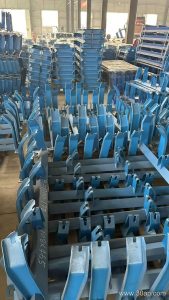
Most brackets are fabricated from angle steel, channel steel, or folded steel plate. The choice depends on load, belt width, and the environment. A dusty coal handling line may favor a heavier folded plate design, while a lighter sand and gravel line may use angle steel brackets.
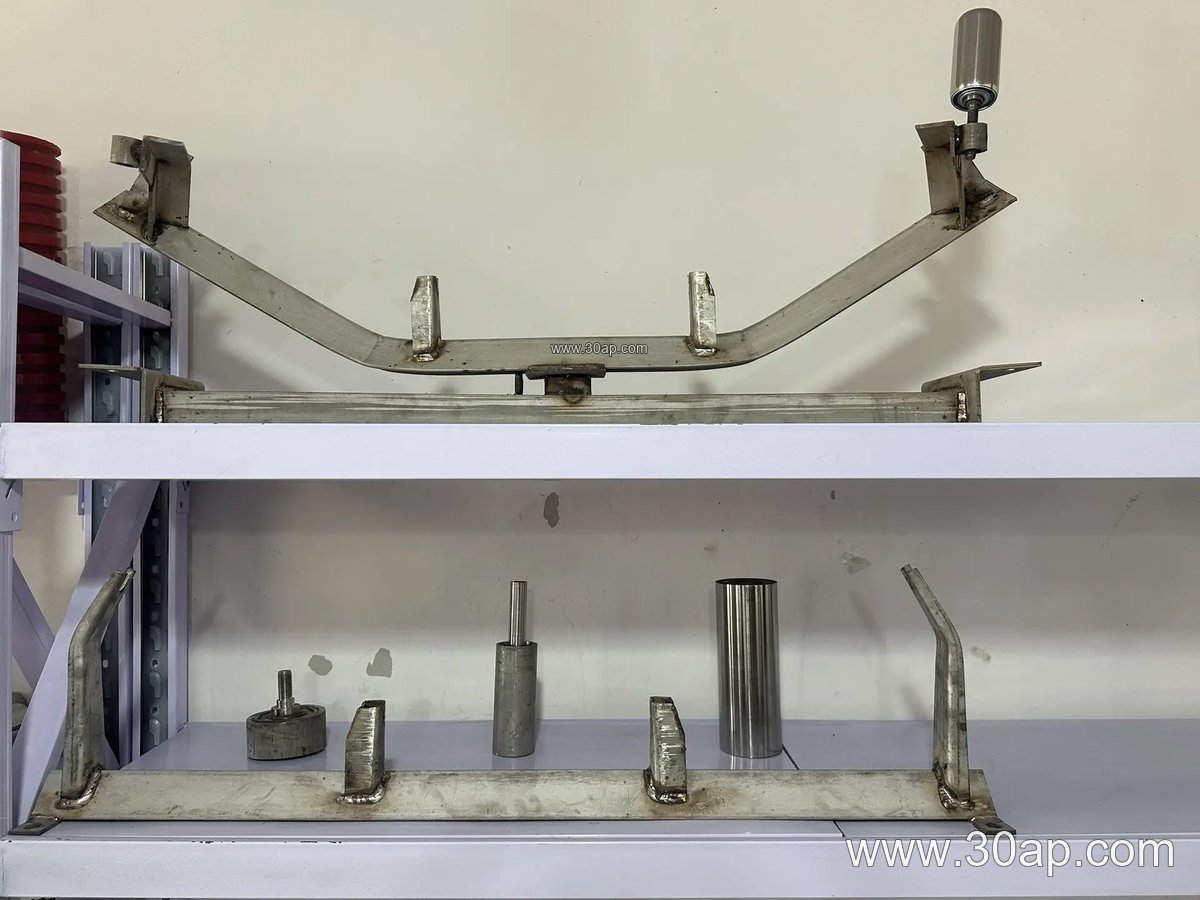
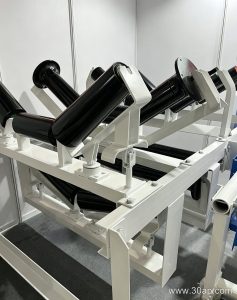
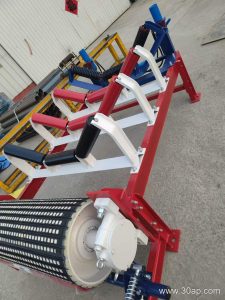
The main forms include troughing brackets, return brackets, impact brackets, self-aligning brackets, and adjustable brackets. Troughing brackets support the carrying side and set the trough angle. Return brackets support the belt on its way back. Impact brackets sit under loading points where material falls onto the belt. Adjustable brackets allow the trough angle to be changed on site.
- Troughing bracket: carries the loaded belt, usually in a three-roller arrangement
- Transition bracket: eases the belt from flat to troughed profile near pulleys
- Return bracket: supports the empty belt, flat or V-shaped
- Impact bracket: reinforced for loading zones in crushing and screening plants
- Self-aligning bracket: helps correct belt tracking on long runs
How Belt Width, Trough Angle, and Roller Diameter Relate
Bracket dimensions follow the conveyor design, not a single fixed rule. Belt width, trough angle, and roller diameter are usually selected together, and the bracket’s mounting hole spacing and crossbeam length change with them. A B800 belt at 35 degrees with Ø108 rollers is a common combination, but it is not the only one. A B1200 line at 45 degrees with Ø133 rollers, or a B650 line at 30 degrees with Ø89 rollers, may suit different duties.
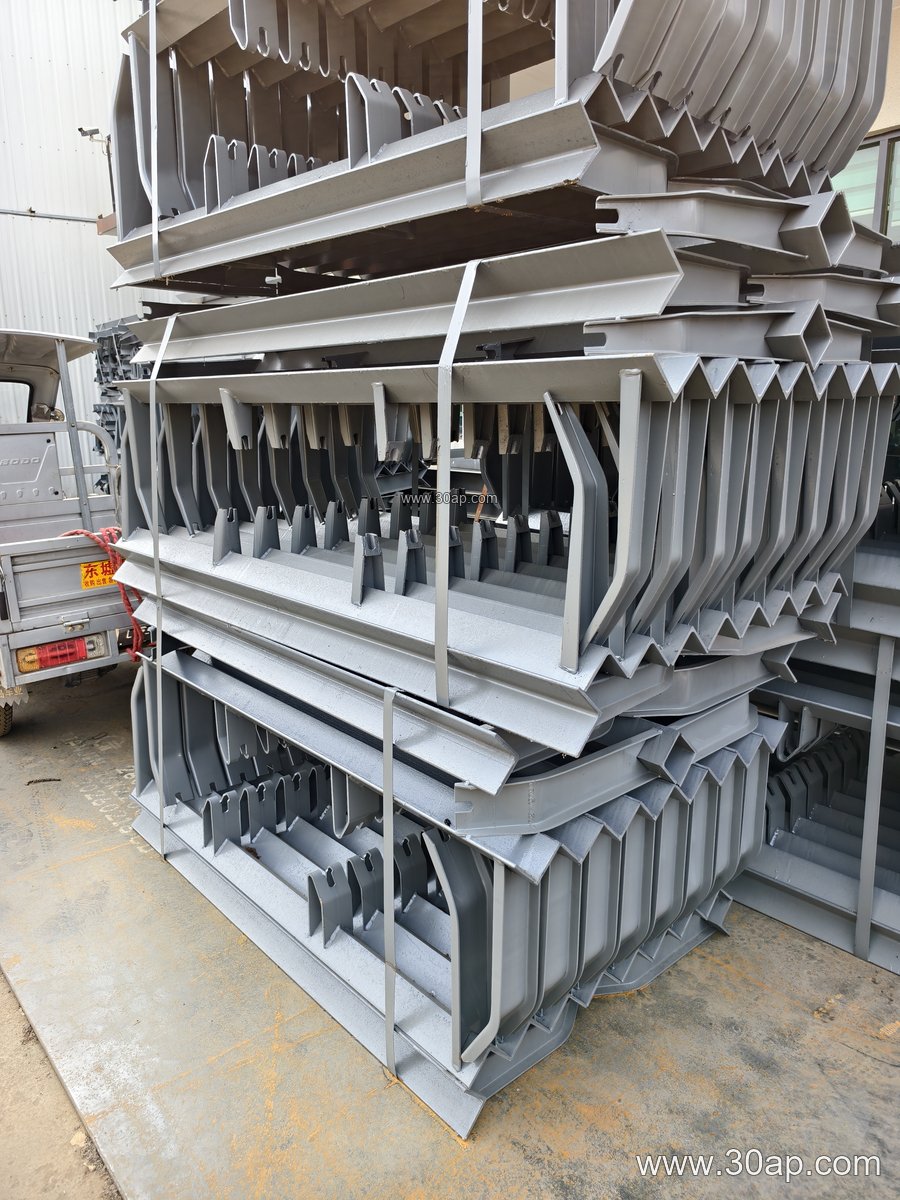
Common belt widths in bulk handling include B500, B650, B800, B1000, B1200, B1400, B1600, B1800, B2000, and B2200. Trough angles are often 20, 30, 35, or 45 degrees. Adjustable brackets can move between these angles. Forward-tilted brackets commonly use about 1.5 to 2 degrees of lead to help belt tracking. Roller diameters such as Ø89, Ø108, Ø133, Ø159, and Ø194 are typical references, and final selection should follow the conveyor design.
Where These Brackets Are Used
In a limestone mine or aggregate crushing line, troughing and impact brackets carry the belt through loading and transfer points. In a power plant coal yard, return brackets and self-aligning brackets keep the empty strand stable over long distances. In a cement plant, brackets must tolerate fine abrasive dust, so smooth surfaces and secure fastening matter.
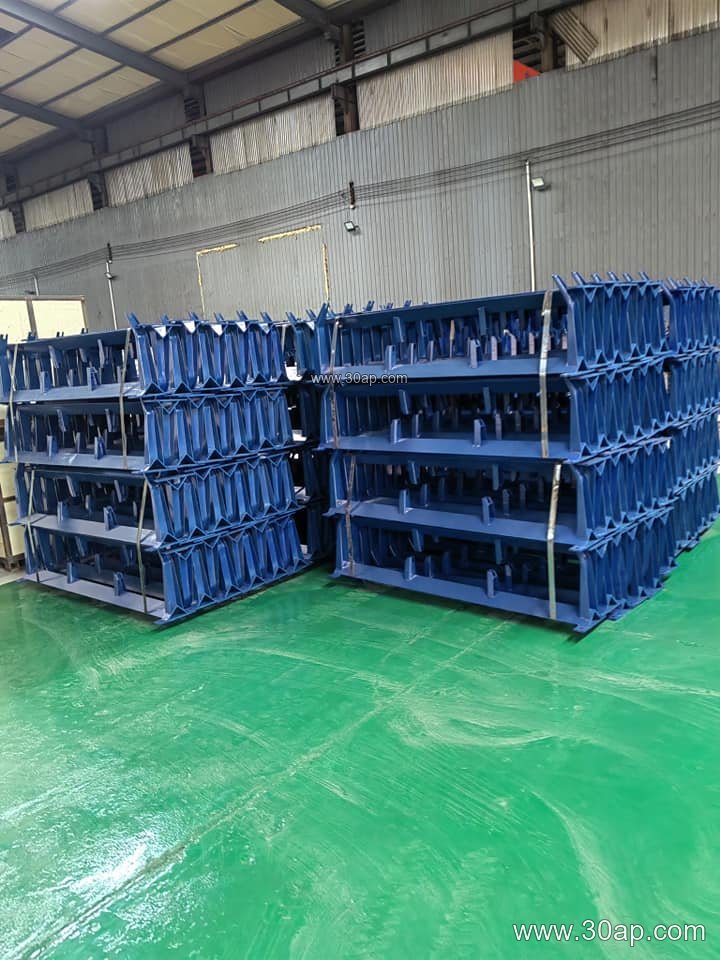
Brackets also appear in fertilizer plants, grain silos, and tunnel spoil handling. In each case, the bracket works with the conveyor belt, idler roller, and conveyor pulley to keep the belt supported and aligned.
Buyer Checklist
Before ordering, confirm the belt width, trough angle, roller diameter, and mounting hole pattern. Check whether the frame uses bolted or welded attachment and whether the bracket must be fixed or adjustable. Ask about material thickness and surface treatment for the site conditions. Verify that the bracket matches the idler roller end type, and confirm crossbeam length against the actual frame drawing.
For high-impact zones, specify impact brackets rather than standard troughing brackets. For long conveyors, consider self-aligning or forward-tilted designs to reduce belt tracking problems. Keep spare brackets on hand for wear-prone loading areas, and inspect fasteners during routine idler roller checks.
Reference Data
| Item | Common Reference Values |
|---|---|
| Belt width | B500, B650, B800, B1000, B1200, B1400, B1600, B1800, B2000, B2200 |
| Trough angle | 20°, 30°, 35°, 45°; adjustable types cover a range |
| Roller diameter | Ø89, Ø108, Ø133, Ø159, Ø194 |
| Forward tilt | Typically about 1.5° to 2° |
| Materials | Angle steel, channel steel, folded steel plate |
These values are references for discussion, not fixed supply promises. Final bracket dimensions, hole spacing, and crossbeam length should be confirmed against the conveyor design drawing.