What a Rubber Lagged Pulley Does on a Conveyor
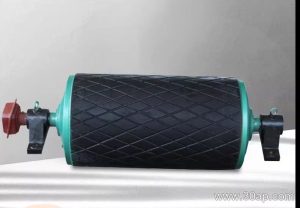
A rubber lagged pulley is a conveyor pulley whose shell is covered with a rubber layer, bonded or vulcanized to the drum surface. This covering is usually called lagging. Its job is straightforward: raise the friction between the pulley shell and the conveyor belt so the belt can be driven or guided without slipping. In a quarry, a coal preparation plant or a cement clinker line, a slipping drive pulley can stop the whole material flow, and lagging is one of the simplest ways to reduce that risk.
The same component may appear in project documents as a rubber-coated pulley, a lagged drum pulley or a rubber-covered conveyor pulley. These names describe the same product. The lagging itself is not a separate accessory bolted on later in most designs; it is part of the pulley’s working surface.
Construction and Surface Forms
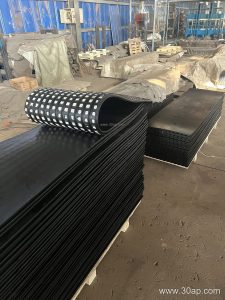
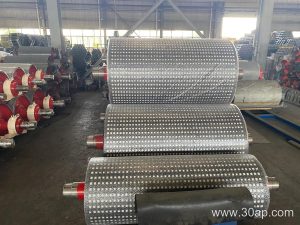
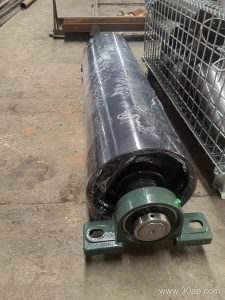
A typical unit is built from a steel shell, end discs, a shaft and bearing housings, with the rubber layer applied to the shell. The rubber is usually applied by hot vulcanization or cold bonding, and the surface can be flat or patterned.
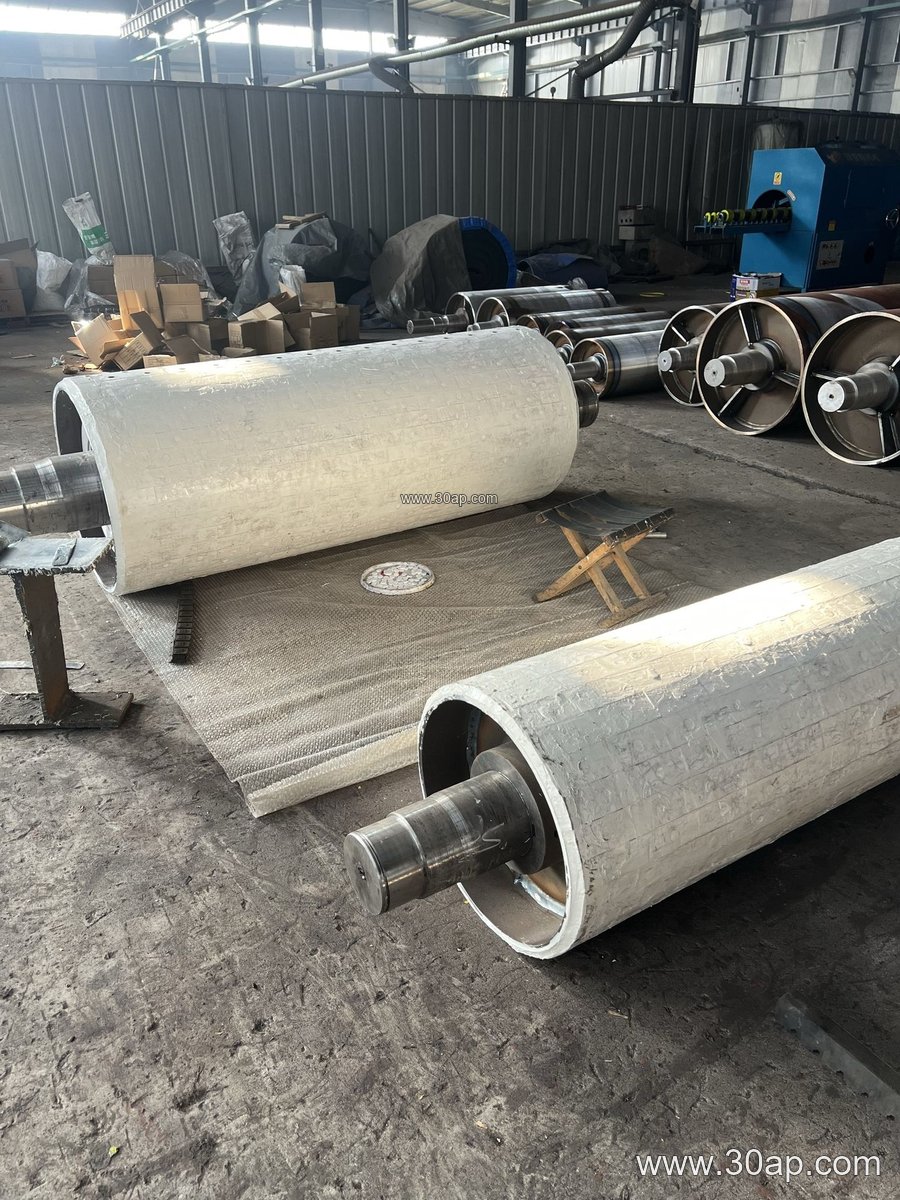
- Flat rubber lagging gives uniform contact and suits many general conveying duties.
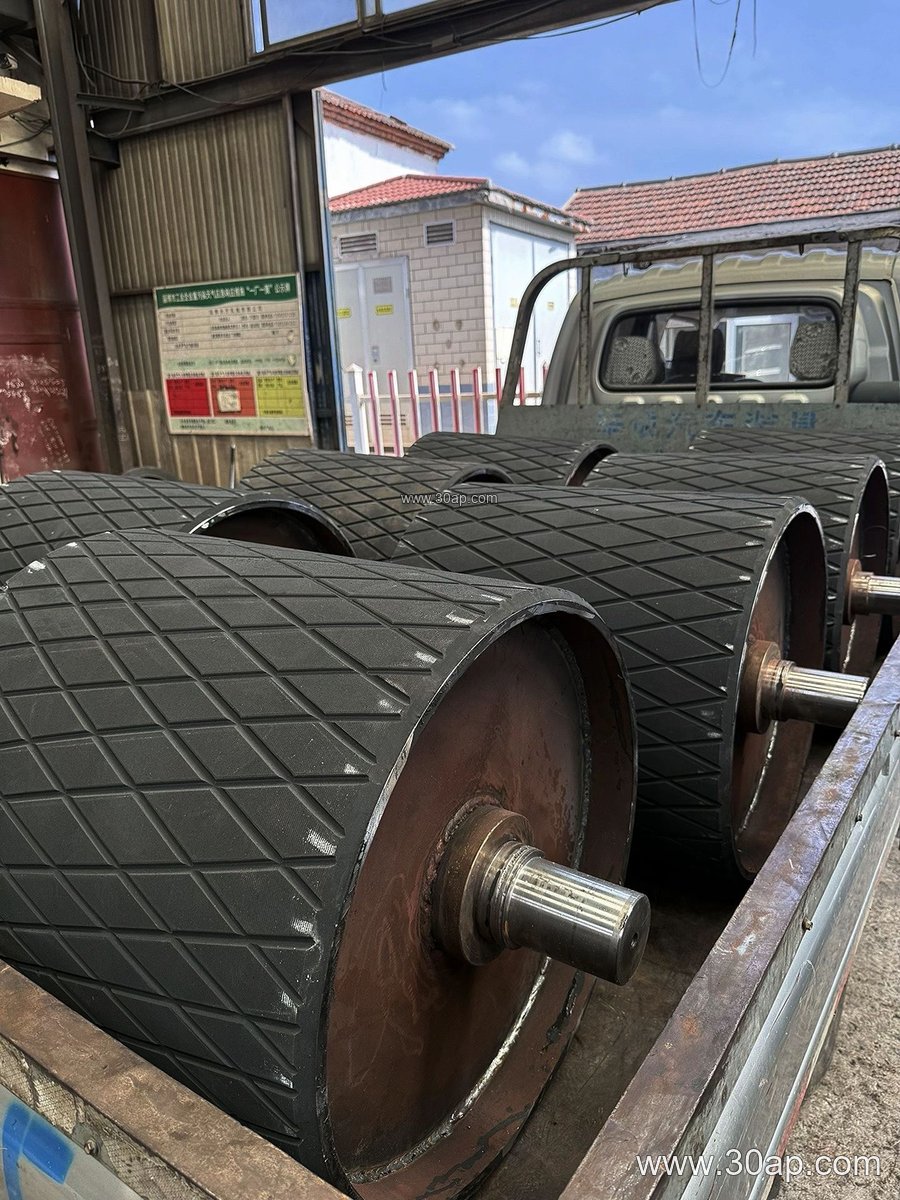
- Diamond lagging helps water and fine dust escape from the contact zone.
- Herringbone lagging offers directional grip and is often chosen where both traction and drainage matter.
- Ceramic lagging combines rubber with embedded ceramic tiles for very abrasive or wet conditions.
Common lagging thickness values are 8, 10, 12, 15 and 20 mm. Thicker rubber does not automatically mean better performance; the load, belt tension and pulley position should guide the choice.
Drive, Tail and Bend Positions Are Not the Same
Where the pulley sits in the conveyor line changes what the lagging must do. A drive pulley or head pulley transmits torque to the belt and needs reliable grip. A tail pulley at the loading end mainly supports and returns the belt, and lagging there is often chosen for wear protection rather than traction. A bend pulley, also called a snub pulley, changes belt direction and may see high local pressure.
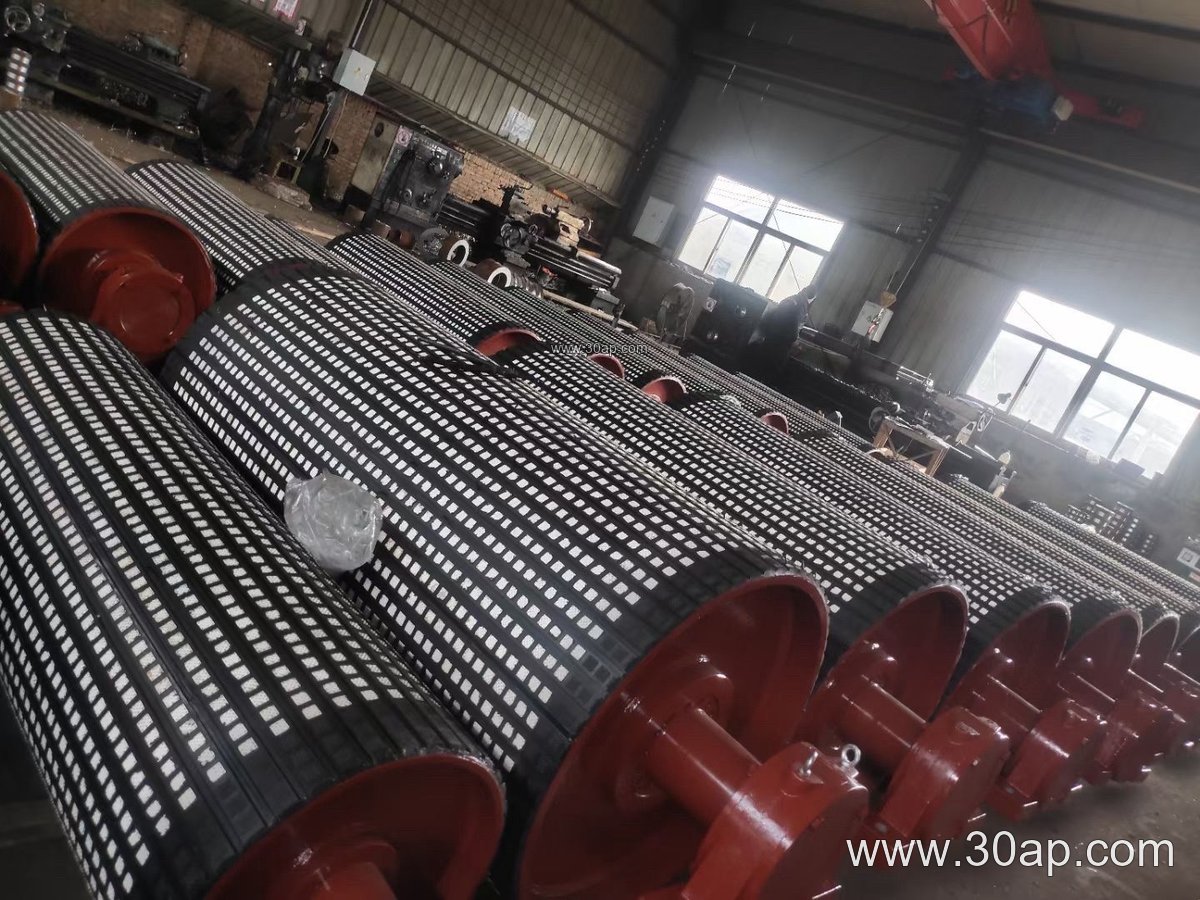
These roles are not interchangeable. A tail pulley should not be treated as a substitute for a drive pulley, and a bend pulley has different duties from either. When maintenance staff replace a failed unit, matching the position and function matters as much as matching the diameter.
Typical Duty in Mining and Heavy Industry
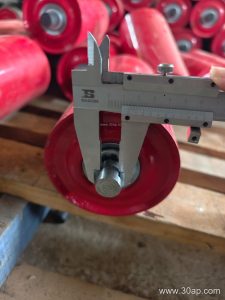
In an iron ore or copper mine, a rubber lagged pulley on the main haulage conveyor faces abrasive dust and frequent starts under load. In a power plant coal handling system, wet coal and wash-down water make grip a real concern, and diamond or grooved lagging may be preferred. Aggregate plants and crushing and screening circuits often run many conveyors with idler rollers and conveyor brackets, and the drive and bend pulleys there must cope with grit and impact.
The same logic applies in a fertilizer plant, a grain silo or a tunnel spoil line: the pulley is only one part of the conveyor, but its surface determines how well the belt tracks and how much slip occurs.
Sizes and How They Are Expressed
A rubber lagged pulley is usually specified by belt width, shell diameter, face width and shaft diameter. Face width is normally a little wider than the belt. The table below shows common reference combinations; actual sizes are set by conveyor design.
| Belt width | Typical face width | Common diameter range |
|---|---|---|
| B500 | about 600 mm | Ø250 to Ø400 |
| B650 | about 750 mm | Ø315 to Ø500 |
| B800 | about 950 mm | Ø400 to Ø630 |
| B1000 | about 1150 mm | Ø500 to Ø800 |
| B1200 | about 1400 mm | Ø630 to Ø1000 |
| B1400 | about 1600 mm | Ø800 to Ø1250 |
Common shaft diameters include Ø80, Ø100, Ø120, Ø140, Ø160 and Ø180, but shaft size must be calculated from torque and bearing load, not copied from belt width alone. A B800 conveyor might use a Ø500 pulley in one plant and a larger drum in another, depending on belt speed, tension and available space.
What Buyers Should Check Before Ordering
Start with the conveyor layout drawing and confirm the pulley’s position, belt width, required face width and shaft dimensions. Ask about the lagging method and surface pattern, and confirm the rubber thickness and hardness range. Check whether the pulley will run wet, dusty or abrasive, because that affects both lagging choice and wear life.
Also confirm bearing type, housing style and balancing requirements, and make sure the pulley will fit the existing conveyor bracket and take-up arrangement. For a replacement unit, measure the old pulley rather than assuming a standard size. A well-matched rubber lagged pulley keeps the conveyor belt running with less slip, less spillage and fewer unplanned stops.