What a Cast-Welded Pulley Is
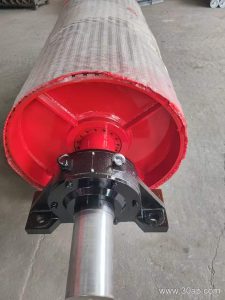
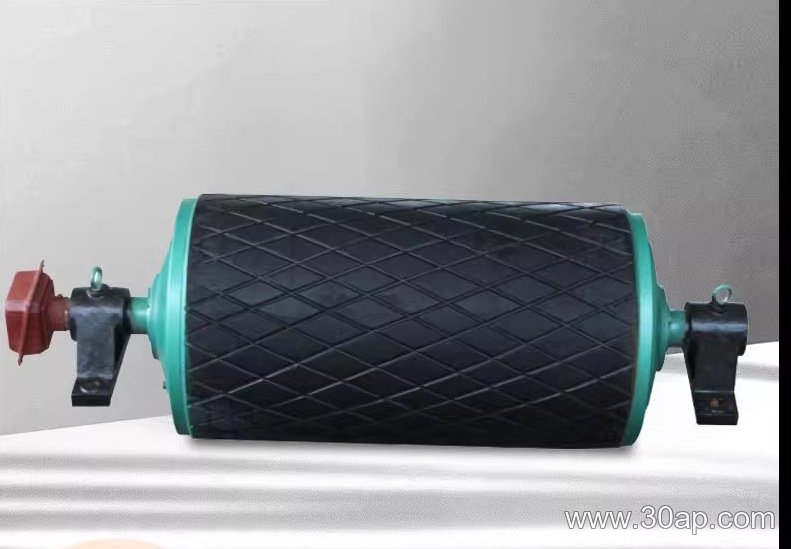
A cast-welded pulley is a conveyor pulley built by combining cast steel or cast iron end discs with a rolled steel shell and a fabricated hub assembly. Instead of machining the entire drum from one billet, the manufacturer casts the end plates with integral hubs or spoke patterns, then welds them to the cylindrical shell. This hybrid approach gives the pulley the wear resistance and dimensional stability of a casting at the contact points, while keeping the overall weight and cost lower than a fully cast drum. In everyday plant language it is simply called a cast-welded drum or cast-welded conveyor pulley.
The result is a component that sits at a head, tail, tension or bend position and carries the conveyor belt around its circumference. It is not the same thing as a drive pulley or a tail pulley by definition; those are functional roles, and a cast-welded unit can serve in any of them depending on where it is installed.
How It Is Built
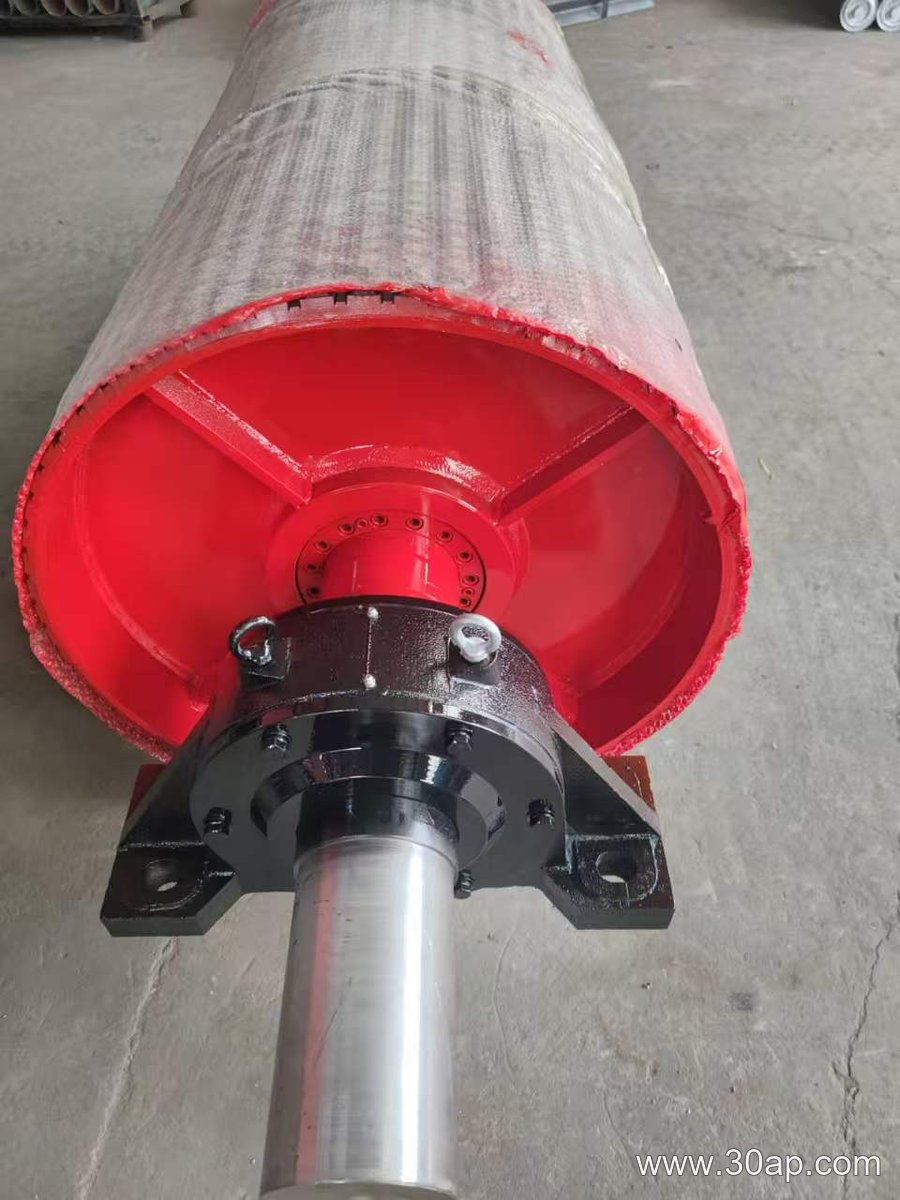
Production usually starts with the shell, which is rolled from steel plate and longitudinally welded. The cast end discs are then fitted and welded to both ends. Because the discs are cast, the hub bore, keyway and any spoke geometry can be formed close to final shape, which reduces machining time on large diameters. After welding, the pulley is stress-relieved, machined on the faces and bore, balanced, and finally fitted with a shaft and bearing housings.
- Cast end discs with integrated hubs
- Rolled and welded cylindrical shell
- Machined bore, keyway and face
- Dynamic balancing before assembly
- Optional lagging applied after machining
Surface treatment is a separate decision. A cast-welded pulley may be supplied plain, or with cast rubber, cold-bonded rubber, hot-vulcanized rubber, diamond grooving, herringbone grooving, ceramic tiles or a flat rubber sheet. Lagging thickness commonly ranges from 8 mm to 20 mm depending on duty. The choice affects grip, belt tracking and how quickly the surface can be replaced in the field.
Where It Fits in a Conveyor
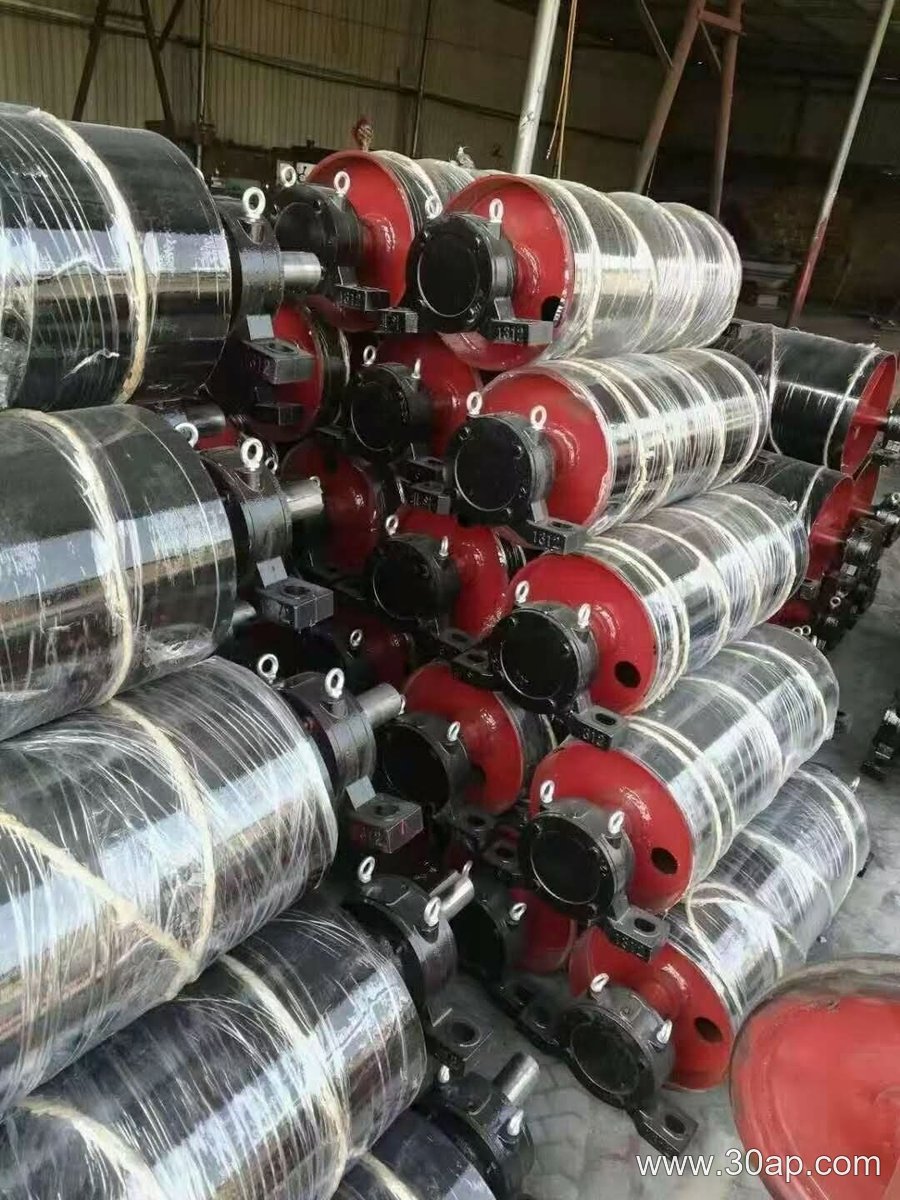
These pulleys appear in bulk handling circuits where shock loads and abrasive dust are normal. A quarry or limestone crushing line often uses them at the head and tail of a belt feeder, while a coal preparation plant may install them as tension or bend pulleys in a take-up tower. In a cement plant they can be found on clinker and raw material belts, and in a port bulk terminal they handle ship-loading and stockyard conveyors. The common thread is a need for a robust drum that resists deformation under high belt tension without the weight penalty of a solid casting.
When a cast-welded pulley is used as a drive pulley, the lagged surface transmits torque to the conveyor belt. When it is used as a tail or bend pulley, the same body simply guides the belt and maintains alignment. The function changes, but the construction remains.
Matching Belt Width and Diameter
Buyers often ask how to pair a pulley with a belt width. The shell face is normally wider than the belt, so a B800 belt typically runs on a face around 950 mm, and a B1200 belt on a face near 1400 mm. Diameter is not fixed by belt width alone. A B800 system might use a Ø500 drum in a light duty section, while a B1200 conveyor could use Ø1000 in a high-tension head position. Common diameters include Ø200, Ø250, Ø315, Ø400, Ø500, Ø630, Ø800, Ø1000, Ø1250 and larger, but the correct size comes from belt tension, wrap angle, shaft load and available space.
Shaft diameter is determined by torque and bending load, not by belt width. A Ø120 shaft may suit one B1000 application, while another B1000 pulley may require Ø160 because of higher tension and longer unsupported span. Do not assume a fixed shaft size from the belt width alone.
What to Check Before Ordering
- Confirm the functional position: head, tail, tension, bend or snub.
- Specify belt width and required face width.
- State the calculated shaft load and torque so the shaft and bearing size can be verified.
- Choose lagging type and thickness for the actual material and moisture conditions.
- Check whether a conveyor bracket or bearing housing style matches the existing frame.
- Ask for balancing grade and runout tolerances if the pulley will run at higher speed.
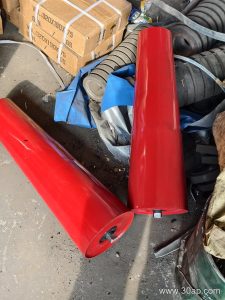
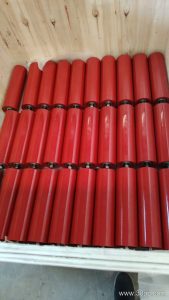
A cast-welded pulley is often a practical middle ground between a fabricated drum and a fully cast one. It offers good structural rigidity, repairable welds, and a surface that can be re-lagged. As with any conveyor pulley, the final selection should follow the design calculations for the specific conveyor, not a generic size chart. The idler roller and conveyor bracket around it also need to be compatible, because the pulley does not work in isolation.