What a V-Type Idler Bracket Does
A V-Type Idler Bracket is the steel support that holds two idler rollers in a shallow V under the return strand of a conveyor belt. Because the two rollers sit at an angle rather than flat, the belt rests in a natural trough that centres the belt as it travels. This bracket is part of the return-side support family, and it is often chosen where spillage, mistracking or belt wander causes trouble on the empty run.
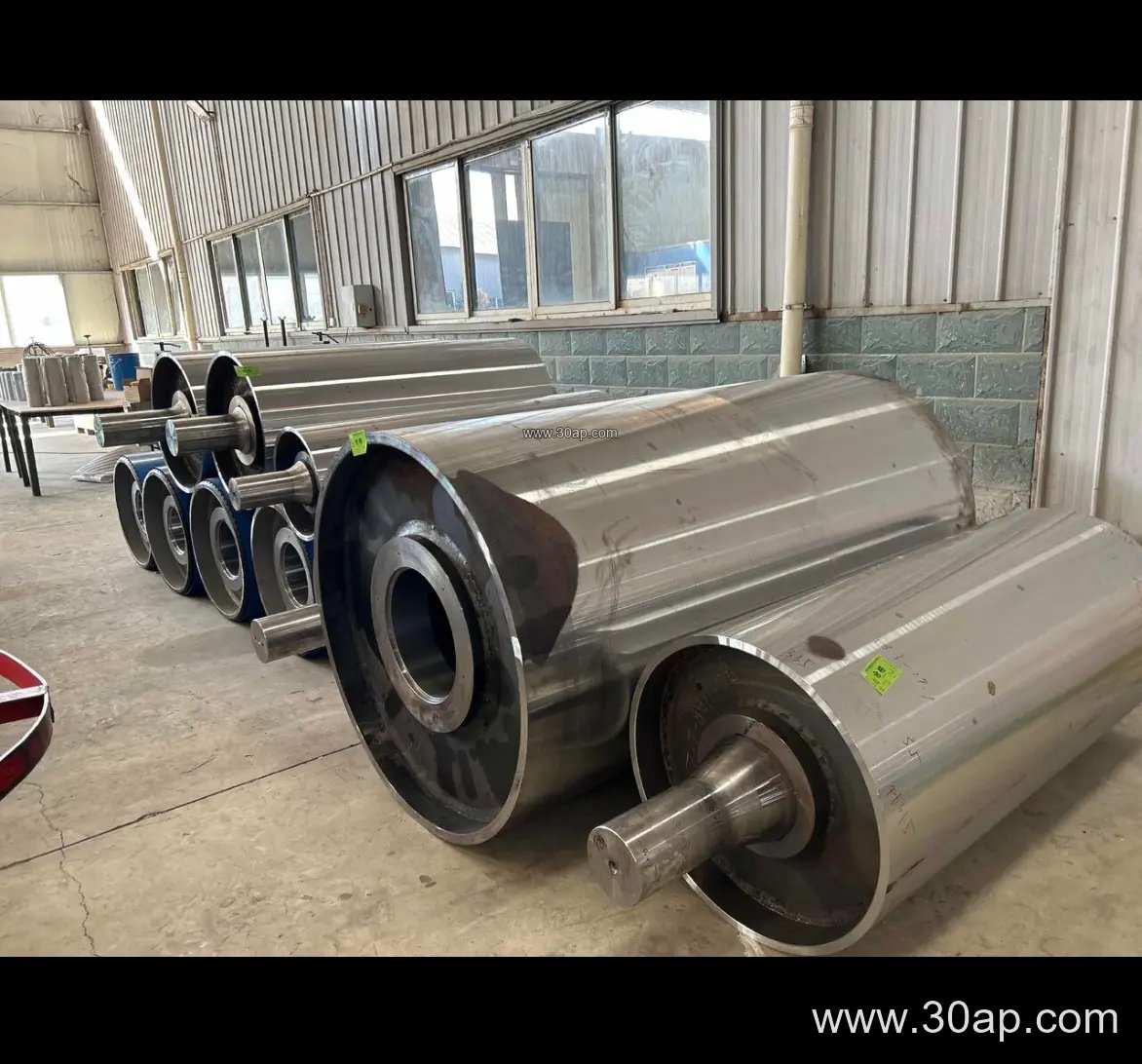
The bracket is not a pulley, and it should not be confused with drive, tail or bend pulleys. Those components transmit power or change belt direction, while a V-type bracket simply carries and guides the returning conveyor belt through its idler rollers.
How the Bracket Is Built
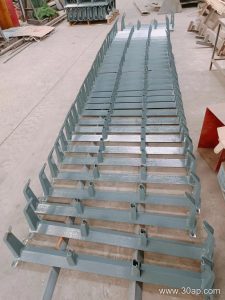
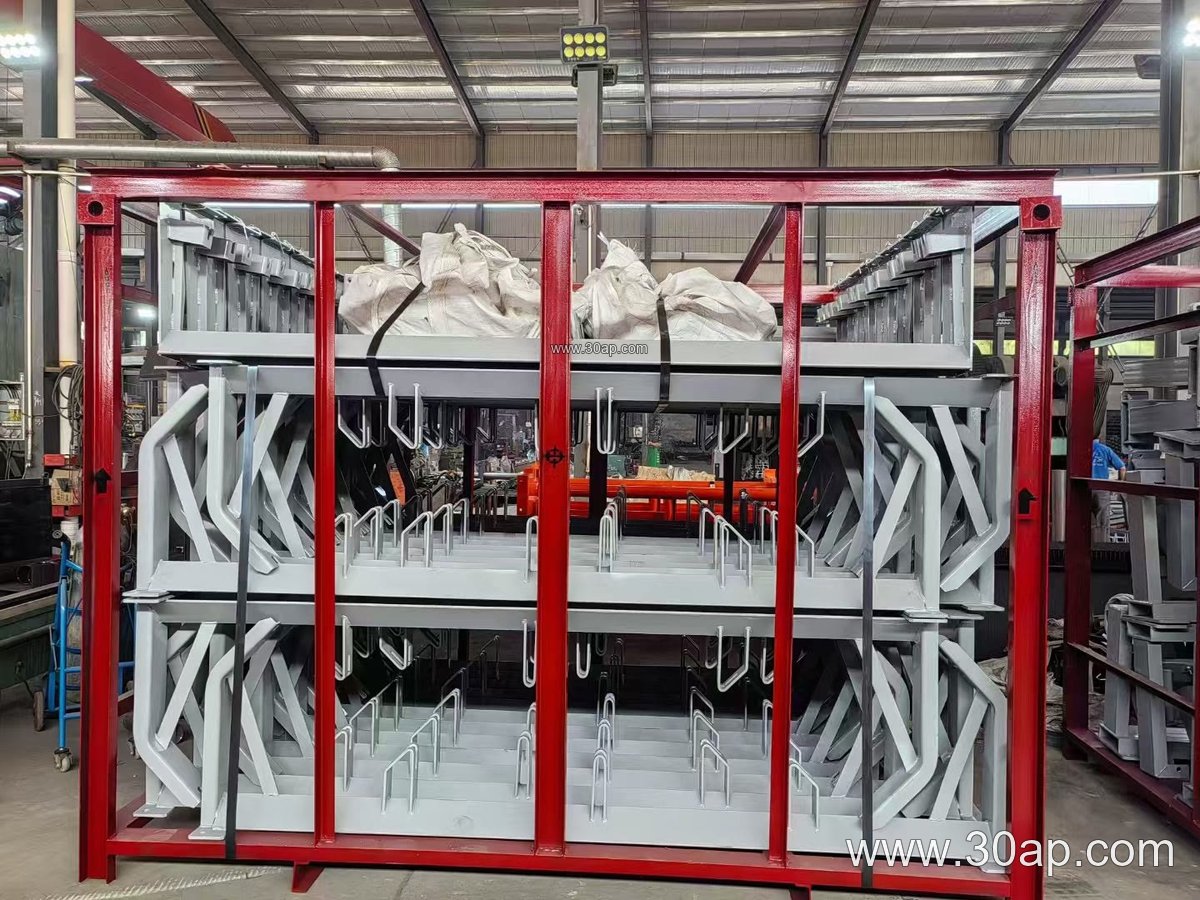
Most units are fabricated from angle steel, channel steel or folded steel plate, then welded into a rigid frame with two inclined mounting faces. The angle between those faces forms the V. Holes or slots are positioned so the idler roller shafts drop in and are retained by pins, bolts or clamp plates.
- Frame material: angle steel, channel steel or bent plate
- Mounting: bolted to the conveyor stringer or cross beam
- Roller fixing: shaft ends held in open slots, clamps or bolted caps
- Finish: painted or galvanised, depending on the site environment
Some designs are fixed, with a set V angle. Others are adjustable, letting maintenance staff change the angle within a working range to suit belt condition and load. A light forward tilt of roughly 1.5 to 2 degrees is sometimes built into training brackets to encourage self-alignment.
Where It Fits on the Conveyor
The bracket belongs on the return side, below the carrying run. In a limestone quarry, a cement plant or a coal handling system, it is commonly installed at intervals along the return strand to keep the conveyor belt from rubbing the structure. It also appears in crushing and screening lines, power plant coal yards, port terminals and steel works sinter plants.
On a long sand and gravel line, a series of V-type brackets helps hold the belt in line between the head and tail. Where the belt tends to drift to one side, the V shape provides a correcting force. This is why the bracket is often grouped with training idlers rather than plain flat return supports.
Common Sizes and Matching Points
Bracket dimensions follow the belt width, the chosen V angle and the roller diameter. There is no single mandatory combination; the table below shows typical reference values, not fixed rules.
| Belt width | Typical V angle | Typical roller diameter |
|---|---|---|
| B500 | 20 degrees | Ø89 |
| B650 | 30 degrees | Ø89 |
| B800 | 30 to 35 degrees | Ø108 |
| B1000 | 35 degrees | Ø108 or Ø133 |
| B1200 | 35 to 45 degrees | Ø133 |
| B1400 | 35 to 45 degrees | Ø133 or Ø159 |
| B1600 | 45 degrees | Ø159 |
| B1800 to B2200 | 45 degrees | Ø159 or Ø194 |
Installation hole spacing and cross beam length change with belt width and V angle, so they are confirmed per design rather than taken from a single number. The same belt width can accept different roller diameters and different angles, depending on belt speed, load and the space available under the frame.
Buyer Checklist
- Confirm the belt width and the existing stringer hole pattern before ordering.
- State whether a fixed or adjustable V angle is needed.
- Match the bracket slot to the shaft end of the idler roller you plan to use.
- Check the available clearance between the return belt and the conveyor bracket frame.
- Ask how the roller is retained, since pin, clamp and bolted cap designs are serviced differently.
- Consider the site environment when choosing paint or galvanised finish.
A well-matched V-type bracket, paired with sound idler rollers and a properly tensioned conveyor belt, reduces edge wear and keeps the return run stable in demanding quarry, mine and plant duty.