What a Belt Anti-Misalignment Idler Does
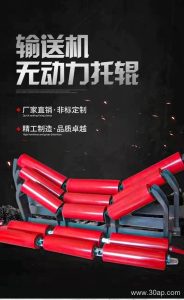
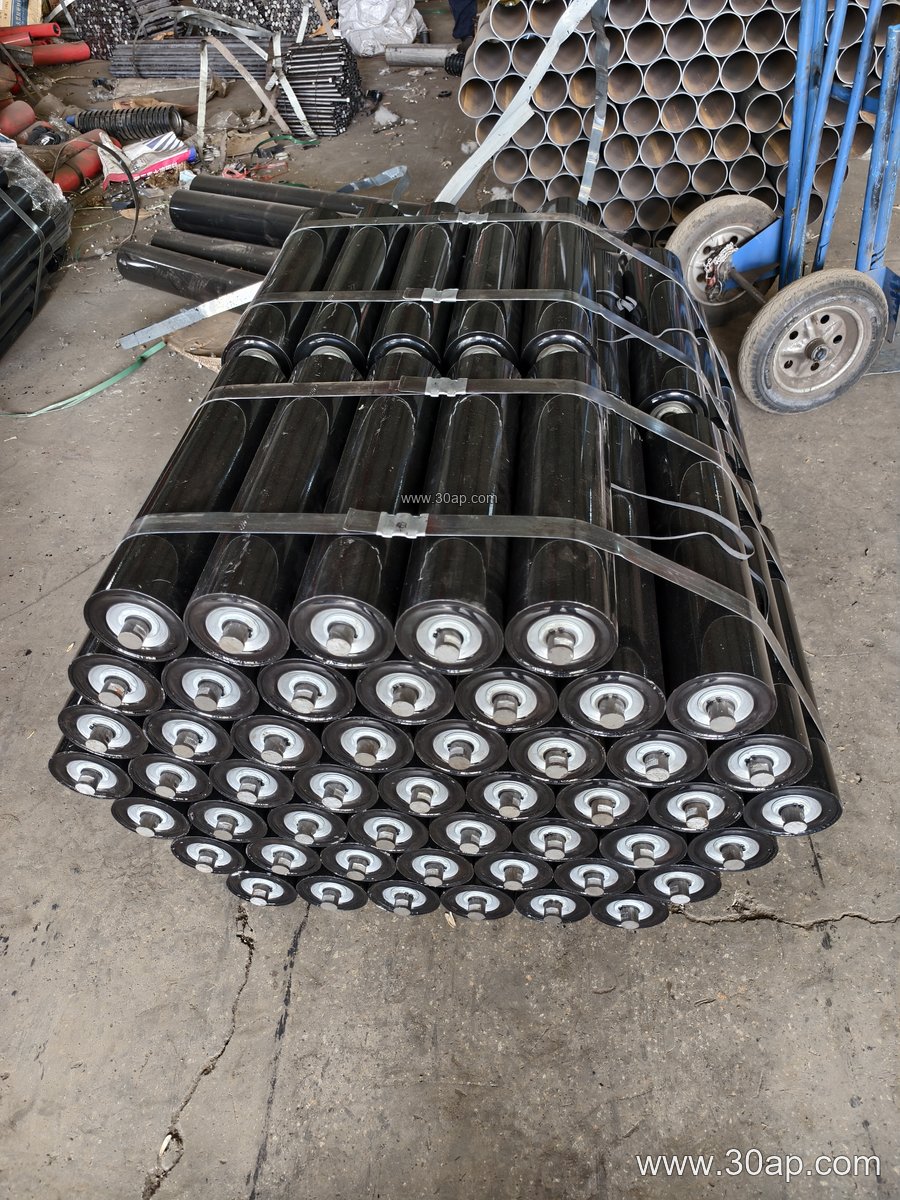
A belt anti-misalignment idler is a self-correcting roller assembly installed along a conveyor to stop the conveyor belt from wandering off its center line. When the belt drifts sideways, the idler responds by steering it back, reducing edge damage, spillage and uneven wear. In a quarry, a coal washing plant or a cement clinker line, a belt that creeps toward the frame is a daily nuisance; this roller is one of the simplest mechanical answers to that problem.
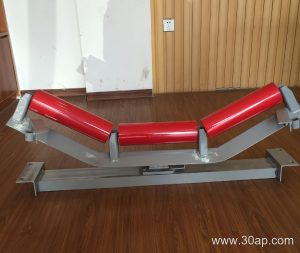
The same product is also known as a self-aligning idler or training idler. Those names describe the same function; they are not different equipment categories. The assembly usually carries a group of rolls mounted on a pivoting frame, and it is the frame movement, not the roll itself, that produces the correction.
How the Correction Works
Most designs rely on a vertical pivot. When friction or a skewed load pushes the belt against a side roller, the frame rotates slightly around its axis. That rotation angles the rolls relative to the belt travel direction, and the resulting force nudges the belt back toward the center. Friction self-aligning and conical self-aligning versions use shaped rolls to increase the sideways force at the belt edge, while a standard flat or troughed roll set depends more on frame geometry.
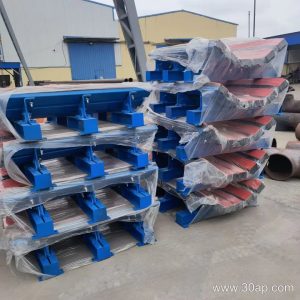
Some units are mounted on the carrying side, others on the return strand. Return-side training is often handled by a V-shaped return idler set with a pivoting frame, and the choice depends on where the misalignment appears. A belt anti-misalignment idler is not a substitute for a drive pulley, a tail pulley or a bend pulley; those components transmit power and change belt direction, while the training idler only corrects lateral position.
Construction and Typical Parameters
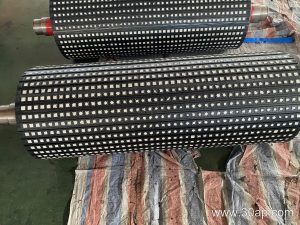
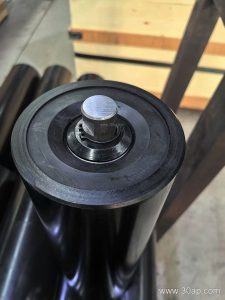
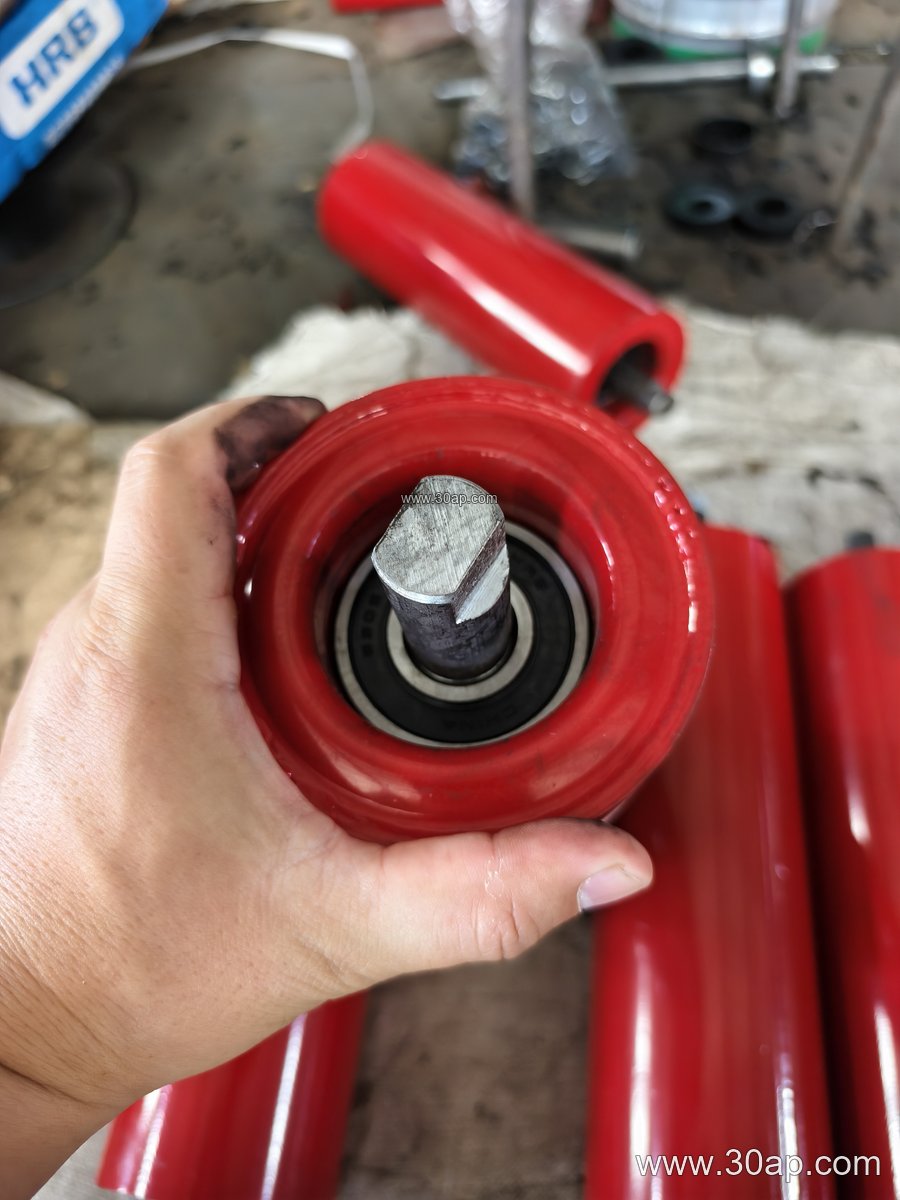
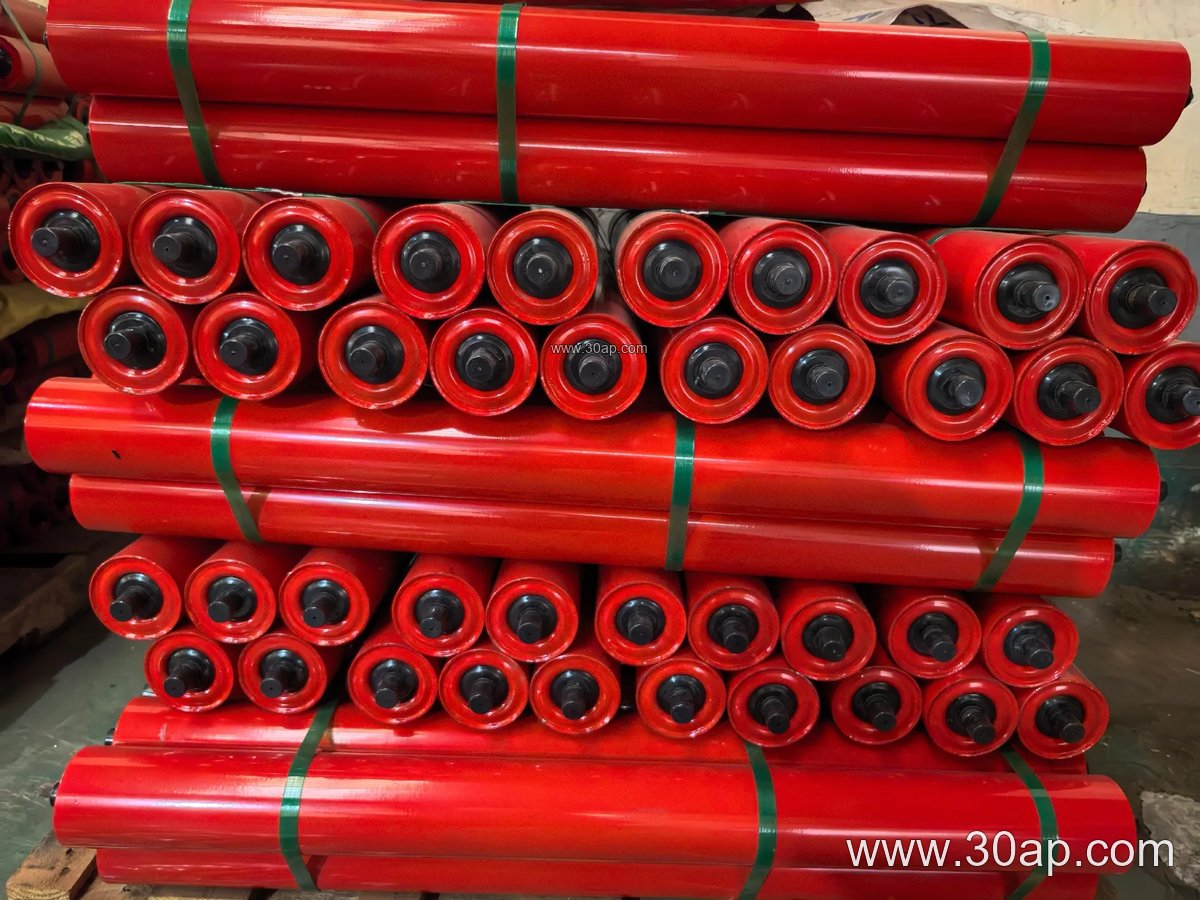
Rolls are commonly made of steel tube, with nylon, ceramic or rubber ring surfaces available for different wear and buildup conditions. Bearings are usually sealed deep-groove types, and sizes such as 6204, 6205, 6305, 6306, 6308 and 6310 appear across the range. Bearing selection follows load and roll diameter; one bearing number does not belong to one roll diameter only.
The table below collects common reference values. They are examples for orientation, not fixed pairings or supply promises.
| Parameter | Common reference values |
|---|---|
| Roll diameter | Ø63, Ø76, Ø89, Ø102, Ø108, Ø127, Ø133, Ø159, Ø178, Ø194, Ø219 mm |
| Belt width | B400, B500, B650, B800, B1000, B1200, B1400, B1600, B1800, B2000, B2200, B2400 |
| Trough angle | 20°, 30°, 35°, 45° |
| Forward tilt | about 1.5° to 2° where a leading-tilt design is used |
| Roll surface | steel tube, nylon, ceramic, rubber ring |
| Idler group | single roll, two-roll, three-roll troughing |
| Roll length, three-roll example | about 200 mm at B500, 250 mm at B650, 315 mm at B800, 380 mm at B1000, 465 mm at B1200, 530 mm at B1400, 600 mm at B1600, 670 mm at B1800, 750 mm at B2000 |
Roll length changes with belt width, trough angle and group form. Side rolls and the center roll can differ in length, so the figures above are only typical examples. Shaft diameter is set by the idler frame and load design, not by belt width alone.
Where It Fits on the Conveyor
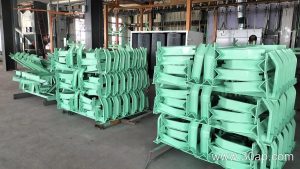
Training idlers are usually placed at intervals along the carrying run, near transfer points and on long straight sections where drift tends to build up. In a limestone mine or a power plant coal yard, a few well-placed units can protect the conveyor belt edges and reduce material spillage. On the return strand, a V-shaped return set with a pivoting frame is a common companion. A conveyor bracket or frame must be stiff enough to hold the pivot without binding, and the assembly should sit square to the belt center line.
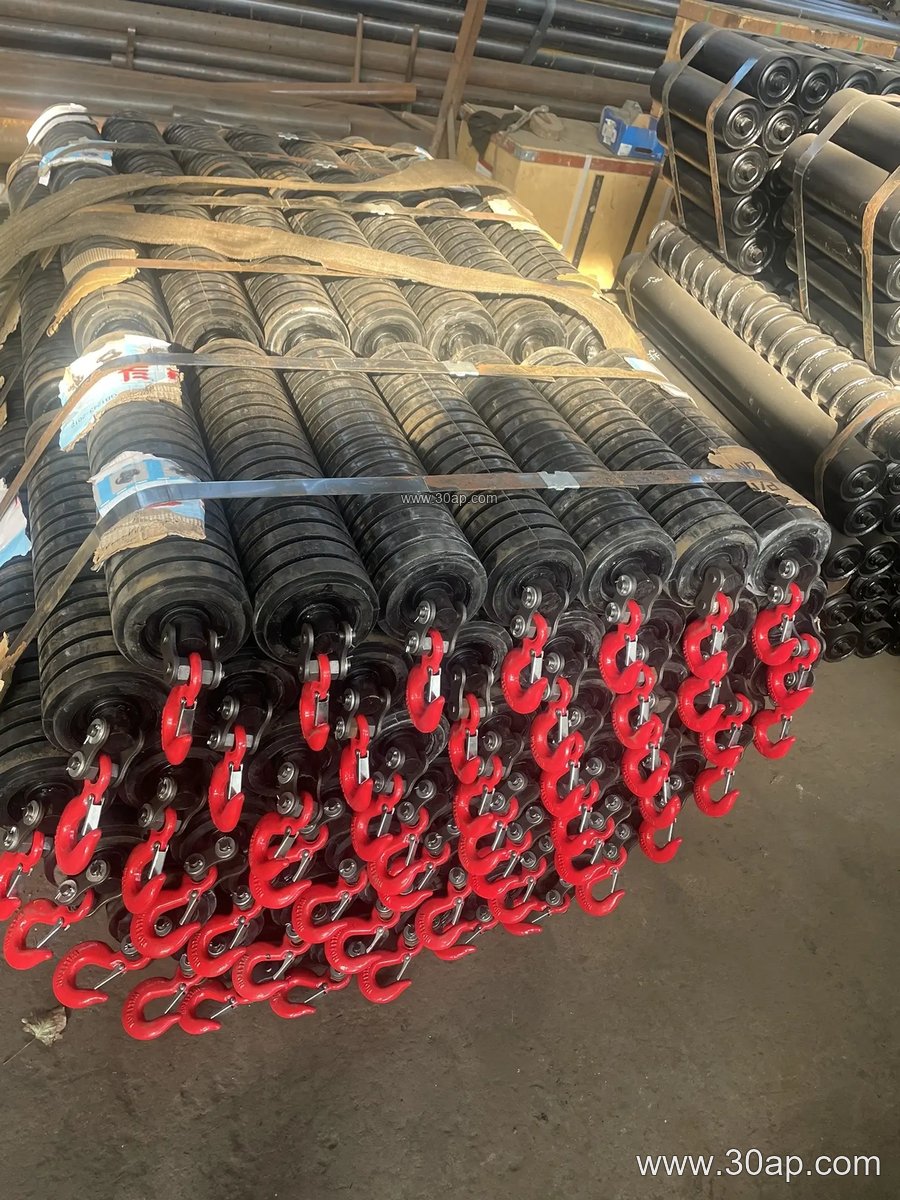
Other idler types are used for comparison rather than replacement. A缓冲 idler, or impact idler with rubber rings, absorbs loading shocks at the transfer point; a spiral idler helps clean the return belt; a troughing idler simply supports the belt. The anti-misalignment unit is chosen when tracking is the main concern, and it can work alongside those types.
Buyer Checklist
- Confirm belt width, trough angle and whether the unit is for the carrying or return side.
- Match roll diameter and bearing size to the load and frame, not to belt width alone.
- Check that the pivot moves freely and that the frame is square to the belt.
- Review seal quality and roll surface for dusty or wet conditions in mines, cement plants and ports.
- Ask for the mounting dimensions and confirm they suit the existing conveyor bracket or frame.
- Plan periodic inspection of pivot play, bearing noise and roll wear, since a seized pivot defeats the correction.
A belt anti-misalignment idler is a small component with a clear job: keep the belt centered, protect the edges and reduce downtime. Selecting it by function, mounting and duty rather than by a single size number gives the best result.