What the Three-Roll Idler Bracket Does
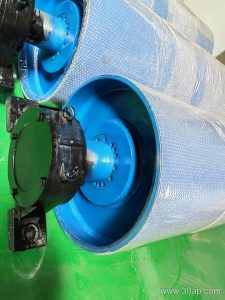
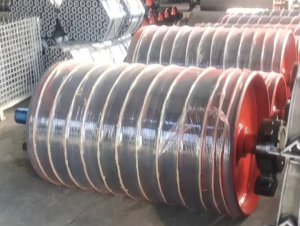
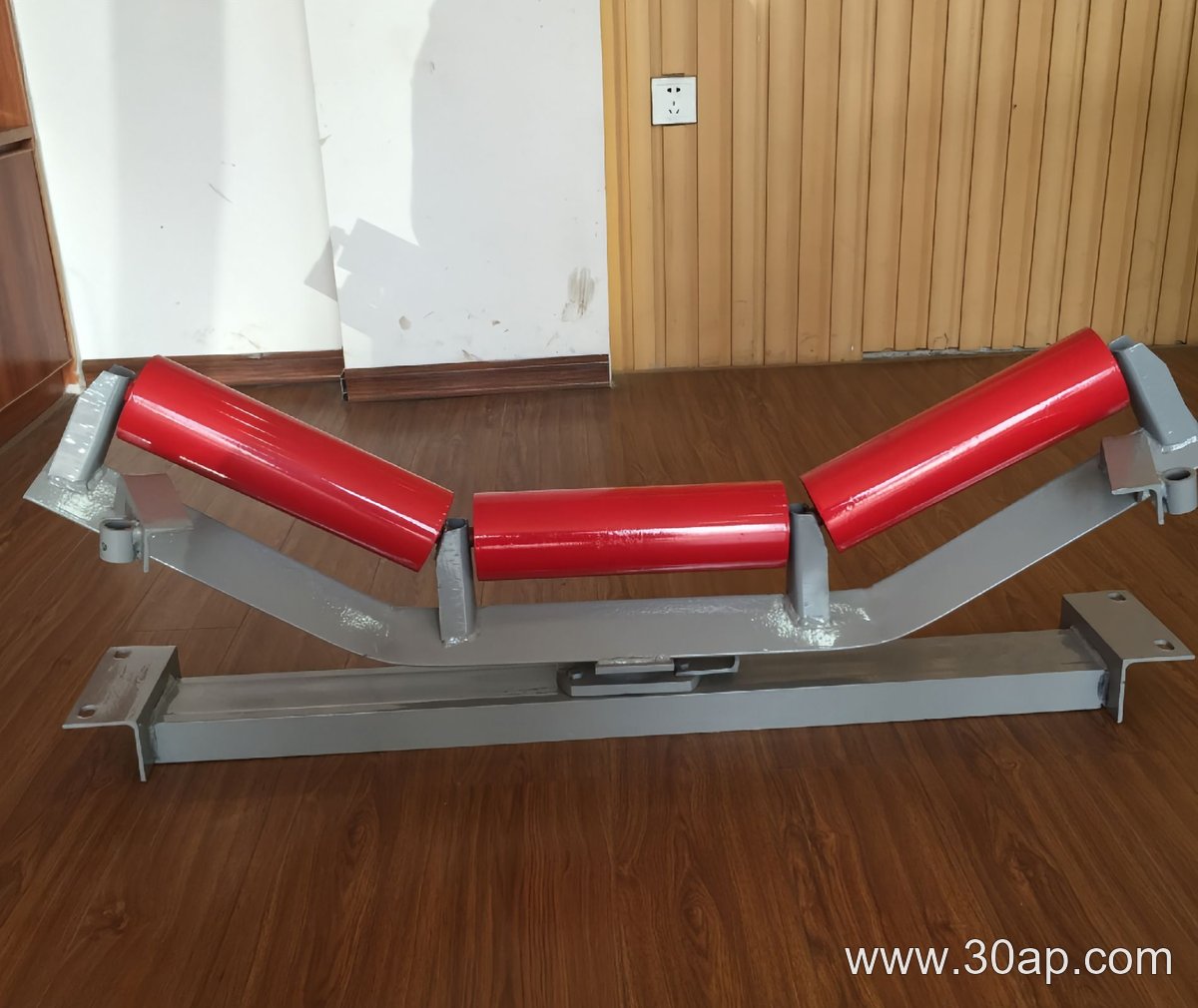
A three-roll idler bracket is the structural support that holds three idler rollers in a troughing arrangement on a belt conveyor. It sets the trough angle, carries the weight of the conveyor belt and the material load, and keeps the rollers in the correct position along the carrying side of the conveyor. In many conveyor assemblies, this bracket is also called a troughing idler bracket or a three-roller support frame. It is a distinct component from a conveyor pulley, such as a drive pulley or a bend pulley, which transmits power or changes belt direction rather than supporting the belt along its run.
How the Bracket Is Built
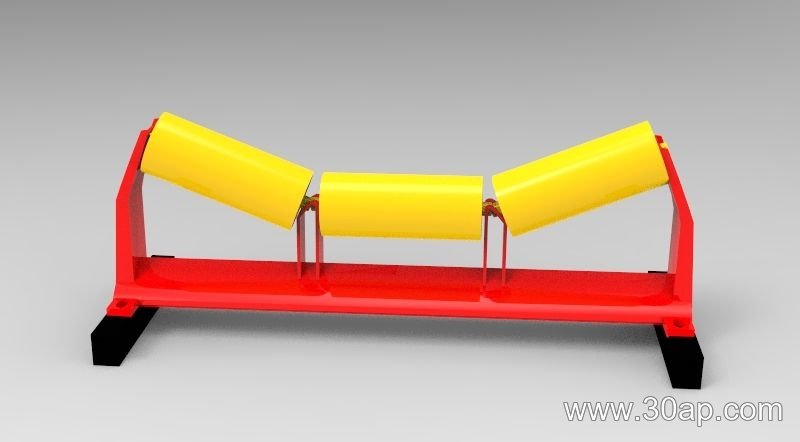
Most three-roll idler brackets are fabricated from angle steel, channel steel, or bent steel plate. The center roll sits lower than the two side rolls, creating the trough shape that keeps bulk material centered on the conveyor belt. The side roll positions determine the trough angle, and the mounting slots or holes are arranged so the rollers sit at the correct height and spacing. Some designs include adjustable positions that allow the same bracket to be set at different trough angles, while fixed brackets are welded or bolted at one angle.
The main dimensions that matter are belt width, trough angle, and roller diameter. These are not fixed combinations; the same belt width can be used with different trough angles and roller diameters depending on the conveyor design. Common roller diameters include Ø89, Ø108, Ø133, Ø159, and Ø194. Trough angles are often 20 degrees, 30 degrees, 35 degrees, or 45 degrees. A three-roll bracket for a B800 belt at 35 degrees with Ø108 rollers is one typical arrangement, while a B1200 belt might use a 45-degree trough with Ø133 rollers. These values are examples only and should be confirmed against the actual conveyor design.
Where It Fits in a Conveyor
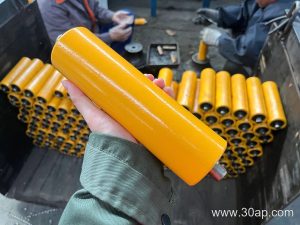
Three-roll idler brackets are used on the carrying side of belt conveyors in many bulk material handling settings. They are common in quarry and sand and gravel operations, where the belt carries crushed stone, gravel, or aggregate. In a coal washing plant, they support the belt that feeds raw coal to screens and separators. The bracket works together with the idler rollers and the conveyor belt, and it may be mounted on the conveyor frame at regular intervals along the carrying run.
On the return side, a different bracket type is used, such as a flat return bracket or a V-return bracket. These are not interchangeable with the three-roll carrying bracket because the return side supports the empty belt and does not need the same trough shape. Similarly, a drive pulley, tail pulley, and bend pulley are not replacement names for this bracket; they are separate conveyor components with different functions.
Selection Points for Buyers
When choosing a three-roll idler bracket, the buyer should match it to the conveyor belt width, the required trough angle, and the roller diameter. The bracket must also fit the frame hole spacing and the cross beam length, which change with belt width and trough angle. Adjustable brackets can be useful where the trough angle may need to be changed, while fixed brackets are simpler and often more rigid.
Other bracket types, such as impact brackets, self-aligning brackets, and forward-tilt brackets, serve different purposes. An impact bracket is used at loading points to absorb shock, and a self-aligning bracket helps correct belt tracking. These are not substitutes for the three-roll troughing bracket but may be used alongside it in the same conveyor system.
Material and finish also matter. Brackets made from angle steel or channel steel are common in general service, while bent steel plate designs can reduce weight. The buyer should confirm the roller mounting dimensions, the bracket length, and the hole pattern before ordering, since these are determined by the conveyor design rather than by a single universal standard.
- Check belt width and trough angle first.
- Confirm roller diameter and shaft mounting.
- Verify frame hole spacing and beam length.
- Decide between fixed and adjustable trough angles.
- Match the bracket type to the carrying or return side.