What a Steel Plant Conveyor Pulley Does
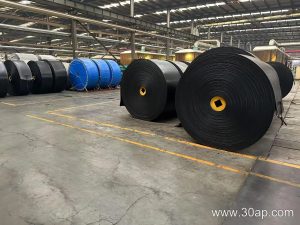
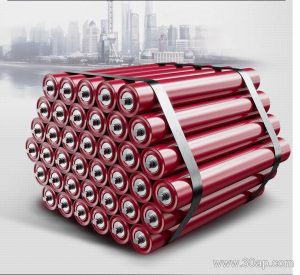
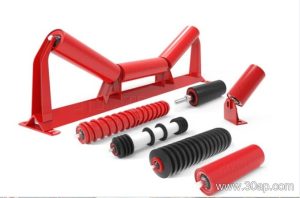
A steel plant conveyor pulley is the rotating drum that drives, tensions, or redirects the conveyor belt in bulk material handling lines. Inside a steelworks, these pulleys appear in sinter plants, coke handling, ore stockyards, and slag transport, moving abrasive and often hot materials alongside idler rollers and sturdy conveyor brackets. The pulley is not a passive part: it transfers torque from the drive unit into the belt through friction, and it must hold belt alignment under heavy loads.
Because the environment is dusty, hot, and sometimes wet, the drum body, shaft, lagging, and bearing housings are usually built for long service rather than for light duty. A steel plant conveyor pulley is therefore a robust assembly rather than a simple cylinder.
How the Assembly Is Built
Most pulleys use a welded steel shell with end discs and a through shaft. The shell may be machined for balance, and the shaft is sized by torque and radial load, not by belt width alone. Common shaft diameters include Ø80, Ø100, Ø120, Ø140, Ø160, and Ø180, but the final value follows the drive calculation and bearing selection.
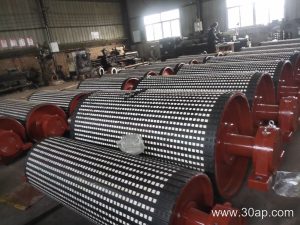
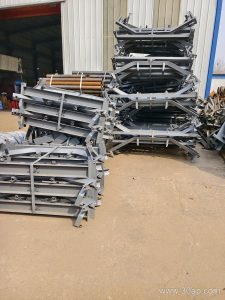
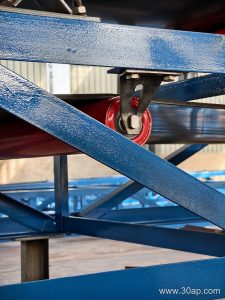
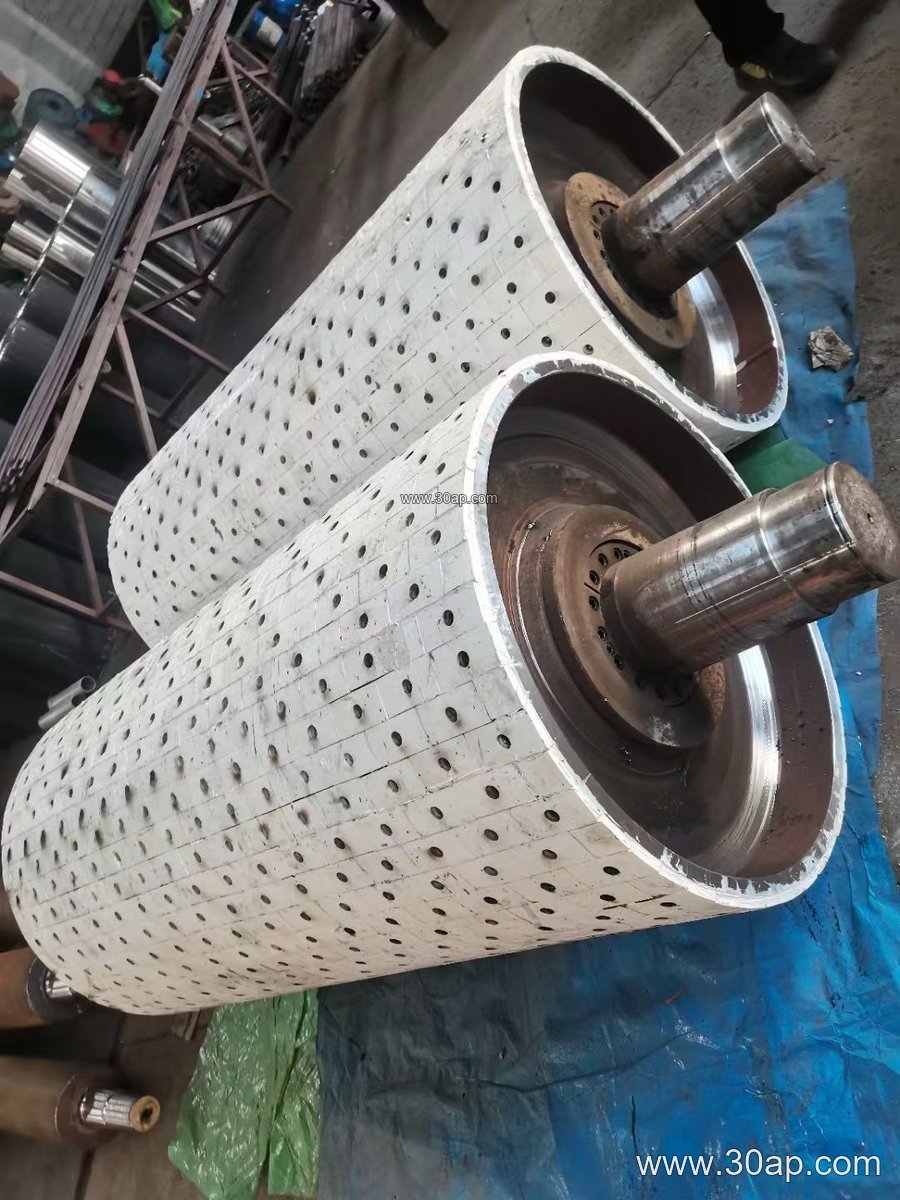
Bearing housings are bolted to the pulley ends or mounted on a separate bearing block, depending on the conveyor bracket design. Surface treatment matters in steel plants: plain steel shells wear quickly under scale and sinter dust, so lagging is often applied.
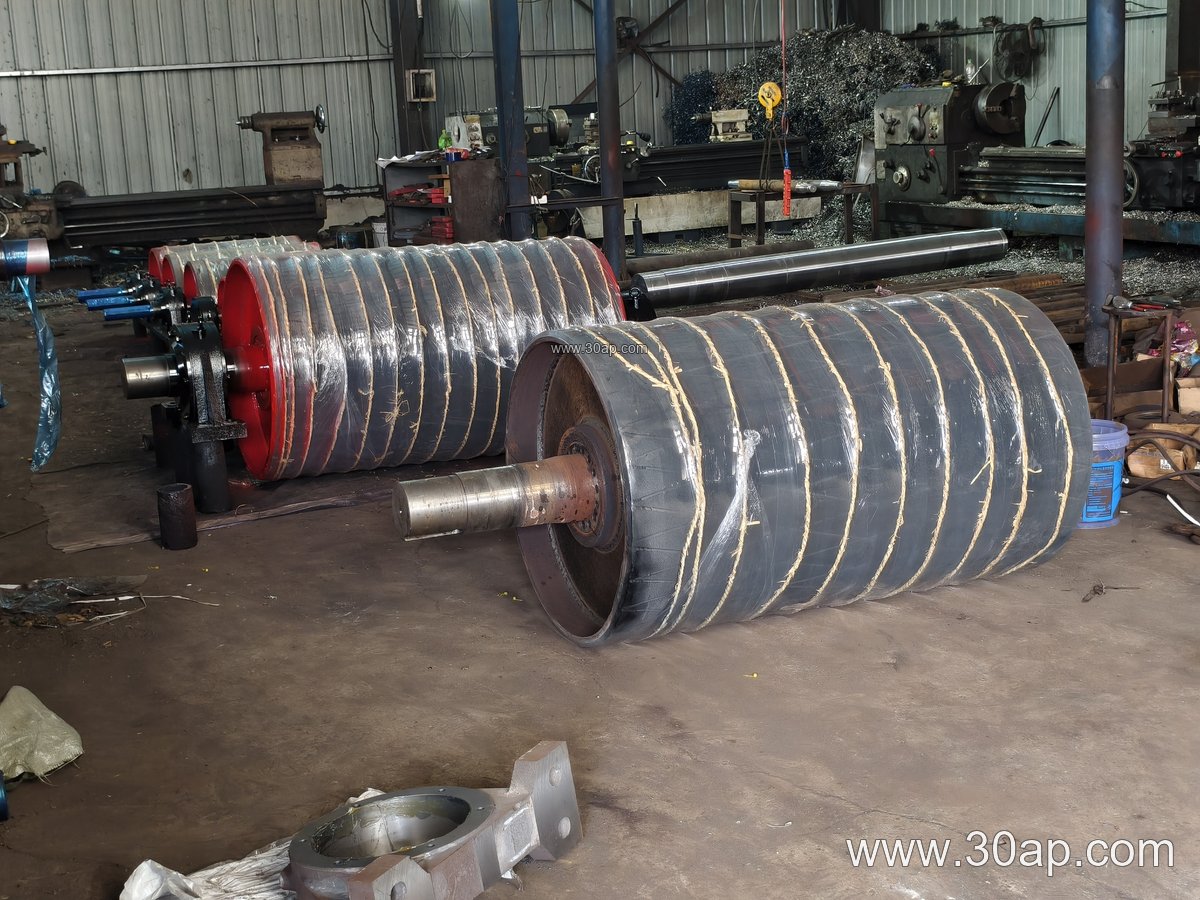
- Plain surface for light, non-abrasive duty
- Cold-bonded rubber or hot-vulcanized rubber for general grip
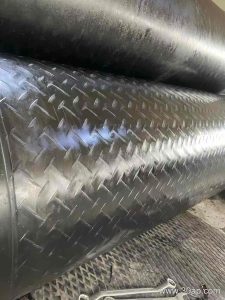
- Diamond or herringbone lagging for wet, slippery belts
- Ceramic lagging for high-wear drive positions
Lagging thickness commonly falls between 8 mm and 20 mm. A drive pulley usually carries thicker, higher-friction lagging, while a bend or tail pulley may use a thinner cover.
Common Positions and Their Different Jobs
Position names are not interchangeable. A drive pulley, also called the head pulley, transmits power at the discharge end. A tail pulley sits at the loading end and supports belt return. A bend pulley changes belt direction, and a tension pulley takes up slack. In a steel plant, the drive pulley is often the most heavily lagged component, while bend and tension pulleys may be plain or lightly covered.
An electric drum motor is a separate option where the drive is built into the pulley, but it is not a substitute for a standard drive pulley in every layout. Snub and wing pulleys have their own roles, such as increasing wrap angle or shedding sticky material.
Matching Pulley Dimensions to the Conveyor
Shell face width is normally wider than the belt. Typical references include B800 with about 950 mm face, B1000 with about 1150 mm, and B1200 with about 1400 mm. Diameter is selected from belt tension, wrap angle, and belt stiffness. A B800 conveyor might use Ø500 or Ø630, and a B1200 line might use Ø800 or Ø1000, but no single belt width fixes one diameter.
| Belt Width | Typical Face Width | Example Diameter Range |
|---|---|---|
| B500 | About 600 mm | Ø250 to Ø400 |
| B650 | About 750 mm | Ø315 to Ø500 |
| B800 | About 950 mm | Ø400 to Ø630 |
| B1000 | About 1150 mm | Ø500 to Ø800 |
| B1200 | About 1400 mm | Ø630 to Ø1000 |
| B1400 | About 1600 mm | Ø800 to Ø1250 |
These are reference combinations only. Final sizing depends on the conveyor design, and a larger diameter reduces belt bending stress while adding weight and cost.
What a Buyer Should Check
Buyers should confirm the belt width, shaft diameter, bearing type, lagging pattern, and mounting bracket dimensions before ordering. Ask for the calculated torque and radial load, not just a diameter. In steel plant service, check whether the pulley will face heat, scale, or washdown, because that affects lagging choice and bearing protection.
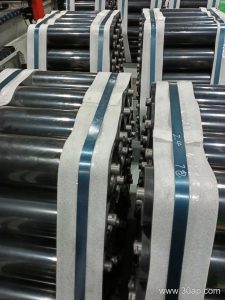
Also review the interface with the conveyor belt and idler roller set: a pulley that is misaligned with the belt path will cause edge wear and tracking problems regardless of its build quality. Spare parts planning should include bearing housings and lagging repair, since these are the first items to wear.