What a Stone Crushing Conveyor Belt Does
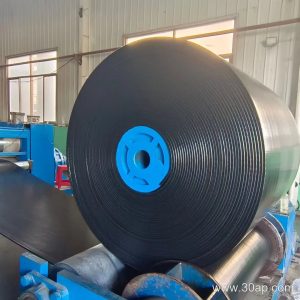
A stone crushing conveyor belt is the heavy-duty rubber belt that carries blasted rock, crushed aggregate, and screened stone between the jaw crusher, cone crusher, screens, and stockpiles. In a quarry, sand and gravel plant, or cement works, this belt is the continuous link that keeps material moving without trucking every load. Because the duty is abrasive and often dusty, the belt is chosen for cut and gouge resistance as much as for tensile strength.
The same product is also called a crusher conveyor belt or an aggregate conveyor belt. Those names describe the same item, not a different component. Drive pulleys, tail pulleys, and bend pulleys remain separate parts of the conveyor and are never interchangeable with the belt itself.
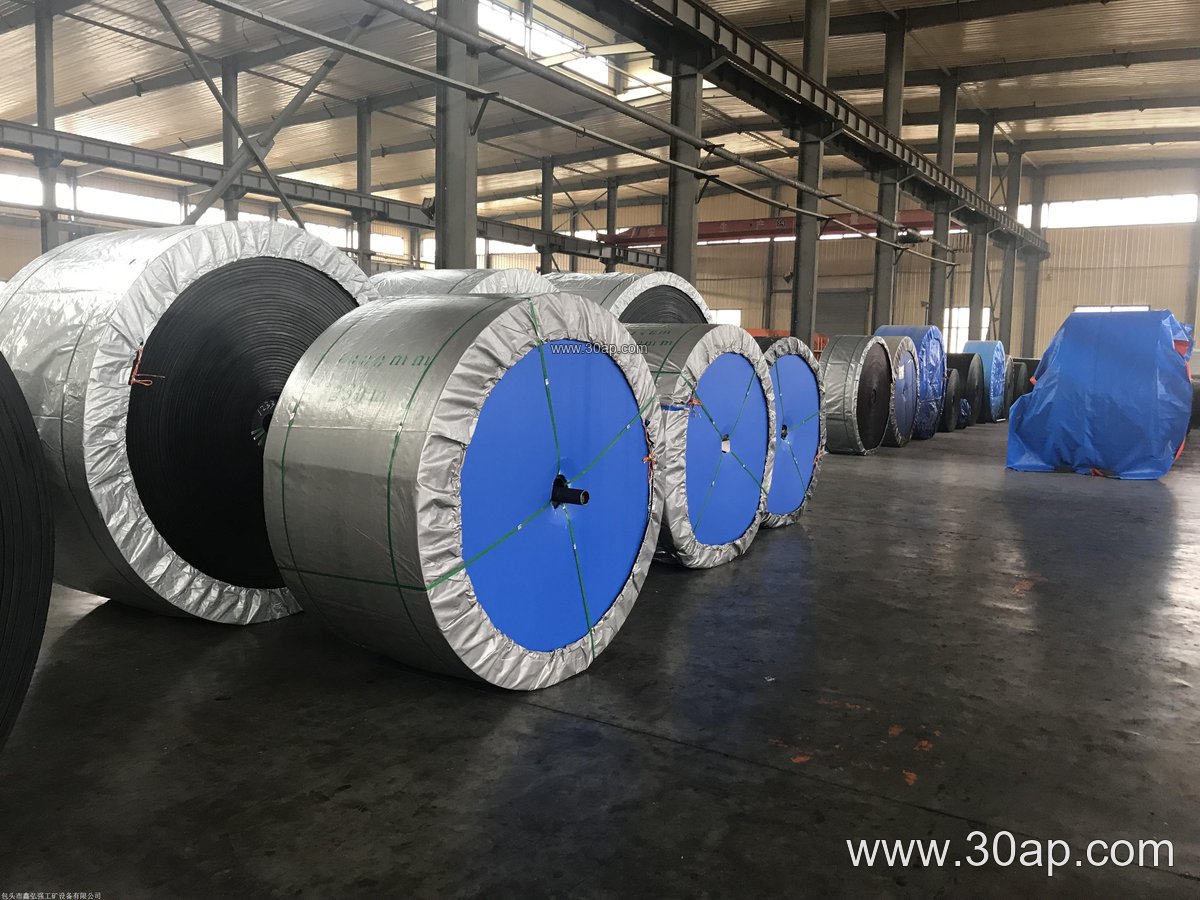
Construction and Common Specifications
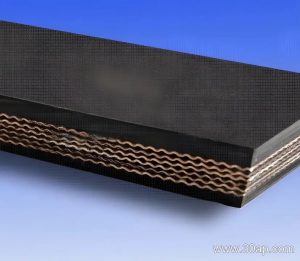
Most stone crushing belts use a fabric carcass, either EP (polyester-cotton) or NN nylon, with rubber covers on both faces. The carcass carries the load, while the top cover absorbs impact from falling stone and the bottom cover protects against pulley wear. For long overland lines or high-tonnage primary duties, a steel cord core belt may be used instead.
Typical reference values are shown below. These are common ranges, not fixed requirements, and final values are determined by the conveyor design.
| Parameter | Common reference values |
|---|---|
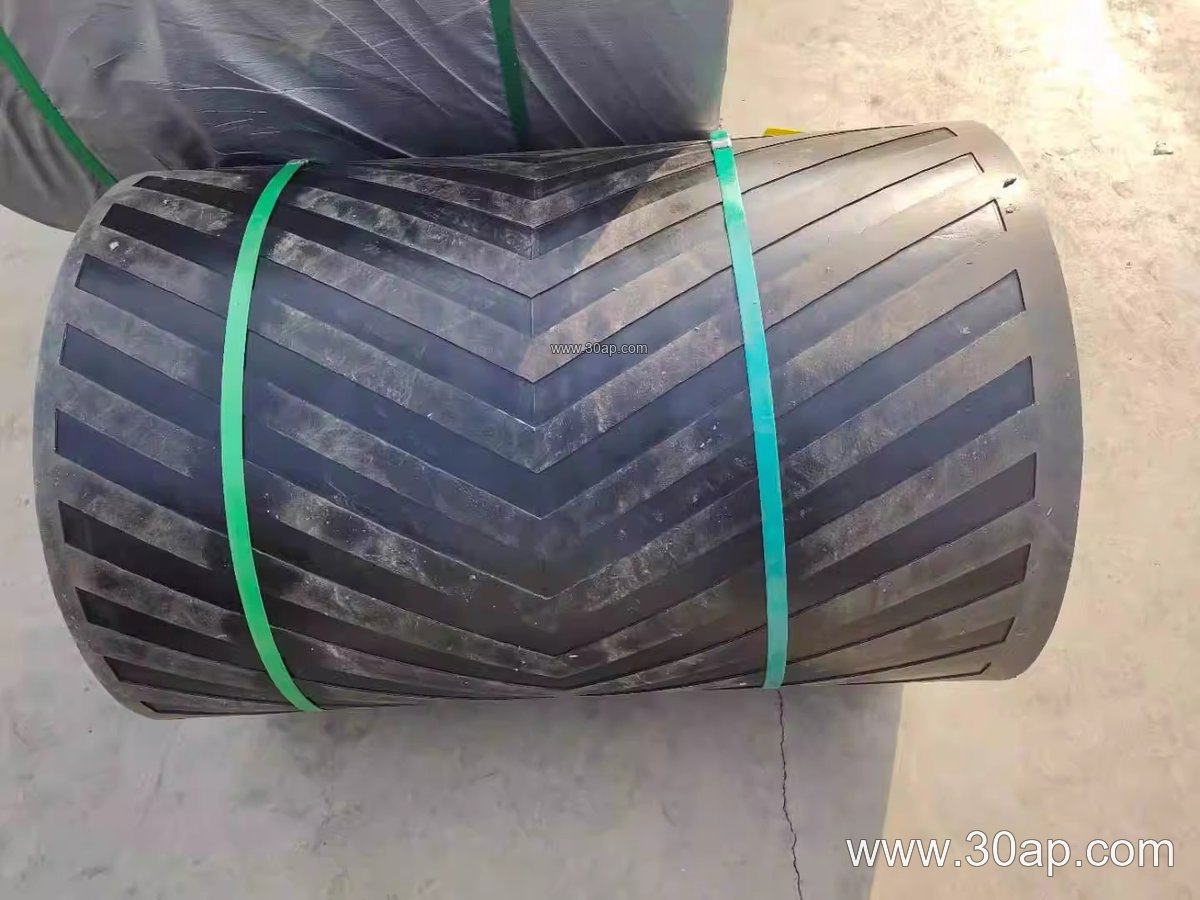
| Belt type | EP, NN nylon, steel cord, wear-resistant, heat-resistant, flame-retardant, anti-static, chevron or patterned |
| Tensile strength | EP200, EP315, EP400, EP500, EP630, EP800, EP1000, EP1250, EP1600, EP2000 |
| Belt width | B500, B650, B800, B1000, B1200, B1400, B1600, B1800, B2000 |
| Cover thickness | 3+1.5, 4+2, 5+2, 6+2, 8+3 mm |
| Carcass plies | Usually 2 to 6 layers for fabric belts |
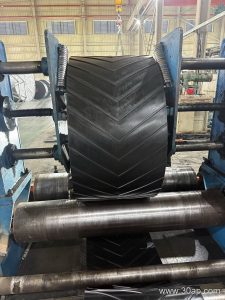
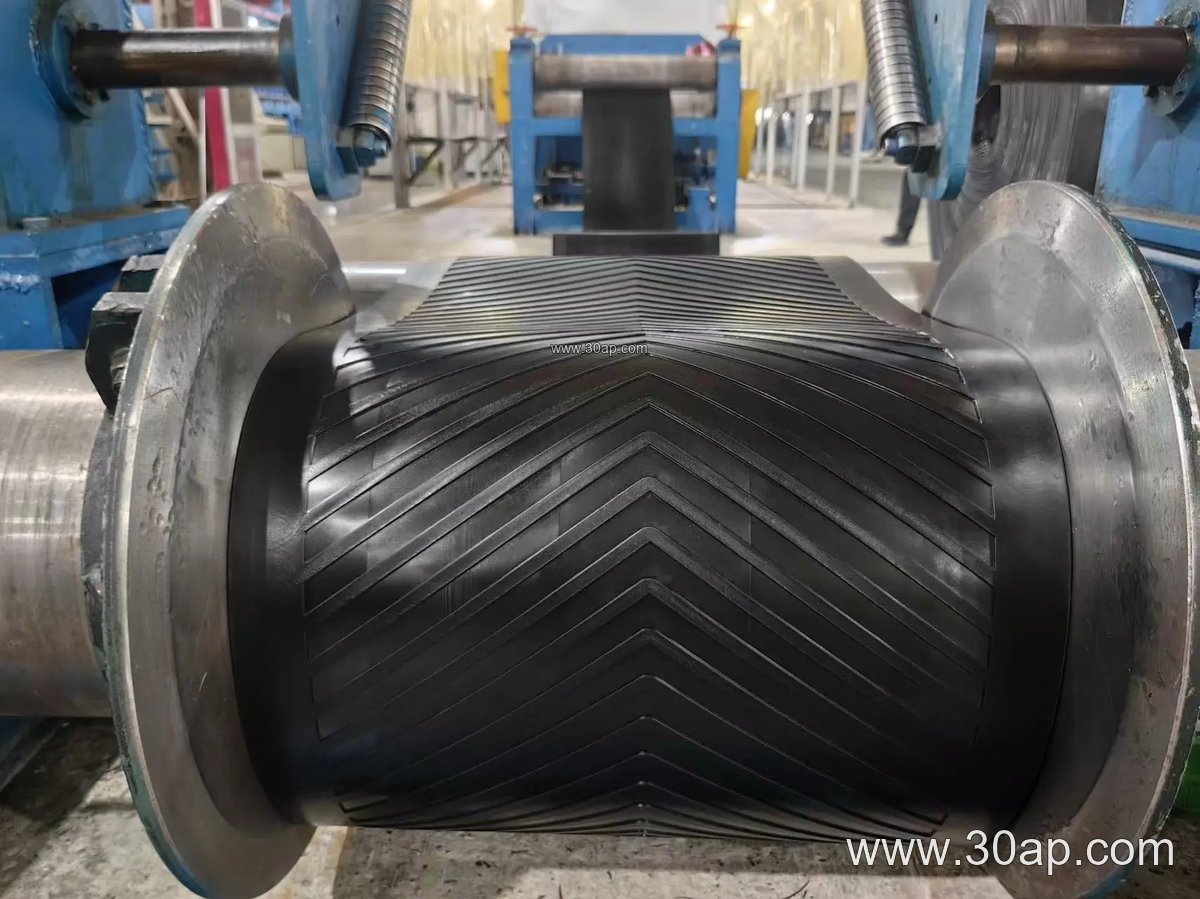
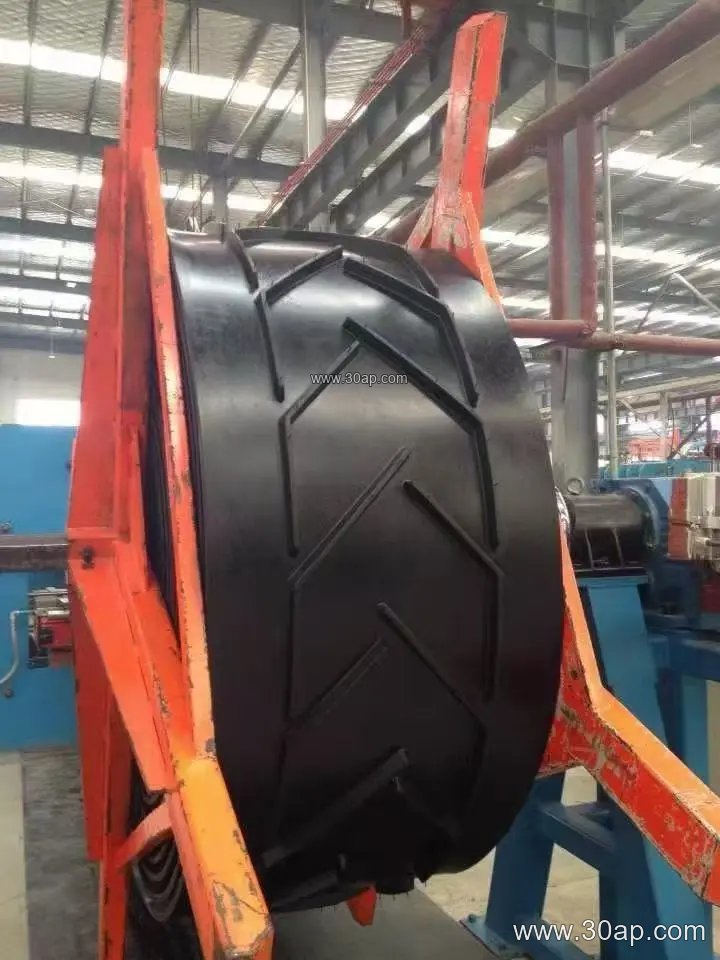
Cover thickness should match the stone size and drop height. A 4+2 mm cover may suit a secondary screen feed, while a 6+2 or 8+3 mm top cover is often considered where large lumps fall onto the belt at the crusher discharge. Chevron or patterned surfaces help on inclines where material would otherwise roll back.
Where It Is Used
- Quarries and sand and gravel plants moving crushed stone from crusher to screen
- Coal preparation plants and mine surface handling
- Cement plants feeding clinker and limestone
- Power plants handling coal and limestone
- Construction waste and recycled aggregate lines
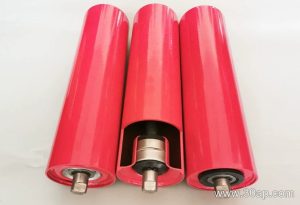
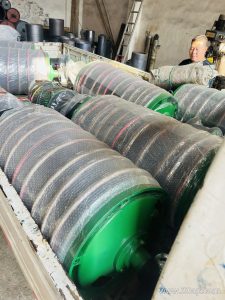
In these settings the belt works with conveyor idler rollers that support the load, conveyor pulleys that drive and redirect it, and conveyor brackets that hold the frame together. Idler spacing, trough angle, and pulley diameter are set by the conveyor designer, and a given belt width can work with more than one pulley size.
What Buyers Should Check
Start with the material: lump size, moisture, temperature, and whether the stone is sharp or rounded. Then confirm the required tensile grade and width against the conveyor’s calculated duty. Ask about cover grade if the line handles hot clinker or oily material, and specify flame-retardant or anti-static construction for underground coal or dusty enclosed galleries.
Also review splice method, edge condition, and skirtboard contact points. A belt that is correctly rated but poorly spliced will fail early at the joint. Spare idler rollers and a spare tail pulley are practical stock items for any crushing line, since a seized roller can damage the belt cover quickly.
Installation and Maintenance Notes
Keep the belt centered during running, check pulley lagging and roller rotation regularly, and clean spillage from the return side. Track cover wear at the load point, because that is where impact and abrasion concentrate. When replacement is needed, match the new belt to the existing conveyor’s calculated tension and pulley diameters rather than copying the old belt blindly.