What a Tail Pulley Does
A tail pulley is the conveyor pulley located at the rear or return end of a conveyor belt. Its main job is to support the belt as it changes direction and returns to the carrying side. Unlike a drive pulley, which transmits power, the tail pulley typically rotates freely or serves as a tensioning point. It is not a bend pulley, which redirects the belt at an intermediate point, nor a head pulley, which discharges material. In a typical conveyor, the tail pulley works together with the conveyor belt, idler rollers, and conveyor brackets to keep the belt tracking correctly and under proper tension.
Construction and Key Components
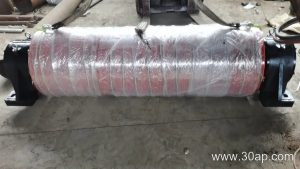
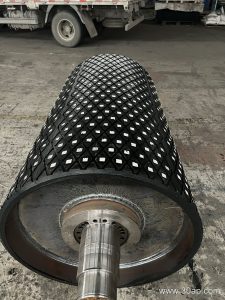
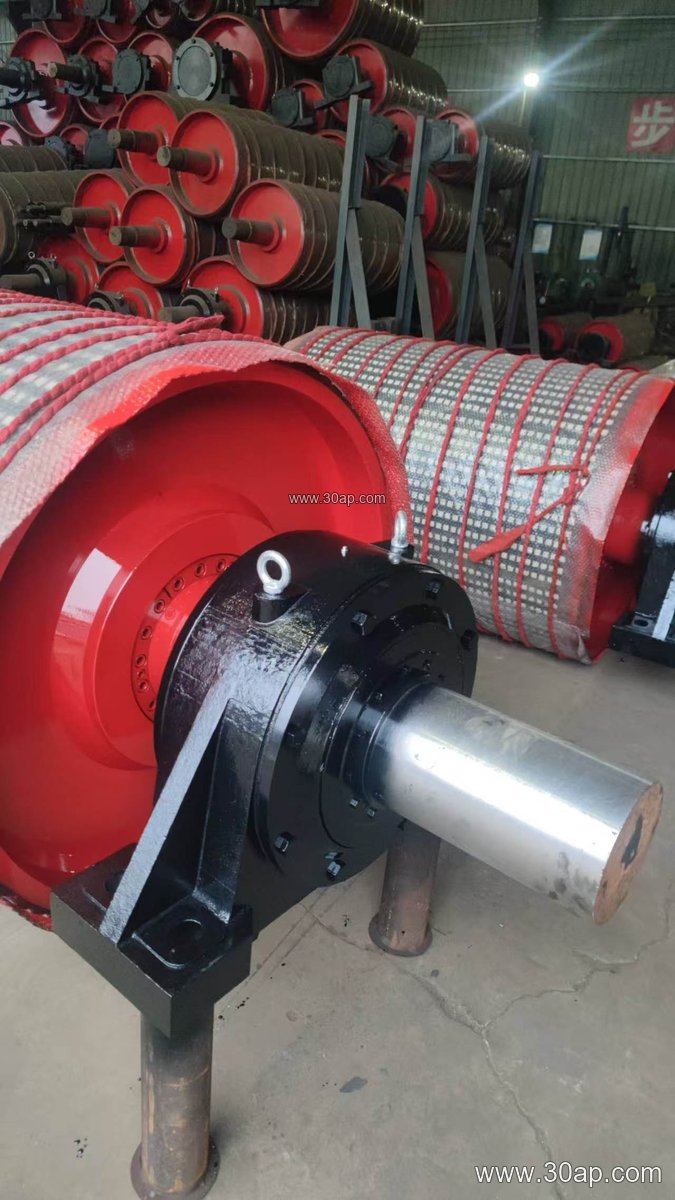
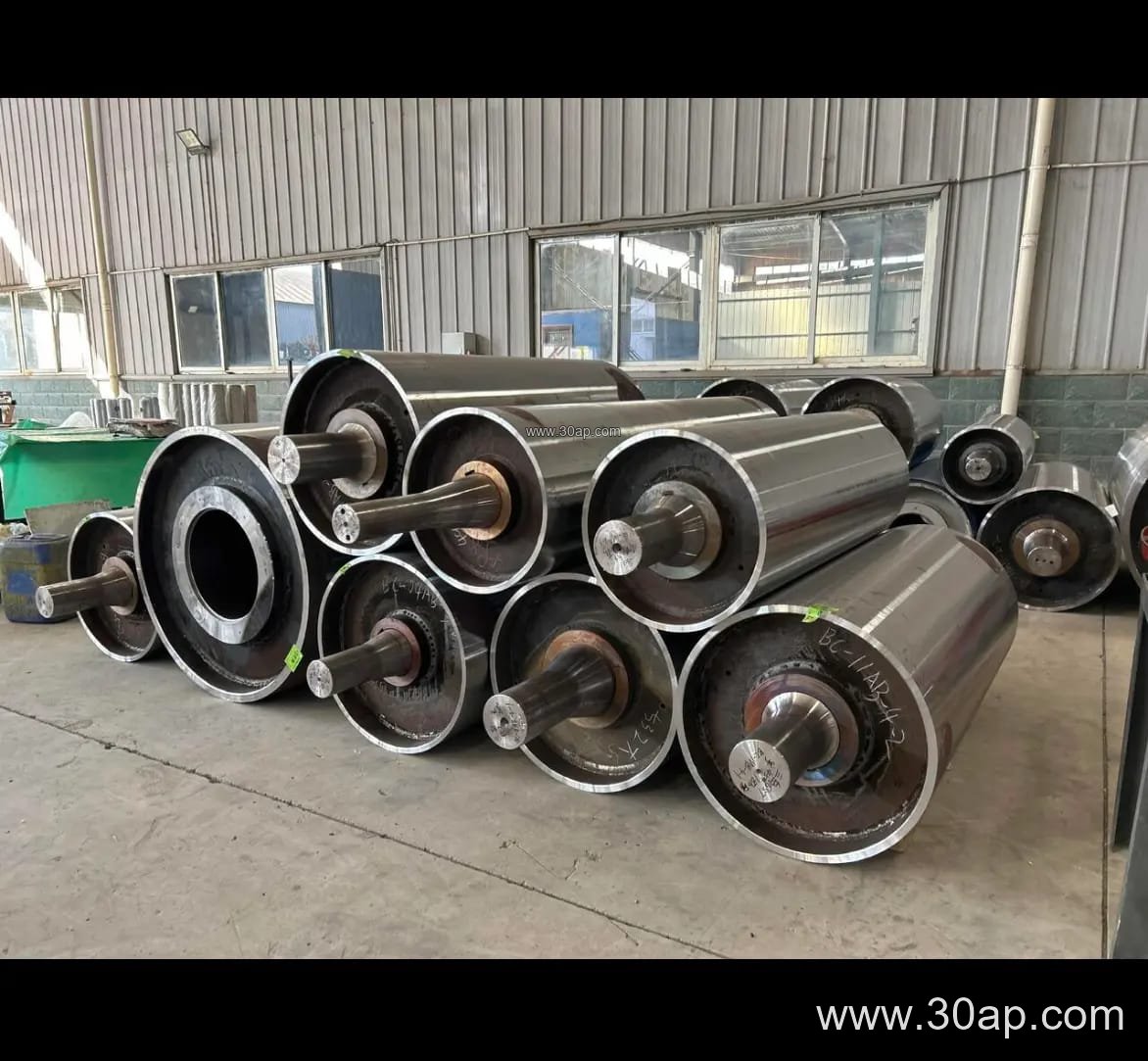
A tail pulley is built around a cylindrical shell, usually made of steel, with shafts extending from both ends. The shell can be plain or covered with rubber, ceramic, or other materials to improve grip or wear resistance. Common surface forms include smooth, rubber-lagged, and diamond-pattern lagging. Lagging thickness often ranges from 8 mm to 20 mm, depending on the application. The pulley is supported by bearings housed in bearing blocks, which are mounted to the conveyor frame. The shaft diameter is determined by torque and load requirements, not simply by belt width. For example, a B800 conveyor might use a tail pulley with a Ø500 shell and a Ø80 shaft, but these values are design-specific.
Where Tail Pulleys Are Used
Tail pulleys appear in bulk material handling across many industries. In a limestone quarry, a tail pulley at the return end helps maintain belt alignment on a long overland conveyor. In a coal preparation plant, it may be part of a conveyor that feeds a wash box. Cement plants use tail pulleys on clinker conveyors, while power plants rely on them in coal handling systems. Sand and gravel operations, port bulk terminals, and tunnel muck removal conveyors also use tail pulleys. In each case, the tail pulley works with the conveyor belt and idler rollers to ensure smooth operation.
Tail Pulley vs Other Pulley Types
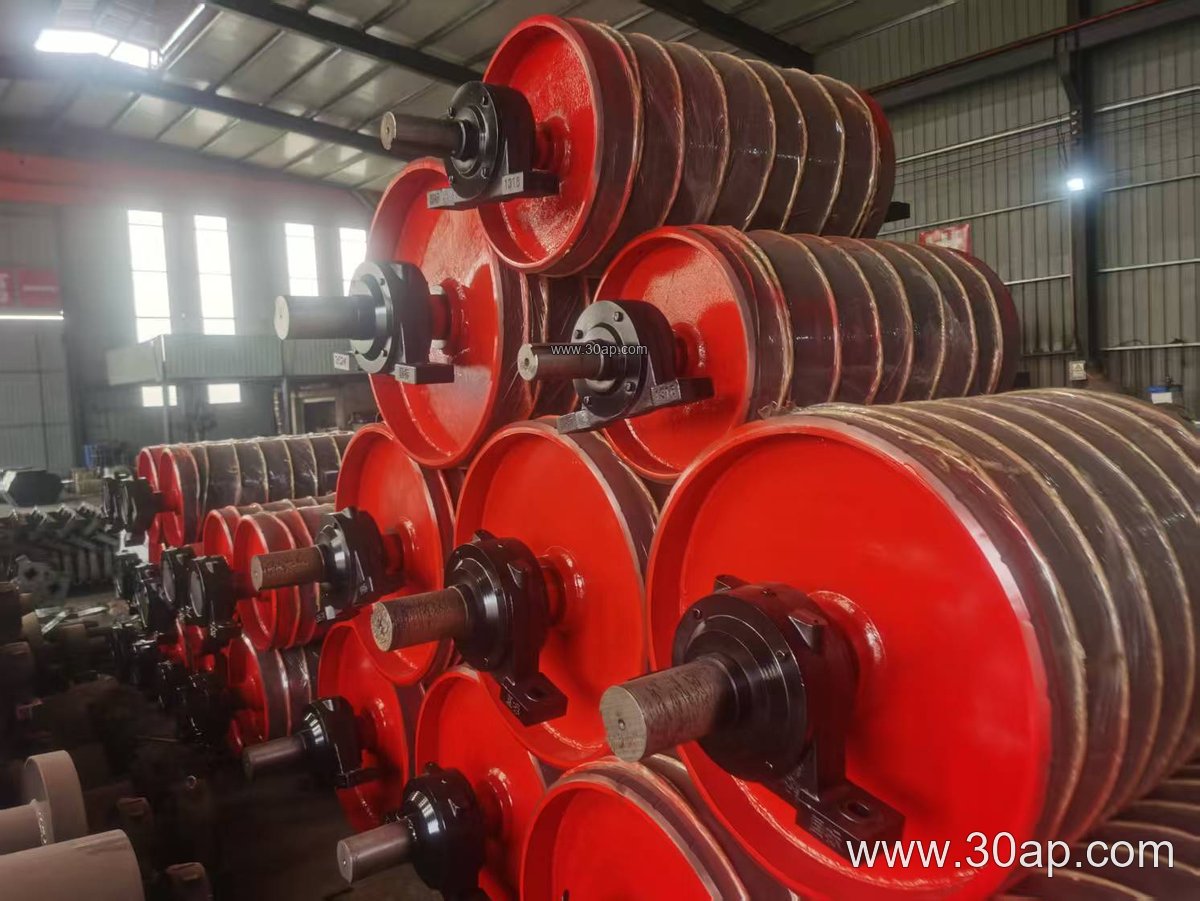
It is important not to confuse a tail pulley with a drive pulley or a bend pulley. A drive pulley is connected to a motor and drives the belt. A bend pulley changes the belt direction without providing tension or drive. A tail pulley, by contrast, is usually at the tail end and may be fixed or mounted on a tensioning device such as a take-up frame. Sometimes a tail pulley also acts as a tension pulley when it is mounted on a sliding base. However, a tension pulley is a specific subtype, and a tail pulley can serve that function only when designed for it. Similarly, a wing pulley is a different subtype used for self-cleaning, not a replacement for a standard tail pulley.
Specifications and Selection Guidance
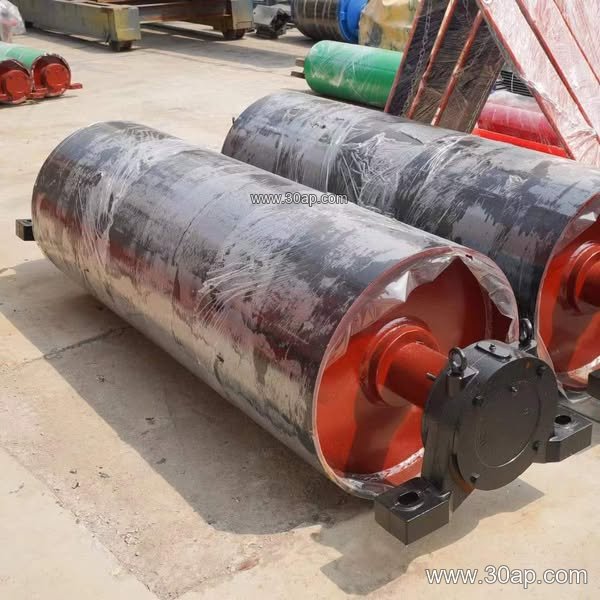
When selecting a tail pulley, consider belt width, pulley diameter, shaft diameter, lagging type, and bearing size. The table below lists common reference values for belt width and corresponding pulley face width. These are typical examples, not mandatory combinations. The actual pulley diameter and shaft size depend on belt tension, material weight, and conveyor design.
| Belt Width | Typical Pulley Face Width | Example Diameter (for reference) |
|---|---|---|
| B400 | ≈500 mm | Ø200–Ø315 |
| B500 | ≈600 mm | Ø250–Ø400 |
| B650 | ≈750 mm | Ø315–Ø500 |
| B800 | ≈950 mm | Ø400–Ø630 |
| B1000 | ≈1150 mm | Ø500–Ø800 |
| B1200 | ≈1400 mm | Ø630–Ø1000 |
| B1400 | ≈1600 mm | Ø800–Ø1250 |
| B1600 | ≈1800 mm | Ø1000–Ø1400 |
| B1800 | ≈2000 mm | Ø1250–Ø1600 |
Shaft diameters commonly range from Ø50 to Ø200, but the correct size is determined by torque and load. Lagging thickness of 8, 10, 12, 15, or 20 mm is available, with diamond or herringbone patterns used for better traction in wet or dusty conditions. Ceramic lagging may be chosen for high-wear areas. Always consult the conveyor design to match the tail pulley to the belt width and tension requirements.
Maintenance and Buyer Checklist
Buyers should verify the pulley diameter, shaft size, bearing type, and lagging specification against the conveyor’s requirements. Check that the tail pulley is compatible with the take-up mechanism and that the bearing blocks fit the conveyor bracket. Regular inspection of lagging wear and bearing condition helps prevent belt misalignment. In dusty environments such as a sand and gravel plant, keep the pulley surface clean to avoid material buildup. Remember that a tail pulley is not interchangeable with a drive pulley or a bend pulley; each has a distinct role in the conveyor system.