What the Ø127 Conveyor Idler Is
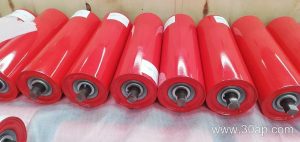
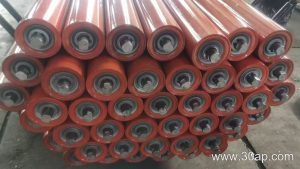
The Ø127 conveyor idler is a carrying or return roller with a 127 mm outside shell diameter, built to support and guide a moving conveyor belt on the load side or the return strand. The 127 mm figure refers to the roller shell diameter, not the shaft or the bearing bore. In many belt conveyor systems this diameter sits in the mid-to-heavy range: larger than the common Ø89 or Ø108 rollers used on lighter lines, and smaller than Ø159 or Ø178 units reserved for very wide or heavily loaded belts. That middle position is why the Ø127 idler roller turns up so often in crushing circuits, aggregate plants and bulk handling lines where belt widths and lump sizes are moderate to large.
How the Roller Is Put Together
Construction is straightforward but the details matter. A typical Ø127 conveyor idler combines a steel tube shell, welded end caps, a through shaft, and one bearing assembly at each end. The shell is usually precision steel tube; buyers may also encounter nylon, ceramic or rubber-covered surfaces for special duties. Seals sit between the end cap and the shaft to keep dust and water out of the bearing cavity, and the quality of that sealing often decides how long the roller lasts in a gritty environment.
Common bearing sizes found in this diameter class include 6205, 6305, 6306 and 6308, but the bearing is selected from the load calculation, not from the shell diameter alone. Shaft diameter is likewise a design decision: it follows the belt tension, the idler spacing and the bracket design, so a Ø127 shell does not imply one fixed shaft size.
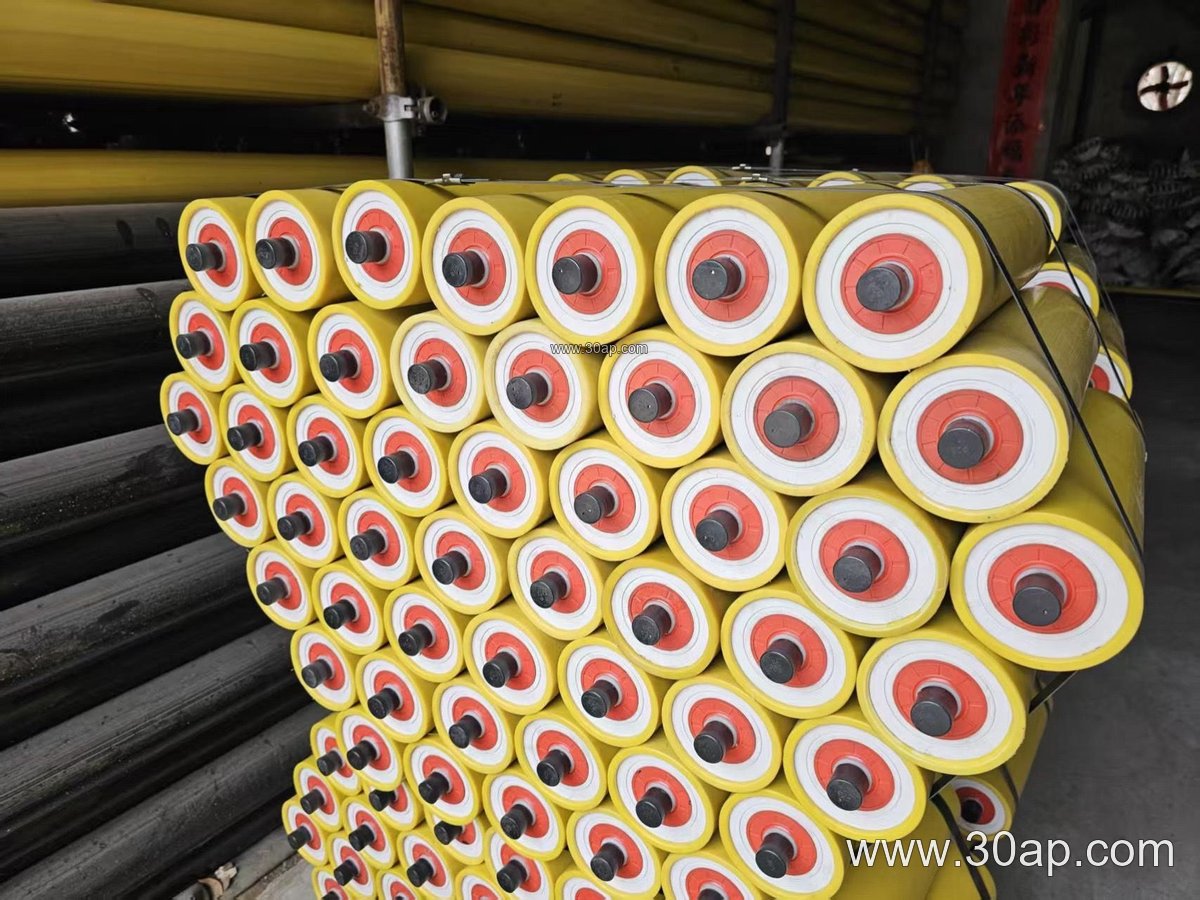
- Shell: steel tube, with nylon, ceramic or rubber options for wear or impact duty
- End caps: welded and machined to hold bearing alignment
- Bearings: typically deep-groove ball bearings in the 6205 to 6308 range
- Sealing: labyrinth or contact seals for dusty service
- Mounting: fixed to the conveyor bracket or frame through the shaft ends
Where It Fits on the Conveyor
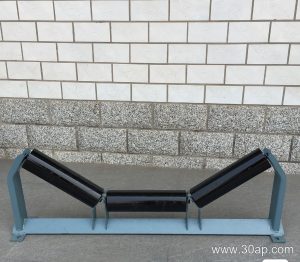
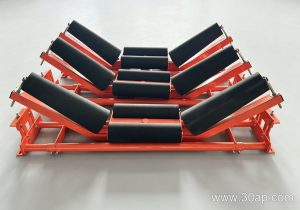
The same 127 mm roller can appear in several positions, and each position changes the roller form rather than the diameter. Troughing sets use two or three rollers to form the belt into a trough; a three-roll set at 35 degrees is a common arrangement on aggregate and cement lines. Transition idlers ease the belt from the flat pulley face into the trough. On the return strand, a flat return roller or a V-return pair keeps the belt supported and helps it track. Impact zones under a crusher discharge may call for cushion rollers with rubber rings, again often in the 127 mm shell size.
Typical installations include:
- Crushing and screening plants handling limestone, granite or slag
- Sand and gravel aggregate lines feeding washing or stockpiling
- Coal preparation plants and power station coal handling
- Cement plants moving clinker and raw meal
- Port bulk terminals and steel plant sinter lines
Matching Diameter, Belt Width and Roll Length
Roll length is not fixed by diameter. It follows belt width, trough angle and the number of rollers in the set. The table below gives common reference values for three-roll troughing sets; side rollers and centre rollers can differ, and the final length should always be confirmed against the actual frame drawing.
| Belt width | Typical roller length, three-roll troughing | Common trough angles |
|---|---|---|
| B650 | about 250 mm | 20, 30, 35 degrees |
| B800 | about 315 mm | 20, 30, 35, 45 degrees |
| B1000 | about 380 mm | 30, 35, 45 degrees |
| B1200 | about 465 mm | 30, 35, 45 degrees |
| B1400 | about 530 mm | 35, 45 degrees |
| B1600 | about 600 mm | 35, 45 degrees |
A 127 mm roller is frequently paired with belts in the B800 to B1600 range, but that is a tendency, not a rule. A narrow belt on a high-tension, high-speed line may also justify a larger shell, while a wide, slow belt may run smaller rollers if the load per roller is low.
What Buyers Should Check Before Ordering
Start with the belt width and the trough angle, then confirm the roller length and the mounting dimensions of the existing conveyor bracket. Ask for the bearing size and seal type, because two rollers with the same shell diameter can differ greatly in service life. For dusty coal or cement duty, specify the sealing arrangement clearly; for impact zones, ask about cushion roller options with rubber rings. Check that the shaft ends match the frame slot, and confirm the roller’s static load rating against the actual belt tension and idler spacing. Surface finish also deserves a look: a ceramic or rubber-covered shell may be worth the extra cost where abrasive material or sticky fines shorten plain steel roller life.
Finally, keep a small stock of spare rollers and check alignment and rotation at each maintenance stop. A worn or seized Ø127 conveyor idler can wear the belt edge, increase drive load and cause mistracking, so replacing it early is usually cheaper than repairing the belt.