What a Plain Lagged Pulley Is
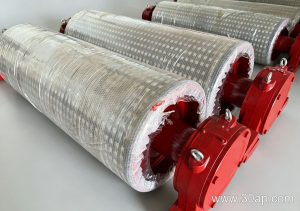
A plain lagged pulley is a conveyor pulley whose shell carries a smooth rubber or polymer lagging without grooves, diamonds, or herringbone patterns. In many plants it is simply called a smooth lagged drum or plain rubber-lagged roller. The lagging raises friction between the shell and the conveyor belt, which helps transmit torque at a drive position and reduces slip where the belt wraps the pulley. Because the surface stays flat, the same pulley can run against the belt with predictable contact and is easy to inspect and clean.
This is not a tail pulley, bend pulley, or take-up pulley by definition. Those names describe the duty position on the conveyor. A plain lagged pulley can be built for a drive, head, tail, or snub position, and the position decides the shaft, bearing housing, and lagging thickness far more than the surface pattern does.
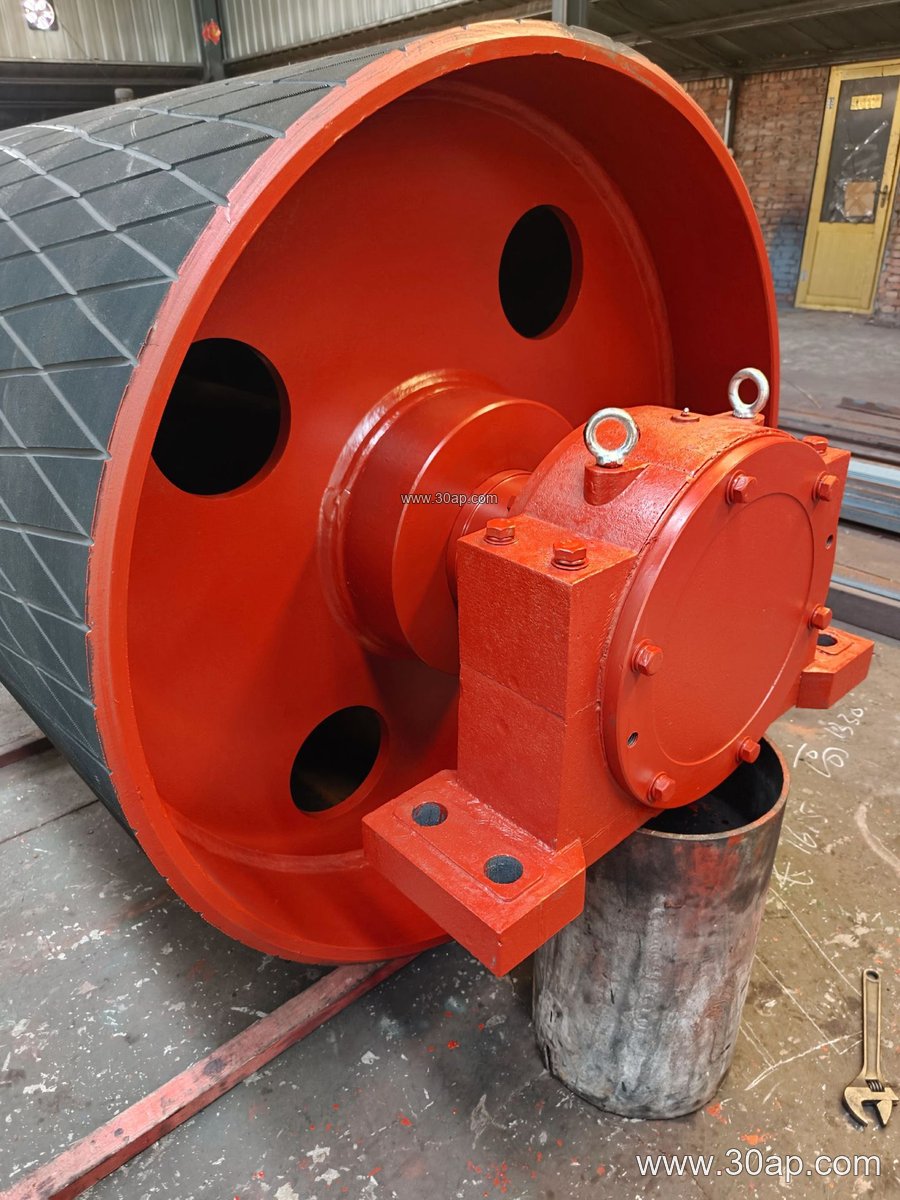
How the Smooth Lagging Is Built
The core is usually a welded steel shell with end discs and a shaft, machined so the lagging sits evenly around the circumference. The plain lagging is applied as a flat rubber sheet, either bonded in a workshop or vulcanized in place depending on the supplier and the required thickness. Common lagging thicknesses are 8, 10, 12, 15, and 20 mm. A thicker layer gives more wear allowance, but it also changes the effective diameter, so the belt path and take-up stroke should be checked before a thick lagging is chosen.
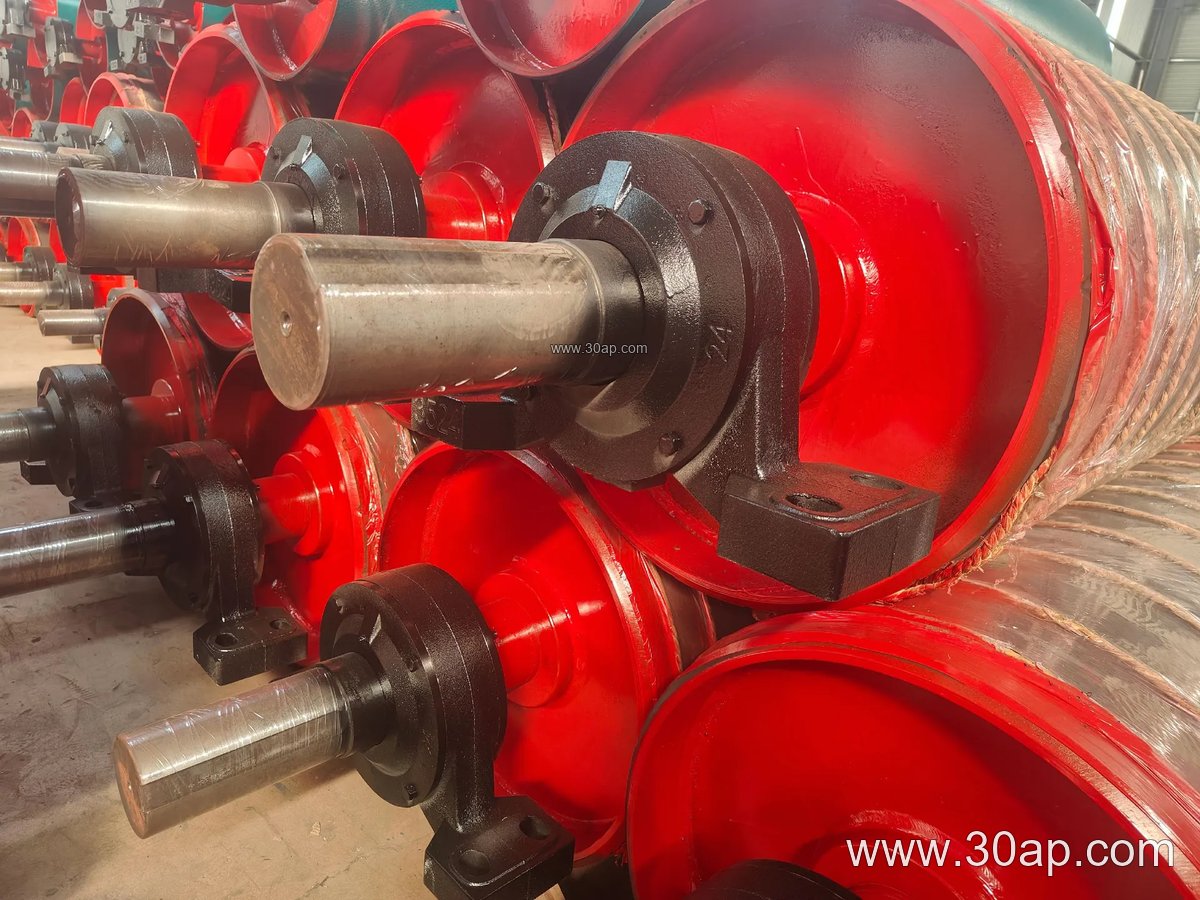
Balance matters on any pulley that will run at speed. A plain lagged pulley should be balanced after lagging, because an uneven sheet or an off-centre joint can cause vibration that shows up in the conveyor bracket and bearing seats. The shaft diameter is set by torque and radial load, not by belt width alone; common shaft sizes run from Ø50 to Ø200 mm on general bulk conveyors.
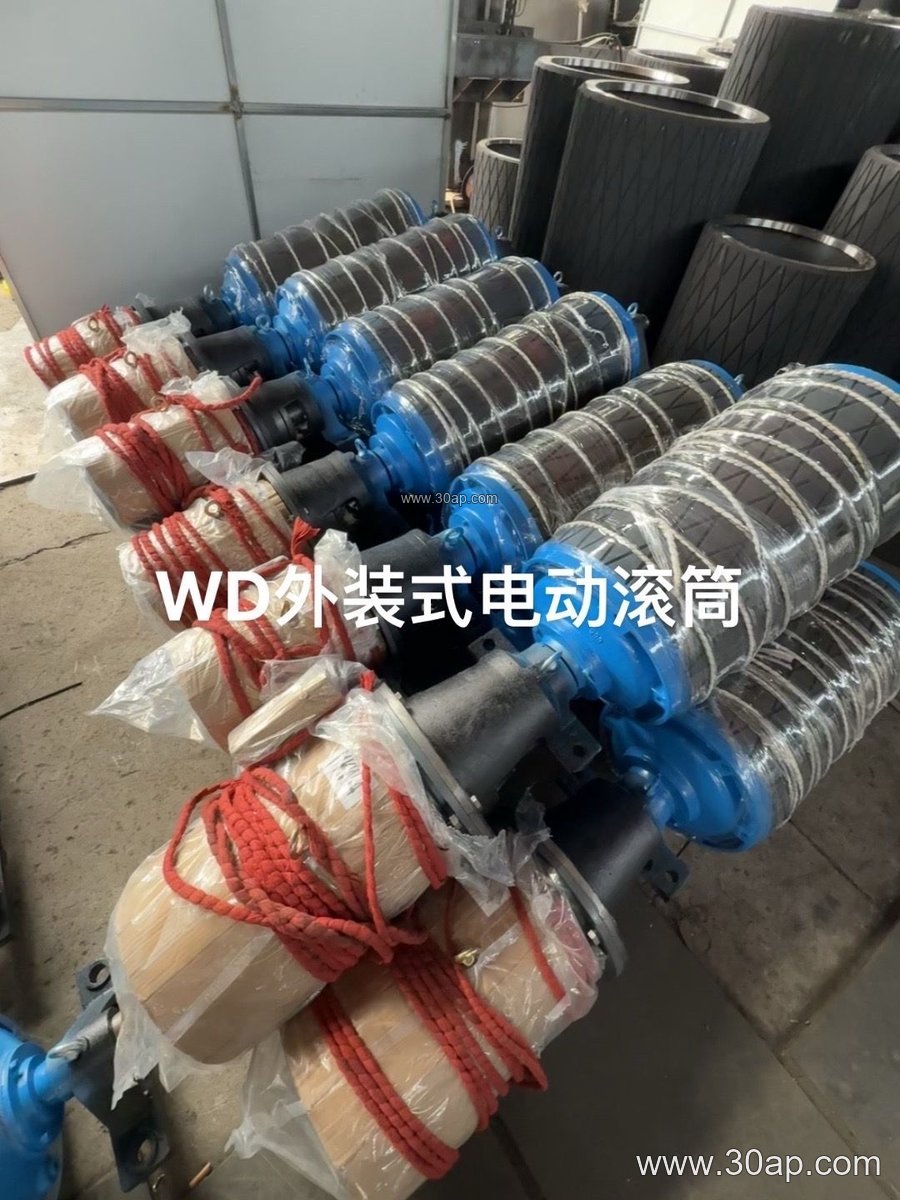
Where Plain Lagging Fits on the Line
In a quarry or sand and gravel line, a plain lagged pulley often appears at the head drive, where the belt leaves the last carrying idler roller and the wrap angle is greatest. A cement plant clinker conveyor may use the same smooth surface on a snub or bend position where the belt only needs a gentle change of direction and a little extra grip. Power station coal handling and port bulk terminals also use smooth lagging where sticky material would pack into grooves and throw the belt off track.
Plain lagging is a practical choice when the conveyed material is wet, fine, or likely to cling. Grooved and diamond patterns can hold debris; a flat surface sheds it more readily. The trade-off is that a plain lagged pulley offers less wet-weather grip than a grooved or ceramic surface, so the drive design should have enough wrap angle and belt tension to compensate.
Matching Pulley Size to the Conveyor
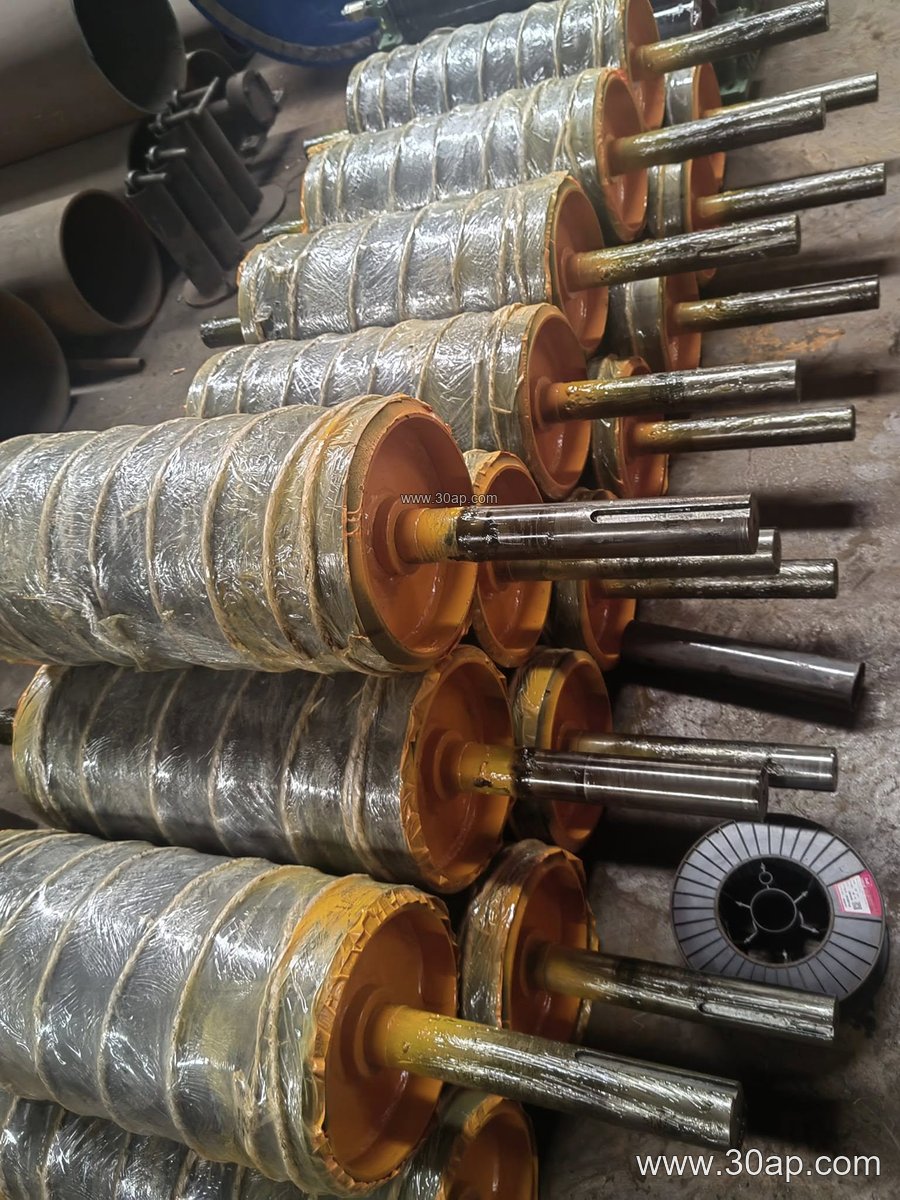
Belt width and pulley diameter are related by the belt path and the allowable bending stress in the belt, not by a fixed rule. A B800 belt may run on a Ø500 pulley in one layout and a larger diameter in another. The table below gives reference combinations that appear in general conveyor design; they are starting points for discussion, not a supply promise.
| Belt width | Typical shell face width | Reference diameter range | Common lagging |
|---|---|---|---|
| B400 | approx. 500 mm | Ø200 to Ø315 | 8 to 10 mm plain |
| B650 | approx. 750 mm | Ø315 to Ø500 | 10 to 12 mm plain |
| B800 | approx. 950 mm | Ø400 to Ø630 | 10 to 15 mm plain |
| B1000 | approx. 1150 mm | Ø500 to Ø800 | 12 to 15 mm plain |
| B1200 | approx. 1400 mm | Ø630 to Ø1000 | 12 to 20 mm plain |
| B1400 | approx. 1600 mm | Ø800 to Ø1250 | 15 to 20 mm plain |
Shell face width is normally a little wider than the belt so the belt edge is fully supported. A B1200 × Ø1000 plain lagged pulley, for example, is a common size on medium-duty aggregate conveyors, while a B800 × Ø500 unit suits a shorter transfer belt. These pairings are examples only; a wider belt can run on a smaller diameter if the belt construction and wrap angle allow it.
Buyer Checklist
- State the duty position: drive, tail, snub, or take-up. The position changes the bearing and shaft requirements.
- Give the belt width, belt type, and belt speed so the supplier can check the wrap angle and lagging thickness.
- Confirm the shaft diameter from torque and load, and ask for the bearing housing drawing before approving the order.
- Ask whether the lagging is workshop-bonded or field-vulcanized, and how the joint is finished.
- Check that the pulley will be balanced after lagging, especially on high-speed drives.
- Keep spare conveyor bracket bolts and bearing seals on hand so a pulley change does not stop the line for a small part.
A plain lagged pulley is a simple component, but the smooth surface, the lagging thickness, and the shaft design all need to match the conveyor it serves. Getting those details right at the enquiry stage avoids slip, vibration, and premature belt wear later.