Where a Double-Sealed Idler Fits on the Conveyor
On a bulk handling line, the carrying side and the return side both depend on rolling components that keep the conveyor belt moving with low resistance. A double-sealed idler is an idler roller built with two sealing stages at each bearing end, so that fine dust, grit and moisture have a harder path to the bearing cavity. In a limestone quarry or a coal preparation plant, that extra barrier often decides how long a roller stays free-turning between maintenance stops.
The double-sealed idler is not a separate position on the machine. It is a sealing construction applied to carrying idlers, return idlers and transition rolls. That distinction matters when specifying: the seal is a feature, while trough angle and roll arrangement describe where the roller sits and how it supports the belt.
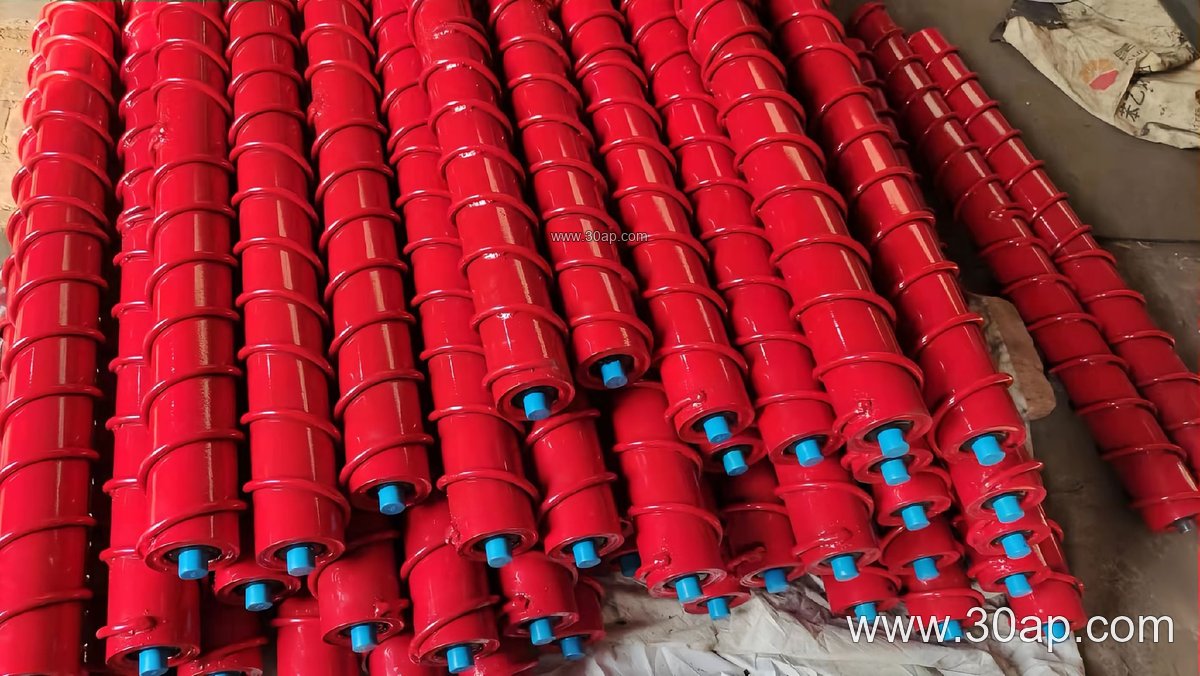
How the Seal Is Built
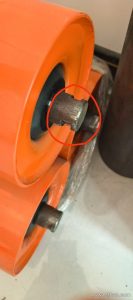
Most designs place a primary lip seal or labyrinth ring near the outer face of the end cap, backed by a secondary seal closer to the bearing. A labyrinth path forces particles to change direction several times, while a lip element wipes the rotating shaft surface. Some rollers add a grease-filled chamber between the two stages, which flushes contaminants outward during relubrication.
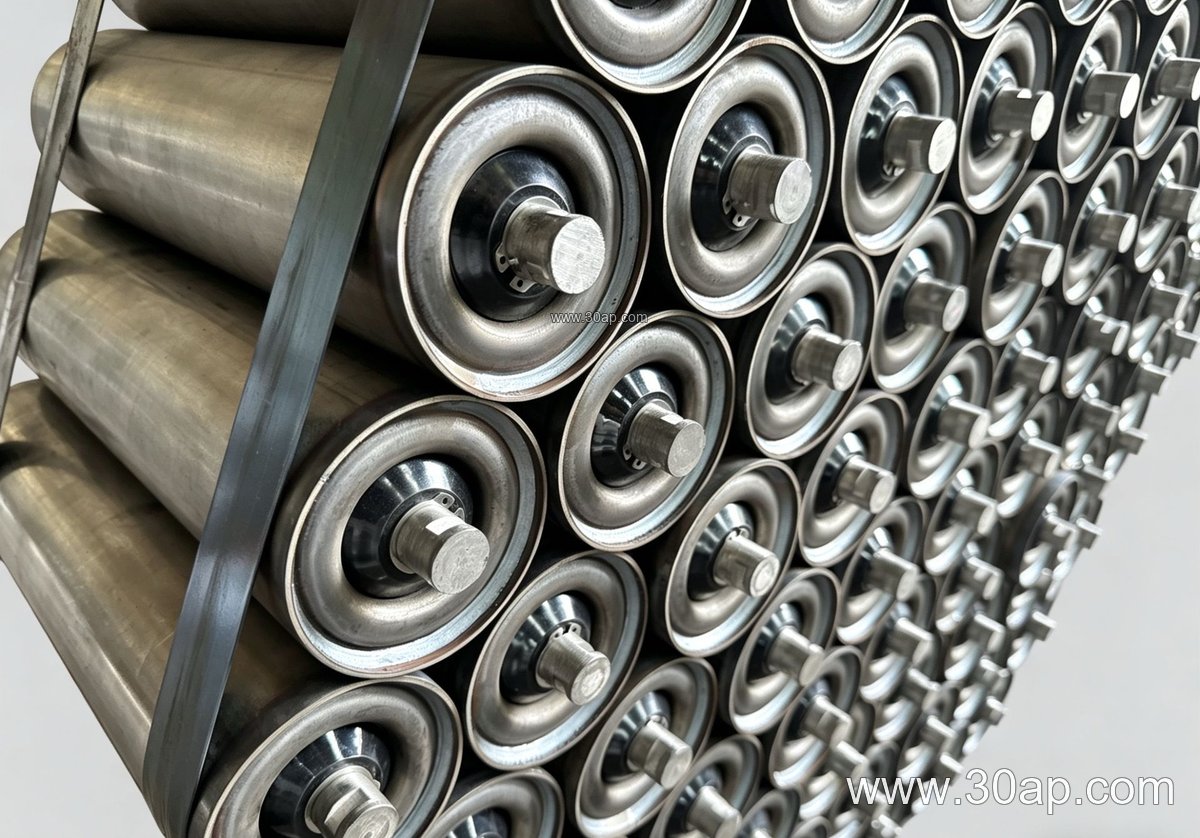
The bearing housing, shaft and end cap are machined to hold both stages in line. A poorly aligned secondary seal rubs and wears quickly, so concentricity of the end cap matters as much as the seal material. Common bearing sizes in this class include 6204, 6205, 6305, 6306, 6308 and 6310, matched to shaft and load requirements rather than to belt width alone.
Typical Service Conditions
Double-sealed rollers are usually chosen where the environment is abrasive or wet. Two examples:
- Cement plants and crushing circuits. Clinker dust and limestone fines are fine enough to enter ordinary clearances; a two-stage seal slows ingress on both carrying and return rolls.
- Coal handling and power plant coal yards. Wash-down water and coal dust combine into a paste that attacks single-lip seals, making the double-sealed version a practical option on the return run.
The same reasoning applies to sand and gravel lines and to tunnel spoil conveyors, where grit is constant and maintenance windows are short.
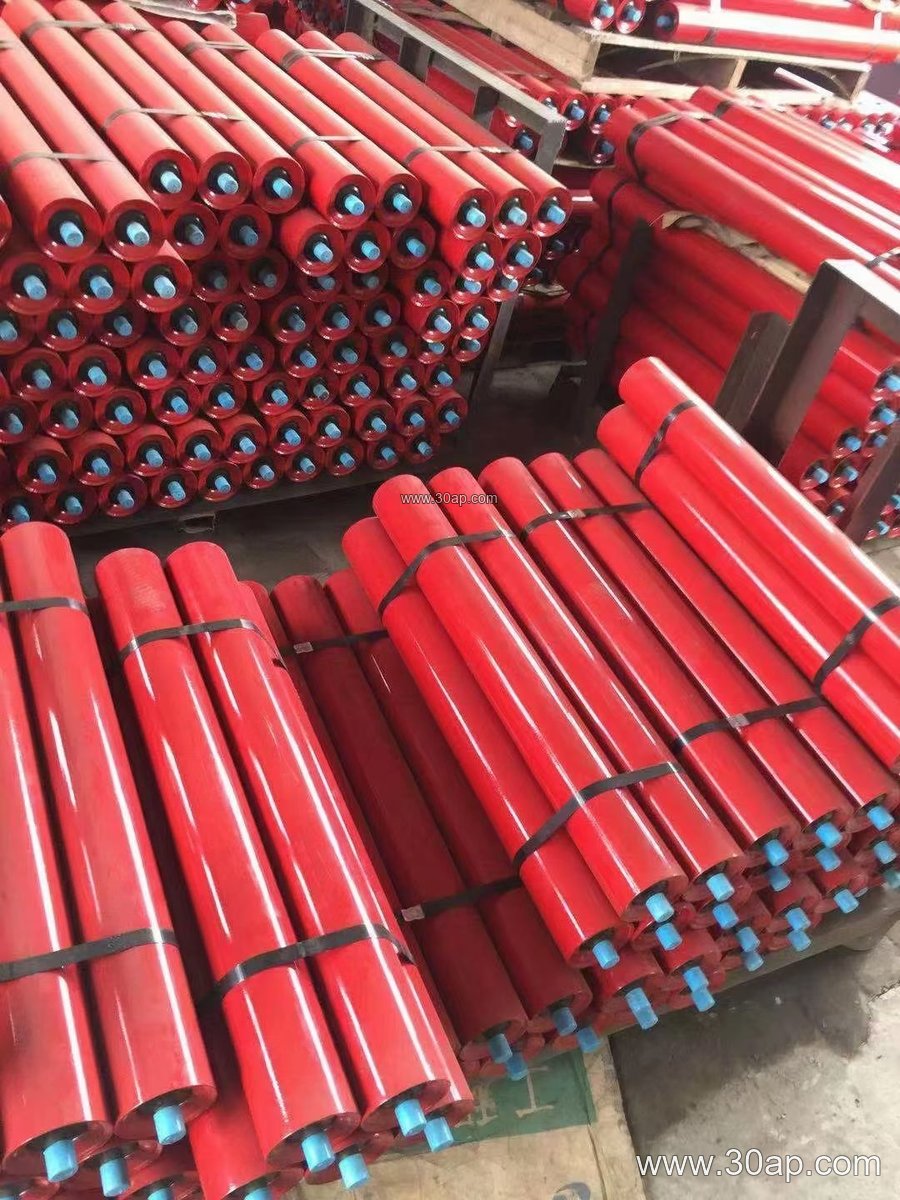
Dimensions and Arrangements to Confirm
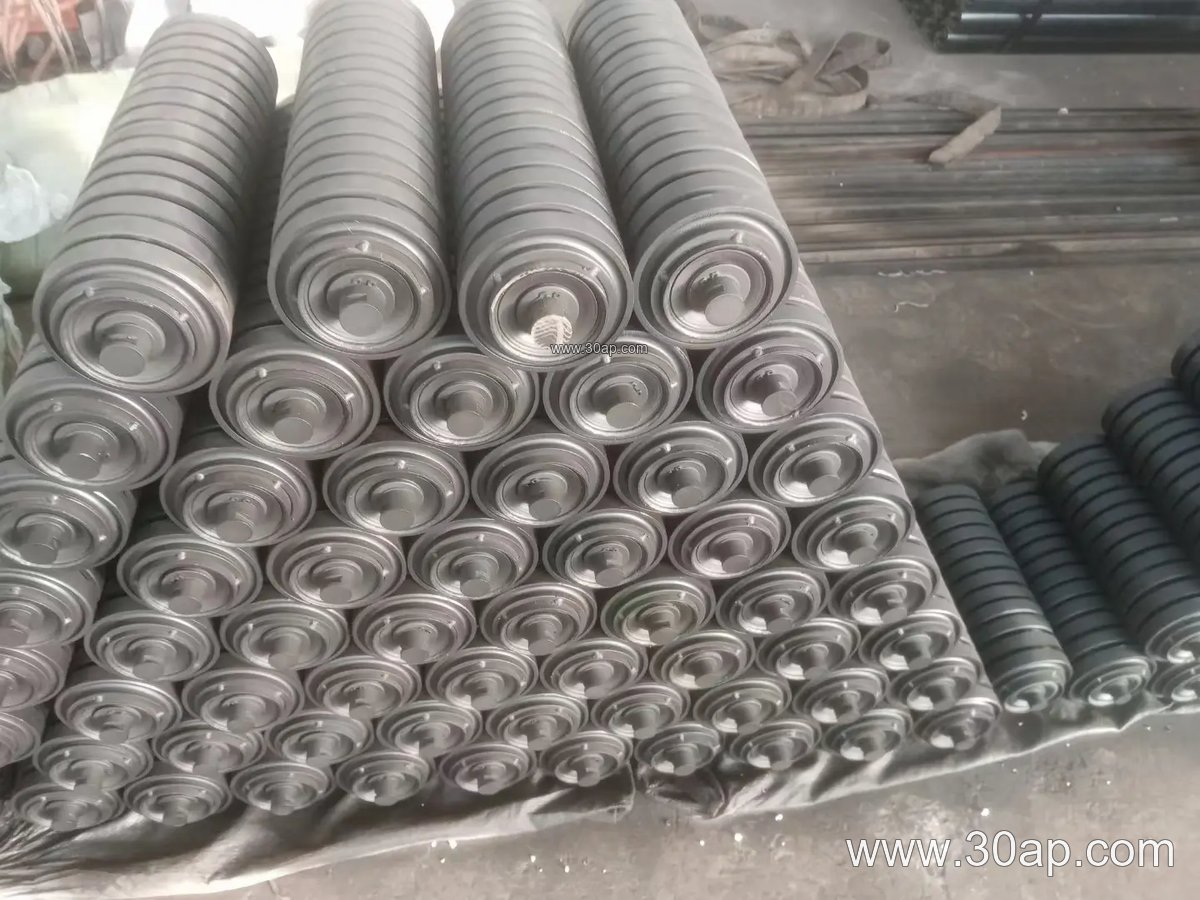
Roll diameter, roll length and bearing size are selected from the conveyor design, not from a single catalogue line. The table below gives common reference values; final dimensions follow the actual belt width, trough angle and idler group.
| Item | Common reference values | Notes |
|---|---|---|
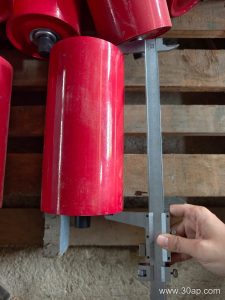
| Roll diameter | Ø63, Ø76, Ø89, Ø102, Ø108, Ø127, Ø133, Ø159, Ø178, Ø194, Ø219 | Larger diameters suit heavier loads and higher belt speeds |
| Belt width | B400, B500, B650, B800, B1000, B1200, B1400, B1600, B1800, B2000 | B2200 and B2400 also appear on large installations |
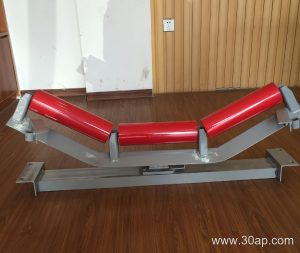
| Trough angle | 20°, 30°, 35°, 45° | Affects material cross-section and side roll length |
| Idler group | Single roll, two-roll, three-roll trough | Return side often uses a flat or V-shaped arrangement |
| Roll surface | Steel tube, nylon, ceramic, rubber ring | Rubber rings are common on impact zones |
| Bearing | 6204, 6205, 6305, 6306, 6308, 6310 | Selected by load and shaft, not by belt width alone |
For a three-roll trough group, common roll lengths are roughly 200 mm at B500, 250 mm at B650, 315 mm at B800, 380 mm at B1000, 465 mm at B1200 and 530 mm at B1400, with larger values at wider belts. These are examples only; centre and side rolls can differ, and the trough angle changes the geometry.
What a Buyer Should Check
Start with the sealing arrangement itself: ask how many stages are used, what material each stage is made from, and whether the gap between them is greased. Then confirm the shaft diameter and bearing number against the existing conveyor bracket, because a replacement roller must fit the frame without adapters.
Check the roll surface against the duty. A steel tube is standard, nylon suits lighter abrasive service, ceramic is used where wear is severe, and rubber rings help at transfer points. Finally, match the idler group to the belt width and trough angle, and keep spare rollers of the same sealing class so that a failed unit is replaced like for like. The sealing detail is small, but it is usually the difference between a roller that runs for years and one that seizes within a season.