What a 2400mm Conveyor Belt Is and Where It Fits
A 2400mm conveyor belt is a wide-format rubber or polymer belt with a nominal width of 2400 millimeters. In practice, this is often written as B2400 and may also be called a 2.4-meter-wide conveyor belt. It sits at the upper end of common belt widths used in bulk material handling, where large tonnages, wide material spread, or long transfer distances justify a broader carrying surface.
This belt width is not a universal answer for every conveyor. It is selected when the conveyor system has been designed around a wide belt, with matching pulleys, idlers, and frame geometry. A 2400mm belt cannot simply be dropped into a conveyor built for narrower belts, because the pulleys, support structure, and take-up system must all be sized to suit the wider profile.
How the Belt Is Built
Construction follows the same layered logic as other heavy-duty belts, scaled to a wider format. The carcass provides tensile strength and resistance to elongation, while the cover rubber protects against abrasion, impact, and environmental exposure.
Common carcass options include EP fabric, NN nylon, and steel cord. For a belt this wide, steel cord and high-strength EP constructions are frequently chosen when the conveyor must carry heavy loads over long distances. The number of fabric plies typically ranges from two to six, depending on the required strength and the conveyor profile.
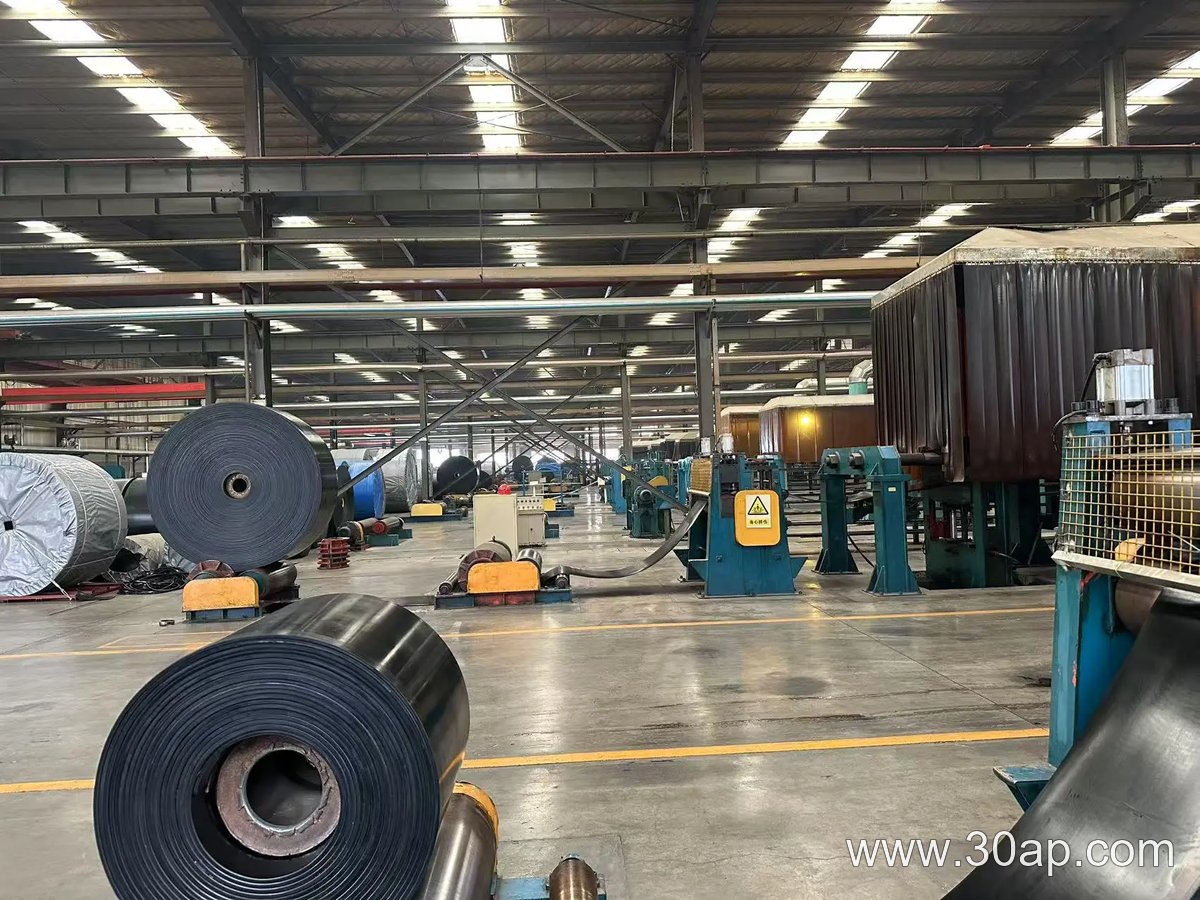
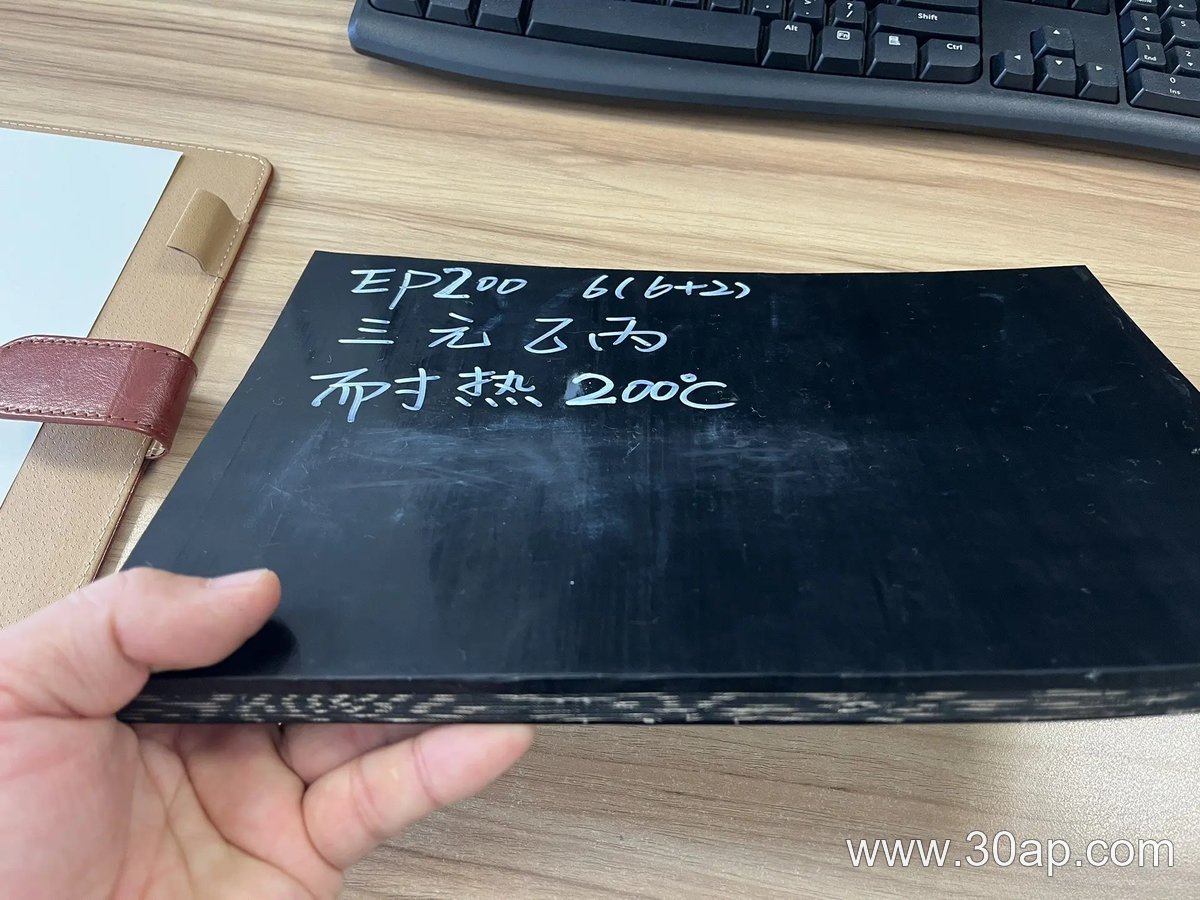
Cover thickness is usually expressed as top cover plus bottom cover. Common combinations include 3+1.5 mm, 4+2 mm, 5+2 mm, 6+2 mm, and 8+3 mm. A thicker top cover is often used when the belt handles sharp, abrasive, or high-impact material.
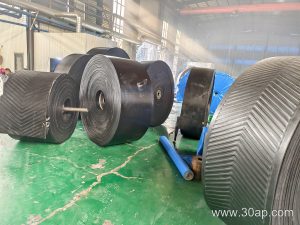
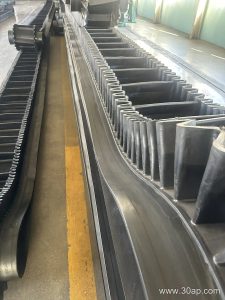
Specialty versions may add heat resistance, oil resistance, flame retardancy, antistatic properties, cold resistance, or resistance to acids and alkalis. Surface forms such as patterned, chevron, or corrugated sidewall belts exist for specific applications, but they are separate design choices and do not replace the standard flat 2400mm belt described here.
Typical Applications
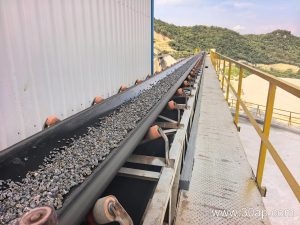
Wide belts are common in mining, mineral processing, port bulk terminals, large crushing plants, and heavy industrial yards. A 2400mm conveyor belt is often found where the material is loaded in a broad, even layer or where the conveyor must move high volumes without excessive belt speed.
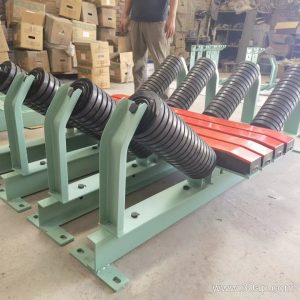
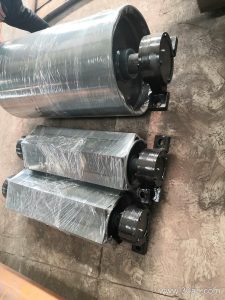
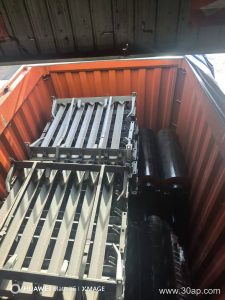
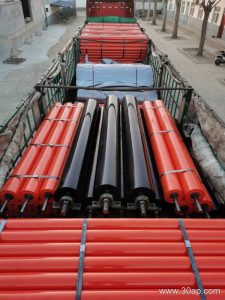
In these systems, the belt works with conveyor pulleys, idler rollers, and conveyor brackets that are sized for the wider load. The drive pulley, tail pulley, and bend pulley each have a distinct role and are not interchangeable. The drive pulley transmits power, the tail pulley helps control belt tracking and tension at the return end, and the bend pulley changes the belt path without driving the system. All of them must be matched to the belt width and the conveyor design.
Buyer Checklist
Before specifying a 2400mm conveyor belt, gather the following information:
- Material type, lump size, density, and temperature
- Required belt strength grade, such as EP200, EP400, EP630, or higher
- Cover thickness and any special resistance requirements
- Conveyor layout, including incline, load points, and transition distances
- Pulley diameters and idler roller spacing
- Belt joint preference, such as vulcanized splice or mechanical fastener
Do not assume that a 2400mm belt automatically pairs with one specific pulley diameter or shaft size. Those values come from the conveyor design, not from belt width alone. A qualified engineer should confirm the belt tension, pulley loading, and support spacing for the actual duty.
Handling and Maintenance Notes
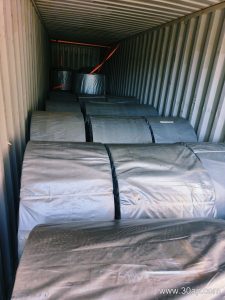
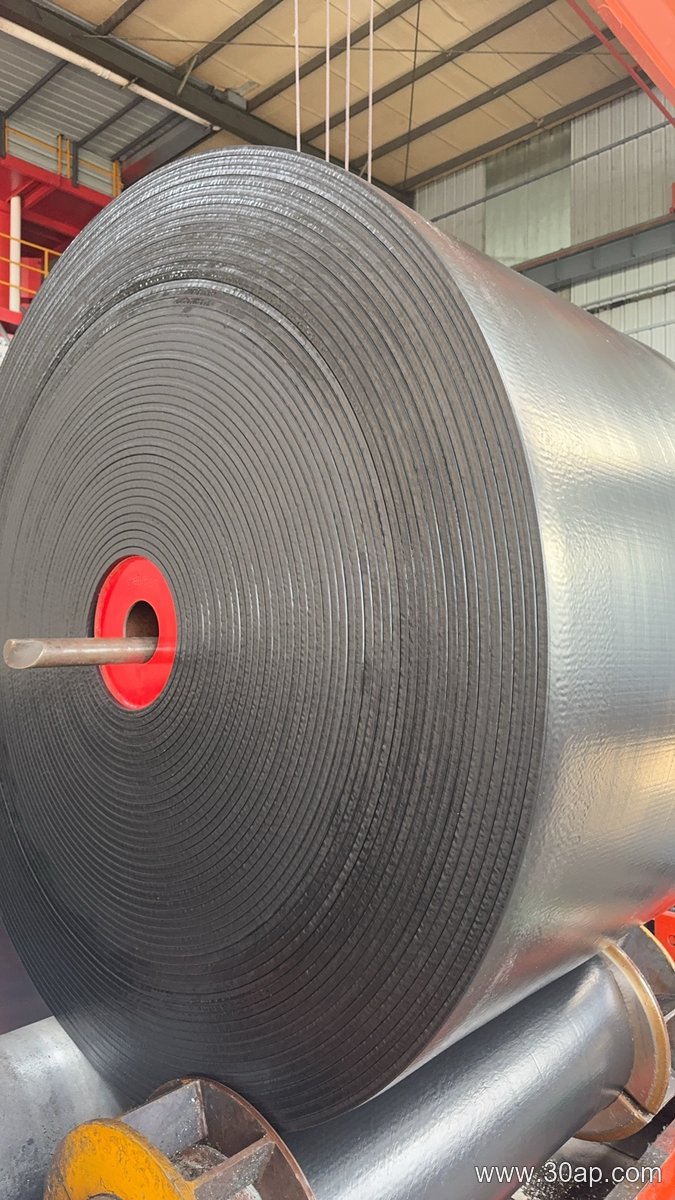
Wide belts are heavy and require careful lifting and alignment during installation. Tracking is especially important on broad belts, because a small misalignment can create edge wear or spillage along a long section. Regular inspection of the belt surface, splices, and edges helps catch problems early.
Idler rollers should turn freely and remain aligned with the belt path. Worn or seized rollers can cause localized wear on a 2400mm belt, and the effect is often more noticeable on wide belts because the load is distributed across a larger area. Conveyor brackets should be checked for corrosion or loosening, particularly in wet or dusty environments.
When replacing a belt, confirm the new item matches the original width, strength, cover grade, and splice orientation. A belt that is stronger or thicker than the conveyor was designed for can affect pulley loading and take-up travel.
Specification Reference
The following values are common reference points. Actual supply depends on the manufacturer and the specific conveyor design.
| Parameter | Common Range or Example |
|---|---|
| Belt width | 2400 mm (B2400) |
| Carcass type | EP, NN nylon, steel cord |
| Strength grade | EP200, EP315, EP400, EP500, EP630, EP800, EP1000, EP1250, EP1600, EP2000 |
| Cover thickness | 3+1.5, 4+2, 5+2, 6+2, 8+3 mm |
| Ply count | 2 to 6 layers |
| Special properties | Heat, oil, flame, antistatic, cold, acid and alkali resistance |
Use these figures as a starting point for discussion with the belt supplier and conveyor designer. The final specification should reflect the actual operating conditions and the mechanical limits of the conveyor system.