What a Mining Belt Conveyor Idler Does on the Line
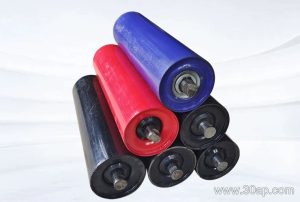
A mining belt conveyor idler is the rotating roller that supports the conveyor belt and the material it carries. In a quarry, a coal preparation plant, or a cement plant, dozens or hundreds of these rollers sit under the belt, carrying the load between the head and tail of the conveyor. Each idler roller turns with the belt, so the belt glides instead of dragging. Friction, energy use, and belt wear all depend on how well the idlers do their job.
The idler is not a pulley. A conveyor pulley drives, returns, or bends the belt at the ends of the conveyor. The idler works along the carrying and return runs, and the two should never be treated as interchangeable parts.
How the Roller Is Put Together
A typical conveyor idler roller has a steel tube shell, a shaft, two bearing housings, bearings, and a sealing system. The seal is what keeps dust and water out, and this matters more in a mine or a stone crushing line than almost anywhere else. Grit that reaches the bearing shortens roller life quickly.
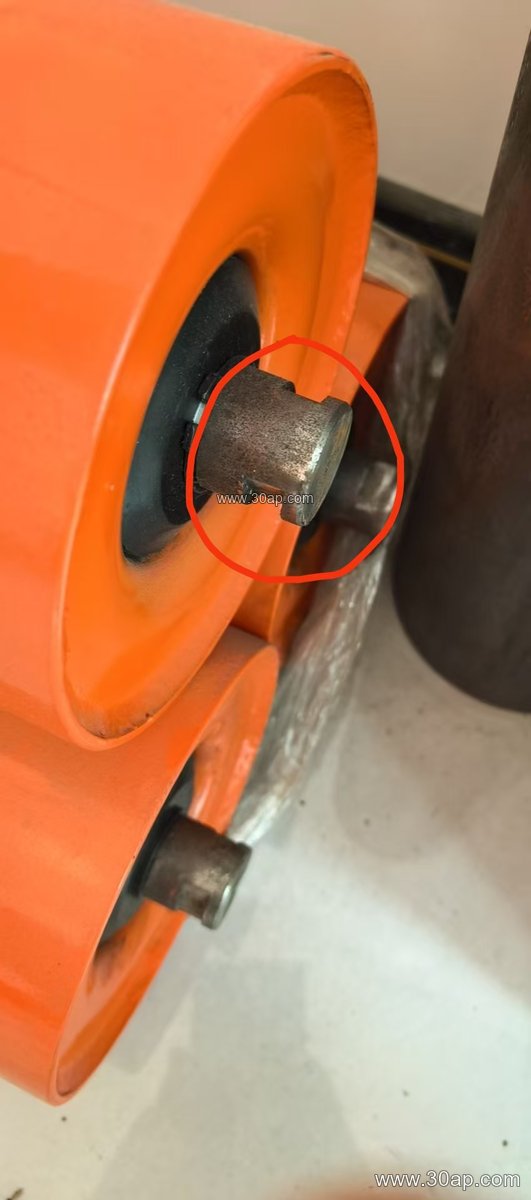
Roller surfaces vary. Plain steel tube is common. Nylon or ceramic covers help in sticky or abrasive service, and rubber rings are used on impact rollers at loading points. Bearings are usually deep-groove ball bearings such as 6204, 6205, 6305, 6306, 6308, or 6310, chosen according to load, speed, and roller diameter rather than a single fixed rule.
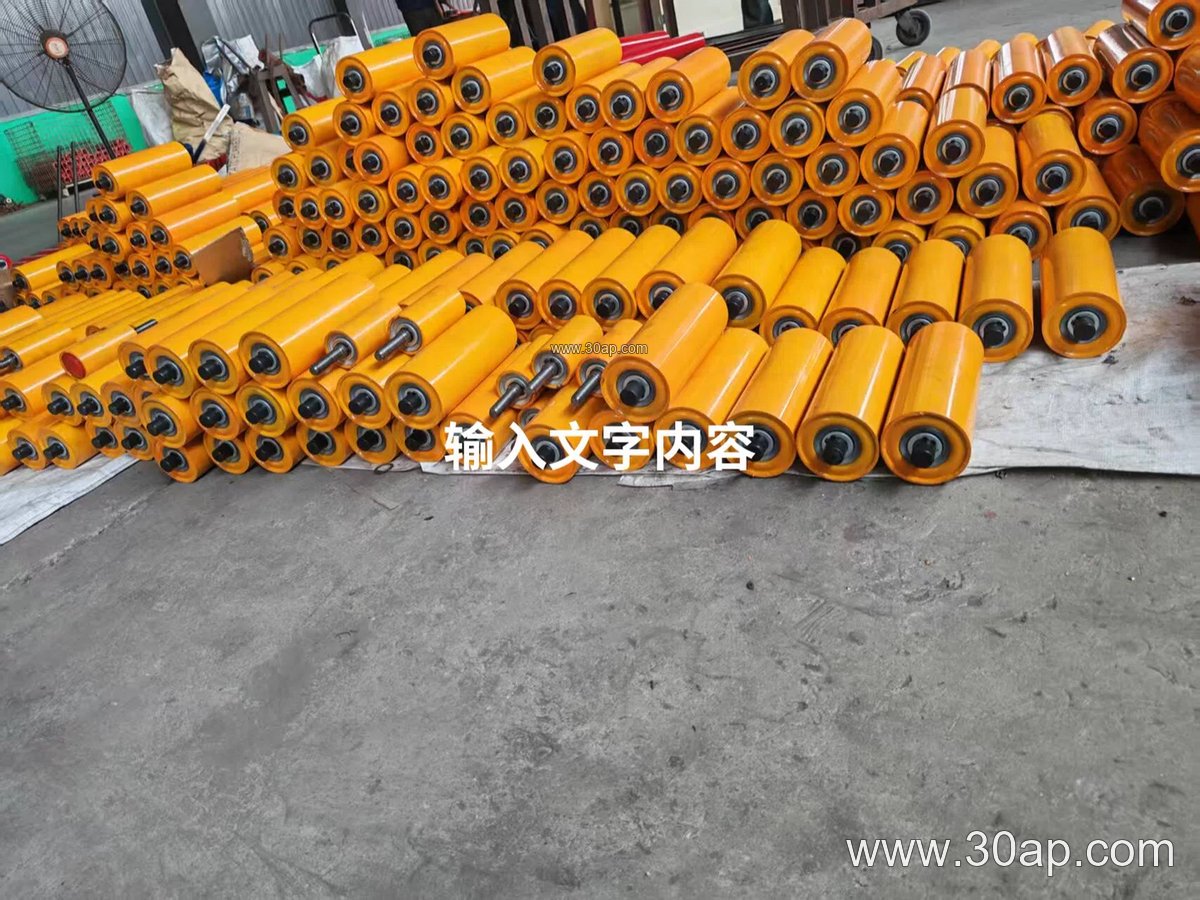
Common Idler Types and Where They Sit
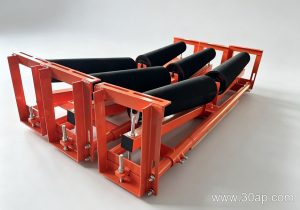
- Troughing idlers – three-roll or two-roll sets on the carrying side, forming a trough that holds the material.
- Transition idlers – placed near the head and tail to ease the belt from flat to troughed.
- Return idlers – flat or V-shaped, supporting the empty belt on its way back.
- Impact idlers – rubber-ring or cushioned rollers under the loading chute.
- Self-aligning idlers – friction or tapered types that help keep the belt centered.
- Spiral and comb idlers – used where sticky material tends to build up on the roller.
These are not replacements for one another. An impact idler solves a loading problem; a return idler supports the empty strand. Matching the type to the position on the conveyor is the first selection step.
Dimensions Buyers Usually Compare
Roller diameter, belt width, trough angle, and roller length are the main reference figures. The table below shows common ranges, not fixed rules. Roller length follows belt width, trough angle, and idler arrangement, and the side rollers may differ from the center roller.
| Parameter | Common Options |
|---|---|
| Roller diameter | Ø63, Ø76, Ø89, Ø102, Ø108, Ø127, Ø133, Ø159, Ø178, Ø194, Ø219 mm |
| Belt width | B400, B500, B650, B800, B1000, B1200, B1400, B1600, B1800, B2000, B2200, B2400 |
| Trough angle | 20°, 30°, 35°, 45° |
| Idler set | single roll, two-roll, three-roll troughing |
| Roller surface | steel tube, nylon, ceramic, rubber rings |
| Bearing examples | 6204, 6205, 6305, 6306, 6308, 6310 |
As a rough example of how roller length scales, a three-roll troughing set might use about 200 mm rollers at B500, 315 mm at B800, 465 mm at B1200, and 600 mm at B1600. These are typical figures only, and the final length is set by design. A wider belt does not lock the conveyor into one pulley diameter, and belt width alone does not determine shaft size.
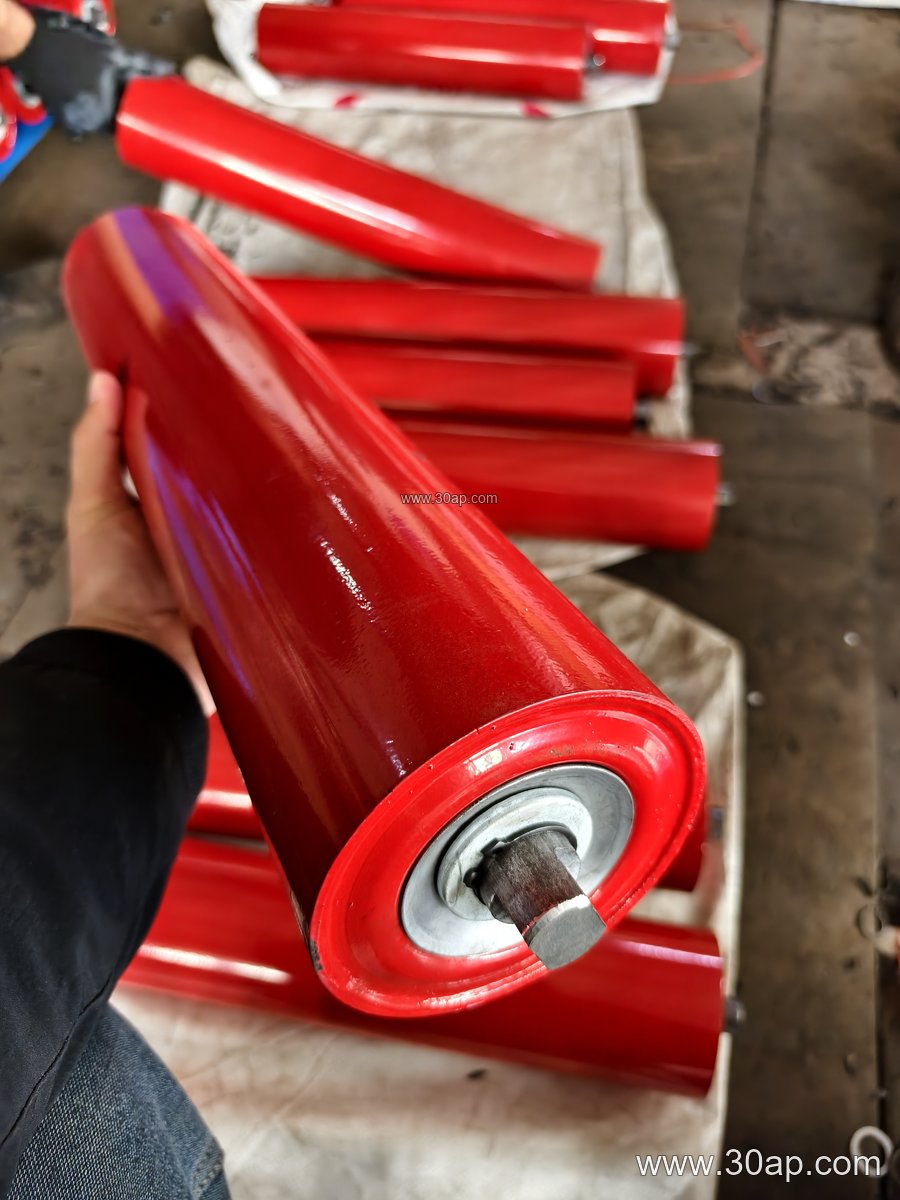
Where These Rollers Work
In a coal washing plant, dust and moisture make sealing the deciding factor. In a limestone quarry or an aggregate line, abrasive stone and heavy loads favor thick-walled tubes and well-protected bearings. Trough angle also matters: a 35° or 45° trough holds material better on a steep, fully loaded strand, while a flatter 20° or 30° setting suits wider belts and freer-flowing cargo.
What to Check Before Ordering
Confirm the belt width and the idler position first, then the roller diameter and trough angle. Ask how the seal is built, what bearing is fitted, and whether the roller is balanced for the intended belt speed. Check that the conveyor bracket and frame match the idler set, since a correct roller on the wrong bracket still causes misalignment. For self-aligning sets, a small forward tilt of about 1.5° to 2° is common and should be stated in the specification.
Finally, keep spare rollers for the loading zone, where impact and spillage do the most damage. A well-chosen mining belt conveyor idler is a low-cost part that protects the conveyor belt, the pulley, and the whole conveying system.