What a Conveyor Support Leg Does
A conveyor support leg, also called a conveyor stand leg or support bracket leg, is the vertical member that carries the weight of the idler set, the conveyor belt, and the material load down to the floor or foundation. In a typical troughing station, the leg works together with a horizontal cross beam and a conveyor bracket to hold three idler rollers at the required trough angle. Without a properly sized and aligned leg, the whole station can sag, twist, or drift out of line.
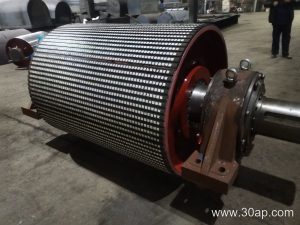
The support leg is not a pulley. Drive pulleys, tail pulleys, and bend pulleys handle power transmission and belt direction, while the leg belongs to the carrying and return side structure. It is a fixed or adjustable steel support that keeps the rollers at the right height and spacing.
Construction and Common Materials
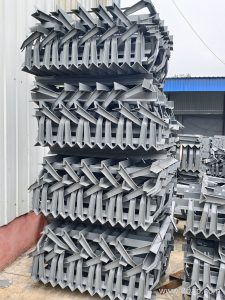
Most legs are fabricated from angle steel, channel steel, or folded steel plate. A simple fixed leg may be a single angle section with pre-drilled holes. A heavier adjustable leg often uses a channel or a folded plate with slotted holes so the roller height or trough angle can be changed on site.
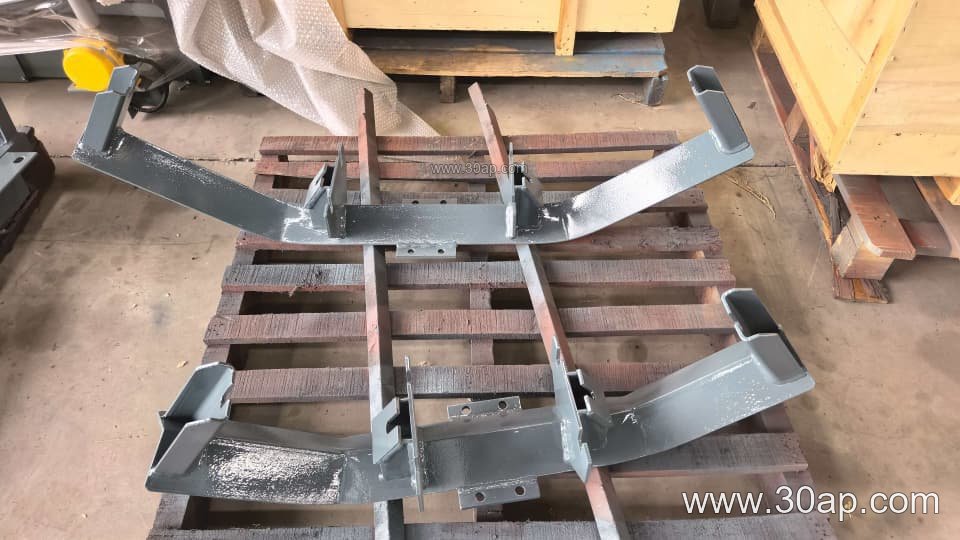
- Angle steel legs: light to medium duty, common on smaller belts.
- Channel steel legs: stronger, used where impact or heavy load is expected.
- Folded plate legs: clean appearance, good stiffness, often used with bolted brackets.
Surface treatment may include painting or galvanizing. The leg usually has a base plate with bolt holes, and the top connects to the cross beam or directly to the bracket. Installation hole spacing and beam length are not fixed values; they change with belt width, trough angle, and the selected roller diameter.
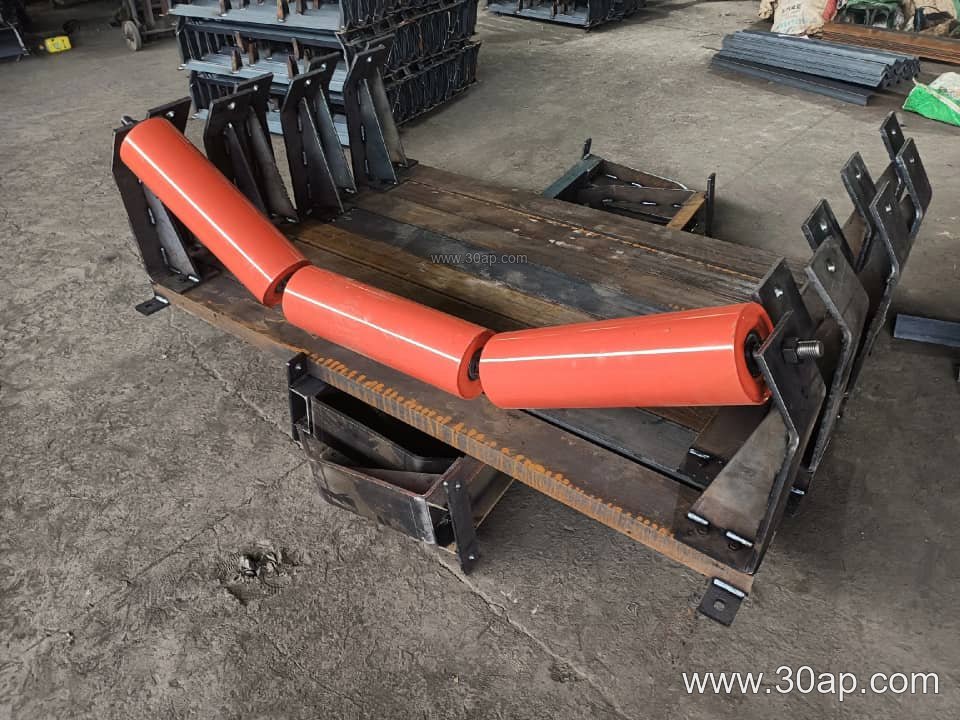
Where It Is Used
Support legs appear in many bulk handling lines, including coal preparation plants, cement plants, power station coal conveying, crushing and screening circuits, and aggregate yards. In a limestone quarry or an iron ore transfer point, the legs must resist dust, vibration, and occasional impact from large lumps. In a fertilizer or grain silo system, clean fabrication and stable alignment matter more than extreme impact resistance.
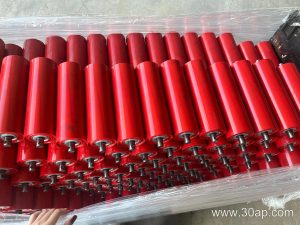
On the carrying side, the leg supports troughing idlers. On the return side, it may support flat return idlers or V-shaped return idlers. A buffer idler station at a loading point often uses a reinforced leg because the belt receives material impact there.
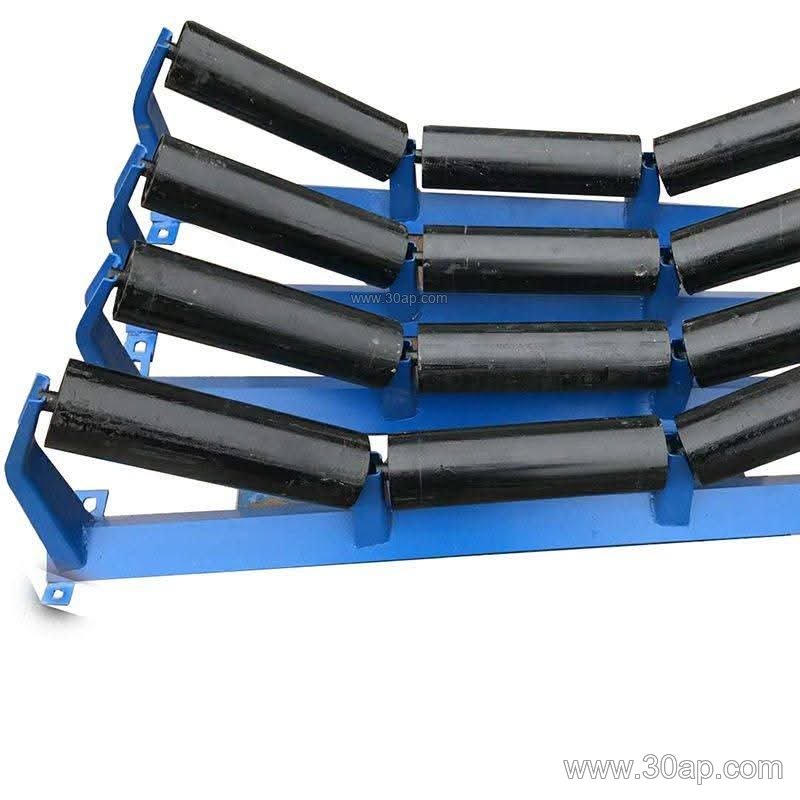
Types and Parameters a Buyer Should Know
Support legs are often grouped by their position and function. Common forms include troughing support legs, transition support legs, return support legs, and adjustable support legs. The adjustable version allows the trough angle to be set between common values such as 20 degrees, 30 degrees, 35 degrees, or 45 degrees. Forward-leaning idler brackets are sometimes set at about 1.5 to 2 degrees, but this is a design choice, not a universal rule.
Belt width and roller diameter should be matched by the conveyor designer, not by a single fixed table. The following reference values show typical combinations seen in catalogues and drawings. They are reference data only, not a supply promise.
| Belt width | Common trough angle | Common roller diameter |
|---|---|---|
| B500 | 20 degrees | Ø89 |
| B650 | 30 degrees | Ø89 |
| B800 | 35 degrees | Ø108 |
| B1000 | 35 degrees | Ø108 |
| B1200 | 45 degrees | Ø133 |
| B1400 | 45 degrees | Ø133 |
| B1600 | 35 degrees | Ø159 |
| B1800 | 35 degrees | Ø159 |
| B2000 | 45 degrees | Ø194 |
| B2200 | 45 degrees | Ø194 |
These pairings are common examples, not mandatory matches. A B800 belt can be used with different trough angles or roller diameters depending on load, speed, and material. A larger roller diameter does not automatically mean a wider belt, and a wider belt does not force one specific leg size.
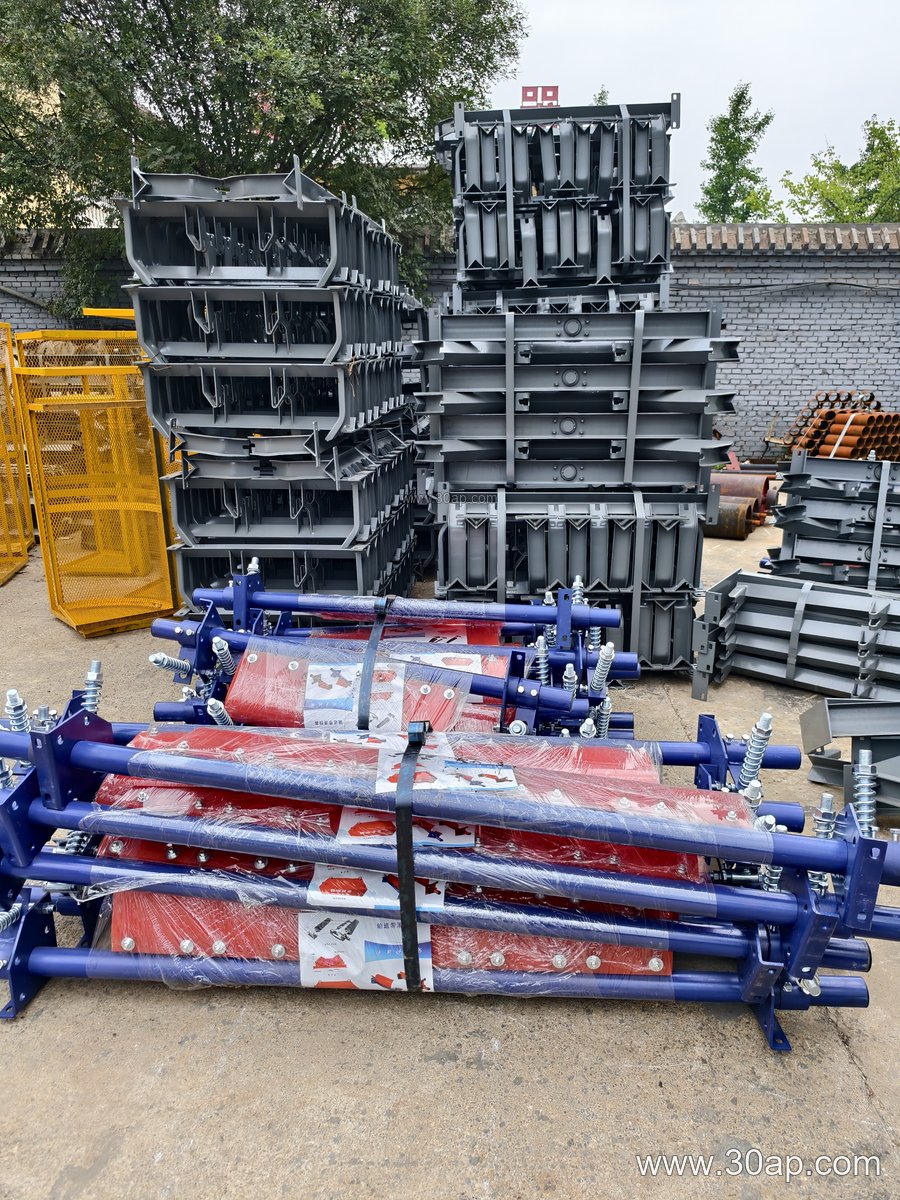
Selection and Maintenance Notes
When choosing a support leg, check the belt width, the roller diameter, the trough angle, the load per station, and the available floor space. The leg height must match the idler frame so the conveyor belt runs true. If the leg is too short or too tall, the idlers may not contact the belt evenly, which can cause belt mistracking, edge wear, and premature roller failure.
During maintenance, inspect the base bolts, welds, and adjustment slots. A loose leg can let the whole station shift, and a bent leg can change the trough profile. Keeping the legs aligned with the string line of the conveyor is a simple way to protect the belt, the idler roller, and the conveyor pulley from unnecessary side load.
For a new project, share the belt width, trough angle, roller diameter, and mounting hole requirements with the supplier. The supplier can then propose a fixed or adjustable conveyor support leg that fits the actual conveyor bracket and cross beam.