What a Bend Pulley Does on a Conveyor
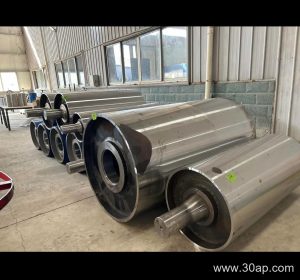
A bend pulley is a non-drive conveyor pulley that changes the direction of the conveyor belt without transmitting torque to the belt. It is often positioned near a tensioning device or at a transition point where the belt must be routed around an obstruction or redirected toward a take-up unit. Unlike a drive pulley, which grips the belt and transfers power, or a tail pulley, which supports the belt at the loading end, a bend pulley simply guides the belt. This functional difference means drive, tail, and bend pulleys are not interchangeable, even when they share similar dimensions.
In a typical bulk handling circuit, you might find a bend pulley working alongside idler rollers to keep the belt tracking correctly. The pulley itself rotates freely on its shaft, supported by bearings, and the belt wraps around part of its circumference. The wrap angle is usually modest, but it still influences belt tension and bearing load.
How a Bend Pulley Is Built
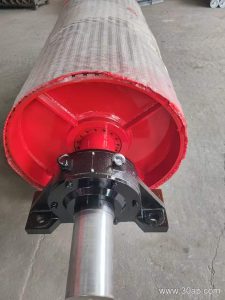
Most bend pulleys consist of a cylindrical shell, two end discs, a shaft, and bearing housings. The shell can be seamless tube or fabricated from rolled plate. End discs are welded to the shell, and the shaft passes through the center. Bearings are mounted either inside the shell or in external housings, depending on the design and load rating.
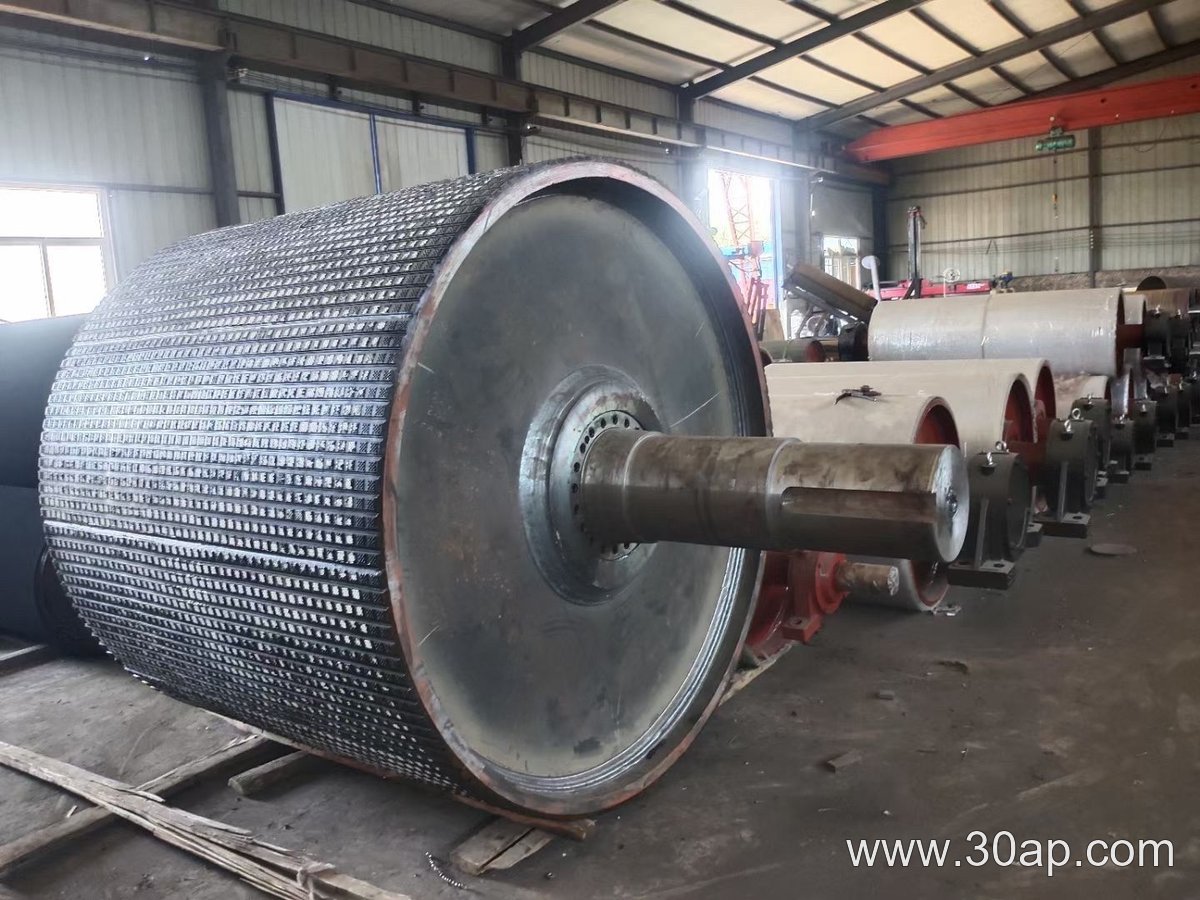
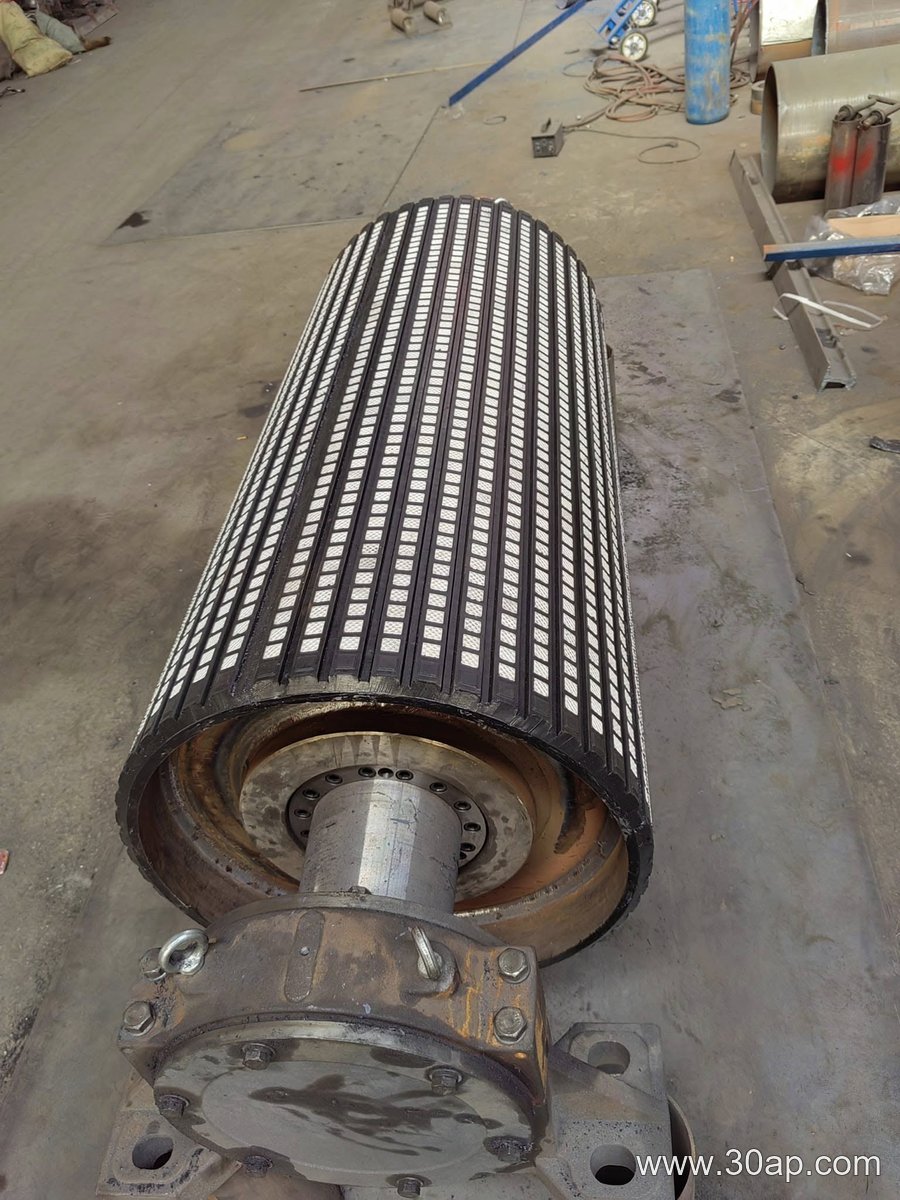
Surface finish matters for belt life. A plain steel surface is common in light-duty positions, while rubber lagging helps improve traction and protect the belt in dusty or wet conditions. Common lagging forms include plain rubber, diamond pattern, and ceramic lagging. Lagging thickness often ranges from 8 mm to 20 mm, with 10 mm and 12 mm being frequent choices for bend pulleys. The right surface depends on belt speed, material, and ambient conditions rather than a single universal rule.
Typical Construction Details
- Shell material: carbon steel or stainless steel for corrosive environments
- End disc: welded or bolted, with or without reinforcing ribs
- Shaft: stepped or straight, sized by torque and radial load
- Bearing type: self-aligning ball or spherical roller bearings
- Surface: plain, rubber lagged, or ceramic lagged
Bore and shaft diameters are not selected from belt width alone. A common shaft diameter may be Ø80, Ø100, or Ø120, but the final choice depends on the calculated load, belt tension, and bearing life. A bend pulley for a B800 belt might use a Ø500 shell with a Ø100 shaft, while a B1400 conveyor could use a Ø800 shell with a Ø160 shaft. These are examples, not fixed pairings.
Where Bend Pulleys Are Used
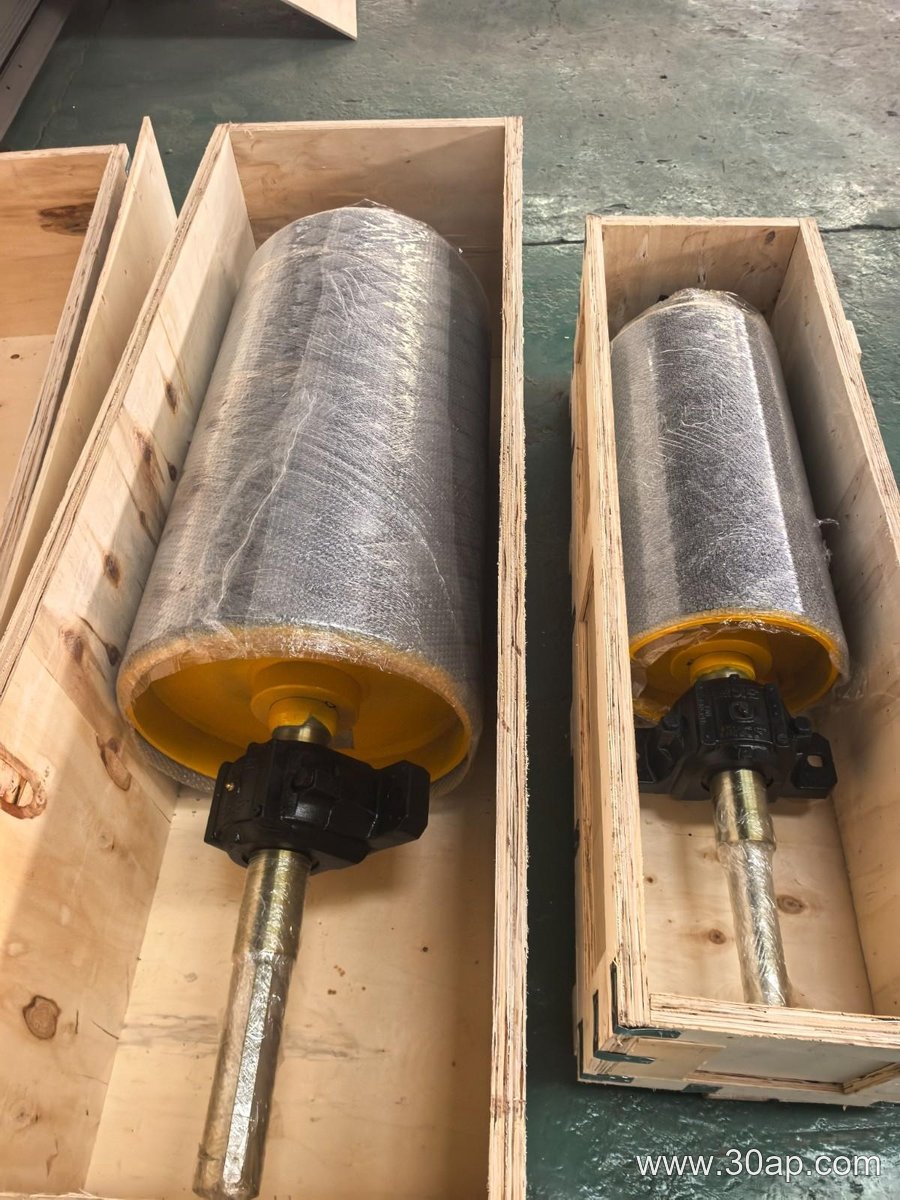
Bend pulleys appear in many industries where conveyor belts move bulk materials. In a coal washing plant, they help route the belt around take-up towers. In a cement plant, they guide clinker and raw material belts through tight spaces. In a sand and gravel pit, they work with idler rollers to keep the belt aligned. You will also find them in power plant coal handling, port bulk terminals, and tunnel muck removal systems.
A common application is the vertical gravity take-up, where a bend pulley redirects the belt downward to a counterweight. Another is the horizontal take-up, where the pulley changes belt direction to save floor space. In both cases, the bend pulley must handle continuous rotation and occasional surge loads without slipping or seizing.
Size and Selection Notes
Bend pulley dimensions follow the conveyor belt width and the required wrap angle. The table below shows typical shell widths for common belt widths, but actual fabrication may vary by manufacturer and design.
| Belt Width | Typical Pulley Face Width | Common Diameter Range |
|---|---|---|
| B400 | 500 mm | Ø200 – Ø315 |
| B500 | 600 mm | Ø250 – Ø400 |
| B650 | 750 mm | Ø315 – Ø500 |
| B800 | 950 mm | Ø400 – Ø630 |
| B1000 | 1150 mm | Ø500 – Ø800 |
| B1200 | 1400 mm | Ø630 – Ø1000 |
| B1400 | 1600 mm | Ø800 – Ø1250 |
| B1600 | 1800 mm | Ø1000 – Ø1400 |
These values are reference data only. A bend pulley with a B1200 belt width might use a Ø1000 diameter in one plant and a Ø800 in another, depending on belt tension and space constraints. The shaft diameter is determined by torque and load, not by belt width. A Ø120 shaft may suit a B1000 pulley in a light application, while a B1000 pulley in a heavy-duty mine might need a Ø160 shaft.
When selecting a bend pulley, consider the belt speed, material being conveyed, ambient temperature, and whether the pulley will be exposed to dust, water, or corrosive substances. Lagging choice, bearing type, and sealing arrangement should match those conditions. Also check that the pulley face width is sufficient for the belt to track without edge damage.
Buyer Checklist
- Confirm the pulley’s function: bend, not drive or tail.
- Verify belt width and required face width.
- Check the calculated shaft load and bearing life.
- Choose lagging based on grip and protection needs.
- Ensure the pulley fits the conveyor bracket and take-up layout.
- Ask for a dimensional drawing before ordering.
A bend pulley may look simple, but its role in belt routing and tension control is critical. Matching the right size, surface, and bearing arrangement to the application helps avoid premature belt wear and unplanned downtime. Whether the conveyor runs in a limestone quarry, a fertilizer plant, or a grain silo, the bend pulley should be treated as a load-bearing component, not an afterthought.