What a Ceramic Lagged Pulley Does on a Conveyor
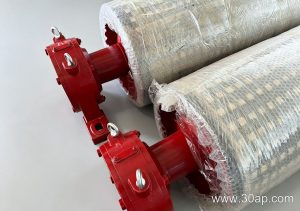
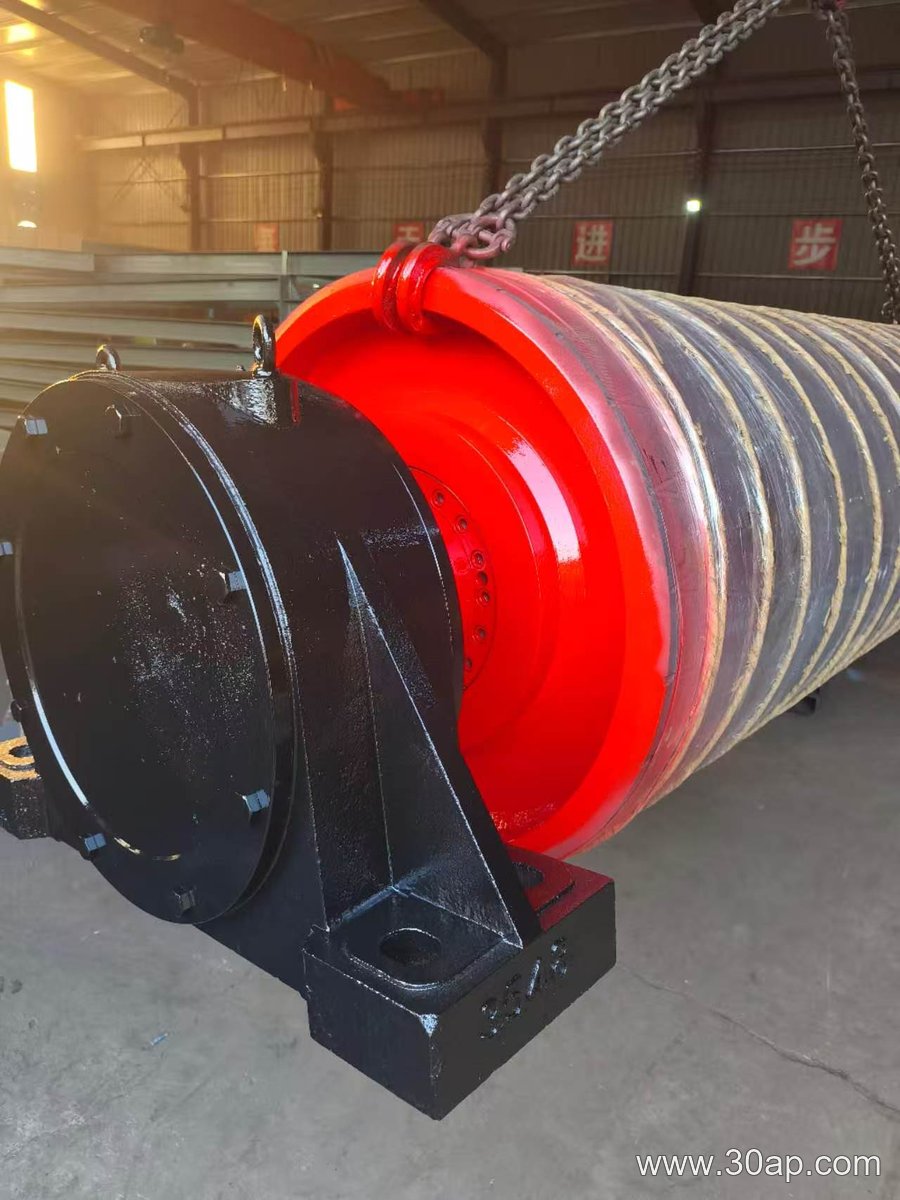
A ceramic lagged pulley is a conveyor pulley whose outer surface is covered with rubber that contains embedded ceramic tiles. This ceramic layer is the lagging, and its purpose is to increase friction between the pulley shell and the conveyor belt. In a quarry, a coal handling system, or a cement plant, belt slip is a common problem when the belt is wet, dusty, or carrying heavy loads. The ceramic lagging bites into the belt cover and keeps the drive moving without excessive slippage.
This product is not a tail pulley or a bend pulley by definition. Those are positions on a conveyor, and each has its own job. A ceramic lagged pulley is most often used as a drive pulley, where torque transfer is critical. A tail pulley or bend pulley may use a different surface, but that is a separate design choice.
How the Ceramic Lagging Is Built
The pulley body is usually a steel cylinder with end discs and a shaft. The lagging is applied in one of two common ways: hot vulcanized rubber with ceramic tiles bonded into the rubber, or cold bonded rubber with ceramic pieces set in place. The ceramic tiles are typically small, with a raised pattern that provides positive grip. Rubber thickness often ranges from 8 mm to 20 mm, and the ceramic may be flush or slightly proud of the rubber surface.
The pulley face width is usually wider than the belt. For example, a B800 belt may run on a pulley face around 950 mm, while a B1200 belt may use a face near 1400 mm. The diameter is selected by the required torque and belt speed, not by belt width alone. Common diameters include Ø500, Ø630, Ø800, Ø1000, and Ø1250. A combination such as B1000 × Ø800 or B1400 × Ø1000 is possible, but no single diameter is mandatory for a given belt width.
Where It Fits in Bulk Material Handling
Ceramic lagged pulleys are found in abrasive and wet conditions. In a sand and gravel plant, the drive pulley may see constant grit and water spray. In a power plant coal yard, the belt can be damp and oily. In a cement plant, clinker dust and high temperatures can reduce the life of plain rubber lagging. Ceramic lagging resists wear better than rubber alone in these settings. It is also used in iron ore and copper ore concentrators where the belt tension is high.
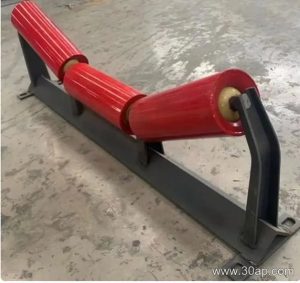
Other components around the pulley include the conveyor belt, idler rollers, and conveyor brackets. These parts work together, but the ceramic lagged pulley specifically addresses traction at the drive point. A conveyor pulley with ceramic lagging is not a replacement for a tail pulley or a take-up pulley; those positions have different load directions and belt wrap angles.
Selection Details a Buyer Should Check
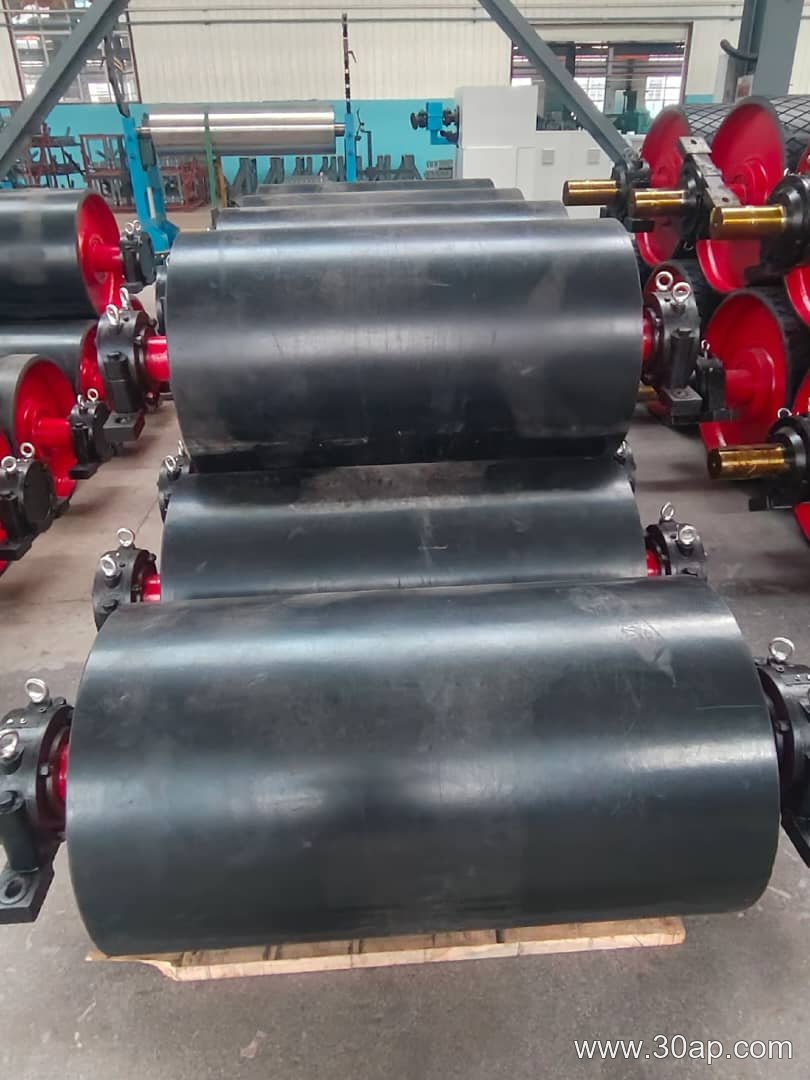
When specifying a ceramic lagged pulley, the following data helps the supplier match the design:
- Belt width and pulley face width, for example B650 with a 750 mm face or B1800 with a 2000 mm face.
- Pulley diameter and shaft diameter. Shaft size depends on torque and bearing load, not on belt width. Common shaft diameters include Ø80, Ø100, Ø120, Ø140, and Ø160.
- Lagging type and thickness. Ceramic lagging is often 10 mm, 12 mm, or 15 mm thick, but the exact value is set by the application.
- Bearing type and housing, plus the conveyor bracket interface.
- Environmental conditions such as water, dust, temperature, and material being carried.
It is also useful to confirm the belt speed and the starting torque. A high-torque drive may need a larger shaft and a wider face. A ceramic surface can be specified in different tile patterns, but the pattern should suit the belt cover and the material. For a very abrasive iron ore line, a heavier ceramic coverage may be chosen; for a coal plant with moderate abrasion, a standard ceramic lagging may be sufficient.
Maintenance and Practical Notes
Ceramic lagged pulleys generally last longer than plain rubber lagged pulleys in wet and abrasive service, but they are not indestructible. If the belt is misaligned, the edge of the ceramic tiles can wear unevenly. Regular inspection of the lagging surface, the belt tracking, and the idler rollers helps avoid premature damage. When the ceramic tiles become loose or the rubber under them wears away, the pulley should be re-lagged or replaced.
A ceramic lagged pulley is a specific solution for drive traction. It should be selected with the conveyor layout, the belt, and the load in mind. For a quarry, a coal plant, or a cement line, the right ceramic lagging can reduce slip and keep the belt running smoothly.