What a Port Conveyor Belt Is
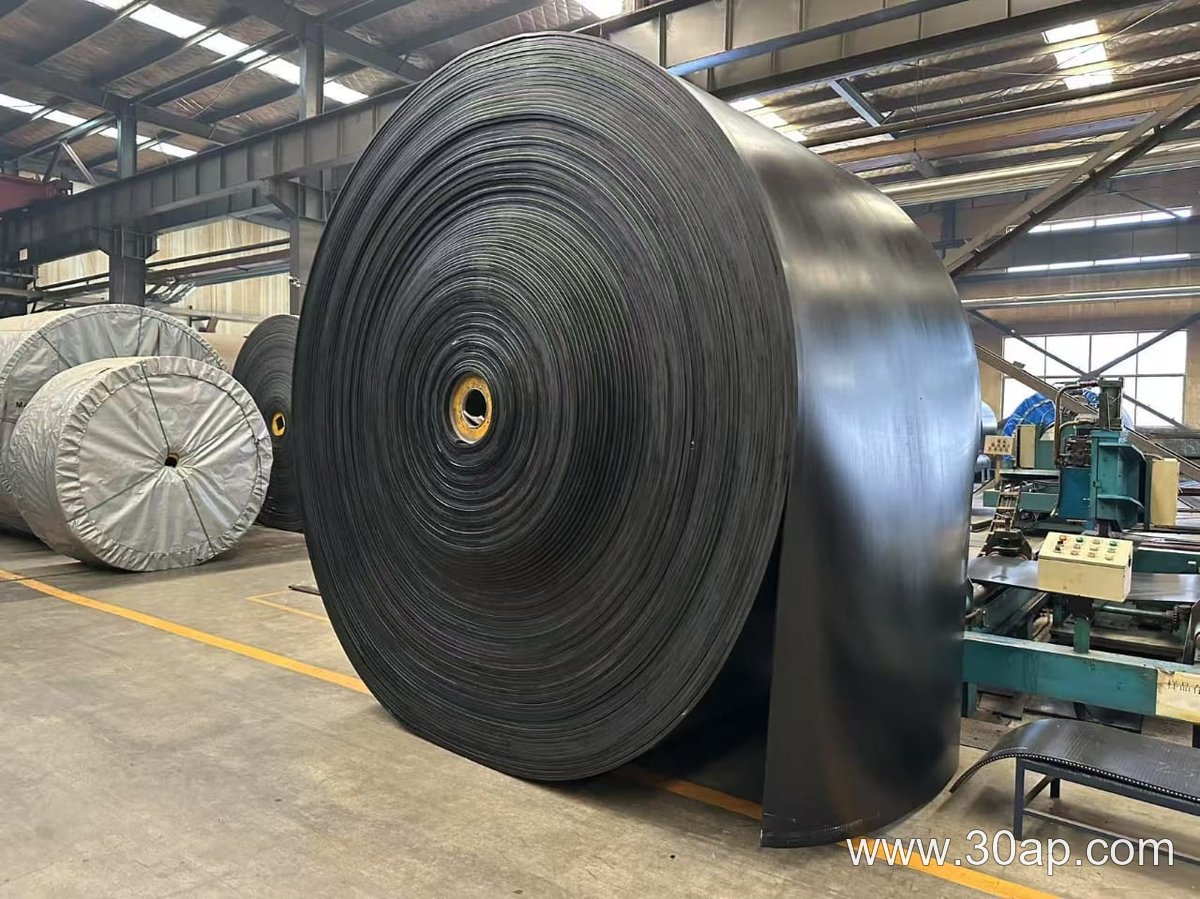
A port conveyor belt is the load-carrying component of a high-capacity belt conveyor system used to move bulk materials such as coal, iron ore, cement clinker, sand, gravel, and fertilizer across a port terminal. In practice, it is a heavy-duty rubber conveyor belt engineered for continuous operation, long conveying distances, and demanding marine environments. The same product is often called a harbour bulk handling belt or a dock conveyor belt, depending on the project vocabulary.
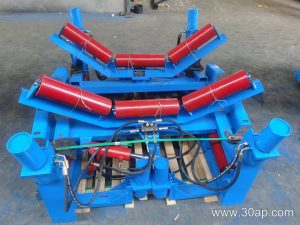
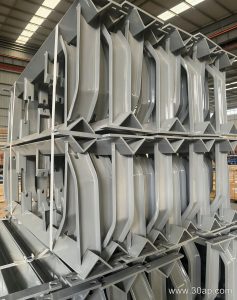
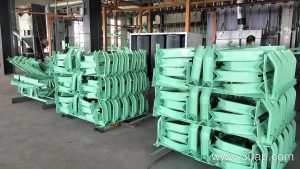
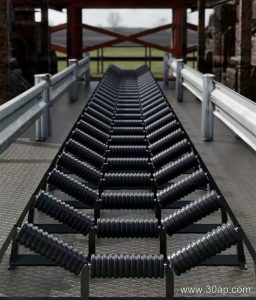
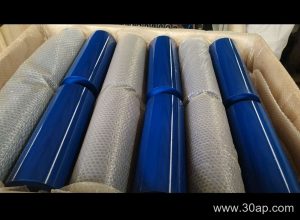
Unlike a short in-plant conveyor, a port conveyor belt must handle high tension, abrasive cargo, and frequent loading and unloading cycles. The belt works together with idler rollers, conveyor pulleys, and conveyor brackets to form a complete handling line. Drive pulleys, tail pulleys, and bend pulleys each have a distinct role and are not interchangeable with one another.
Construction and Common Specifications
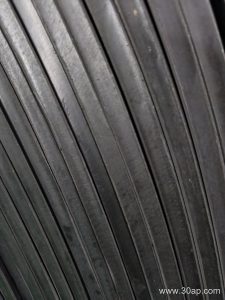
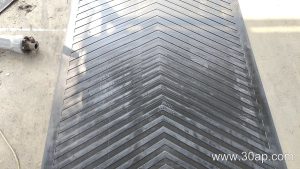
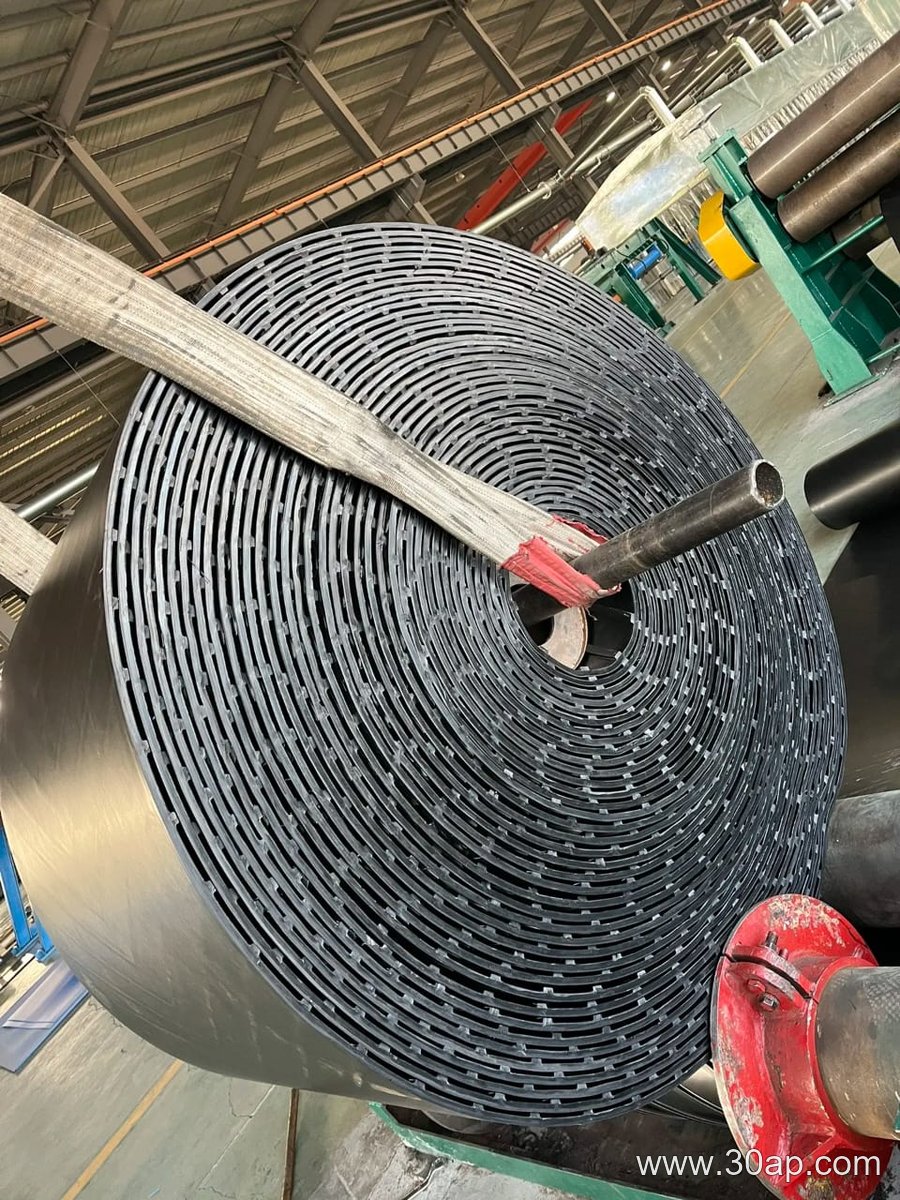
The belt body usually combines a reinforcing carcass with rubber covers. The carcass may be EP fabric, NN nylon fabric, or steel cord, while the covers protect against wear, heat, oil, or fire as the application requires. Surface forms such as smooth, patterned, chevron, and corrugated sidewall are selected for the material and the incline.
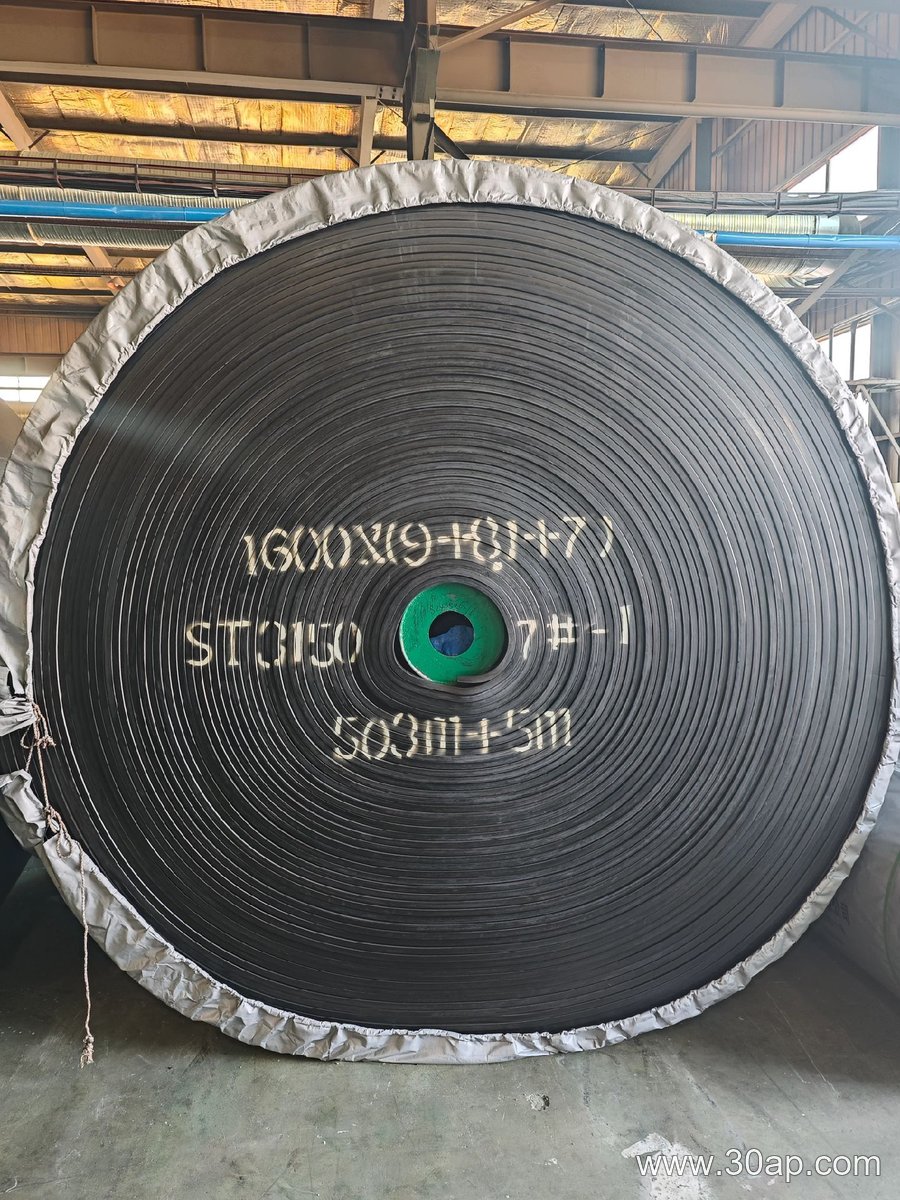
Typical reference data for port conveyor belts is listed below. These values are common examples only and should be confirmed by design.
| Parameter | Common Reference Values |
|---|---|
| Belt type | EP, NN nylon, steel cord, PVC, PVG, wear-resistant, heat-resistant, oil-resistant, flame-retardant, antistatic, cold-resistant, acid and alkali resistant, patterned, chevron, corrugated sidewall |
| Tensile strength | EP200, EP315, EP400, EP500, EP630, EP800, EP1000, EP1250, EP1600, EP2000 |
| Belt width | B500, B650, B800, B1000, B1200, B1400, B1600, B1800, B2000 |
| Cover thickness | 3+1.5 mm, 4+2 mm, 5+2 mm, 6+2 mm, 8+3 mm |
| Carcass layers | 2 to 6 layers, depending on tension and duty |
Belt width and pulley diameter are matched by the conveyor designer, not by a fixed rule. One belt width can work with different pulley diameters, and shaft diameter is determined by the drive calculation rather than by belt width alone.
Where It Is Used
Ports handling dry bulk cargo rely on these belts at ship unloaders, stackers, reclaimers, and transfer towers. A single terminal may serve the mining industry, coal terminals, cement plants, power stations, and sand and gravel yards. The belt also appears in fertilizer and grain berths where gentle handling and dust control matter.
Because salt air and humidity accelerate rubber aging, a port conveyor belt often uses covers formulated for marine exposure. Idler rollers and conveyor pulleys in these systems are also selected for corrosion resistance and smooth rotation.
Buyer Checklist
Before ordering, gather the following information so the supplier can propose a suitable construction:
- Material to be conveyed, including lump size, density, and temperature
- Required capacity in tons per hour and the conveyor profile
- Belt width, belt speed, and the maximum tension in the system
- Cover grade needed for abrasion, heat, oil, or fire resistance
- Roller and pulley dimensions, plus bracket spacing
- Ambient conditions such as coastal humidity or low temperature
Ask for the carcass type, cover thickness, and edge construction in writing. A belt that is under-specified for impact or abrasion may fail early at the loading point, while an over-specified belt adds unnecessary weight and cost.
Selection and Maintenance Notes
Selection starts with the duty. A coal terminal may prefer a flame-retardant and antistatic belt, a cement plant may choose heat-resistant covers, and an ore berth may need extra abrasion resistance. Chevron or corrugated sidewall belts help when the incline is steep, but they are not a replacement for the standard flat belt on horizontal runs.
During operation, check belt tracking, splice condition, and cover wear. Inspect idler rollers for seized bearings and confirm that conveyor pulleys remain aligned. Keep the belt cleaner and skirt rubber in good condition to reduce spillage. These steps extend service life and protect the conveyor brackets and structure.
For any port project, the final belt specification should come from the conveyor designer and the belt manufacturer, using the actual duty and environment rather than a general catalogue value.