What a Self-Aligning Idler Bracket Does
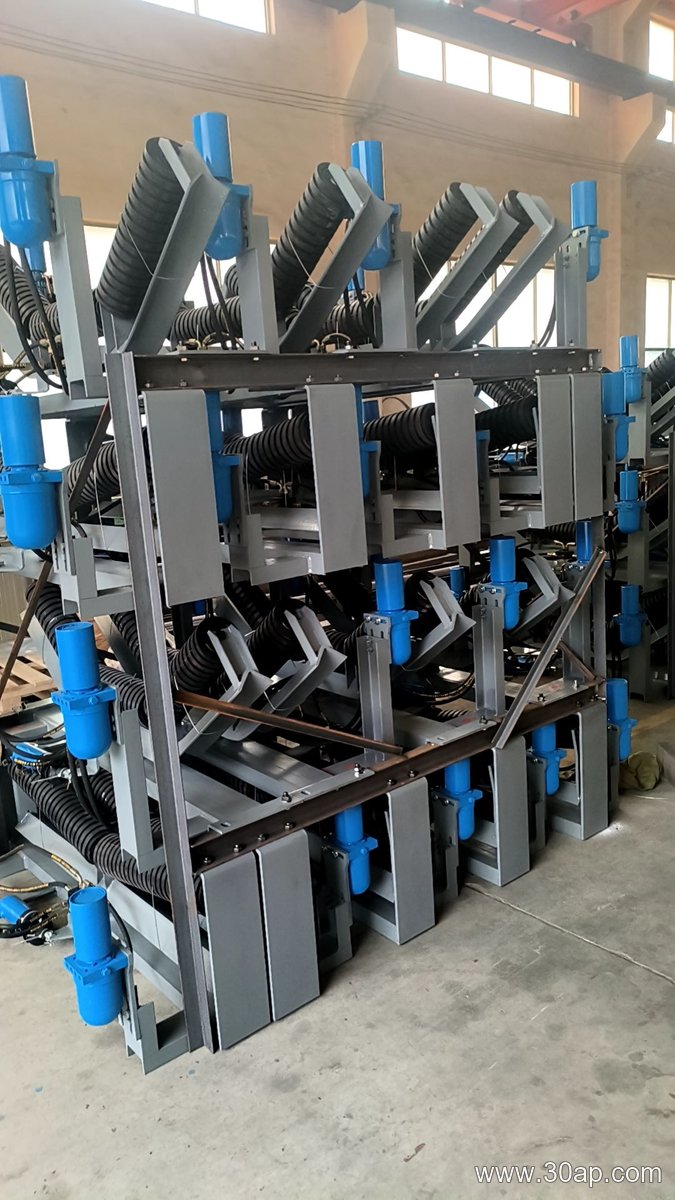
A self-aligning idler bracket is a pivoting support that holds the carrying or return idlers of a conveyor belt. Its purpose is to correct belt drift automatically. When the belt starts to run off-center, the bracket swings slightly around a vertical pivot, which angles the idlers relative to the belt path. That small angle creates a steering effect that nudges the conveyor belt back toward the center line. In industries such as coal washing plants, cement kilns, and stone crushing lines, this simple mechanism reduces spillage and edge damage without any external power.
Construction and Key Components
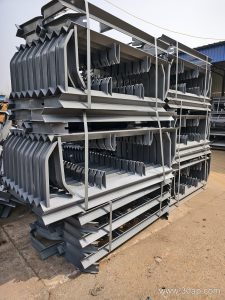
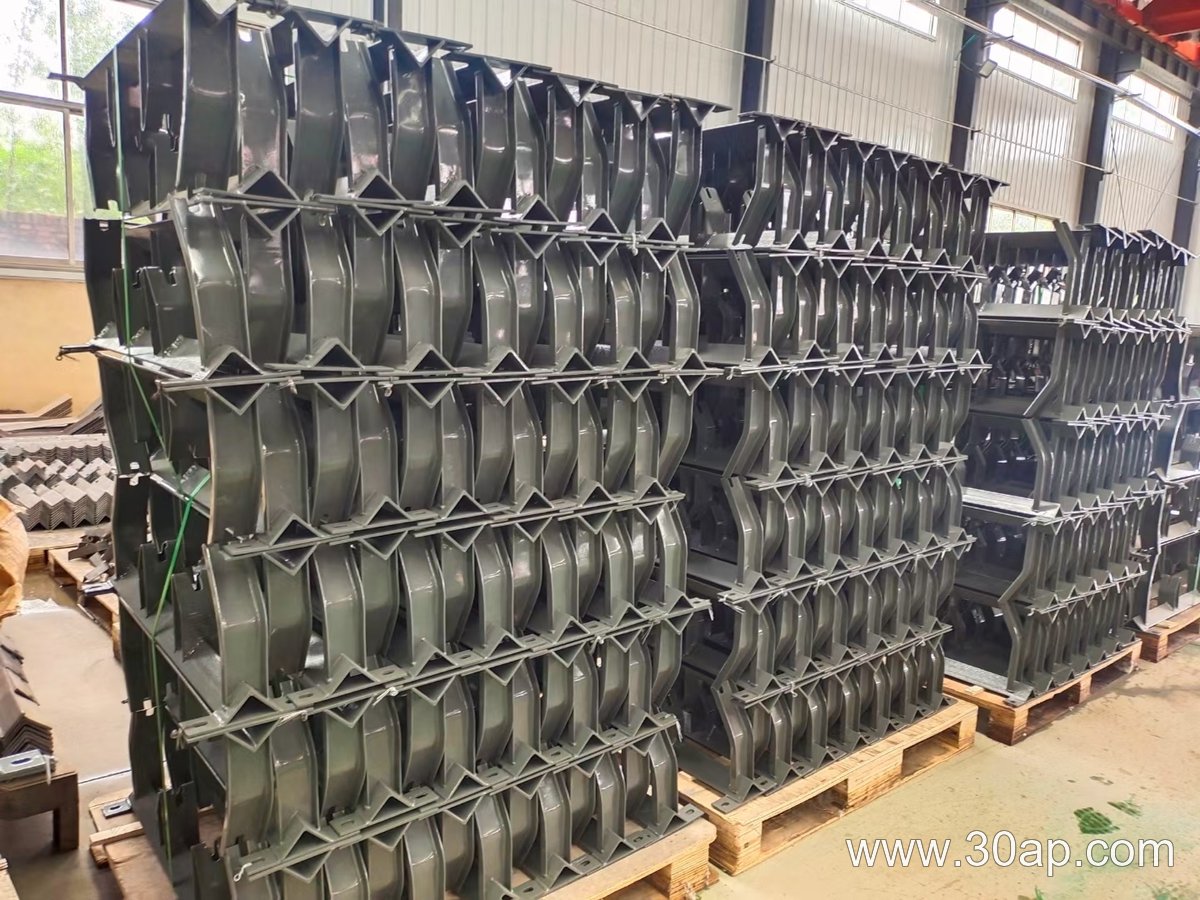
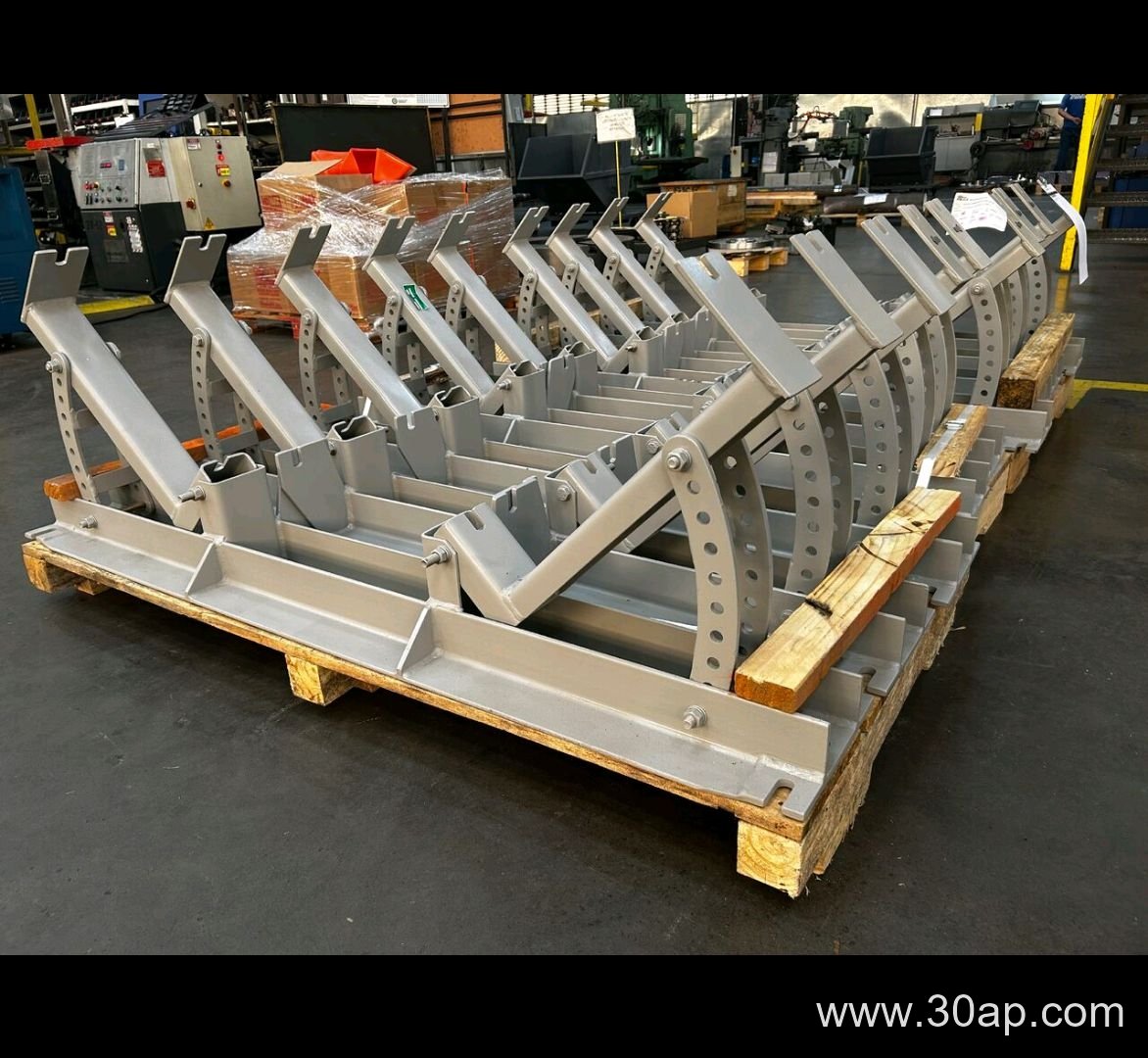
The bracket is usually made from angle steel, channel steel, or folded steel plate. A typical unit includes a base plate, a pivot shaft, a bracket frame, and mounting pads for the idler roller. The frame may be fixed at a specific trough angle or adjustable between common angles such as 20, 30, 35, and 45 degrees. Some designs use a slight forward tilt of about 1.5 to 2 degrees on the side rollers to help with tracking. The pivot assembly is the heart of the self-aligning function; it must move freely but without excessive play. Roller diameter commonly ranges from Ø89 to Ø194, and the bracket is matched to the belt width, for example B650, B800, B1000, or B1200.
Where It Fits on a Conveyor
Self-aligning idler brackets are installed along the carrying side and sometimes on the return side. They are most useful where belt misalignment is likely: after a loading point, before a conveyor pulley, or on long overland sections. They are not a replacement for drive pulleys, tail pulleys, or bend pulleys. Those pulleys have different functions. The bracket works together with the idler rollers and the conveyor belt itself. A related item is the fixed troughing bracket, which does not pivot. A fixed conveyor bracket is simpler and cheaper, but it cannot correct tracking on its own, so a self-aligning version is chosen when belt wander is a recurring problem.
Common Variations and Parameters
Different plants use different arrangements. A self-aligning bracket may be a troughing type for the carrying belt, a V-return type for the return belt, or a flat return type. The table below lists typical reference values; actual selection depends on belt width, trough angle, and roller diameter. These are not fixed combinations and should be confirmed by design.
| Belt width | Trough angle | Roller diameter | Typical application |
|---|---|---|---|
| B500 | 20° | Ø89 | Small transfer conveyors |
| B650 | 30° | Ø89 or Ø108 | Aggregate and sand lines |
| B800 | 35° | Ø108 | Coal washing and cement |
| B1000 | 35° or 45° | Ø133 | Power plant coal handling |
| B1200 | 45° | Ø133 or Ø159 | Mining and port terminals |
| B1400–B2000 | 35°–45° | Ø159 or Ø194 | Heavy bulk handling |
Mounting hole spacing and crossbeam length vary with belt width and trough angle, so they are not universal. The bracket should be specified together with the idler roller and the conveyor belt to ensure proper fit.
Selection and Maintenance Advice
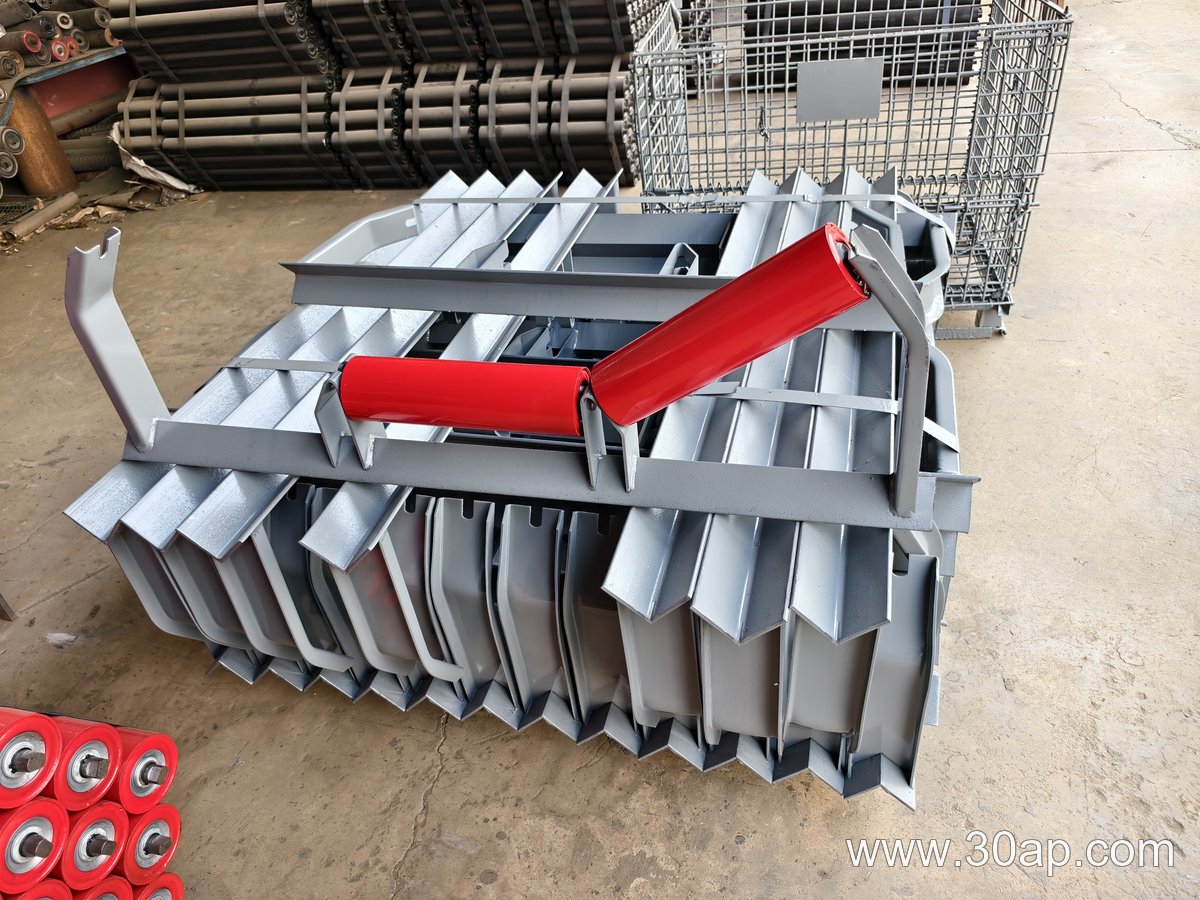
A buyer should first confirm the belt width, the required trough angle, and the roller diameter. Then check the pivot mechanism: it should rotate smoothly but not wobble. The bracket material and finish should suit the environment. In fertilizer plants or food silos, corrosion resistance may matter more than in a dry limestone quarry. Installation must be square to the belt center line. After installation, observe the belt for a few runs. If tracking is still poor, look for other causes such as off-center loading, seized idlers, or a misaligned conveyor pulley. Routine checks include cleaning around the pivot and verifying that the idler roller spins freely. A worn pivot bushing can be replaced without removing the whole bracket in many designs. Keep spare pivot pins and fasteners on hand for critical conveyors.
Working With Other Conveyor Parts
The self-aligning idler bracket is one part of a larger system. It depends on good alignment of the conveyor pulley, proper tension, and straight idler frames. When used correctly, it reduces edge wear and material spillage in stone crushing plants, iron ore terminals, and tunnel muck handling. For very wide belts or high-speed conveyors, a combination of self-aligning and fixed brackets is common. Always follow the conveyor designer’s recommendation for placement and quantity. No single bracket can correct every tracking issue, but a well-chosen self-aligning bracket is a practical first step.