What an Industrial Conveyor Pulley Does
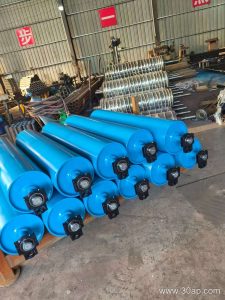
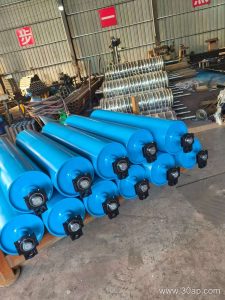
An industrial conveyor pulley is the rotating cylindrical assembly that drives, redirects, or tensions a conveyor belt. In a bulk handling line, it is the component that transfers motion from the drive unit to the belt or changes the belt path at the head, tail, or bend section. Unlike a small idler roller that mainly supports the belt along the carrying run, a pulley carries much higher torque and load, and it is usually built as a robust welded or cast drum with a shaft, hub, and bearing assembly.
In a quarry, a crushing and screening plant, or a coal washing facility, the pulley often works in dusty and abrasive conditions. The same applies in a cement clinker line, a power plant coal handling system, and a port bulk terminal. The pulley must keep the belt tracking, transmit power, and resist wear, so its design is never just a steel tube.
How a Conveyor Pulley Is Built
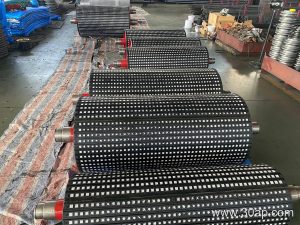
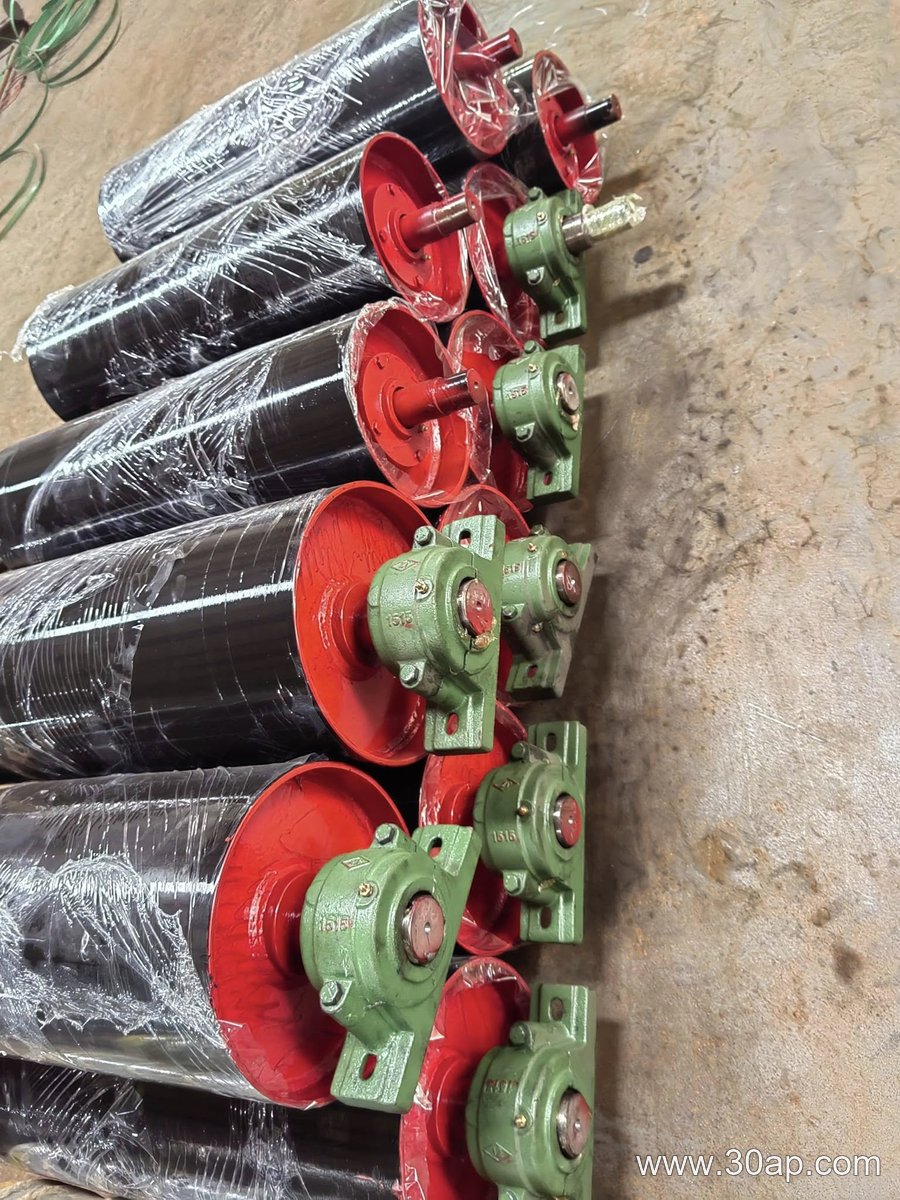
A typical conveyor pulley consists of a cylindrical shell, two end discs, a shaft, hubs, and a bearing housing. The shell can be smooth or covered with rubber, ceramic, or another lagging material. Common surface forms include smooth, cast rubber, cold-bonded rubber, hot vulcanized rubber, diamond lagging, herringbone lagging, ceramic lagging, and plain rubber sheet. Lagging thickness often ranges from 8 mm to 20 mm, depending on the duty and the belt friction requirement.
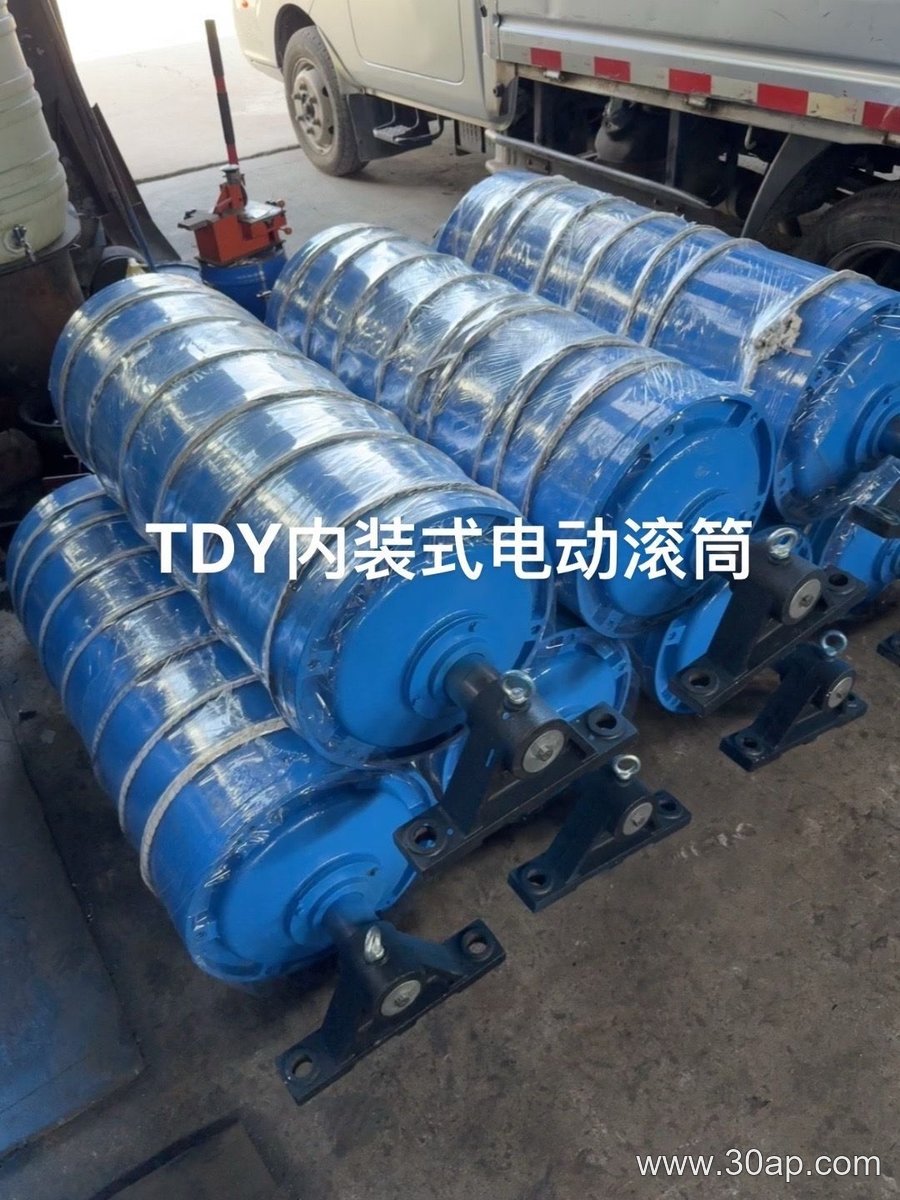
Diameter and face width are selected together with the belt width and the load. Common belt widths include B400, B500, B650, B800, B1000, B1200, B1400, B1600, B1800, B2000, B2200, and B2400. Face width is usually a little wider than the belt, for example about 500 mm for B400, about 750 mm for B650, about 1150 mm for B1000, and about 1600 mm for B1400. These are reference relationships, not fixed rules. A B1200 system may use a Ø1000 pulley in one project and a different diameter in another, because the choice depends on belt tension, wrap angle, and shaft load.
Main Types and Their Positions
- Drive pulley or head pulley: transmits power to the belt at the discharge end.
- Tail pulley: supports the belt at the loading end and helps maintain alignment.
- Bend pulley: changes the belt direction without driving it.
- Take-up pulley and snub pulley: used in tensioning and wrap-angle adjustment.
- Motorized pulley: integrates the drive inside the drum for a compact layout.
These positions are not interchangeable. A drive pulley must handle torque and traction, while a bend pulley mainly guides the belt. A tail pulley is not a substitute for a drive pulley, and a snub pulley should not be treated as a tail pulley. Wing pulleys are sometimes used at the tail position in sticky material handling because they self-clean, but they are a different construction and should be chosen for that specific duty.
Materials, Dimensions, and Selection Points
Shaft diameter is determined by torque and bending load, not by belt width alone. Common shaft sizes include Ø50, Ø60, Ø70, Ø80, Ø90, Ø100, Ø120, Ø140, Ø160, Ø180, and Ø200 mm. Pulley diameters often range from Ø200 to Ø1800 mm, with examples such as Ø320, Ø400, Ø500, Ø630, Ø800, Ø1000, Ø1250, Ø1400, and Ø1600. A buyer should confirm the belt width, belt speed, motor power, wrap angle, and lagging type before fixing the final dimensions.
| Item | Common Reference Range |
|---|---|
| Belt width | B400 to B2400 |
| Pulley diameter | Ø200 to Ø1800 mm |
| Shaft diameter | Ø50 to Ø200 mm |
| Lagging thickness | 8, 10, 12, 15, 20 mm |
| Surface form | Smooth, rubber lagging, diamond, herringbone, ceramic |
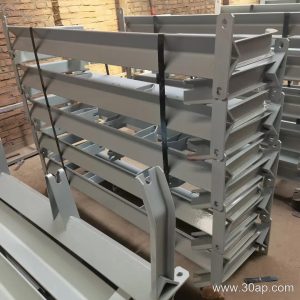
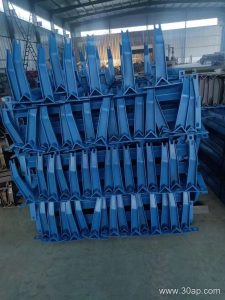
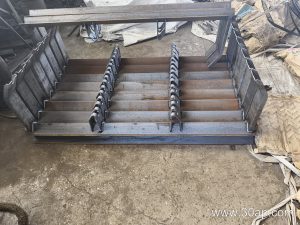
For a limestone mine or an iron ore concentrator, abrasion resistance and lagging grip matter most. In a power plant coal yard, dust and belt slip are common concerns. In a fertilizer or grain silo, cleanliness and material compatibility may guide the lagging choice. A conveyor bracket and conveyor idler roller also affect belt alignment, so the pulley should be selected as part of the whole conveyor, not in isolation.
Buyer Checklist
- Confirm the pulley function: drive, tail, bend, take-up, or snub.
- Match belt width, pulley face width, and required diameter by calculation.
- Choose lagging based on grip, wear, and material build-up.
- Check shaft size against torque and bearing load, not only belt width.
- Review balancing, sealing, and bearing type for the site environment.
An industrial conveyor pulley is a load-bearing, power-transmitting component. When it is specified correctly, the conveyor belt runs straighter, the drive system lasts longer, and maintenance intervals become more predictable. The final selection should always follow the actual conveyor design data and the site conditions.