What a Belt Conveyor Idler Frame Does
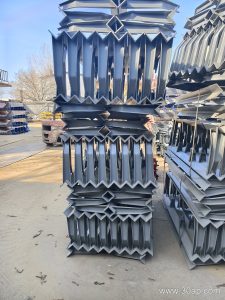
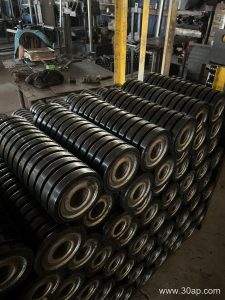
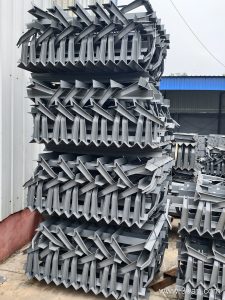
The belt conveyor idler frame is the structural element that holds idler rollers in the correct position along a conveyor. It is not a rotating part. Instead, it provides the geometry, spacing and rigidity that let the rollers support the belt and the material on it. Without a proper frame, idlers would shift, the belt would mistrack, and the whole conveying line would lose efficiency. In many workshops, this component is also called a conveyor idler bracket or roller support frame, and those names refer to the same product. A conveyor bracket for a pulley is a different item, so the two should not be confused.
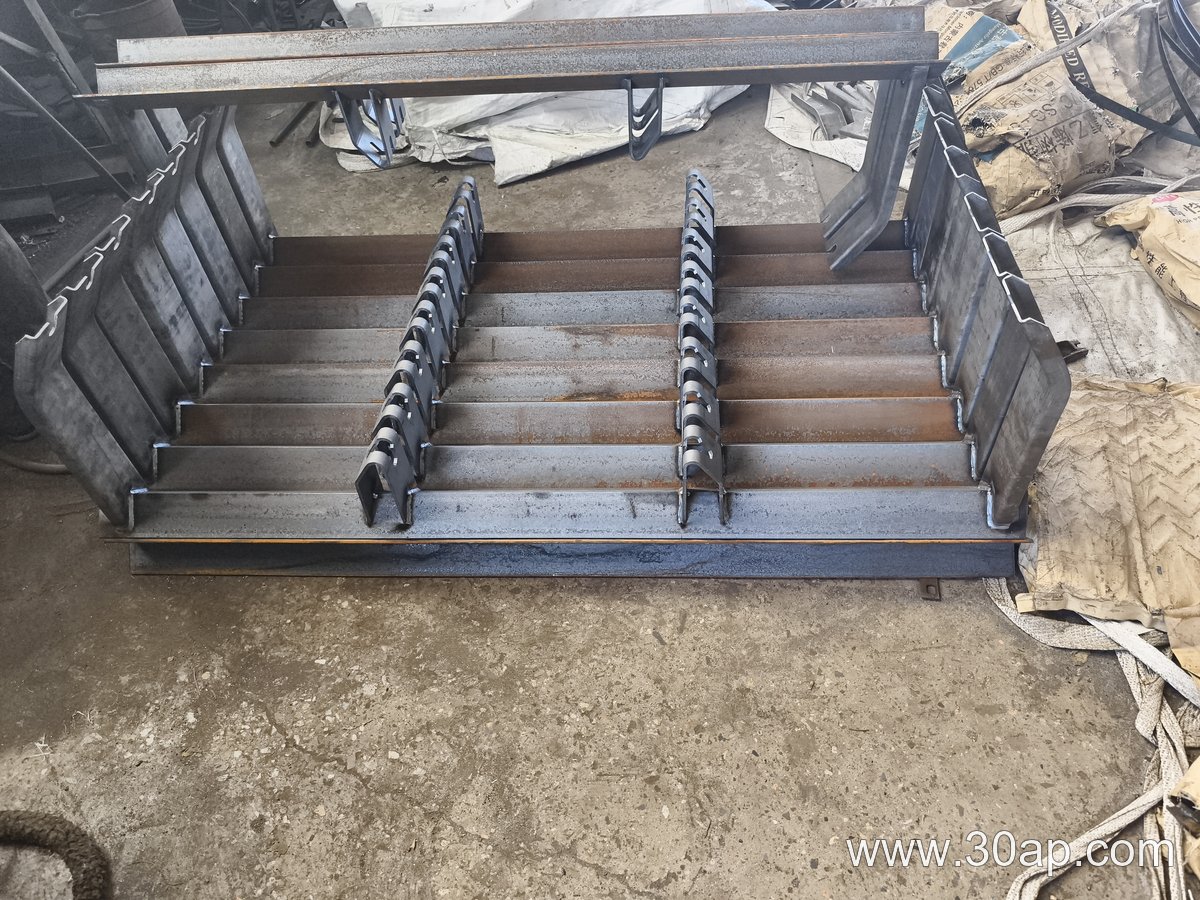
How the Frame Is Built
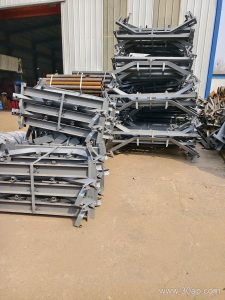
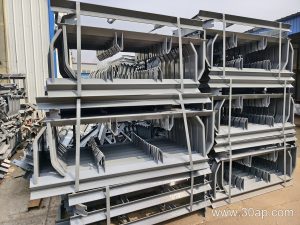
Most frames are fabricated from angle steel, channel steel, or bent steel plate. The choice depends on the load, the belt width, and the environment. A typical troughing frame carries three idlers arranged in a trough shape, while a return frame supports a single flat or V-shaped roller under the returning belt. The frame may be fixed or adjustable. Adjustable versions allow the trough angle to be set between common values such as 20, 30, 35, or 45 degrees. Leading or forward-tilted frames usually hold idlers at about 1.5 to 2 degrees to help center the belt. Mounting hole spacing and crossbeam length are not universal; they change with belt width and trough angle, so they should be confirmed against the actual conveyor design.
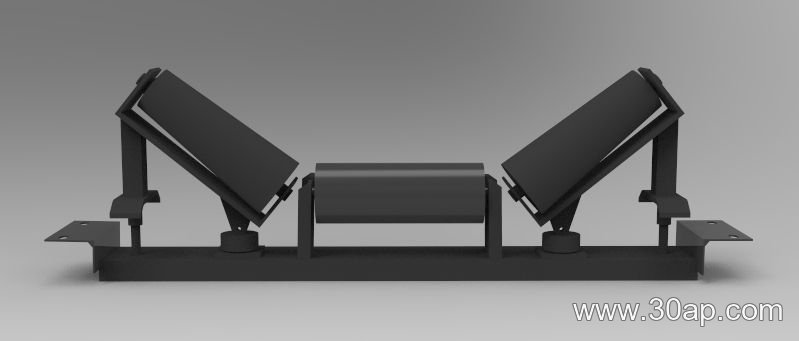
Where It Fits on the Conveyor
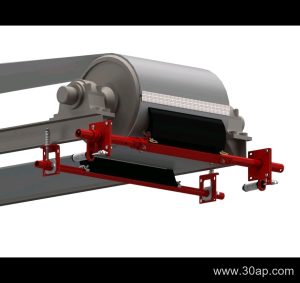
The idler frame sits between the conveyor pulleys. The drive pulley pulls the belt, the tail pulley returns it, and bend pulleys change its direction, but none of these pulleys are interchangeable with an idler frame. On the carrying side, troughing frames support the loaded belt. On the return side, flat or V-return frames keep the empty belt steady. Transition frames are used near pulleys to guide the belt from a flat profile into a trough without stressing the edges. Impact frames with cushioning rollers are placed under loading points to absorb the fall of material. Self-aligning frames are used where belt mistracking is a concern. Each of these is a subtype of the same basic supporting structure, and each is selected for its position and duty.
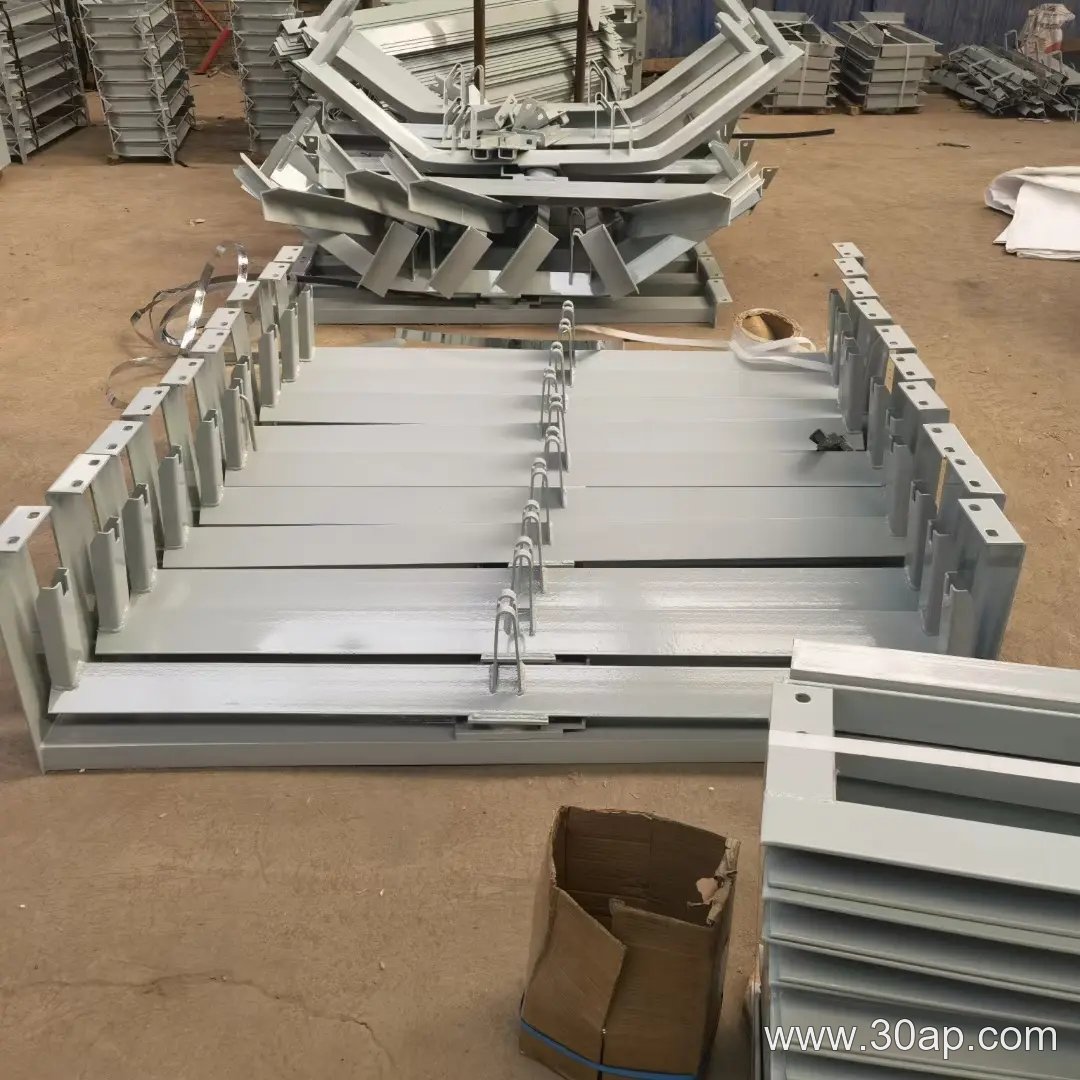
Common Applications
These frames appear in many bulk handling settings. In a crushing and screening plant, they carry crushed rock from one stage to the next. In a coal washing plant, they support the belt through wet and abrasive conditions. Other users include cement plants, power station coal yards, port bulk terminals, steel works, fertilizer plants, and grain silos. The operating environment affects the choice of material and surface protection, but the core function remains the same: hold the idler roller in place so it can turn freely.
What Buyers Should Check
- Belt width and trough angle: frames are made for B500 up to B2200, with angles such as 20, 30, 35, or 45 degrees. A B800 frame with a 35 degree trough is a common example, but the same belt width can also use other angles depending on the material and capacity.
- Idler diameter: common roller diameters include 89, 108, 133, 159, and 194 mm. A frame for a 108 mm roller will not correctly seat a 159 mm roller, so the two must match.
- Frame type: fixed or adjustable, troughing or return, standard or impact. The type should match the location on the conveyor.
- Material and finish: angle steel and channel steel are common. In wet or corrosive areas, a painted or galvanized finish may be preferred.
- Mounting dimensions: hole spacing and beam length are design-specific. They should be taken from the conveyor drawing, not assumed from belt width alone.
A well-chosen belt conveyor idler frame keeps the idler rollers aligned, extends belt life, and reduces maintenance. It is a simple part, but its role in the conveyor system is structural and continuous.