What a Conveyor Carrying Bracket Does
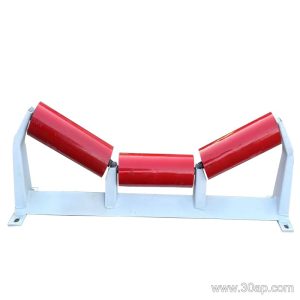
A conveyor carrying bracket is the structural support that holds the idler rollers forming the trough on the loaded side of a belt conveyor. While the rollers do the turning, the bracket does the positioning. It sets the trough angle, keeps the rollers at the correct spacing, and transfers the weight of the conveyor belt and its material down into the conveyor frame.
In everyday workshop language this component is often called a carrying idler bracket, a troughing bracket, or a troughing idler frame. All of these describe the same product. It is not a drive pulley, a tail pulley, or a bend pulley; those are drums that transmit motion or change belt direction. The carrying bracket is a stationary support, and its job is geometry and load bearing rather than power transmission.
How the Bracket Is Built
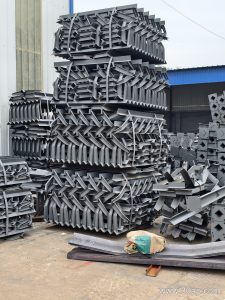
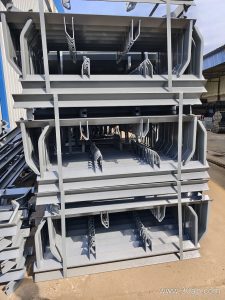
Most carrying brackets are fabricated rather than cast. A typical unit combines a cross beam with two or three roller cradles. The beam may be formed from angle steel, channel steel, or folded steel plate, depending on the load and the manufacturer’s design. Roller cradles are usually welded or bolted to the beam at the angle that produces the required trough.
Two-roller brackets give a simple V profile, while three-roller designs create the familiar troughed shape with a centre roller and two side rollers. Some designs add a slight forward tilt to the side rollers, commonly around 1.5 to 2 degrees, to help the belt track toward the centre. The mounting holes and beam length are not universal; they change with belt width, trough angle, and frame design, so they are always confirmed against the drawing.
Where It Sits on the Conveyor
The carrying bracket belongs to the upper, load-carrying run of the conveyor. Below the belt, on the return side, a different support is used, such as a flat return bracket or a V-shaped return bracket. The two are not interchangeable, because the return run carries no material load and only needs to keep the belt supported and aligned.
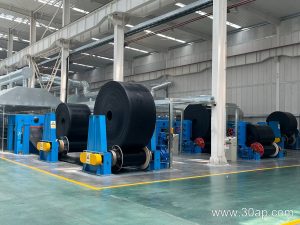
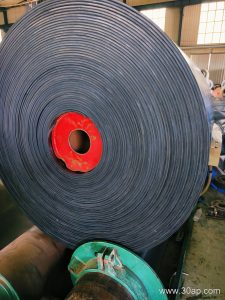
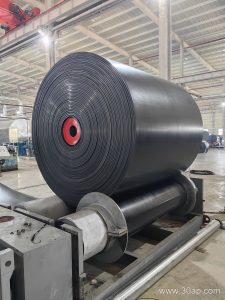
Common installation points include crushing and screening plants, sand and gravel lines, and coal handling systems in power stations. In these places the bracket works together with the conveyor belt, the idler roller, and the conveyor pulley at each end of the system. A belt that is properly supported at the carrying side runs more smoothly and wears more evenly.
Trough Angle and Belt Width
Trough angle is one of the most important choices for a carrying bracket. Common values are 20, 30, 35, and 45 degrees. A shallow trough suits materials that are easy to convey and belts that need gentle support. A deeper trough increases capacity and helps contain material on the belt, but it also increases the bending stress at the belt edges.
Adjustable brackets allow the trough angle to be changed within a range, which is useful during commissioning or when a conveyor is repurposed. Fixed brackets lock the angle permanently and are simpler and more rigid. Neither style is automatically better; the choice depends on whether the conveyor will ever need adjustment.
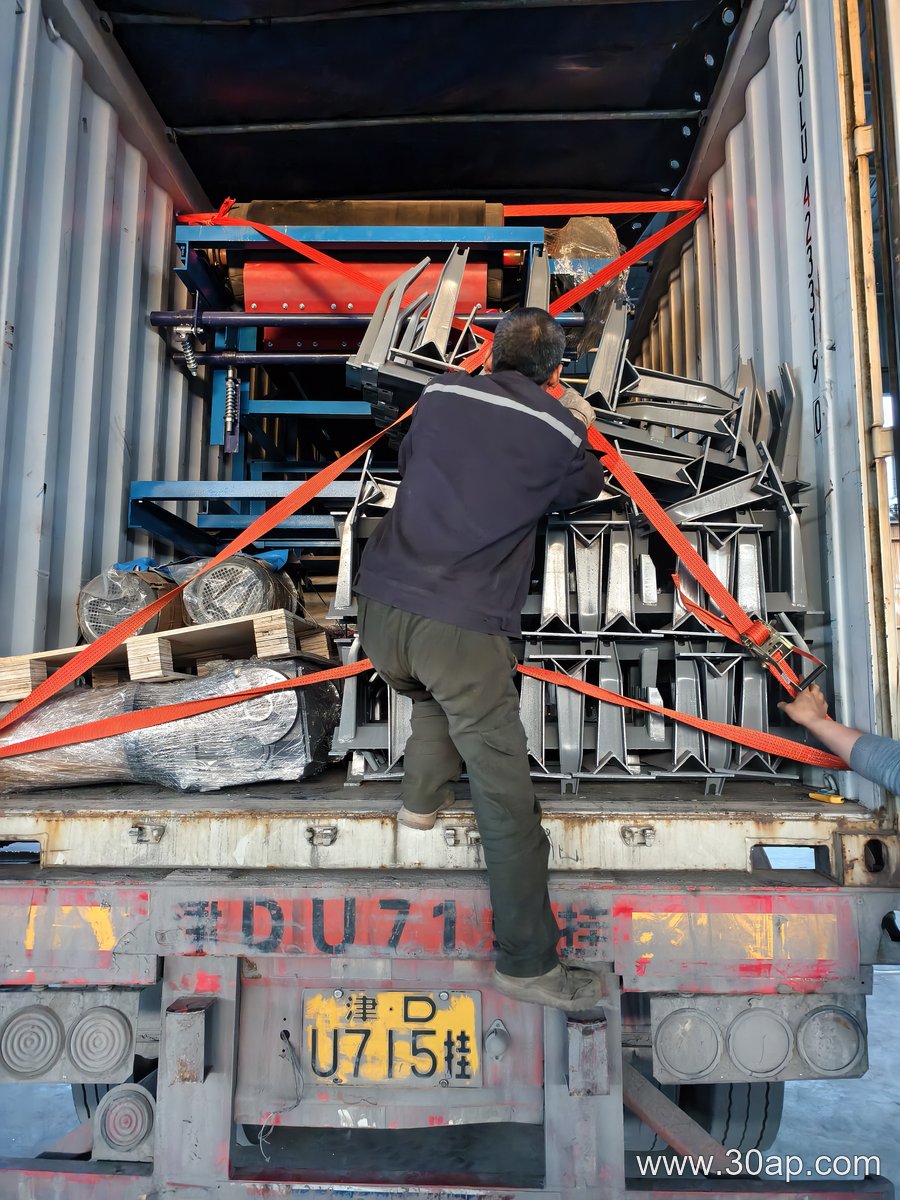
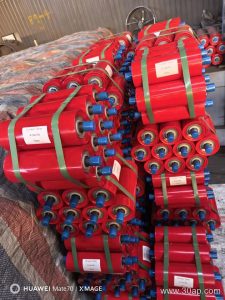
Belt width and roller diameter are selected together with the bracket, not in a fixed one-to-one relationship. Reference sizes such as B500, B650, B800, B1000, B1200, and larger widths can appear in the same family of brackets, paired with roller diameters such as 89 mm, 108 mm, 133 mm, 159 mm, or 194 mm. A B800 belt may run with 108 mm or 133 mm rollers depending on load and speed, and a B1200 conveyor might use 133 mm rollers at a 35 degree trough. There is no rule that one belt width can only match one roller diameter or one trough angle.
Types You May Encounter
- Troughing bracket for the standard three-roller carrying position
- Transition bracket near the pulley, where the belt changes from flat to troughed
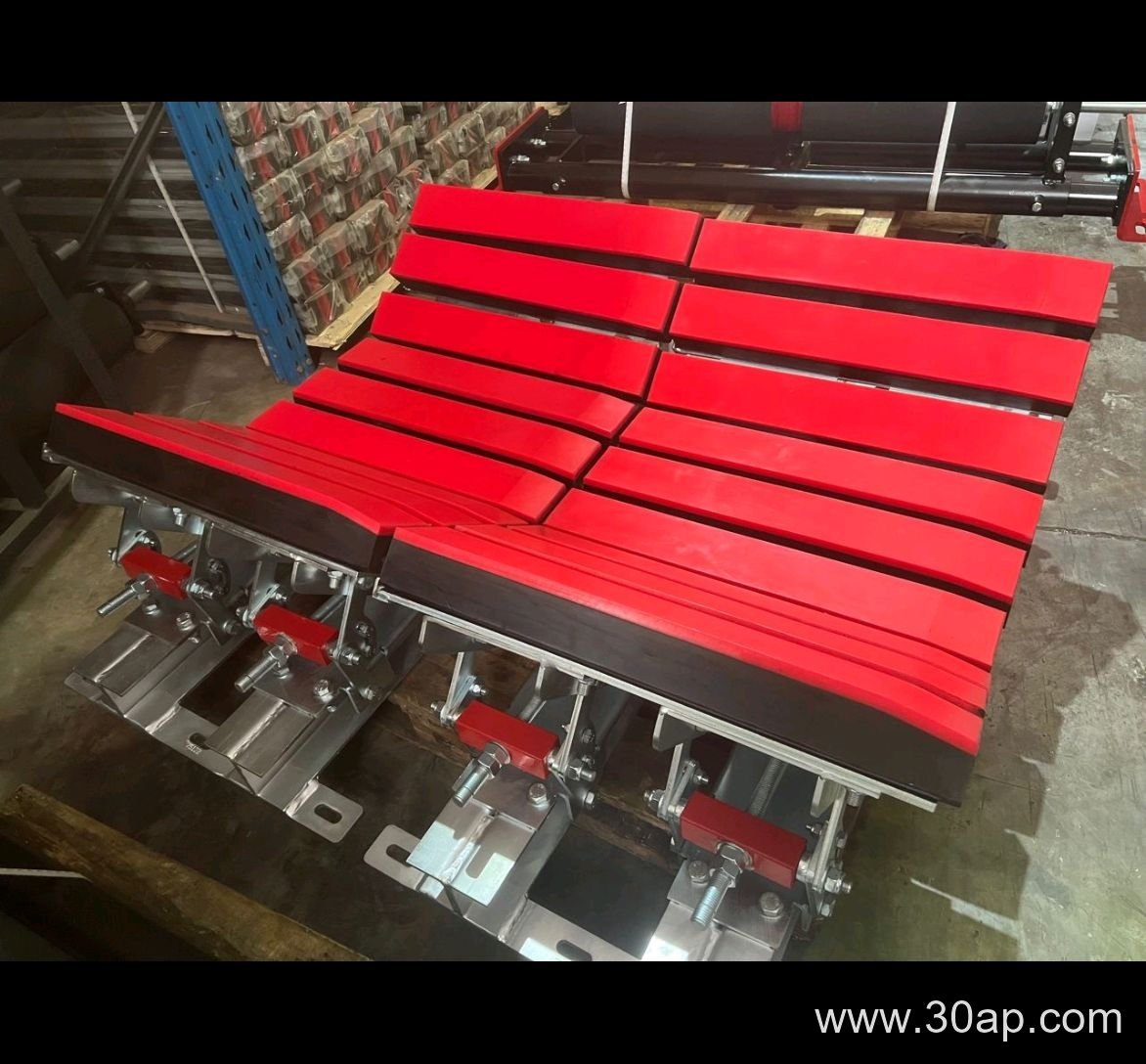
- Impact bracket under the loading point, built heavier for shock loads
- Self-aligning bracket that helps correct belt mistracking
- Forward-tilted bracket with slightly angled side rollers
- Suspended bracket hung from the frame instead of bolted on top
Each type solves a specific problem. An impact bracket is not a replacement for a standard troughing bracket along the whole conveyor, and a self-aligning bracket is not a substitute for correct pulley alignment. They are used where their function is needed.
What Buyers Should Check
Before ordering, confirm the belt width, the required trough angle, the roller diameter, and the mounting hole spacing. Check the frame beam height and the fixing method, because a bracket that fits one conveyor frame may not fit another. Ask about the material and finish if the conveyor operates outdoors or in a wet, dusty environment. For dusty locations such as a coal yard or a limestone crushing line, a design that resists material build-up around the roller seats is worth considering.
Spare parts planning matters too. Carrying brackets are wear items, and keeping a few units in stock reduces downtime. When requesting a quotation, provide a drawing or a clear photo of the existing bracket, plus the roller diameter and trough angle. That information lets the supplier match the replacement correctly rather than guessing from belt width alone.
A well-chosen conveyor carrying bracket is a quiet component. It does not attract attention when it works, but it determines how well the belt is supported, how evenly the idler rollers wear, and how much material stays on the belt. Getting the trough angle, roller spacing, and frame fit right at the start is the most reliable way to avoid tracking problems later.