What a Dual Drive Pulley Is and Why It Matters
A dual drive pulley is a conveyor pulley that receives power from two separate drive units, typically mounted on the same shaft or on two shafts at the head end of the conveyor. Unlike a single drive arrangement, this configuration splits the total torque across two motors, gearboxes, or coupling points. The result is lower stress on each drive component and better traction on the conveyor belt. In high-capacity operations—such as a copper mine, a limestone quarry, or a coal preparation plant—the dual drive pulley often becomes the preferred head-end solution when a single drive would be too large or too costly to maintain.
It is important not to confuse this component with a tail pulley, bend pulley, or take-up pulley. Those serve different positions and functions along the conveyor. The dual drive pulley is specifically a driving pulley, and when two drive inputs are used, it is often described as a dual drive head pulley or a twin-drive conveyor pulley.
Construction and Key Components
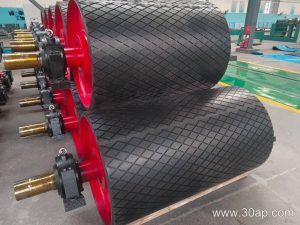
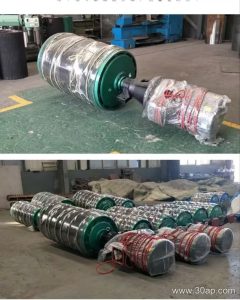
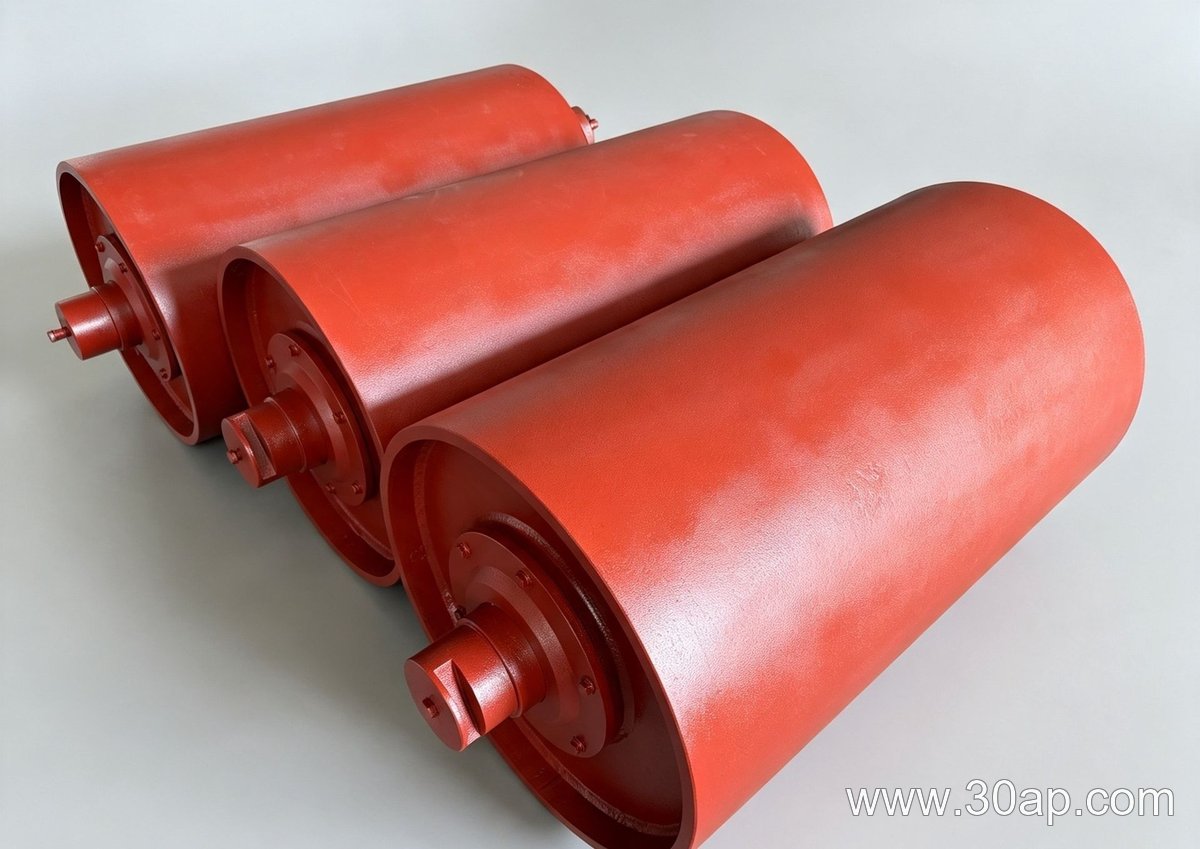
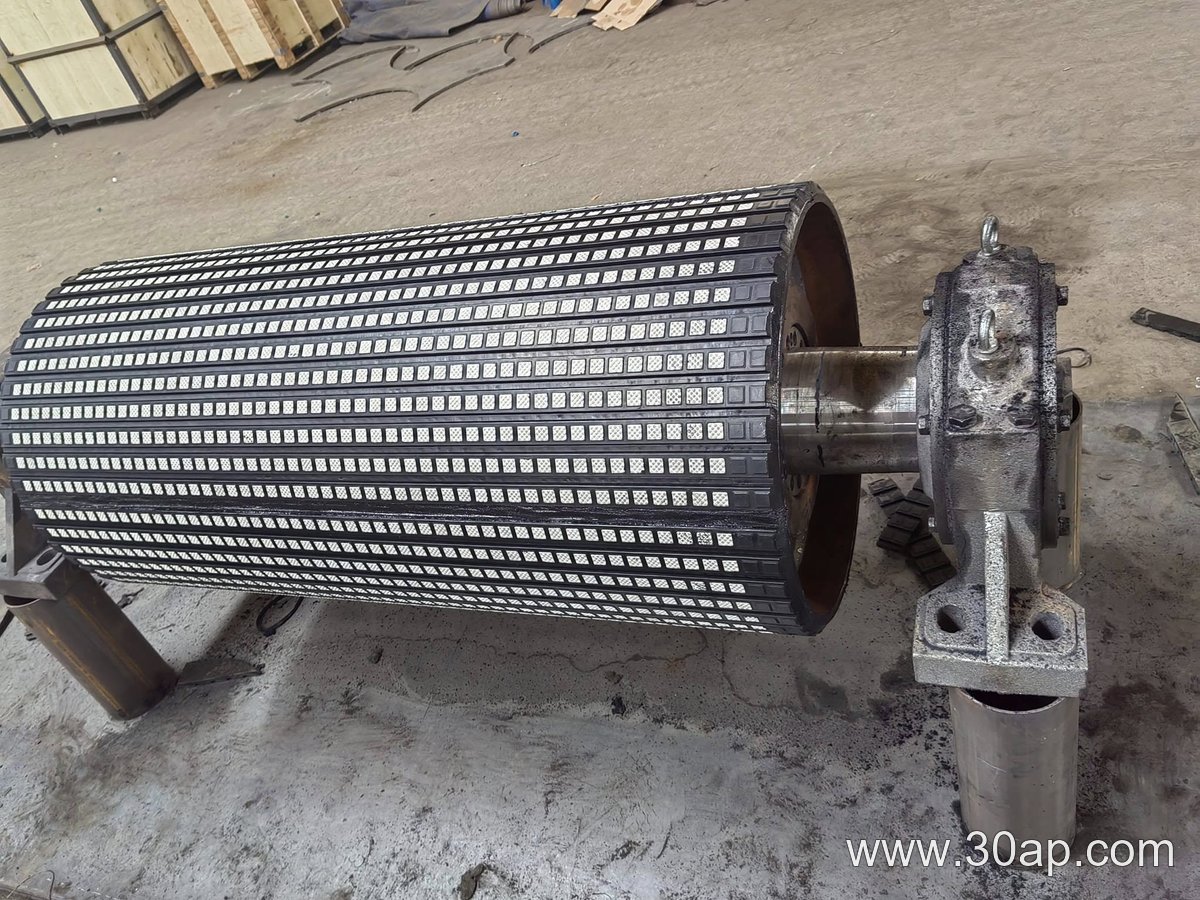
A typical dual drive pulley is built around a heavy steel shell, with end discs, a shaft, and bearing housings. The shell may be machined and then covered with a rubber or ceramic lagging to improve grip. Drive torque enters through two separate points—often through keyed shafts, locking assemblies, or flange-mounted gearboxes. The pulley body must handle not only the belt tension but also the combined torque from both drives.
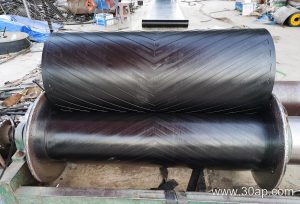
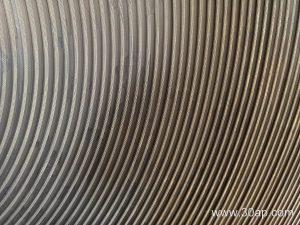
Common surface forms include plain steel, diamond rubber lagging, herringbone lagging, and ceramic lagging. Lagging thickness is often 8 mm, 10 mm, 12 mm, 15 mm, or 20 mm, depending on the belt speed, material, and ambient conditions. For dusty or wet environments—such as a cement plant clinker line or a port bulk terminal—diamond or ceramic lagging is frequently chosen to reduce slip.
Where Dual Drive Pulleys Are Used
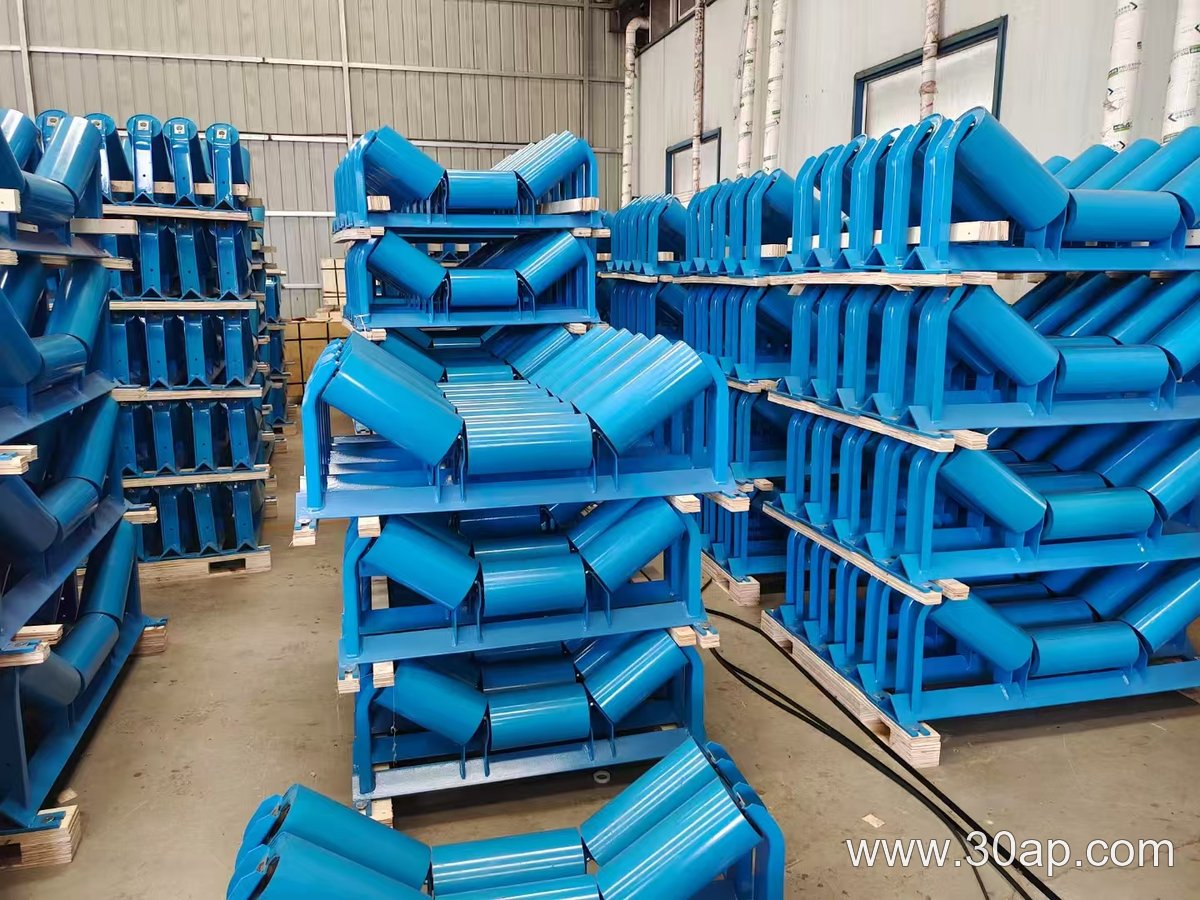
These pulleys appear in applications where the conveyor must move large tonnages over long distances or uphill. Examples include:
- Iron ore and copper ore transport in mining
- Coal handling in power plants and washeries
- Crushed stone and aggregate lines in a quarry or sand and gravel plant
- Clinker and raw material conveyors in cement works
- Bulk cargo loading and unloading at ports
In these settings, a single drive pulley may require an extremely large motor and gearbox, which can be difficult to source, install, and service. A dual drive pulley allows the use of two smaller, more standard drive units, and it can also provide redundancy—if one drive is temporarily offline, the other may still allow limited operation, depending on the design.
How to Match a Dual Drive Pulley to the Conveyor
Selection is not a matter of picking one diameter for one belt width. Instead, the pulley diameter, shaft diameter, and lagging type must be calculated from the actual belt tension, torque, and load. The following table shows common reference ranges; these are not mandatory combinations.
| Belt width | Typical pulley face width | Common pulley diameters | Typical shaft diameters |
|---|---|---|---|
| B500 | 600 mm | Ø250, Ø315, Ø400 | Ø50, Ø60, Ø70 |
| B650 | 750 mm | Ø315, Ø400, Ø500 | Ø60, Ø70, Ø80 |
| B800 | 950 mm | Ø400, Ø500, Ø630 | Ø70, Ø80, Ø90 |
| B1000 | 1150 mm | Ø500, Ø630, Ø800 | Ø80, Ø90, Ø100 |
| B1200 | 1400 mm | Ø630, Ø800, Ø1000 | Ø90, Ø100, Ø120 |
| B1400 | 1600 mm | Ø800, Ø1000, Ø1250 | Ø100, Ø120, Ø140 |
| B1600 | 1800 mm | Ø1000, Ø1250, Ø1400 | Ø120, Ø140, Ø160 |
| B1800 | 2000 mm | Ø1250, Ø1400, Ø1600 | Ø140, Ø160, Ø180 |
| B2000 | 2200 mm | Ø1400, Ø1600, Ø1800 | Ø160, Ø180, Ø200 |
For example, a B1200 conveyor may use a dual drive pulley with a Ø1000 shell, but a B1200 system with lower tension could also use a Ø800 pulley. The shaft diameter is determined by torque and bending load, not by belt width alone. Always confirm with the conveyor designer.
Buyer Checklist for Dual Drive Pulleys
- Confirm the drive arrangement: two motors on one shaft, or two separate drive pulleys on a common frame?
- Specify lagging type and thickness based on material and moisture. For a sand and gravel line, diamond rubber is common; for a coal washery, ceramic lagging may be preferred.
- Check the conveyor bracket and bearing housing dimensions to ensure the pulley fits the existing structure.
- Ask for the calculated shaft diameter and the allowable torque per drive, not just the shell diameter.
- Consider maintenance access: dual drive pulleys often require more space around the head end, and the two drive units must be aligned.
- Remember that a dual drive pulley is not a substitute for a tail pulley or a bend pulley. Each has its own role in belt tracking and tension.
When properly sized, a dual drive pulley can improve reliability and reduce component wear in demanding conveyor systems. It is a specialized solution, and the final choice should be based on the actual load profile, belt speed, and site conditions.