What a Self-Aligning Idler Does
A conveyor belt self-aligning idler is a carrying or return roller assembly designed to correct belt drift without manual intervention. When a belt starts to wander toward one side of the frame, the self-aligning idler pivots slightly and steers the belt back toward the centerline. This correcting action is what separates it from a standard fixed troughing idler. In many plants the same component is called a self-correcting idler or training idler, and those names describe the same product.
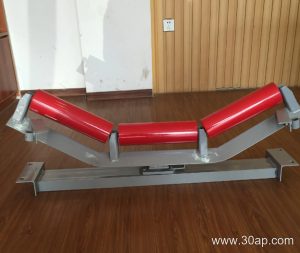
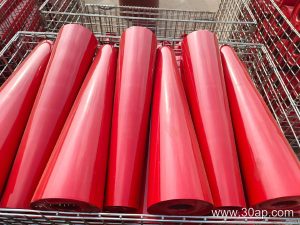
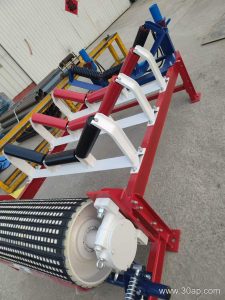
The assembly usually sits on a rotating base or a pivoted bracket. Because the roller frame can swing horizontally, any lateral force from a misaligned belt turns the rollers at a small angle. That angle produces a gentle sideways push, and the belt returns to its proper path. A typical unit may be fitted with two or three rolls, and the roll surface can be steel, nylon, ceramic, or rubber-covered depending on the material being handled.
How It Is Built
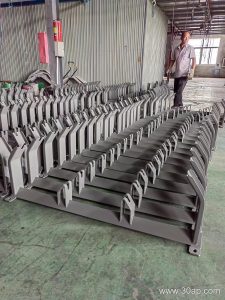
Construction starts with a set of idler rollers mounted in a frame that is free to rotate about a vertical pivot. The pivot is often supported by a conveyor bracket that bolts to the conveyor stringer. A common arrangement uses a three-roll troughing set for the carrying side; a two-roll V-return or a single flat roll is more typical on the return strand. Roll diameter and shaft size are selected from the belt width, load, and speed, not from a single fixed rule.
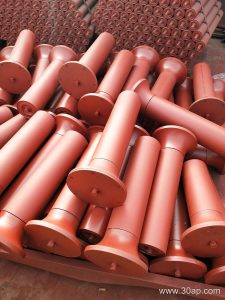
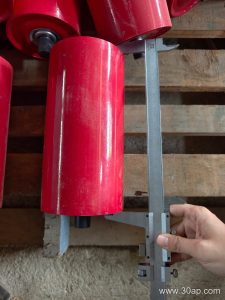
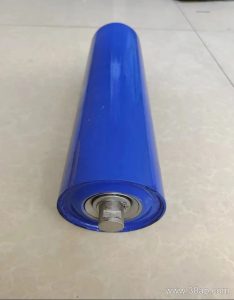
Bearing housings are usually sealed to keep dust and fines out. Common bearing sizes include 6204, 6205, 6305, 6306, 6308, and 6310, but these are reference examples rather than a fixed match to any one roll diameter. Roll diameters often range from Ø63 up to Ø219, and belt widths from B400 to B2400 appear in catalogues. A B800 belt, for instance, might use a 315 mm roll in a three-roll troughing set, while a B1200 belt may use a 465 mm roll. These figures are typical examples only; side rolls and center rolls can differ.
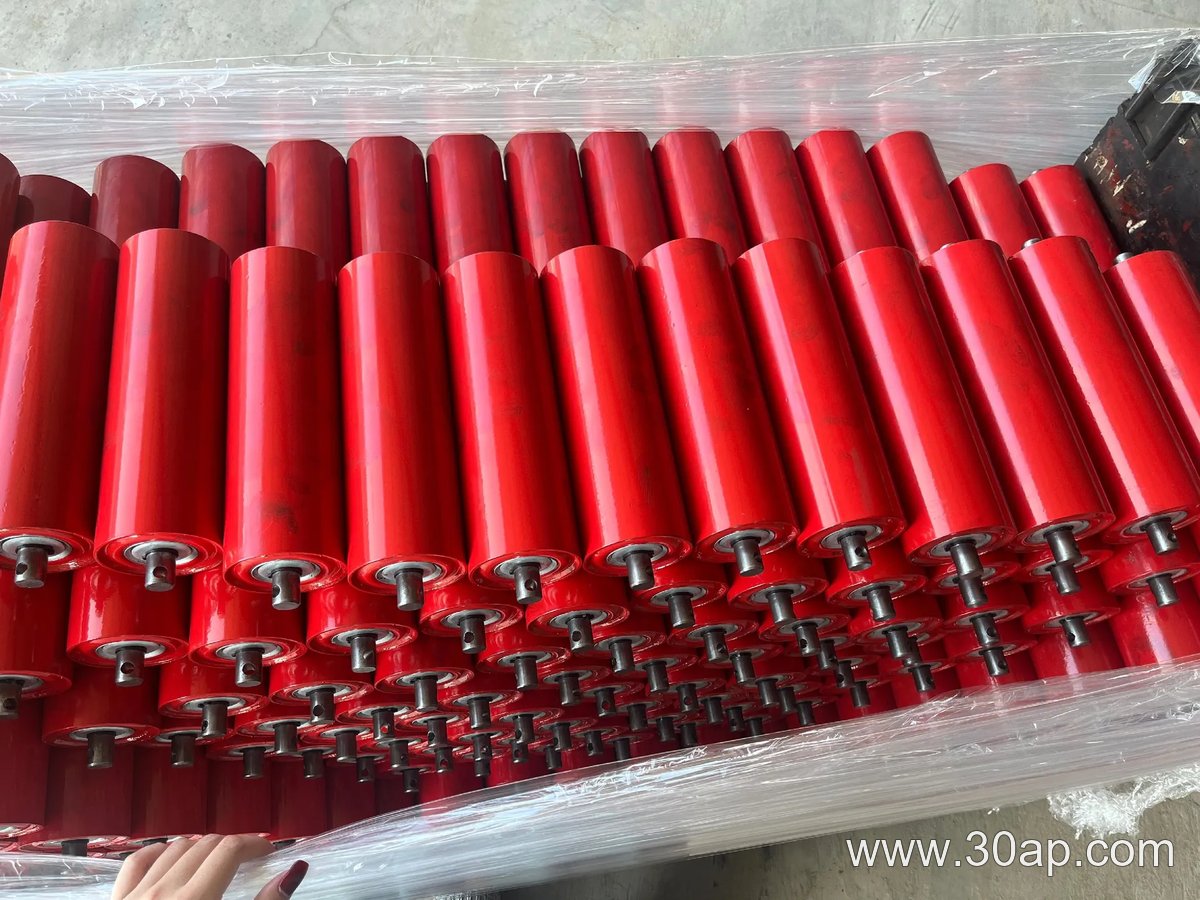
Where It Fits on the Conveyor
Self-aligning idlers are most useful where belt training is difficult. They are common on long overland conveyors, on curves, and after transition zones where the belt leaves a conveyor pulley. In a quarry or a limestone mine, a training idler on the carrying side helps hold the belt after the load point. In a coal washing plant or a power station coal yard, return-side self-aligning rollers reduce edge wear on the return strand. They also appear in sand and gravel lines, crushing and screening circuits, and tunnel muck handling.
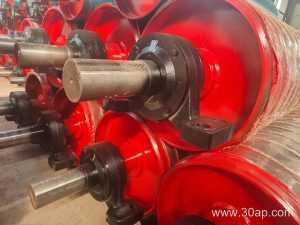
They are not a substitute for a drive pulley, a tail pulley, or a bend pulley. Those components transmit power or change belt direction, while a self-aligning idler only guides the belt. A trained belt still depends on correct pulley alignment, proper loading, and good maintenance of the whole conveyor.
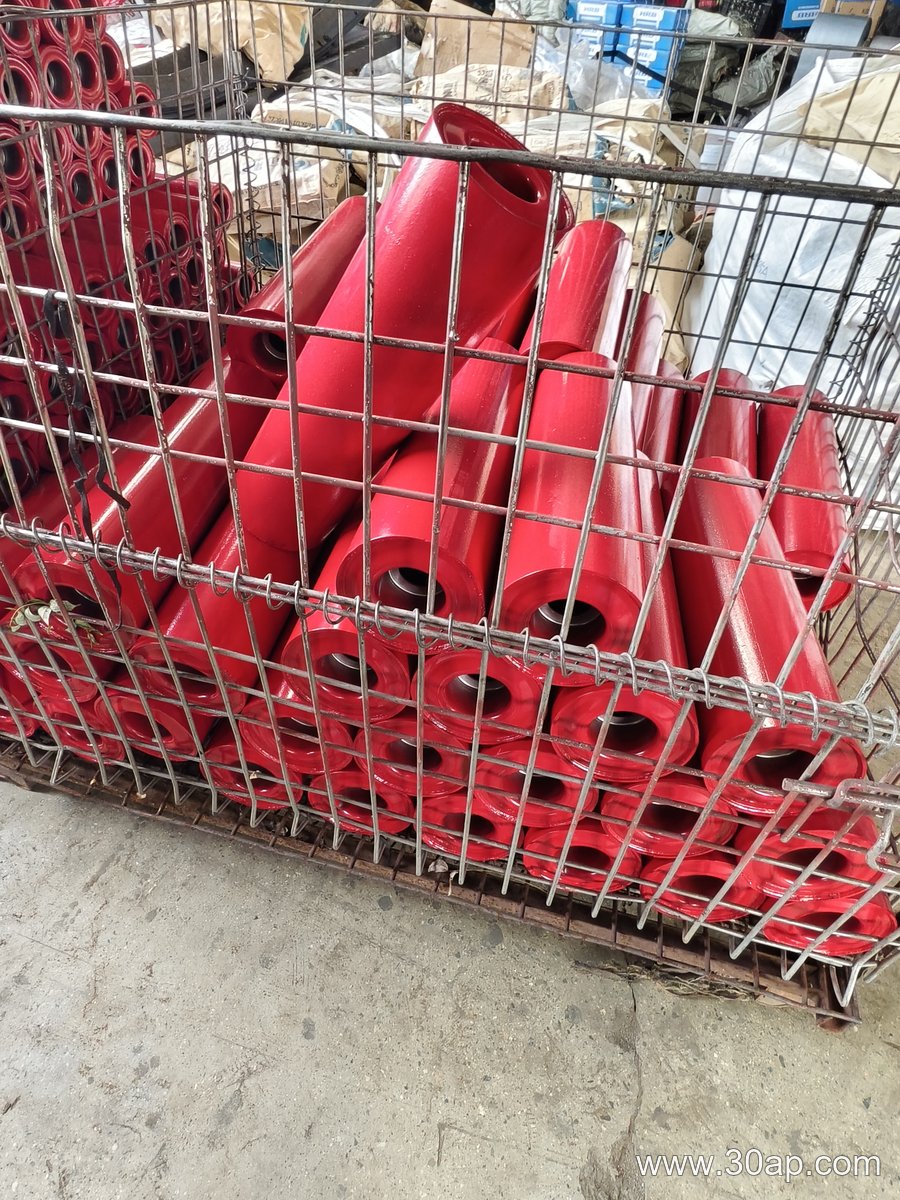
Selection Points for Buyers
Before choosing a self-aligning roller, confirm the belt width, the trough angle, the roll diameter, and the mounting hole pattern. Trough angles of 20, 30, 35, and 45 degrees are common. A forward tilt of about 1.5 to 2 degrees is sometimes used on training idlers to improve steering. Ask whether the unit is for the carrying side or the return side, because the frame shape and roll count differ. Check the shaft and bearing size against the actual load, and confirm that the bracket matches the existing conveyor bracket spacing.
- Belt width: B400, B500, B650, B800, B1000, B1200, B1400, B1600, B1800, B2000, B2200, B2400
- Roll diameter: Ø63, Ø76, Ø89, Ø102, Ø108, Ø127, Ø133, Ø159, Ø178, Ø194, Ø219
- Trough angle: 20°, 30°, 35°, 45°
- Roll surface: steel tube, nylon, ceramic, rubber ring
A buyer should also ask about the pivot mechanism. A friction training idler uses friction between the roll and the belt to swing the frame, while a positive-steer design uses a linkage. Both can work, but the choice depends on belt speed, material stickiness, and how much correction is needed. For sticky or highly abrasive material, rubber-covered rolls may last longer, while ceramic rolls can suit wet or fine material.
Maintenance and Practical Notes
Self-aligning idlers need periodic inspection like any idler roller. Check that the pivot moves freely, that the rolls turn without noise, and that the frame is not jammed by spilled material. A training idler that cannot pivot will not correct belt drift. Also check that the conveyor belt is not overloaded on one side, since uneven loading can defeat even a well-set training idler.
Keep spare rollers, bearings, and brackets on hand for the most common sizes on site. When replacing a unit, match the roll length, shaft diameter, and mounting centres to the original position. Do not assume that one belt width always takes one pulley or idler diameter; the correct size is set by the conveyor design.