What a Self-Cleaning Idler Does
A self-cleaning idler is a conveyor roller designed to shed material that would otherwise stick to its surface. On belts carrying wet, fine, or clay-rich loads, ordinary rollers can build up a layer of carryback. That layer changes the roll diameter, causes belt tracking problems, and eventually damages the belt edge. The self-cleaning idler addresses this by using a surface geometry that continuously breaks the bond between the roller and the material.
This is not a different category of conveyor pulley. It remains an idler roller mounted on a conveyor bracket, and it sits under the belt in the same way as a standard carrying or return roller. The difference lies in the roller face and, in some designs, the internal sealing arrangement.
How the Cleaning Action Works
Most self-cleaning idlers use one of two approaches. The first is a helical or spiral surface, often called a spiral idler. As the roller turns, the spiral edge pushes material toward one end and off the face. The second is a segmented or grooved surface, where small gaps interrupt the contact area so sticky fines cannot form a continuous coating.
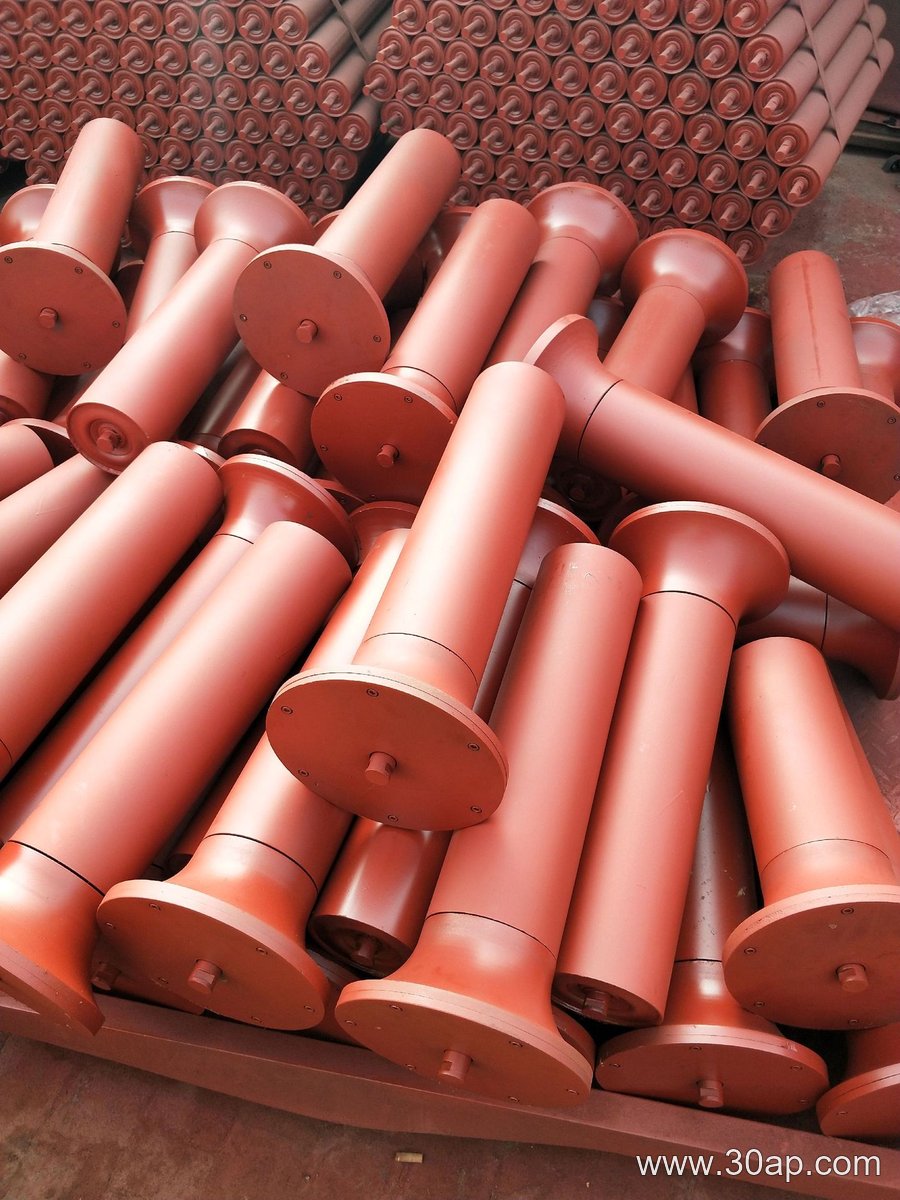
Both approaches rely on the roller turning freely. If the bearing seizes, the cleaning action stops and the surface becomes a wear point. For that reason, self-cleaning idlers usually pair a protected bearing housing with a labyrinth or contact seal. Common bearing sizes for this duty include 6205, 6305, and 6306, though the correct bearing depends on the load and roller diameter, not on belt width alone.
Where Self-Cleaning Idlers Fit on a Conveyor
These rollers are most often used in the return run, where loose material falls onto the roller face. They also appear in the carrying run on belts that carry damp sand, limestone, or washed aggregate. A self-cleaning idler is not a replacement for a bend pulley or a drive pulley. Those components transmit belt tension and change belt direction, while an idler roller only supports the belt.
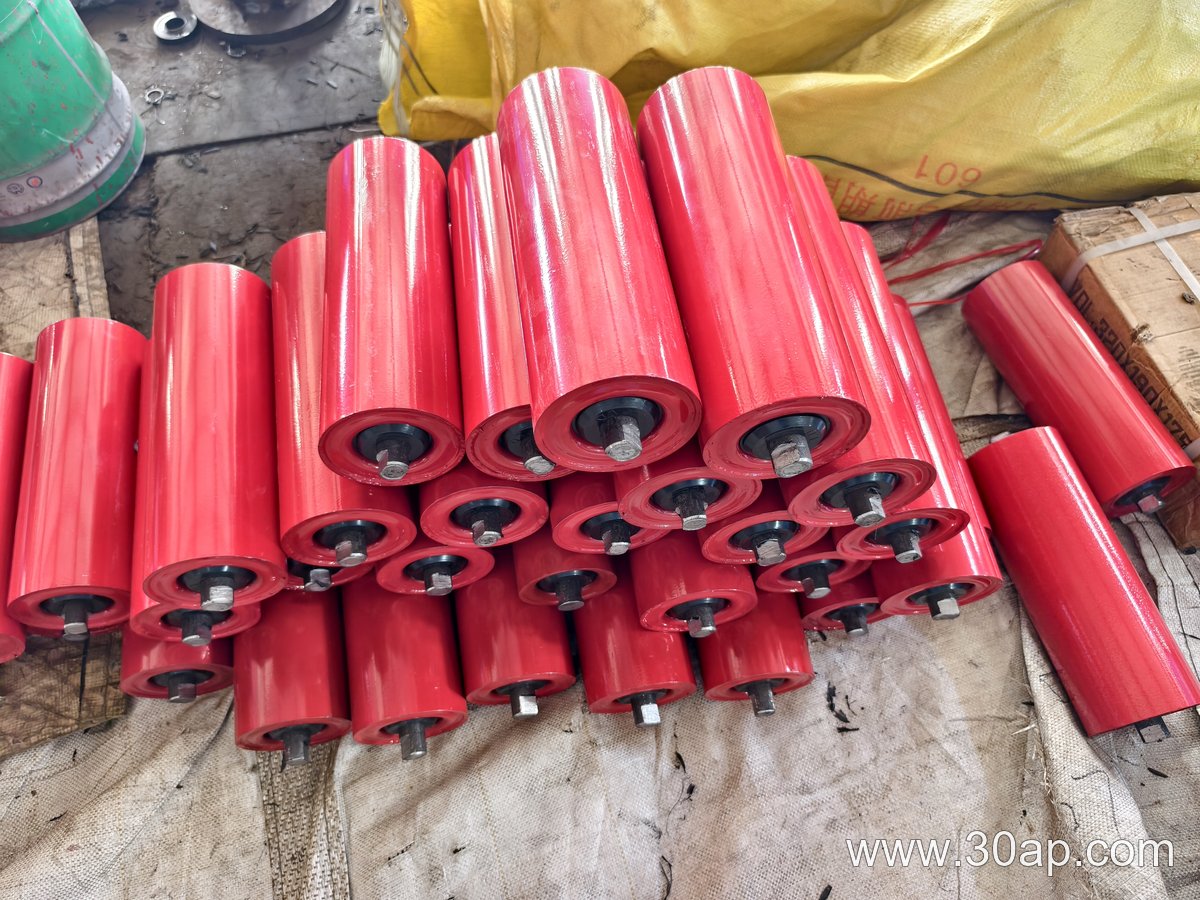
Typical installation points include:
- Return run after the head pulley, where carryback is heaviest
- Loading zones where fines spill onto the return belt
- Transfer points in crushing and screening circuits
- Conveyors handling filter cake, clay, or wet coal
In a sand and gravel line, a self-cleaning return idler can reduce the labor needed to scrape material from standard rollers. In a coal handling system, the same roller helps prevent wet coal from wrapping around the return roll.
Construction Details Buyers Should Check
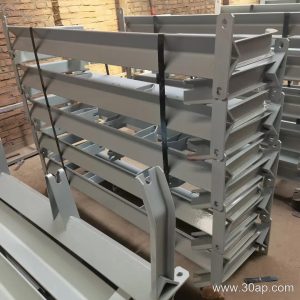
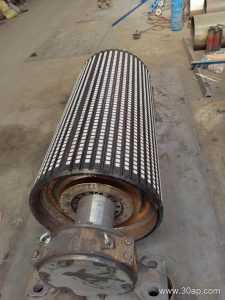
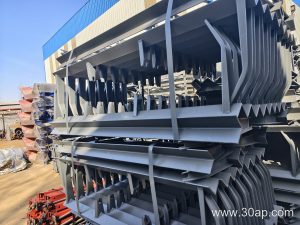
The roller shell is usually steel tube, but the surface may be fitted with rubber rings or a ceramic coating for extra abrasion resistance. Rubber ring idlers are common in buffer positions, while a self-cleaning spiral is more often a bare steel or nylon face. The shaft, bearing housing, and bracket must match the conveyor frame. A conveyor bracket that fits a 30 mm shaft will not accept a 40 mm shaft without modification.
Diameter and length are selected from the belt width, the trough angle, and the load. For a three-roll troughing set, common roller lengths are approximately 200 mm for B500, 250 mm for B650, 315 mm for B800, 380 mm for B1000, 465 mm for B1200, and 530 mm for B1400. These are examples, not fixed pairings. A single belt width can use different roller diameters depending on the belt speed and the material weight. Do not assume that one belt width requires one specific pulley diameter or one specific shaft size.
Selection and Maintenance Notes
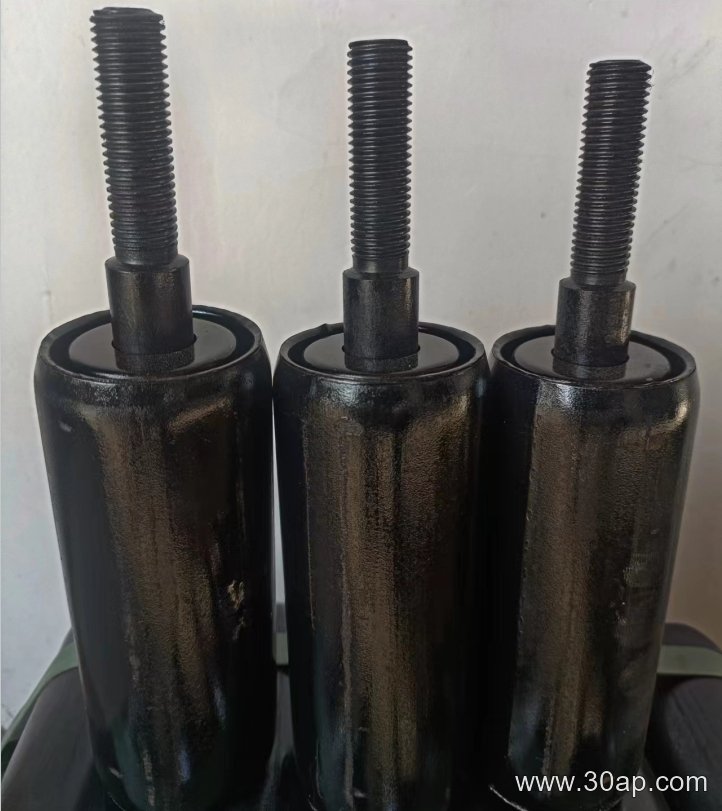
When specifying a self-cleaning idler, confirm the roller diameter, the shaft diameter, the bracket spacing, and the sealing class. Ask whether the cleaning surface is spiral, grooved, or disc-based, because each handles a different material consistency. A spiral works well for dry fines, while a disc or rubber ring surface may suit wet, lumpy material better.
Inspect the idler during normal belt maintenance. Check for a worn spiral edge, a cracked bearing housing, or material packed behind the seal. A self-cleaning idler that no longer turns is no longer self-cleaning. Replace it before the stationary roller wears a flat spot into the conveyor belt.
Used correctly, a self-cleaning idler reduces manual cleanup and helps the belt run true. It is a support component, not a drive component, and it should be selected with the same care as any other idler roller on the conveyor.