What a Conveyor Leg Does
A conveyor leg is the vertical support that carries the idler roller frames and, through them, the loaded conveyor belt. In many Chinese workshops and project drawings, the same component is called a bracket leg or support leg for the conveyor frame. It is not a drive pulley, a tail pulley, or a bend pulley. Those pulleys transmit motion or change belt direction, while the leg simply holds the carrying and return idlers at the correct height and angle.
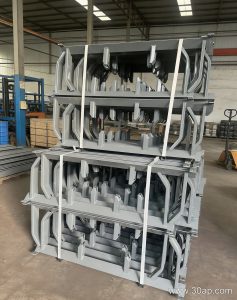
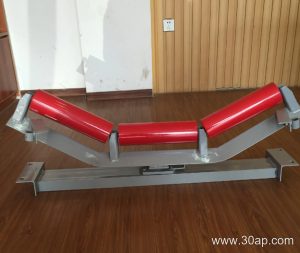
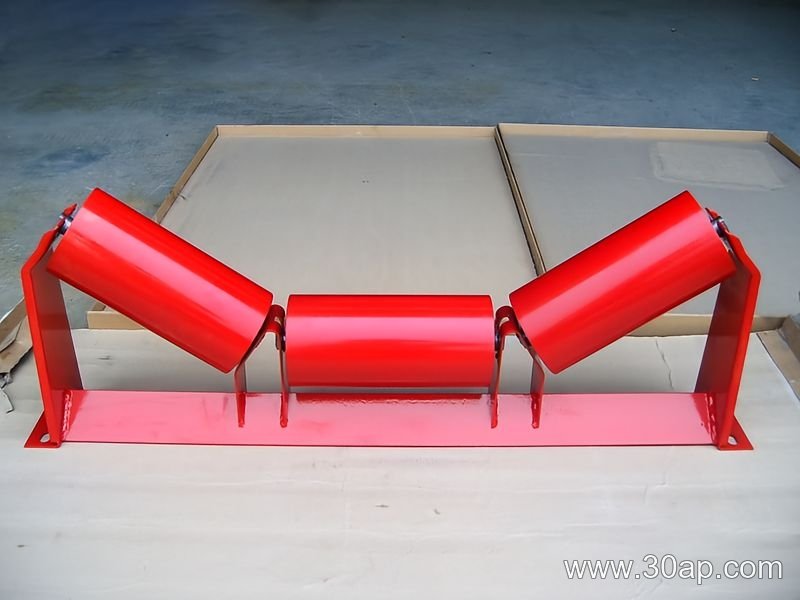
On a typical carrying side, the leg sits under a troughing bracket that holds three idlers. On the return side, it may support a flat return bracket or a V-shaped return bracket. The leg is usually made from angle steel, channel steel, or folded steel plate, then drilled or punched for bolting to the main frame. A conveyor bracket and a conveyor leg work as a pair: the bracket sets the trough angle, and the leg keeps that bracket at a fixed elevation above the ground or walkway.
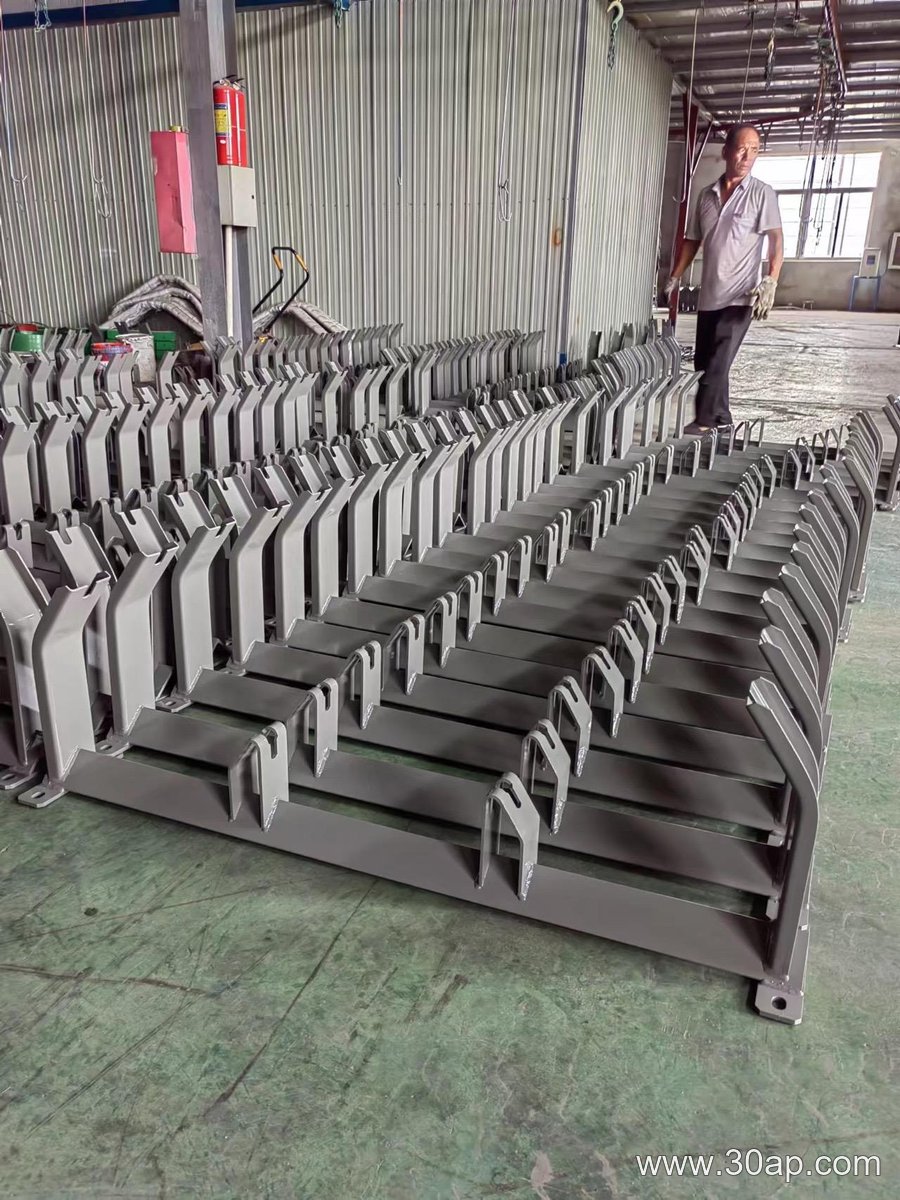
How the Leg Is Built and Installed
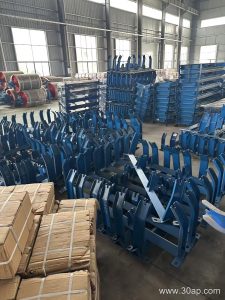
A standard leg has a base plate for floor mounting, a vertical column, and a top plate or angle for the bracket connection. Adjustable legs include slotted holes or telescopic sections so the user can fine-tune height. Fixed legs are welded or bolted to a fixed dimension. For a B800 belt with a 35 degree trough angle, the leg height is often set so the center idler sits at the correct profile; for a B1200 belt with a 45 degree trough angle, the same leg family may be taller and wider. The mounting hole spacing and crossbeam length change with belt width and trough angle, so they are confirmed by design rather than treated as a universal number.
Installation starts with aligning the leg bases along the conveyor centerline. The legs are then squared to the frame before the idler rollers are placed. A misaligned leg can cause the belt to drift, which is often mistaken for a pulley or idler problem. On a typical 30 degree troughing set, the leg supports the bracket, the bracket holds the rollers, and the conveyor belt runs on the rollers. The leg itself does not touch the belt.
Where Conveyor Legs Are Used
These supports appear in fixed belt conveyors across many bulk handling sites. In a limestone quarry, heavy-duty legs carry the impact zone under the crusher discharge. In a coal washing plant, galvanized or painted legs resist moisture and fine coal dust. In a sand and gravel line, the legs are often placed on sleepers or concrete plinths to keep the frame above spilled material. They also appear in cement plants, power plant coal yards, and port loading systems.
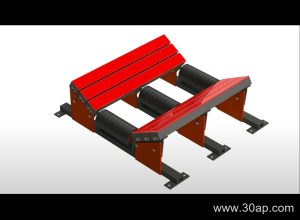
Different positions call for different leg heights. A loading zone may use a shorter leg with a buffer idler bracket, while a long overland section uses standard legs at regular intervals. A transfer point may need a transition bracket and a taller leg to match the chute. The leg is selected by belt width, trough angle, roller diameter, and the load carried by the idler set.
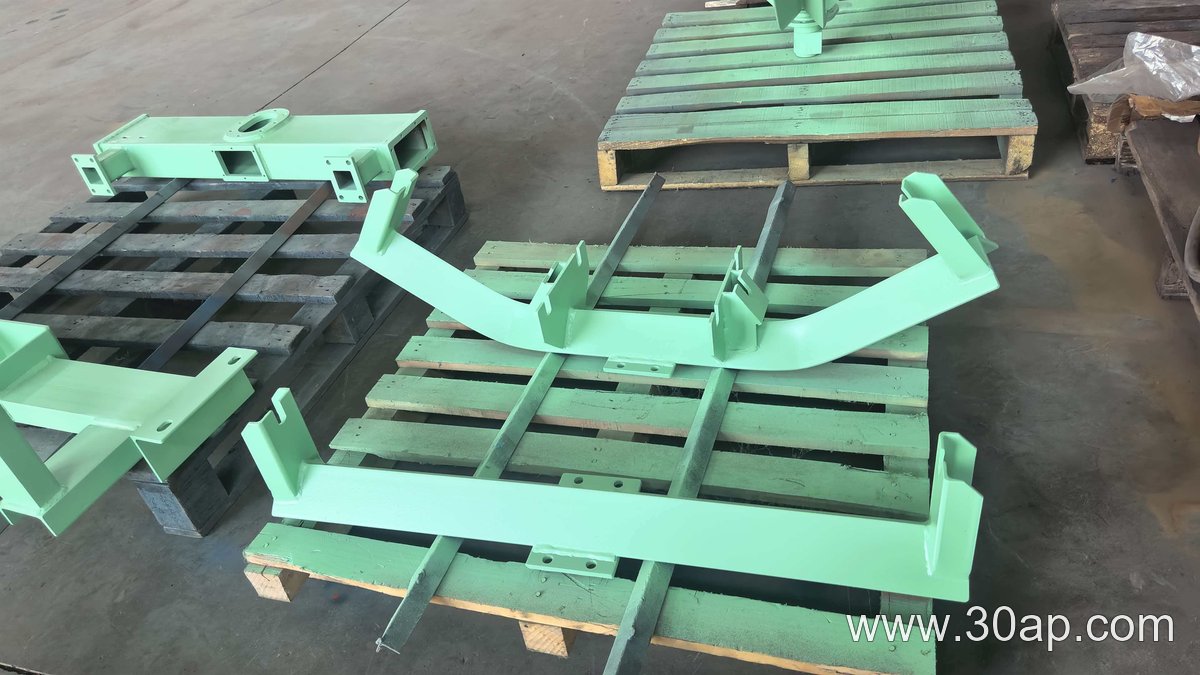
Common Reference Data for Selection
When choosing a conveyor leg, the buyer usually provides belt width, trough angle, roller diameter, and whether the support is fixed or adjustable. The table below gives common reference combinations, not mandatory matches. One belt width can work with more than one trough angle or roller diameter.
| Belt width | Trough angle | Roller diameter | Typical leg note |
|---|---|---|---|
| B500 | 20 degrees | Ø89 | Light duty, fixed or adjustable |
| B650 | 30 degrees | Ø89 or Ø108 | Common for small transfer lines |
| B800 | 35 degrees | Ø108 | Standard quarry and sand line support |
| B1000 | 35 or 45 degrees | Ø133 | Heavier frame, wider base plate |
| B1200 | 45 degrees | Ø133 or Ø159 | High capacity, reinforced leg |
| B1400 | 35 or 45 degrees | Ø159 | Mining and port duty |
| B1600 | 45 degrees | Ø159 or Ø194 | Heavy impact and high tonnage |
These values are reference data only. Actual leg height, hole spacing, and base dimensions are determined by the conveyor design. A B1200 belt, for example, does not have to use a 45 degree trough angle; it can run at 35 degrees if the material and capacity allow. Likewise, a Ø133 roller is not the only choice for B1000.
What a Buyer Should Check
- Confirm the belt width and trough angle before ordering the leg.
- State whether the leg is fixed or adjustable, and the required height range.
- Match the top connection to the conveyor bracket and idler roller frame.
- Check the base plate hole pattern against the floor or steel structure.
- For dusty or wet sites, specify the surface treatment, such as painting or galvanizing.
- Ask for the leg drawing with hole spacing, because it changes with belt width and trough angle.
A conveyor leg is a simple part, but it controls belt line height, trough profile, and long-term stability. Getting the leg details right at the start avoids field drilling and keeps the idler rollers and conveyor belt running true.