What Rubber Pulley Lagging Does on a Conveyor Pulley
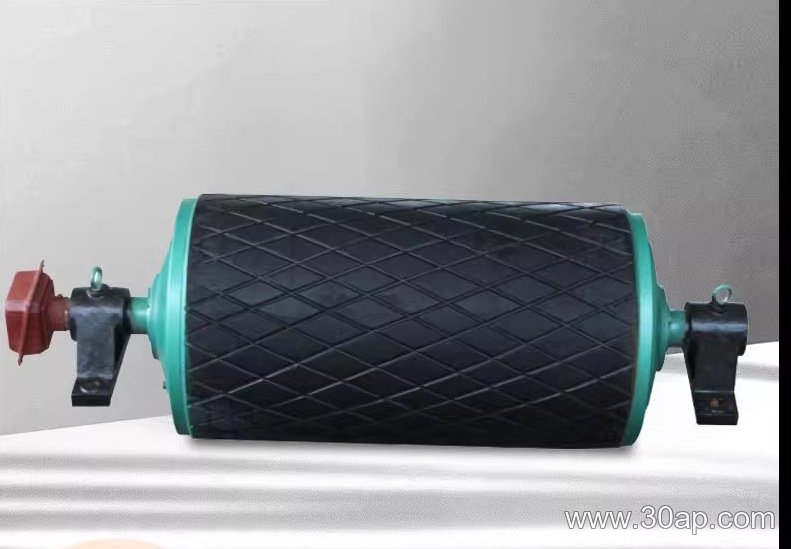
Rubber pulley lagging is the rubber layer bonded to the cylindrical shell of a conveyor pulley to improve grip between the drum and the conveyor belt. On a drive pulley, that grip is what lets the motor turn the belt without slipping. On a tail, bend, or tension pulley, lagging mainly protects the shell from wear, abrasive material, and moisture while helping the belt track more steadily. The product is also known as rubber drum lagging, and both names describe the same rubber covering applied to a pulley face.
Drive pulleys, tail pulleys, and bend pulleys are not interchangeable. A drive pulley transmits torque and needs friction, so its lagging is often selected for grip. A tail pulley mostly guides and tensions the belt, so wear resistance may matter more. A bend pulley changes belt direction and usually carries a lighter load.
How the Lagging Is Built and Fitted
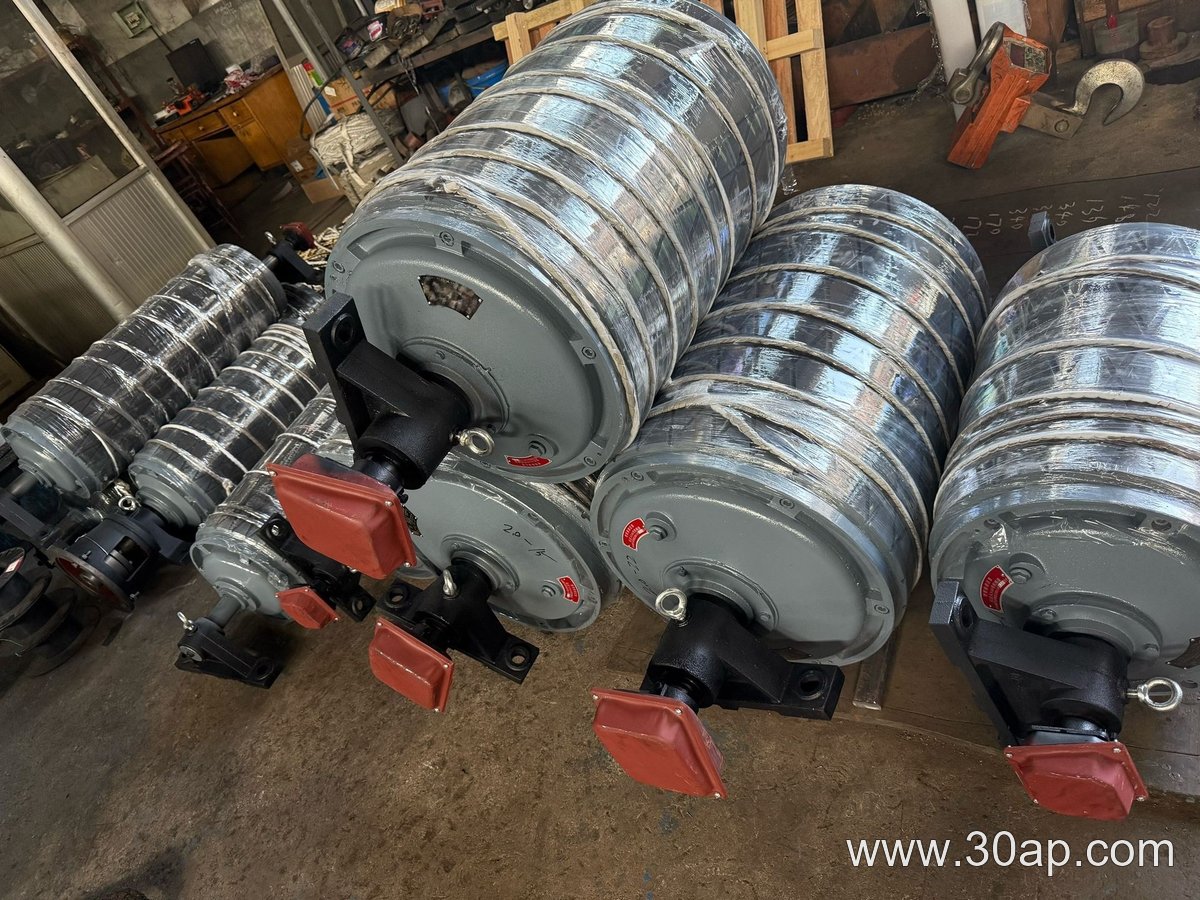
Rubber lagging is usually supplied in two forms. Sheet lagging comes as a flat rubber strip that is cut to the pulley width and wrapped around the shell, then bonded. Strip or tile lagging comes in pre-cut pieces, which can be easier to fit on site. The rubber may be bonded by hot vulcanization, which cures the joint under heat and pressure, or by cold bonding with a two-part adhesive. Hot vulcanized joints are common where a strong, seamless surface is needed. Cold bonded rubber is often chosen for repairs or when removing the pulley is difficult.
The rubber itself may be natural rubber, styrene-butadiene rubber, or a blend. Hardness, tensile strength, and abrasion resistance are the usual properties a buyer compares, though exact values depend on the supplier and the compound.
Surface Forms and Where They Help
The surface pattern affects how the lagging behaves. Plain or smooth rubber gives uniform contact and is common on bend and tail pulleys. Diamond lagging has a raised diamond pattern that helps water and fine material escape from under the belt. Herringbone lagging uses angled ribs to push debris sideways and can improve grip on a drive pulley. Ceramic lagging embeds ceramic tiles in rubber for very high wear resistance, but it is a different product family and is not the same as plain rubber lagging.
Common rubber thicknesses include 8 mm, 10 mm, 12 mm, 15 mm, and 20 mm. Thicker lagging lasts longer in abrasive service but adds weight and may affect the pulley diameter. A buyer should match thickness to belt tension, material abrasiveness, and the pulley position.
Sizes and Selection Notes
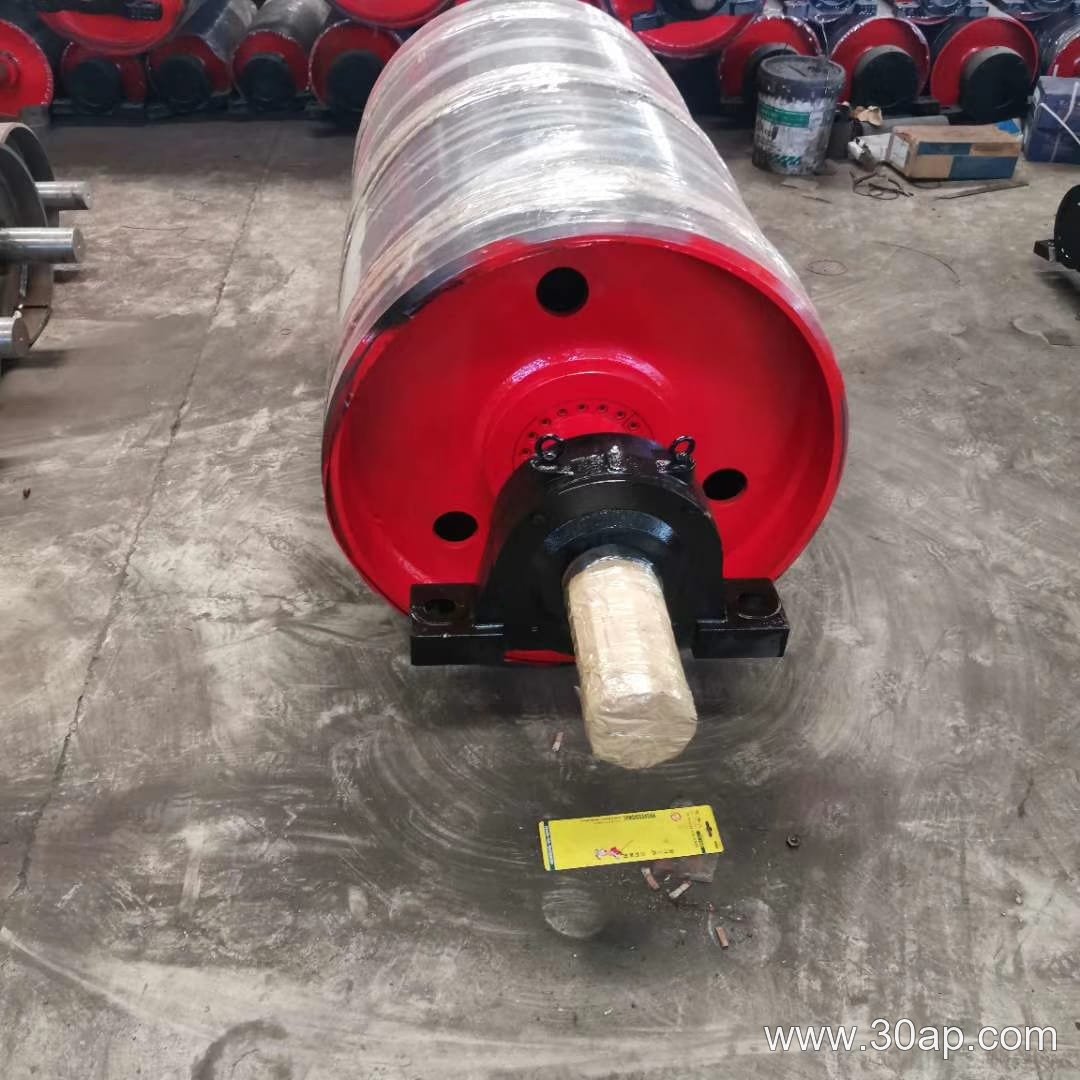
Rubber lagging is ordered by pulley face width, pulley diameter, and lagging thickness. The table below shows reference combinations, not fixed rules. A given belt width can work with more than one pulley diameter, and shaft diameter is set by torque and load, not by belt width alone.
| Belt width | Pulley face width, typical | Example pulley diameter | Common lagging thickness |
|---|---|---|---|
| B500 | about 600 mm | Ø400, Ø500 | 8, 10 mm |
| B800 | about 950 mm | Ø500, Ø630 | 10, 12 mm |
| B1200 | about 1400 mm | Ø800, Ø1000 | 12, 15 mm |
| B1400 | about 1600 mm | Ø1000, Ø1250 | 15, 20 mm |
Shaft diameters such as Ø80, Ø100, Ø120, or Ø160 are determined by the drive calculation. They should never be guessed from belt width.
Where Rubber Lagging Is Used
Rubber pulley lagging appears in bulk material handling across many industries. In a quarry or limestone mine, drive pulleys on the main conveyor often carry diamond or herringbone lagging to keep the belt moving under wet, dusty conditions. In a coal preparation plant, tail and bend pulleys may use plain rubber lagging to resist fine coal slurry. Other common sites include sand and gravel lines, crushing and screening plants, cement clinker conveyors, and port bulk terminals.
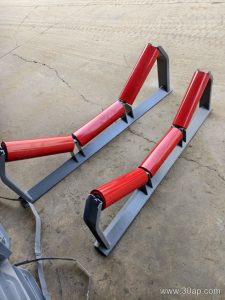
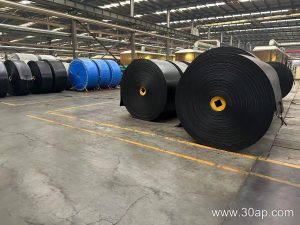
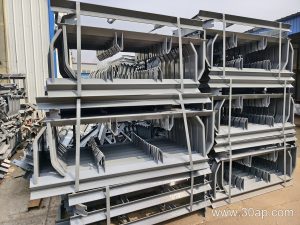
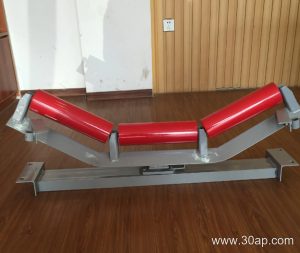
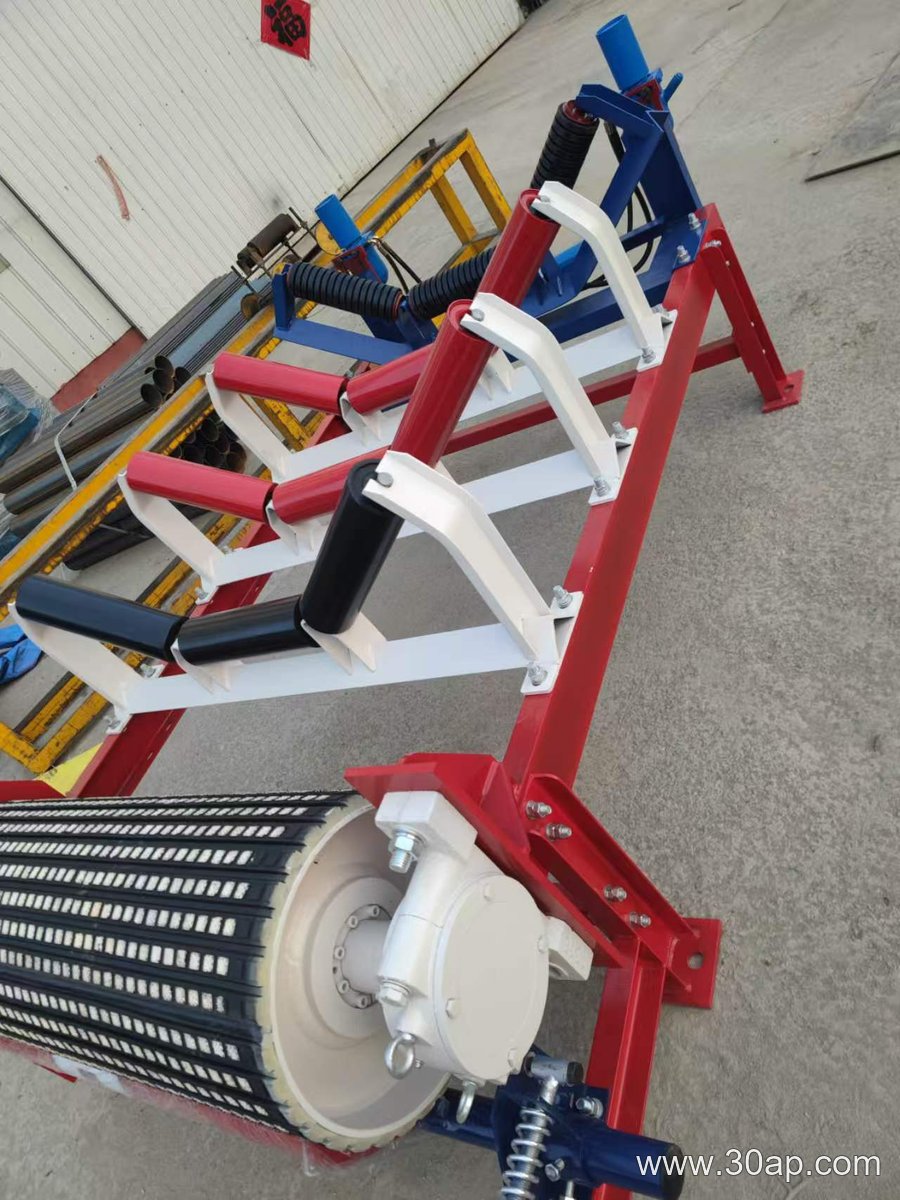
On any conveyor, the pulley works with the conveyor belt, idler rollers, and conveyor brackets. Lagging is only one part of the drive system, but it is often the part that decides whether the belt slips or holds.
What a Buyer Should Check
- Confirm the pulley type: drive, tail, bend, tension, or snub. The duty changes the lagging choice.
- Check pulley diameter and face width so the lagging fits the shell.
- Choose the rubber compound and surface pattern for the material being carried.
- Decide between hot vulcanized and cold bonded application based on site conditions.
- Ask for the lagging thickness in millimeters and confirm the adhesive system.
- Remember that shaft diameter follows the torque design and is not set by belt width.
Rubber pulley lagging is a small part of a conveyor, but it protects the pulley, improves traction, and helps the belt run true. Matching the lagging to the pulley position and the working environment is the practical way to get a longer service life.