What a 2400mm Conveyor Belt Is
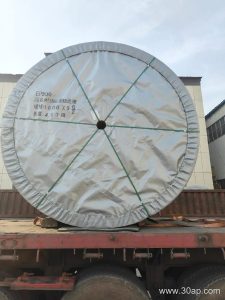
A 2400mm conveyor belt is a wide-format rubber belt with a nominal width of 2400 millimeters. In industrial settings, it is often called a 2.4-meter-wide conveyor belt or a 2400mm wide belt. The width is the defining feature: it allows a single conveyor line to carry a broad, continuous stream of bulk material without excessive belt speed. This belt is not a pulley, idler roller, or conveyor bracket. It is the moving surface that carries the load, running over a conveyor pulley at the head and tail and supported by idler rollers along the carrying side.
Because of its size, a 2400mm belt is usually part of a high-capacity system. It is common in applications where tonnage per hour is high and material is spread across a wide bed. The belt itself is built to handle that duty through a combination of carcass strength, cover compound, and edge construction.
How the Belt Is Built
The construction of a 2400mm conveyor belt follows the same layered logic as narrower belts, but the wider format places greater demands on cross-belt stability. A typical build includes:
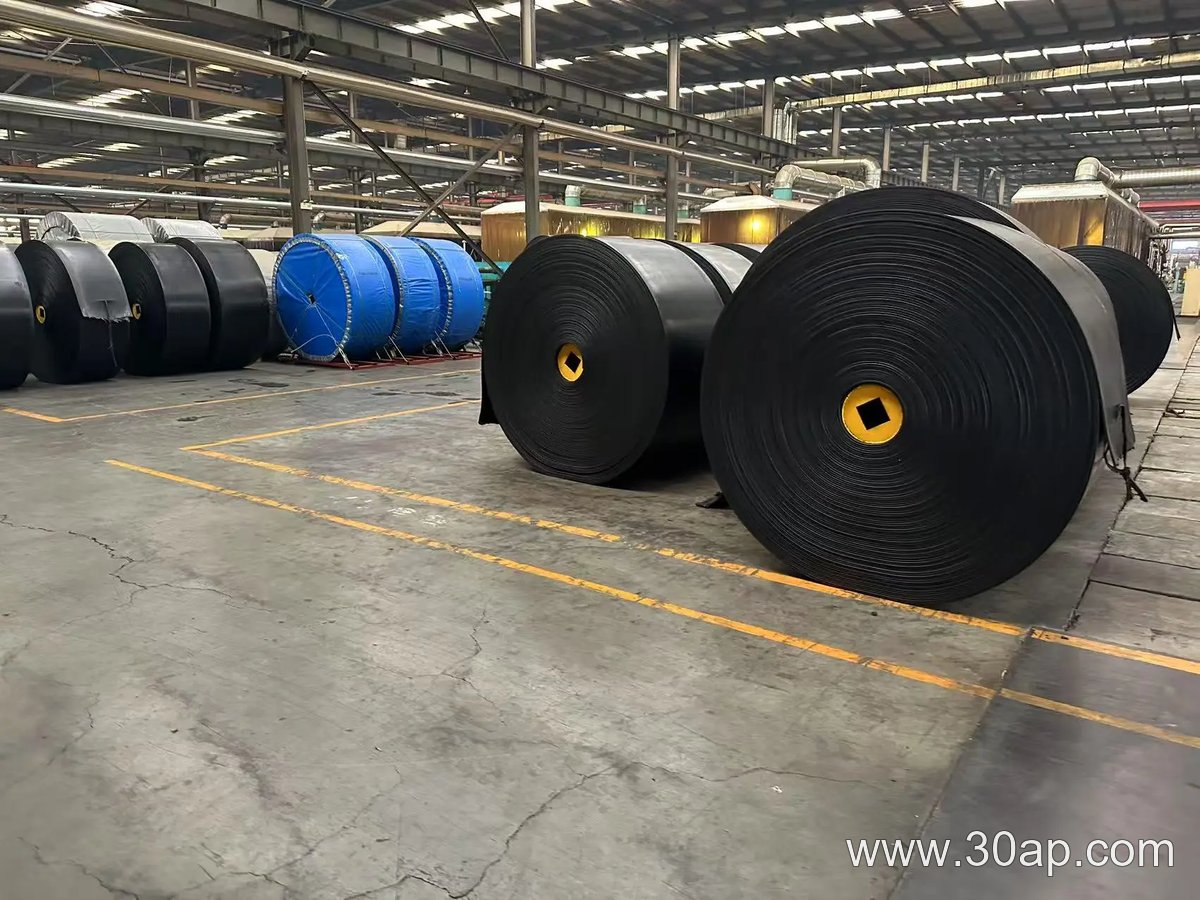
- A carcass of fabric plies, such as EP (polyester-cotton) or NN (nylon-nylon), or steel cord for very high tension.
- Rubber covers on the top and bottom, with thickness selected for abrasion, impact, and material characteristics.
- Edge protection to resist fraying and misalignment.
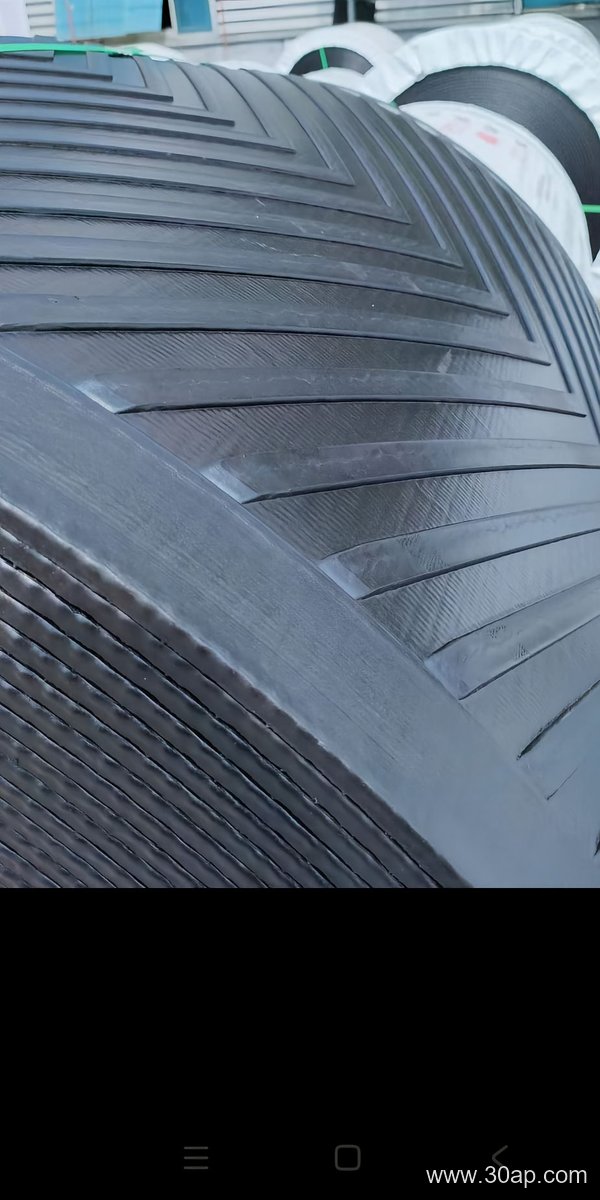
Common cover grades include abrasion-resistant, heat-resistant, oil-resistant, flame-retardant, antistatic, cold-resistant, and acid-alkali-resistant. Surface forms may be smooth, patterned, chevron, or with corrugated sidewalls. For a 2400mm belt, the cover thickness is often specified in combinations such as 4+2 mm, 5+2 mm, 6+2 mm, or 8+3 mm, depending on the duty. Fabric plies usually range from 2 to 6 layers, while steel cord belts are chosen when the belt must handle very high tensile loads over long distances.
Tensile strength grades for fabric belts include EP200, EP315, EP400, EP500, EP630, EP800, EP1000, EP1250, EP1600, and EP2000. These are reference values, not a fixed match for every 2400mm belt. The actual grade depends on the conveyor profile, load, and safety factor. A wide belt does not automatically require the highest grade, and a single belt width does not dictate one pulley diameter. The pulley, idler roller, and conveyor bracket layout are all part of the system design.
Where It Is Used
This width is found in bulk material handling where large volumes move continuously. Examples include:
- Mining and mineral processing, where ore and crushed rock are carried in wide beds.
- Ports and bulk terminals, for loading and unloading coal, grain, or fertilizer.
- Power plants, for fuel and ash handling.
- Steel plants and cement works, for raw materials and clinker.
- Large-scale recycling and waste sorting lines.
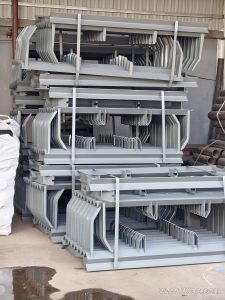
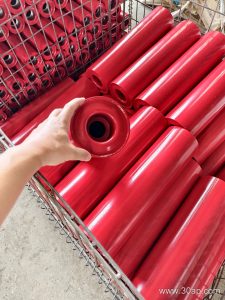
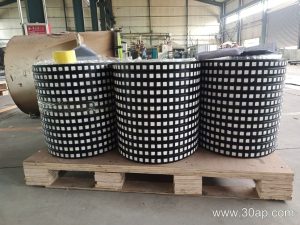
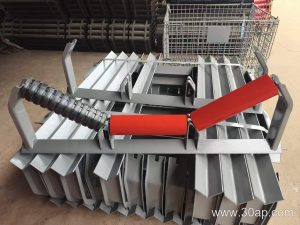
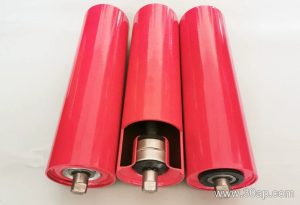
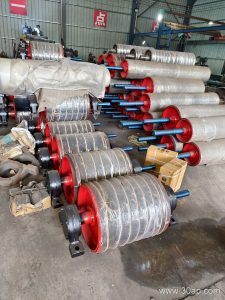
In these settings, the belt works with a drive pulley, tail pulley, and bend pulleys. Each pulley has a distinct role: the drive pulley transmits power, the tail pulley returns the belt, and a bend pulley changes direction. They are not interchangeable names. The belt also runs over idler rollers that support the load and help maintain trough shape. Conveyor brackets hold the idlers and pulleys in position. A 2400mm belt may also be compared with a narrower belt, such as a 1200mm or 1400mm model, when a project needs to balance capacity against structural cost. The wider belt can reduce the number of parallel lines, but it also requires a wider frame and more careful alignment.
What a Buyer Should Know
When specifying a 2400mm conveyor belt, the width alone is not enough. The buyer should confirm:
- Material type and lump size, because sharp or hot material affects cover choice.
- Required tensile grade, such as EP400 or EP1000, based on calculated belt tension.
- Cover thickness and grade, for example 6+2 mm abrasion-resistant or 8+3 mm heat-resistant.
- Whether a smooth, patterned, chevron, or corrugated sidewall surface is needed.
- Belt length, splice method, and expected roll or coil dimensions for transport.
- Compatibility with the existing pulley diameters, idler roller spacing, and conveyor bracket arrangement.
It is also wise to ask for the manufacturer’s technical data sheet. Values such as strength, elongation, and cover properties can vary between producers. A 2400mm conveyor belt is a significant investment, and correct selection reduces downtime, belt mistracking, and premature wear. Maintenance should include regular inspection of the belt edges, splice condition, and alignment over the pulleys and idlers. Keeping the system clean and tensioned correctly helps the belt run true across its full width.