What an Impact Resistant Idler Does
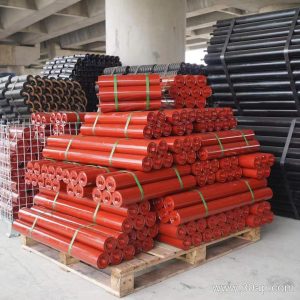
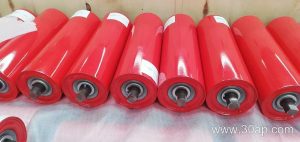
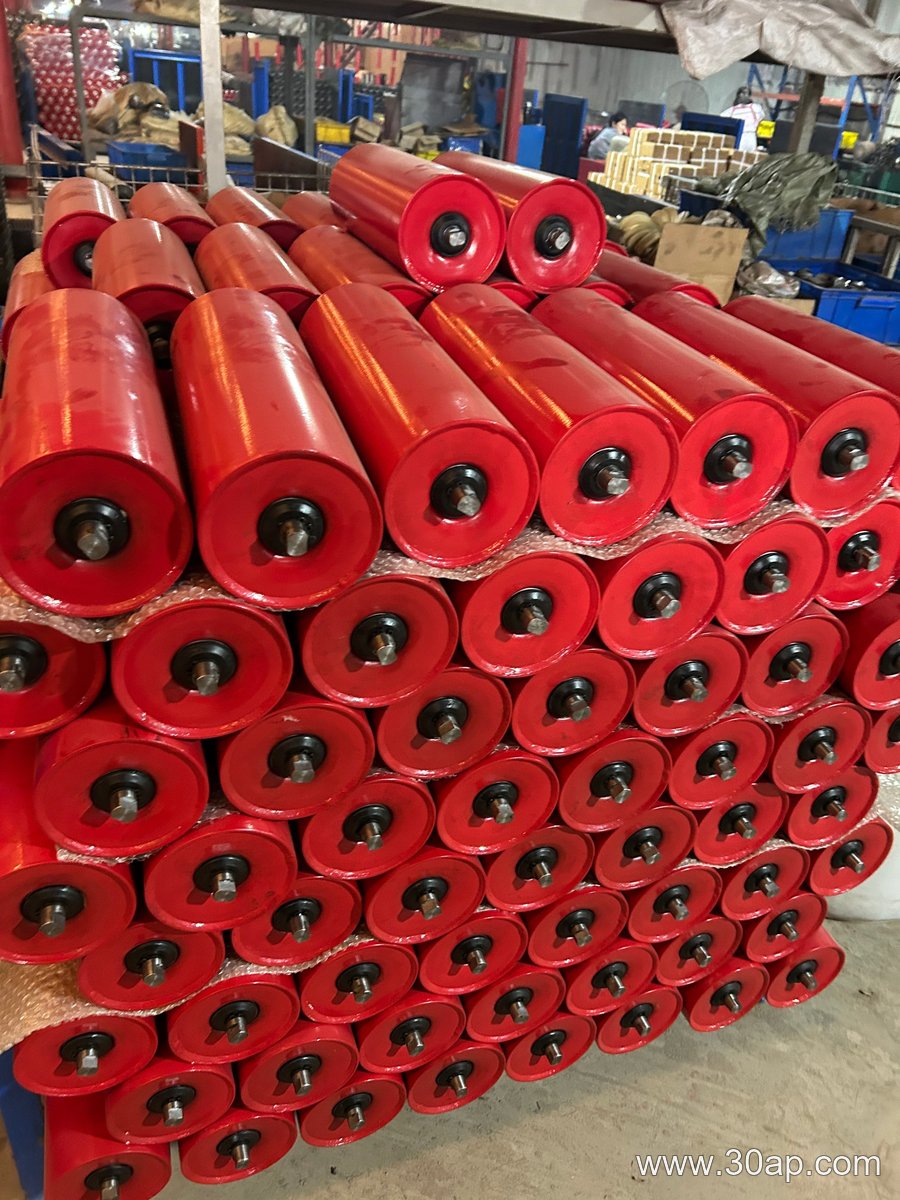
An impact resistant idler is a carrying roller built to absorb the force of falling material at a conveyor transfer point. Instead of a rigid steel shell taking the full blow, this idler roller uses a resilient surface that compresses slightly and spreads the load. The result is less shock transferred into the roller body, the conveyor bracket, and the belt itself. In many plants the same item is simply called a buffer roller or shock-absorbing idler, and those names describe the same job.
These rollers sit where the belt receives its load, not along the long straight runs. That placement is the whole point. A standard troughing roll can survive a gentle feed, but when lumps drop from a crusher discharge or a chute, the repeated impact can flatten a shell, crack a bearing seat, or damage the belt cover. A dedicated impact idler is the usual answer at that spot.
How the Roller Is Built
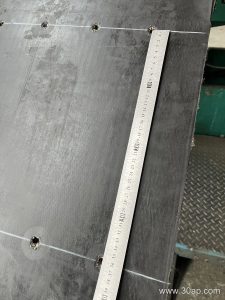
The common construction starts with a steel tube body, fitted with bearing housings and a shaft, and then covered with a ring of rubber discs. This is why the rubber ring impact idler appears so often in loading areas. The rings flex under impact, then return to shape. Some designs use a solid rubber sleeve rather than separate rings, and a few use nylon or ceramic surfaces where abrasion is the main concern rather than shock. Each has a place, and the choice depends on what is actually hitting the belt.
Several details matter to service life:
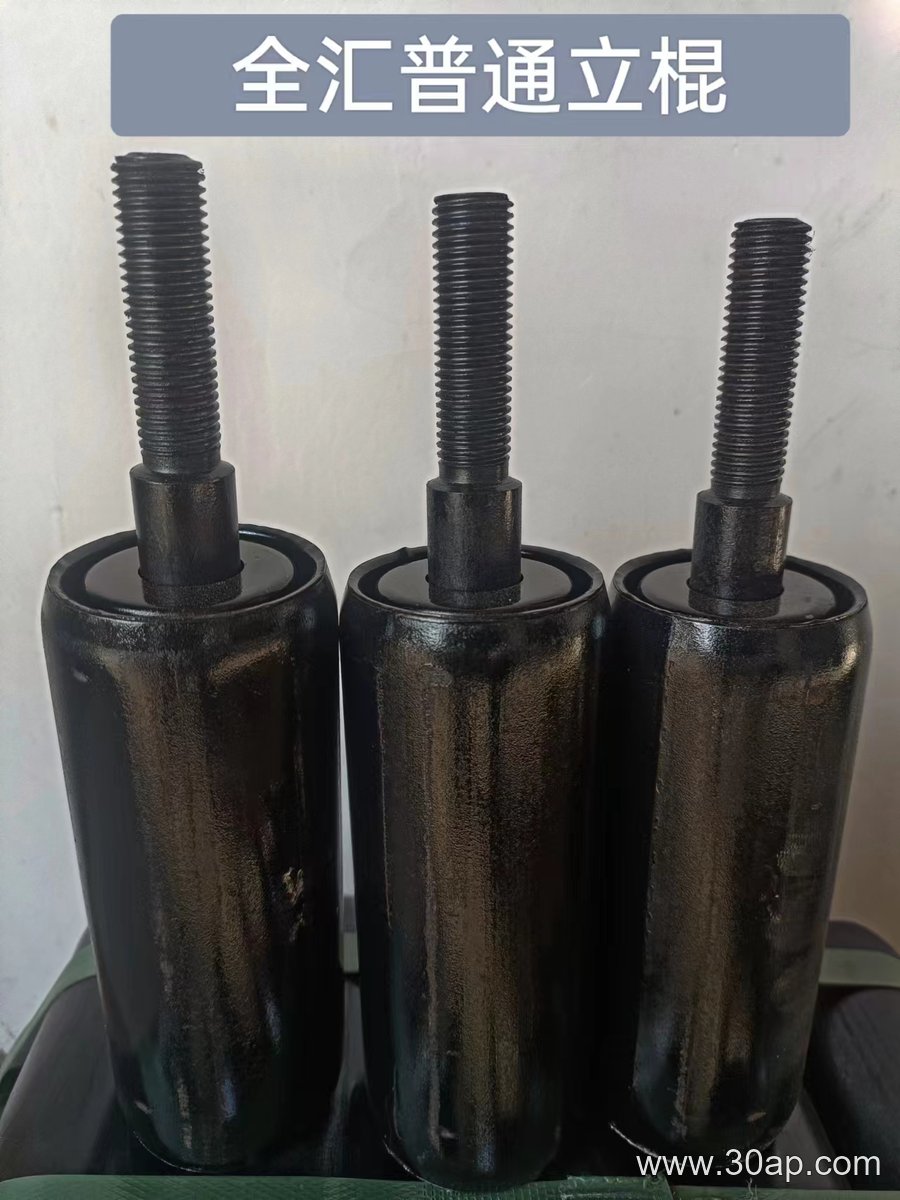
- The rubber rings should be firmly bonded or mechanically locked so they do not walk along the tube.
- Labyrinth or contact seals keep fine dust out of the bearing cavity.
- Bearing size is matched to the load and speed, not chosen by habit.
- The shaft and end caps must resist bending when a heavy lump lands off center.
Common bearing numbers in this family include 6204, 6205, 6305, 6306, 6308, and 6310. None of these is tied to one roller diameter; the same bearing can appear in more than one shell size depending on the duty.
Where It Is Used
The obvious home is a quarry or a sand and gravel line, right under the primary crusher. A second frequent location is a coal handling system at a power station, where the belt is fed from a bunker or a chute. In both cases the material arrives with speed and weight, and the belt needs support that gives a little.
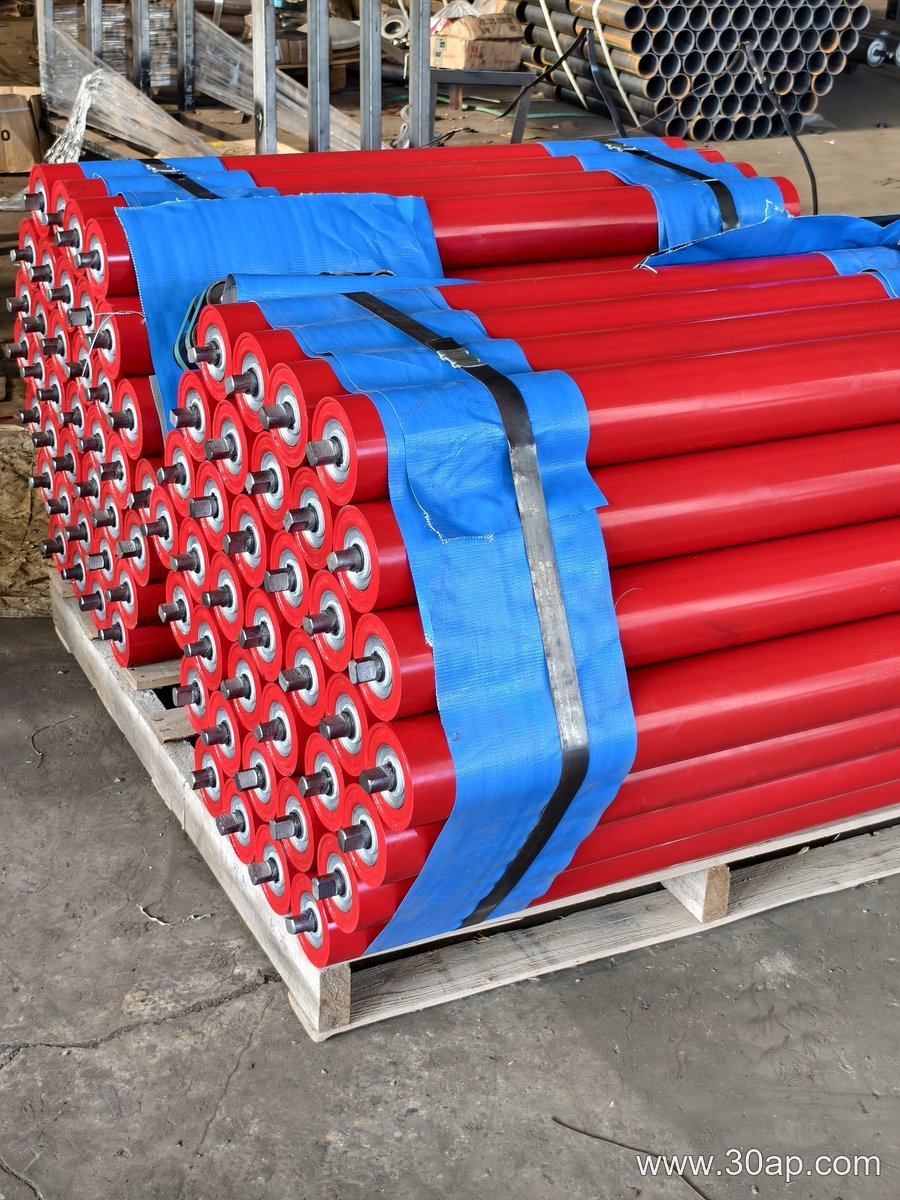
At the loading zone, an impact idler is often installed as part of a three-roll troughing set, with the center roll doing most of the cushioning. The trough angle is typically 20, 30, 35, or 45 degrees, and the roll length follows the belt width and the set arrangement. Side rolls are usually shorter than the center roll, so the same belt width can use different roll lengths within one station.
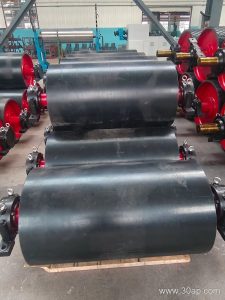
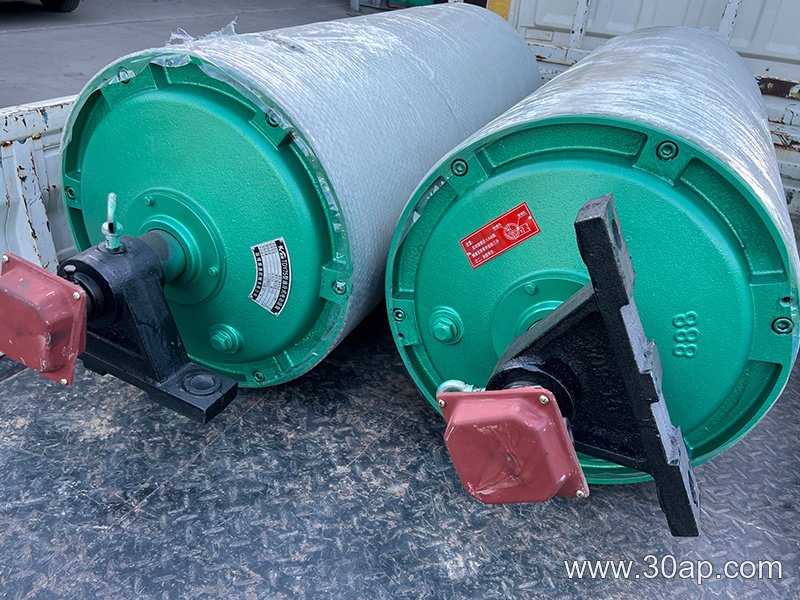
These rollers are not a substitute for a bend pulley, a drive pulley, or a tail pulley. Those are separate components with separate duties. An impact idler only supports and cushions the belt at the point of loading.
Common Reference Sizes
The table below lists typical values seen in catalogs and drawings. They are reference data, not a fixed pairing, and final dimensions should follow the conveyor design.
| Item | Typical range |
|---|---|
| Roller diameter | Ø63, Ø76, Ø89, Ø102, Ø108, Ø127, Ø133, Ø159, Ø178, Ø194, Ø219 mm |
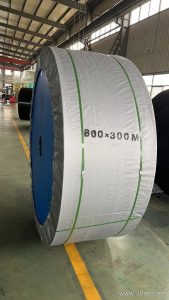
| Belt width | B400, B500, B650, B800, B1000, B1200, B1400, B1600, B1800, B2000 mm |
| Trough angle | 20, 30, 35, 45 degrees |
| Surface form | Steel tube, rubber rings, nylon, ceramic |
| Bearing | 6204, 6205, 6305, 6306, 6308, 6310 |
| Roll length example | About 200 mm at B500, 315 mm at B800, 465 mm at B1200, 600 mm at B1600 |
Roll length is not decided by belt width alone. It changes with trough angle and with the number of rolls in the station. A two-roll set and a three-roll set of the same belt width will not share identical roll lengths.
What a Buyer Should Check
Before ordering, confirm the belt width, the trough angle, the roller diameter, and the mounting dimensions of the existing conveyor bracket. Ask what material is being handled and how large the largest lumps are, because that drives the rubber thickness and the bearing selection. Check whether the loading point already has a skirt and a wear liner, since a well-controlled feed reduces the load on the idler.
Also decide whether the whole station or only the center roll is being replaced. Mixing an impact roll with standard rolls in the same set is possible, but the diameters and the shaft ends should match so the belt line stays smooth. Spare rubber rings and bearings are worth keeping on hand at a busy transfer point, where a failed roller can stop the belt.