What a Conveyor Bracket Does on a Belt Conveyor
A conveyor bracket is the structural component that holds idler rollers in position along a belt conveyor. It connects the rollers to the conveyor frame and sets the trough angle, spacing, and alignment that keep the conveyor belt running smoothly. When buyers talk about conveyor bracket procurement, they are usually sourcing the support hardware that sits between the main frame and the rotating rollers. This is a distinct product from the pulley itself; a drive pulley, tail pulley, or bend pulley serves a different function and cannot be substituted for a bracket.
The bracket is often called a roller bracket or idler bracket in supplier catalogs. The exact name varies, but the function is the same: provide a stable mounting point for conveyor rollers while allowing the belt to form the required profile.
How Conveyor Brackets Are Built
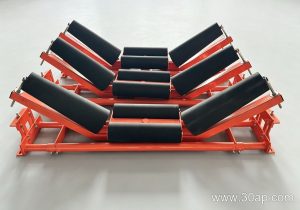
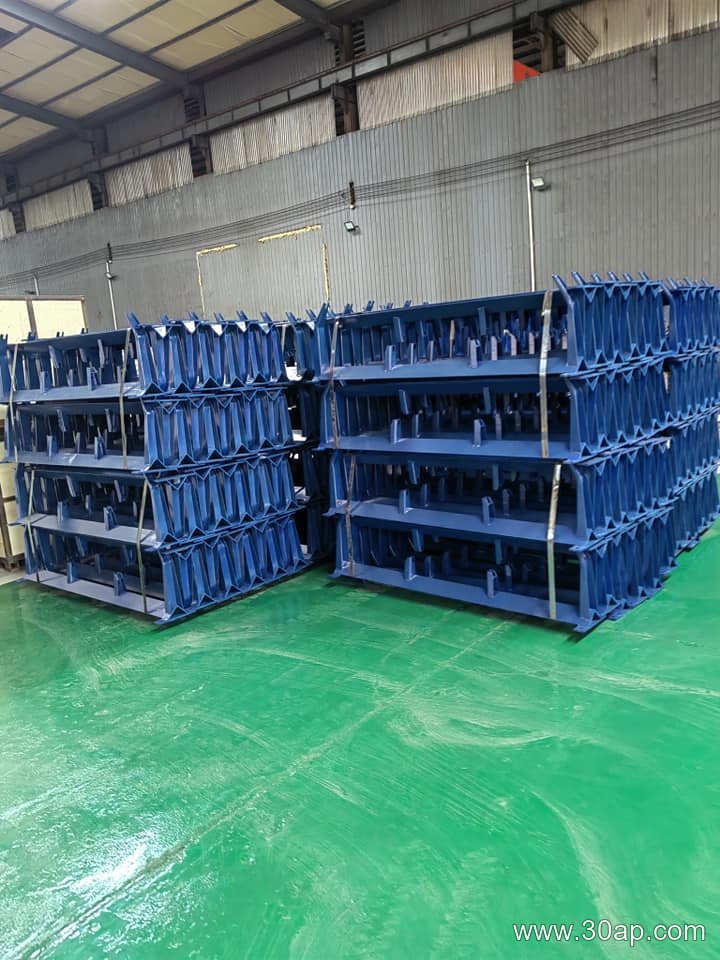
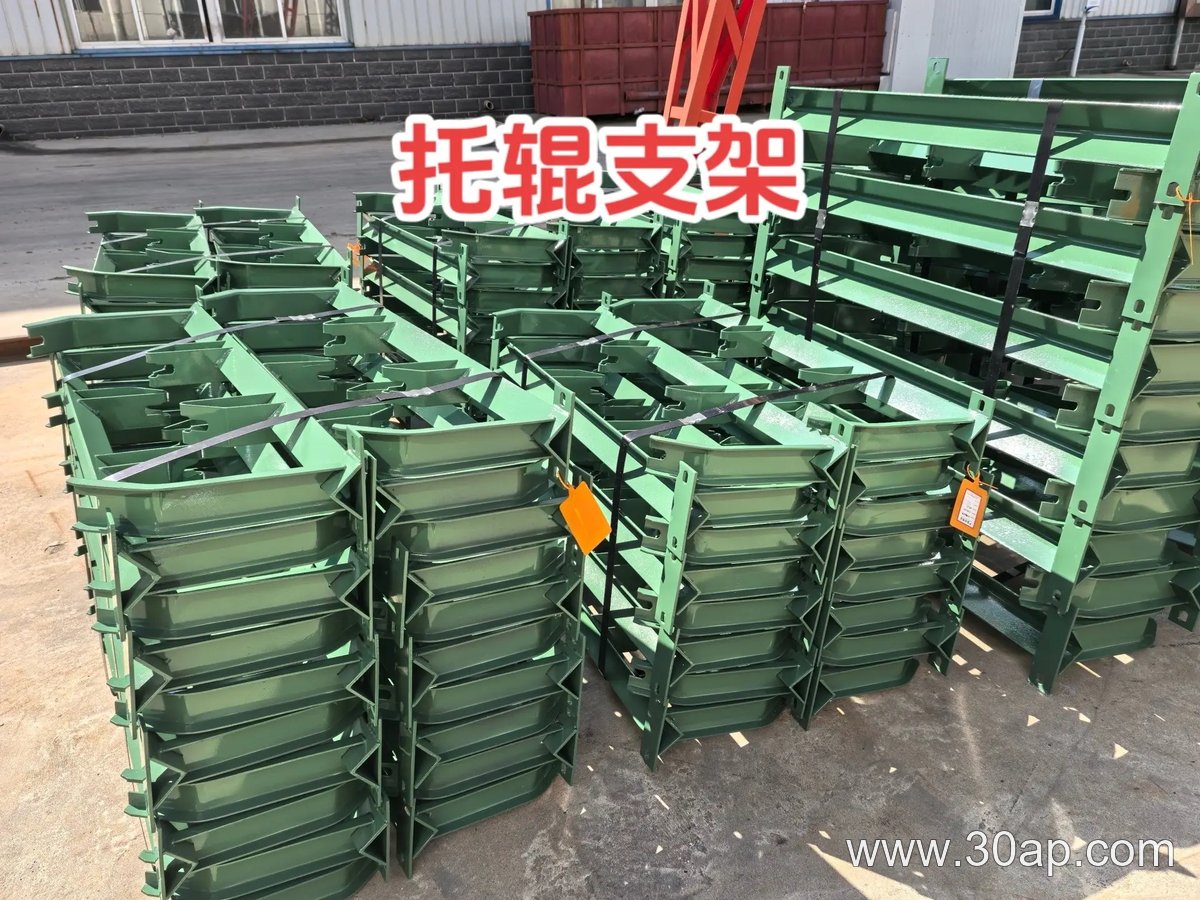
Most brackets are fabricated from angle steel, channel steel, or bent steel plate. The choice of material and thickness depends on the load, belt width, and operating environment. A typical troughing bracket may have three or more mounting positions to hold rollers at a specific trough angle. Return brackets and flat brackets have a simpler geometry because they support rollers on the return side of the belt.
Some designs are fixed, while others are adjustable. An adjustable bracket can be set to different trough angles, commonly 20, 30, 35, or 45 degrees, depending on the conveyor design. A fixed bracket is welded or bolted to hold one angle. Transition brackets are used near the head and tail to guide the belt from flat to troughed shape. Impact brackets, sometimes called buffer brackets, are placed at loading points to absorb force from falling material.
Where Conveyor Brackets Are Used
Conveyor brackets appear wherever a belt conveyor carries bulk material. In a quarry or limestone mine, they support the troughing idlers that carry crushed rock. In a coal washing plant, they hold rollers that keep the belt aligned through wet and abrasive conditions. Other common locations include sand and gravel lines, crushing and screening plants, and cement plants. The bracket must match the conveyor frame and the roller diameter, so procurement should always start from the existing conveyor design.
Brackets also work together with conveyor pulleys. The drive pulley pulls the belt, the tail pulley returns it, and the bend pulley changes direction. None of these pulleys can replace a bracket, and a bracket cannot replace a pulley. Each has its own role in the belt support system.
Key Points for Buyers
Before requesting quotes, gather the following information:
- Belt width, such as B650, B800, B1000, or B1200
- Trough angle required, for example 30 or 35 degrees
- Roller diameter, such as Ø89, Ø108, or Ø133
- Bracket type: troughing, return, transition, impact, or adjustable
- Mounting hole spacing and beam length, which vary with belt width and angle
- Material preference: angle steel, channel steel, or bent plate
Do not assume that one belt width always matches one roller diameter or one trough angle. A B800 conveyor may use different roller sizes depending on load and speed. Installation hole spacing is not universal; it should be confirmed against the frame drawing. If the conveyor uses a forward tilt of about 1.5 to 2 degrees, mention this to the supplier because it affects bracket geometry.
Matching Brackets with Rollers and Belts
A conveyor bracket is only one part of the support system. The idler roller must fit the bracket opening, and the conveyor belt must run true on the rollers. If the bracket is misaligned or the wrong height, the belt may drift or wear unevenly. During procurement, ask for dimensional drawings and confirm that the bracket will accept the specified roller shaft. For adjustable brackets, check the range of angles and the locking method.
Spare parts planning also matters. Keeping a few extra brackets of each type on site reduces downtime when a bracket bends or corrodes. The exact quantity depends on conveyor length and operating conditions, but common practice is to stock at least one replacement for each bracket type in critical areas.
Procurement Checklist
When comparing suppliers, focus on material grade, fabrication quality, and dimensional consistency. A bracket made from thin plate may flex under load, while an oversized bracket may not fit the existing frame. Ask for the bracket type, belt width range, trough angle, roller diameter compatibility, and surface treatment. Avoid treating any single size combination as universal. The right bracket is the one that matches your conveyor design and keeps the belt supported through every stage of operation.