What a Three-Roll Trough Idler Does on a Conveying Line
A three-roll trough idler is the carrying idler assembly most often seen under the loaded strand of a belt conveyor. Its three rollers sit in a trough shape, so the conveyor belt curves upward at both edges and keeps bulk material gathered toward the center of the belt. In a quarry, a cement plant, or a power plant coal yard, this simple geometry decides how much spillage the operator has to clean up and how evenly the belt tracks. The same assembly is also called a three-roll troughing idler or a three-roller trough idler, and the names describe the same product.
The troughing effect matters most where material is loose and fast-moving. A flat belt tends to let lumps roll to the edges; a properly set trough keeps the load centered and reduces edge wear on the conveyor belt.
How the Assembly Is Built
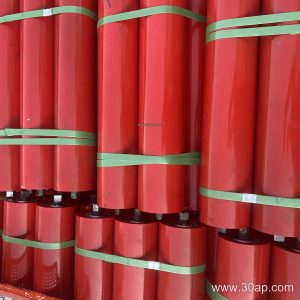
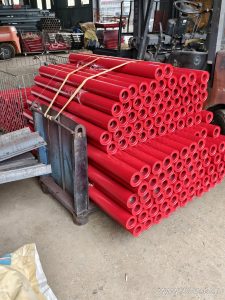
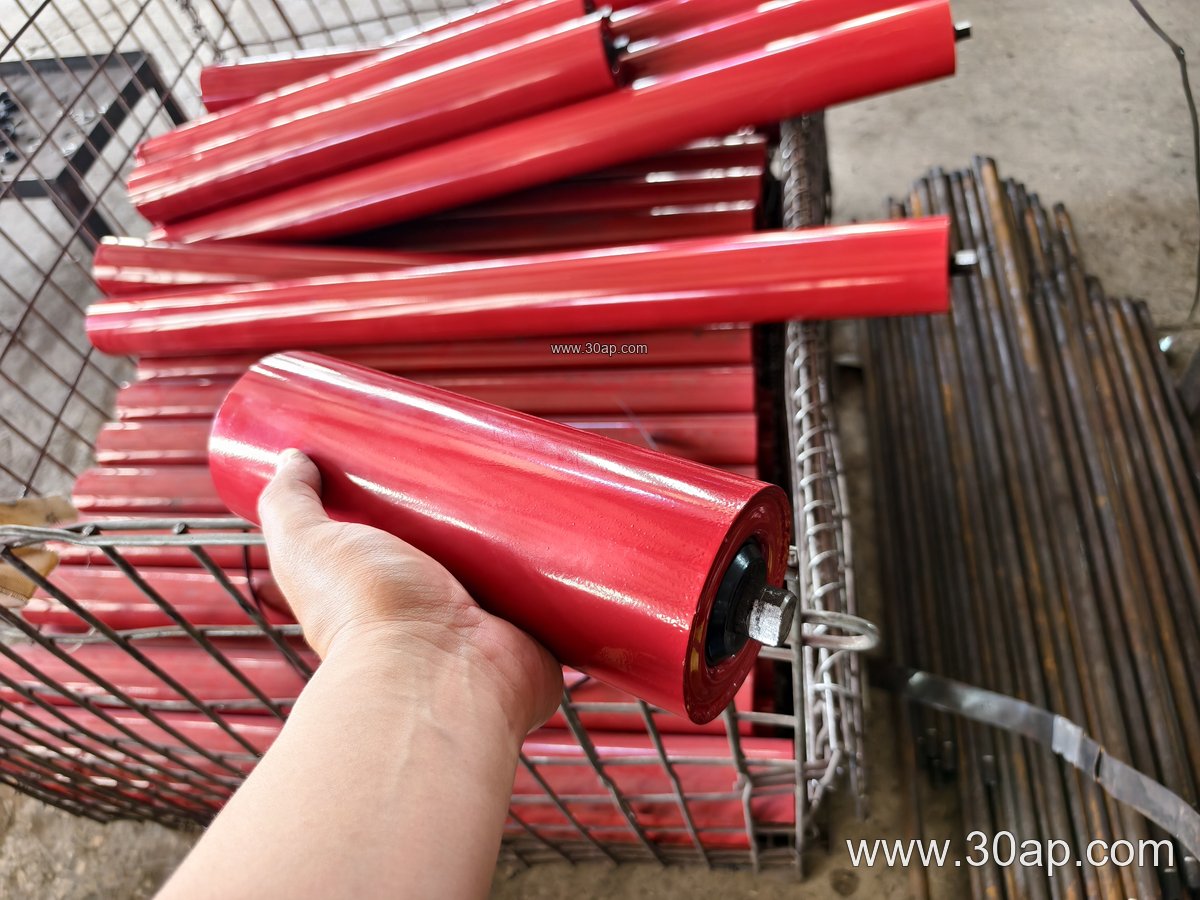
A typical unit consists of a center roller, two side rollers, a shaft, bearing housings, seals, and a frame that fixes the trough angle. The side rollers are inclined while the center roller stays roughly horizontal. Common roller diameters include Ø89, Ø108, Ø127, Ø133, and Ø159, and the choice usually follows belt width, load, and shaft design rather than a single fixed rule. Bearing numbers such as 6204, 6205, 6305, and 6306 appear across this range, but a given bearing is not tied to one roller diameter.
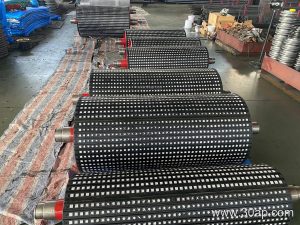
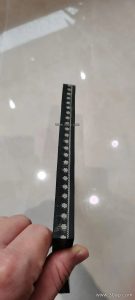
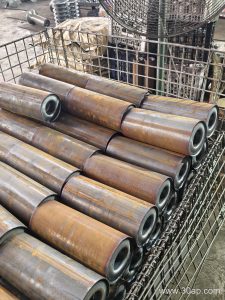
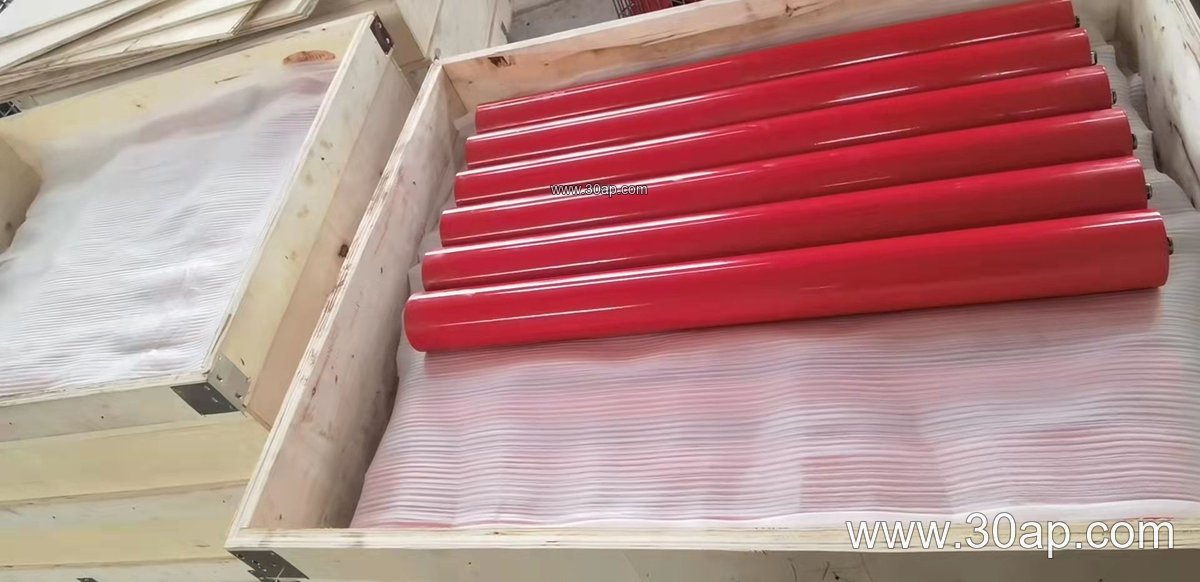
Roller shells may be plain steel tube, nylon, or rubber-covered. Rubber rings are useful at transfer points where impact is heavy, while ceramic or nylon surfaces can help in abrasive or sticky service. Seals and bearing protection deserve attention in dusty plants, because a failed bearing usually takes the whole idler roller out of service.
Common Dimensions and Their Practical Range
Roller length changes with belt width, trough angle, and the number of rolls in the set. The figures below are common examples, not fixed matches; side rollers and the center roller can differ, and final dimensions are set by design.
| Belt width | Typical roller length (three-roll trough set) | Trough angle options |
|---|---|---|
| B500 | about 200 mm | 20°, 30°, 35° |
| B650 | about 250 mm | 20°, 30°, 35°, 45° |
| B800 | about 315 mm | 20°, 30°, 35°, 45° |
| B1000 | about 380 mm | 30°, 35°, 45° |
| B1200 | about 465 mm | 30°, 35°, 45° |
| B1400 | about 530 mm | 30°, 35°, 45° |
| B1600 | about 600 mm | 30°, 35°, 45° |
| B1800 | about 670 mm | 30°, 35°, 45° |
| B2000 | about 750 mm | 30°, 35°, 45° |
Steeper trough angles, such as 45°, hold material more firmly but ask more of the belt’s flexibility. A 20° or 30° set may suit wider, flatter belts or gentle material. Forward tilt of about 1.5° to 2° is sometimes used on training idlers, not on every carrying set.
Where It Fits in the Conveyor Layout
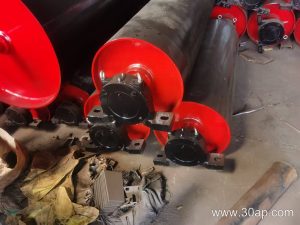
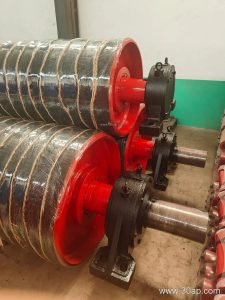
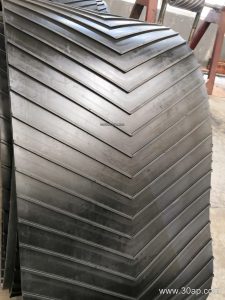
These idlers belong on the carrying side, between the tail pulley and the head pulley of a conveyor. They are not drive pulleys, tail pulleys, or bend pulleys; those are different components with different duties. On a long overland line, three-roll carrying idlers repeat at close spacing to support the belt and load, while return idlers support the empty strand underneath. In a coal mining conveyor or an underground mining conveyor, flame retardant conveyor belt and fire resistant conveyor belt grades are often specified together with robust idler frames and brackets.
At a crusher discharge or a belt transfer, impact idlers with rubber rings are often placed first, and three-roll trough sets follow downstream. In a cement plant or aggregate conveyor, abrasive dust calls for sealed bearings and wear-resistant shells. Ports and ship loading conveyors may use wide belts, so B1800 or B2000 sets with large-diameter rollers are common.
Buyer Checklist Before Ordering
- Confirm belt width, trough angle, and whether the set needs 20°, 30°, 35°, or 45°.
- State the roller diameter and shaft ends that match the existing conveyor bracket.
- Match roller surface to the duty: steel for general service, rubber rings for impact, nylon or ceramic where abrasion is severe.
- Check bearing size and sealing class against dust and moisture at the site.
- Ask for the drawing of the complete idler set, not only the roller length, because frame height and mounting holes vary.
- For mining or underground work, confirm that the conveyor belt and idler components meet the required flame retardant and anti-static properties.
Spare parts planning also helps. Keeping a few complete three-roll trough idler assemblies on hand reduces downtime when a bearing seizes or a shell wears through. During inspection, check for roller rotation, seal leakage, frame alignment, and belt edge contact. A worn idler roller can damage the belt quickly, so early replacement is cheaper than a belt repair.
For related conveyor components, buyers often compare idler sets with conveyor pulleys, brackets, and the belt itself, but each item should be specified on its own duty. A balanced selection of three-roll trough idlers, return rollers, and a suitable conveyor belt keeps a quarry, coal yard, or cement line running steadily.