What a Conveyor Bracket Quotation Covers
A conveyor bracket is the steel support that holds a conveyor idler roller in position under or over the conveyor belt. When a buyer asks for a conveyor bracket quotation, they are usually pricing a set of support frames for one line, not a single loose piece of steel. The quotation should make clear which bracket type is being offered, what belt width it suits, which trough angle it is built for, and how the mounting holes are arranged. In a quarry or a cement plant, these frames sit in dusty, loaded conditions, so the quotation also needs to state the material and the surface treatment.
The accurate equivalent name for this item is a belt conveyor idler support bracket or idler frame bracket. The term is used for the same product family, but it should not be confused with a conveyor pulley. A drive pulley, a tail pulley and a bend pulley are separate components at the ends and bends of the belt line, and they are not interchangeable with support brackets.
How the Bracket Is Built
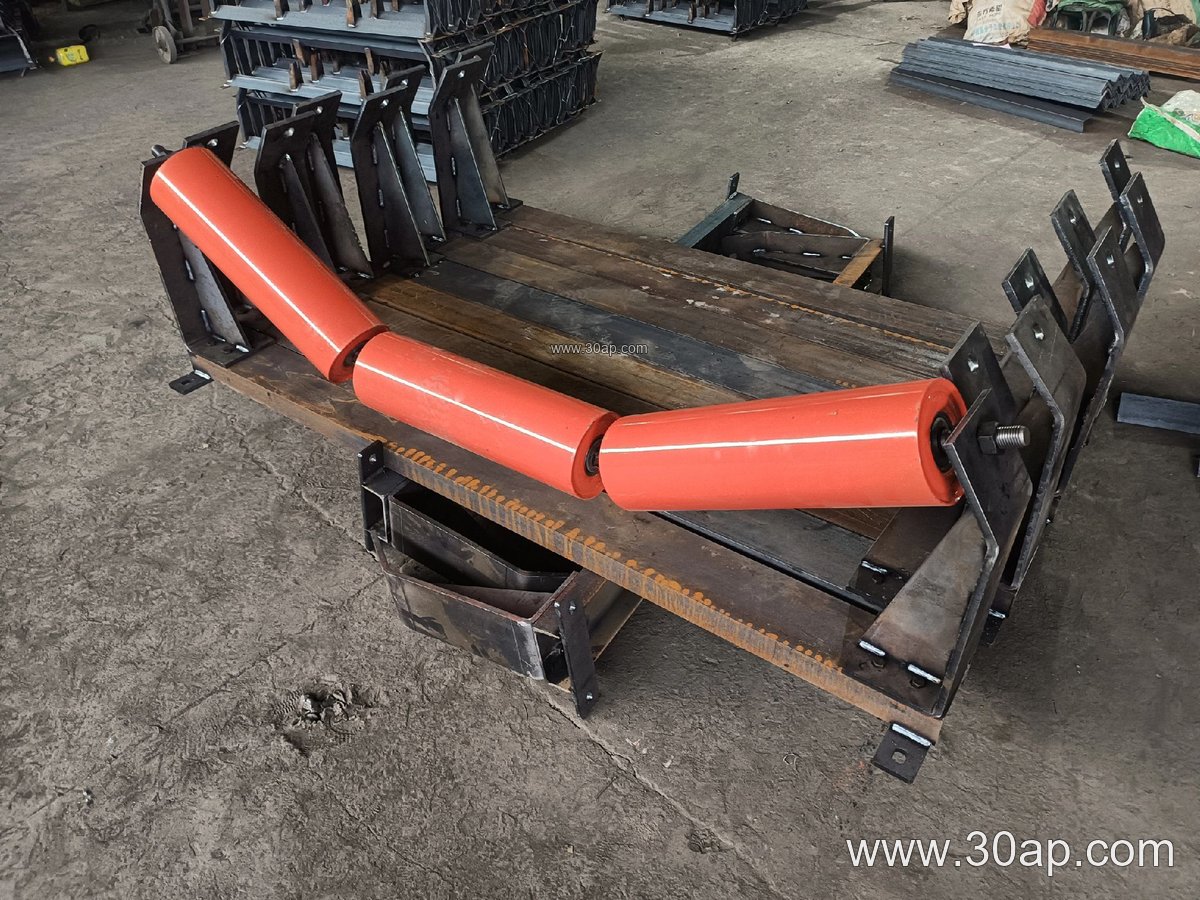
Most brackets are fabricated from angle steel, channel steel or folded steel plate. A trough bracket carries three idlers in a troughed arrangement; a return bracket carries the lower run of the belt. The fabrication details matter for quotation accuracy, because the横 beam length and the hole spacing change with belt width and trough angle. They are not fixed numbers and should be confirmed on the drawing.
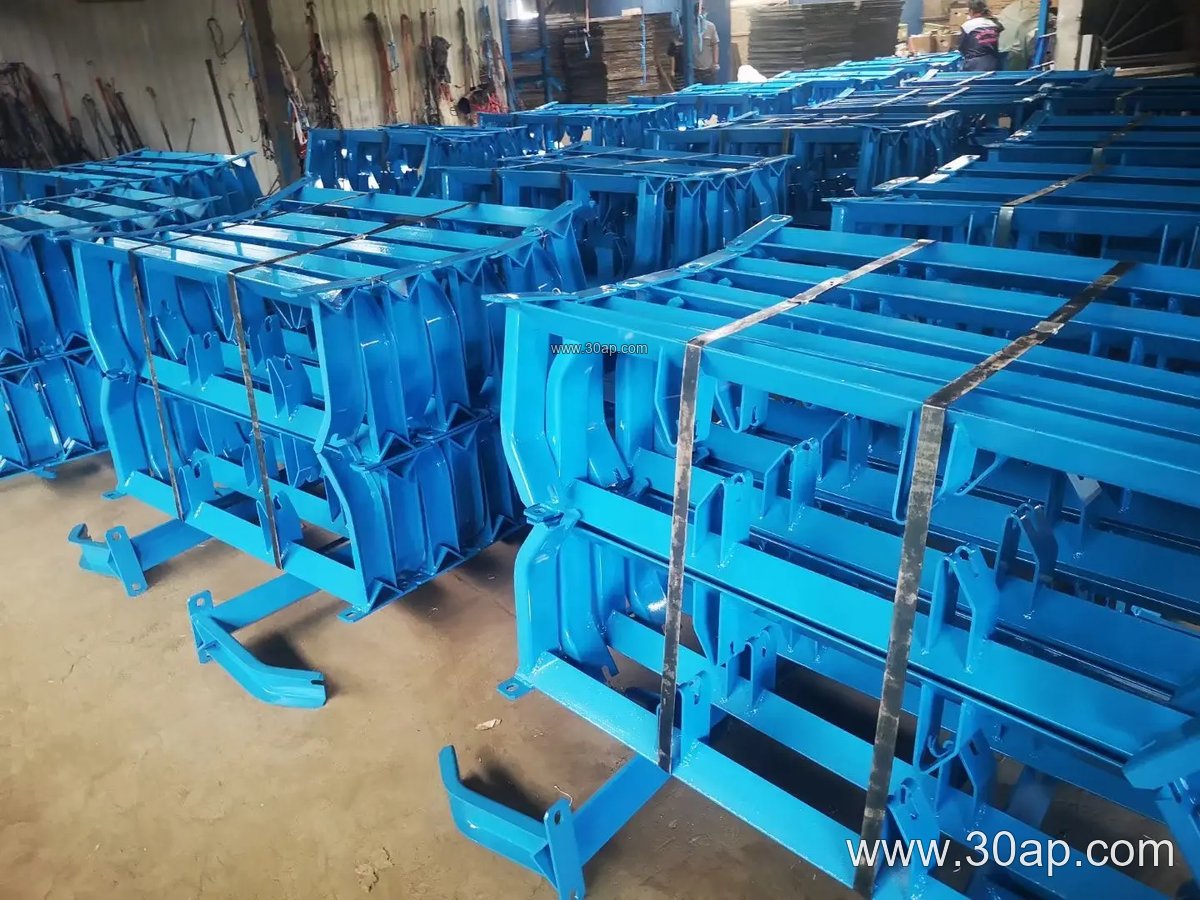
A typical quotation line may look like B800, 35 degree, suitable for Ø108 idlers, but this is a common reference combination rather than a rule. Belt width does not dictate a single pulley or roller diameter, and the shaft size should come from the idler design, not from the belt width alone.
Common Bracket Types and Reference Data
The table below lists typical bracket types and reference values that may appear in a quotation. Treat them as design references, not as verified universal specifications.
- Trough bracket (upper) – carries three idlers; common trough angles 20, 30, 35 and 45 degrees.
- Transition bracket – used near the pulley to ease the belt from flat to troughed.
- Return bracket / V-return bracket – supports the lower belt run.
- Impact bracket – fitted with buffer idlers at the loading point.
- Self-aligning bracket – helps correct belt tracking.
- Forward-tilt bracket – commonly about 1.5 to 2 degrees of tilt.
- Adjustable bracket – allows the trough angle to be changed within the listed range.
| Reference item | Typical values |
|---|---|
| Belt width | B500, B650, B800, B1000, B1200, B1400, B1600, B1800, B2000, B2200 |
| Trough angle | 20, 30, 35, 45 degrees |
| Idler diameter | Ø89, Ø108, Ø133, Ø159, Ø194 |
| Material | Angle steel, channel steel, folded plate |
Where These Brackets Are Used
In a coal washing plant, trough and return brackets support the belt through long, wet runs, and the quotation often needs a corrosion-resistant finish. In a sand and gravel line or a crushing and screening plant, impact brackets at the feed point take the shock load, while standard trough brackets carry the rest of the line. The same frames appear in power plant coal handling, steel sintering lines and batching plants, always working together with the conveyor belt, idler rollers and pulleys.
What a Buyer Should Check Before Ordering
A good conveyor bracket quotation should be read together with the layout drawing. Check the belt width, the trough angle, the idler diameter and the mounting hole distance, and confirm whether fixed or adjustable brackets are wanted. Ask how the bracket is finished and how it will be packed for transport. If the quotation lists only a price per piece without type, angle and hole data, ask for the missing details before comparing offers. Clear specification on the quotation prevents mismatched frames on site and keeps installation on schedule.