What a 1250mm Diameter Conveyor Pulley Is
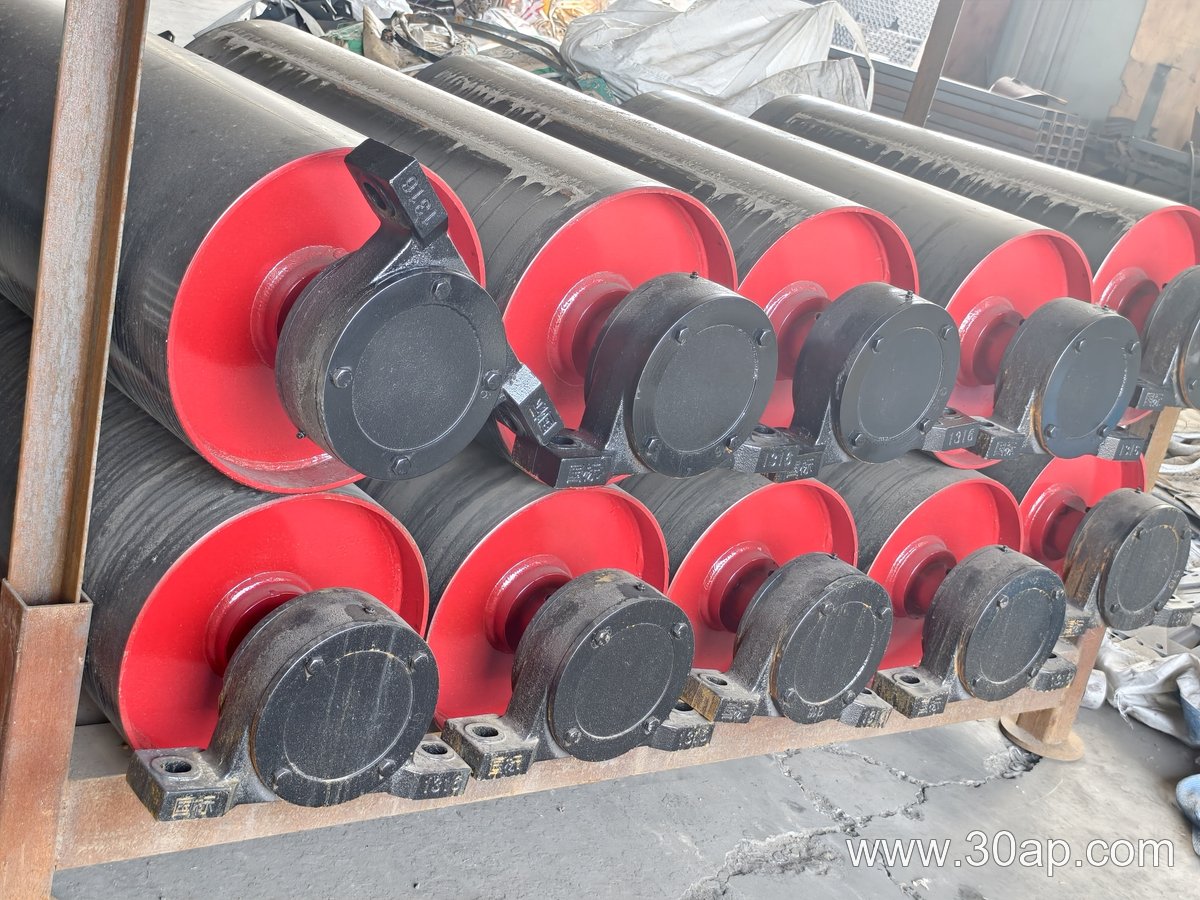
A 1250mm diameter conveyor pulley is a large cylindrical drum used to turn and support a conveyor belt. With a nominal diameter of 1250 millimetres, it belongs to the group of heavy-duty pulleys that are common in bulk material handling. The same product is often called a Ø1250 conveyor drum or a 1250mm drum pulley, and those names refer to the same item. The pulley rotates on a shaft, carries the belt across its face, and transmits motion or maintains tension depending on where it sits in the conveyor layout.
Diameter is only one part of the specification. The face width, shaft diameter, bearing type, lagging and connection to the conveyor bracket all matter. A 1250mm drum is rarely chosen by diameter alone; engineers select it together with belt width, belt tension and the duty of the conveyor.
How the Drum Is Built
A typical large pulley has several main parts. The shell is a rolled steel cylinder, machined at the ends and often checked for roundness. Inside, end discs or a hub assembly connect the shell to the shaft. The shaft is sized by torque and bending load, not by belt width. Common shaft diameters include Ø120, Ø140, Ø160, Ø180 and Ø200, but the final value is determined by design calculations.
Bearings are mounted in housings that bolt to the conveyor frame. The pulley may be keyed to the shaft, or it may use a locking assembly for a friction grip. Surface finish on the shell matters because the belt must track without slipping. For abrasive or wet conditions, the drum can be covered with rubber lagging. Plain, cold-bonded rubber, hot-vulcanised rubber, diamond groove and ceramic lagging are all used on large pulleys. Lagging thickness is often 8, 10, 12, 15 or 20 mm, selected according to grip and wear requirements.
Where a 1250mm Drum Fits in a Conveyor
A drum of this size can appear in more than one position, and the position changes its job. A drive pulley is connected to a gearbox or motor and pulls the belt. A tail pulley sits at the loading end and turns with the belt. A bend pulley changes the belt direction, and a tension pulley takes up slack. These are not interchangeable names, and a 1250mm diameter conveyor pulley can be built for any of those duties if the load case matches.
Large diameters are often used where belt tension is high, where the belt is thick and stiff, or where a long contact arc is needed to reduce slip. In a quarry or a limestone mine, a heavy-duty pulley may handle coarse rock. In a coal preparation plant, it may work with wet and sticky material. A cement plant clinker line or a port bulk terminal can also use large drums on main conveyors. The surrounding equipment usually includes the conveyor belt, idler rollers and a conveyor bracket that supports the bearing housing.
Belt Width, Face Width and Diameter
Face width is usually wider than the belt so the belt has room to run. For example, a B1200 belt often runs on a drum face of about 1400mm, while a B1400 belt may use a face near 1600mm. These are common reference values, not fixed rules. A 1250mm diameter pulley can be supplied with different face widths for different belt widths. It is not correct to say that one belt width can only match one pulley diameter, because the required diameter also depends on tension, wrap angle and belt construction.
A buyer may see combinations such as B1200 x Ø1000, B1400 x Ø800 or B800 x Ø500 in catalogues. Those combinations are examples, not limits. A Ø1250 drum may be paired with a B1200, B1400 or wider belt when the conveyor design calls for it. The shaft diameter should never be guessed from belt width alone; it must be calculated from the actual torque and load.
What a Buyer Should Check
- Duty and position: confirm whether the pulley is a drive, tail, bend, tension or other functional drum, because the loads differ.
- Belt width and face width: check that the drum face gives enough support and tracking room.
- Shaft and bearing size: ask for the calculated shaft diameter and bearing life, not a rule-of-thumb figure.
- Lagging: choose plain, rubber or ceramic surface according to grip, abrasion and moisture.
- Balance and runout: a large drum should be balanced and machined to limits that suit the belt speed.
- Mounting: confirm the bolt pattern and dimensions that match the conveyor bracket.
- Environmental conditions: dust, water, temperature and material build-up affect bearing seals and lagging choice.
It also helps to ask about inspection and documentation. A large pulley is a long-term component, and a clear drawing with key dimensions reduces installation problems. The buyer should confirm the belt speed, the maximum tension and the expected starting torque before finalising the order.
Maintenance Notes
Regular checks keep a 1250mm diameter conveyor pulley working reliably. Inspect the lagging for wear, cuts or missing rubber. Listen for unusual bearing noise and check for grease leakage. Watch belt tracking; a belt that drifts may indicate a misaligned drum or a worn surface. If the pulley is a drive unit, check the coupling and gearbox alignment. Small corrections early can prevent belt damage and unplanned downtime.
When replacing a pulley, match the new drum to the existing shaft, bearing housings and conveyor bracket. A larger or smaller diameter changes belt length and take-up travel, so the whole conveyor layout should be reviewed. A 1250mm drum is a capable choice for heavy conveyors, but it should be selected as part of a complete design rather than as a single size decision.
What a Four-Roll Idler Bracket Does
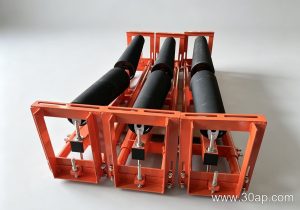
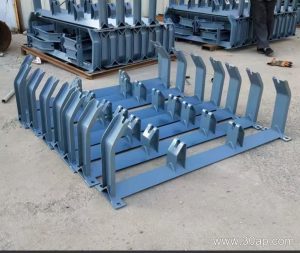
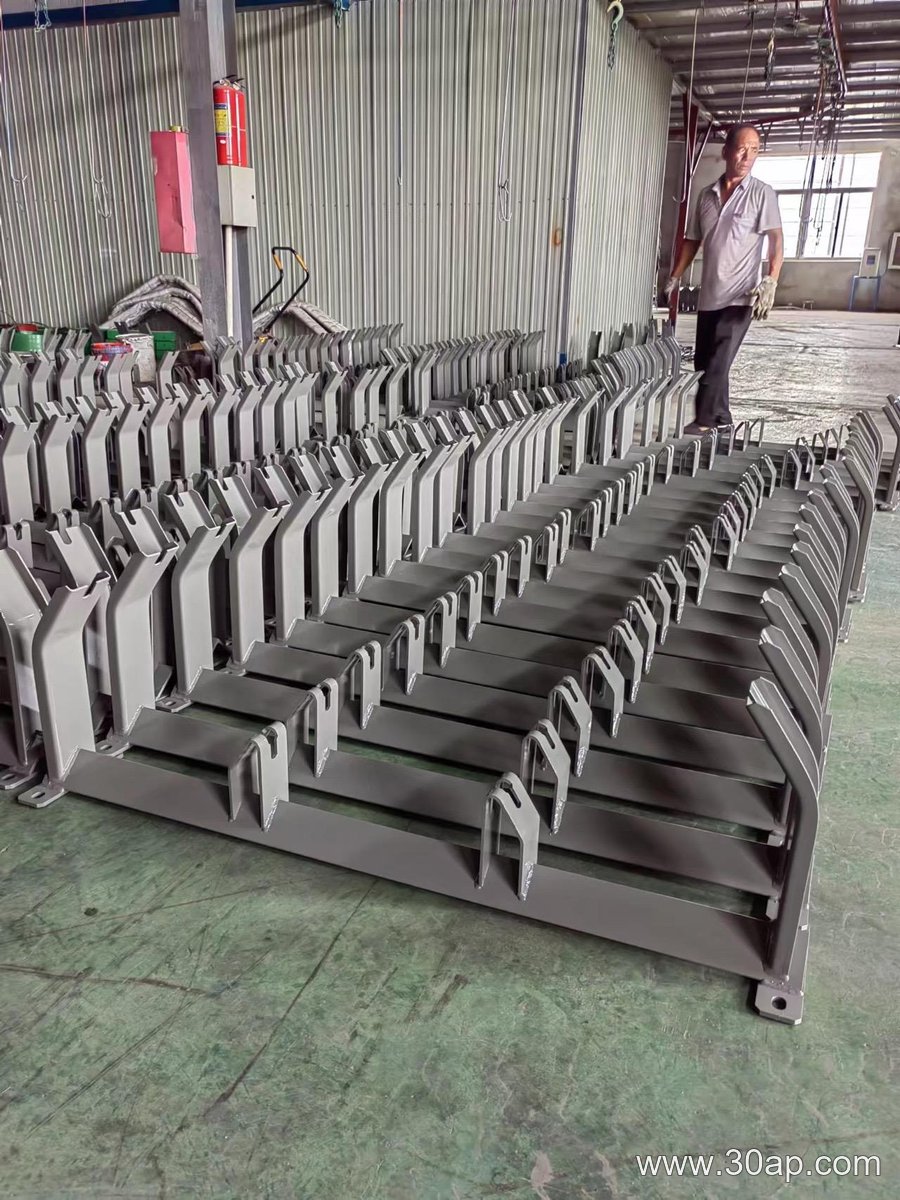
A four-roll idler bracket is a support frame that holds four idler rollers in a single assembly, usually arranged to carry the belt in a deep trough or to support both the carrying side and the return side in one station. Instead of using a separate bracket for each roller, the four-roll design groups them together so the belt moves over a wider, more controlled contact pattern. This bracket is often called a four-roller idler frame or a four-idler support bracket, and those names point to the same component.
The main purpose is to keep the conveyor belt stable, centered, and supported across its full width. By spreading the load over four rollers, the bracket can reduce the stress on any single roller and help the belt run smoothly, especially on high-capacity lines where the material load is heavy or the belt is wide.
How the Bracket Is Built
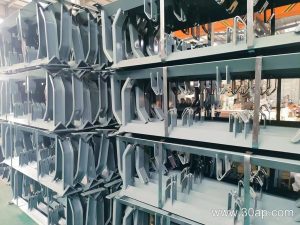
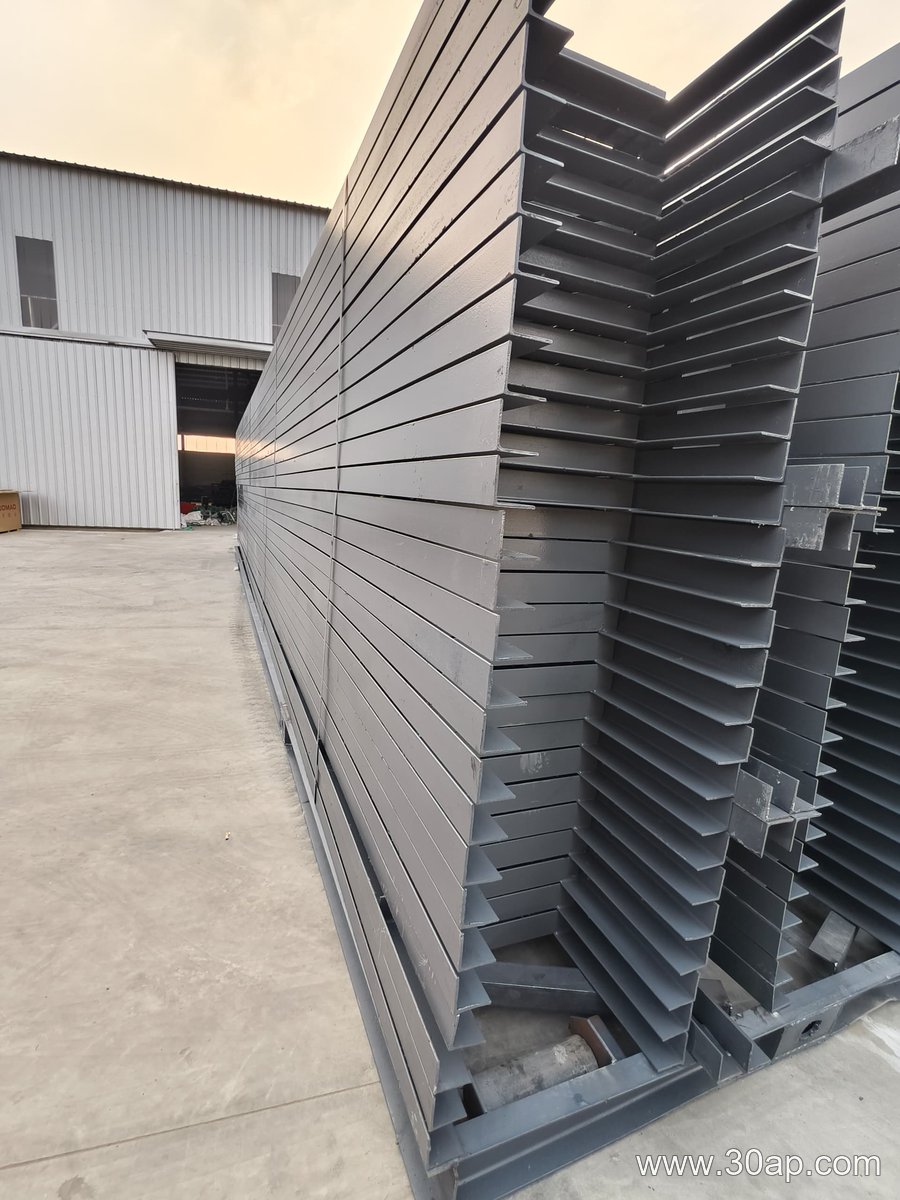
Most four-roll idler brackets are fabricated from steel. Common materials include angle steel, channel steel, and bent steel plate. The frame may be welded or bolted, depending on the design and the maintenance approach. A typical bracket has a crossbeam that spans the conveyor structure, with mounting holes or slots for each idler roller. The rollers sit in cradles or seats that set the trough angle and keep the rollers spaced correctly.
The bracket also includes attachment points for fixing it to the conveyor frame. These may be bolt holes, clamps, or welded lugs. Because the four-roll arrangement is wider than a standard three-roll set, the bracket often requires a longer crossbeam and a different mounting footprint. The exact dimensions depend on the belt width, the trough angle, and the roller diameter chosen for the application.
Where It Is Used
Four-roll idler brackets are common in bulk material handling where the conveyor belt needs extra support. You will see them in limestone mines, sand and gravel lines, and crushing and screening plants. They are also used in coal washing plants and cement plants where dust and heavy loads are part of daily operation.
In these settings, the bracket works together with the conveyor belt, idler rollers, and conveyor pulleys. The drive pulley, tail pulley, and bend pulley are separate components with their own functions; they are not interchangeable with the idler bracket. The bracket’s job is strictly to support the belt and the rollers, not to transmit power or change the belt direction.
Types and Variations
Four-roll idler brackets come in several forms. Some are fixed, with a set trough angle that cannot be changed. Others are adjustable, allowing the operator to change the trough angle within a range. Adjustable brackets are useful when the conveyor handles different materials or when the belt needs fine-tuning to reduce spillage.
For comparison, a three-roll troughing bracket is a different subtype with a narrower support profile. It is not a replacement for the four-roll bracket, but it can be suitable for lighter loads or narrower belts. The four-roll version is often chosen when the belt is wide or the material is heavy, because the extra roller helps distribute the load more evenly.
Other bracket types include transition brackets, return brackets, and impact brackets. Each has a specific role, and they should not be confused with the four-roll idler bracket described here.
Choosing the Right Bracket
When selecting a four-roll idler bracket, start with the belt width. Common belt widths include B500, B650, B800, B1000, B1200, B1400, B1600, B1800, B2000, and B2200. The bracket must match the belt width so the rollers support the belt properly without overhanging or leaving gaps.
Next, consider the trough angle. Typical angles are 20 degrees, 30 degrees, 35 degrees, and 45 degrees. A deeper trough angle gives better material containment, while a shallower angle is easier on the belt. Adjustable brackets can move between these angles, but fixed brackets are set at one angle.
Roller diameter is another factor. Common diameters include 89 mm, 108 mm, 133 mm, 159 mm, and 194 mm. The bracket’s roller seats and mounting holes must match the chosen diameter. Do not assume that one belt width automatically dictates one roller diameter or one trough angle. The correct combination depends on the load, belt speed, and material characteristics.
Mounting hole spacing and crossbeam length also vary with belt width and trough angle. These are not fixed values, so always confirm them with the bracket drawing or supplier data before ordering.
Installation and Maintenance Notes
Install the four-roll idler bracket so that all four rollers sit square to the belt line. Misalignment can cause the belt to drift or wear unevenly. Check that the bracket is securely fastened to the conveyor frame and that the rollers turn freely.
During maintenance, inspect the bracket for bent steel, cracked welds, or elongated mounting holes. Replace worn rollers before they damage the belt. Keep the area around the bracket clean so material buildup does not affect roller rotation.
If the conveyor uses a conveyor pulley for drive or direction change, keep the bracket separate from that function. The bracket supports the belt; the pulley moves it. Both are necessary, but they are not interchangeable.
What Buyers Should Know
Buyers should ask for the bracket material, roller diameter, trough angle, belt width, and mounting dimensions. If the bracket is adjustable, confirm the adjustment range. If it is fixed, confirm the exact angle. Also check whether the bracket is designed for the carrying side, the return side, or both.
Because four-roll idler brackets are often custom-fabricated, lead times and availability can vary. Provide the conveyor specifications and the roller details to the supplier so the bracket fits the first time. Avoid assuming that a bracket from one conveyor will fit another, even if the belt width looks similar.
Finally, remember that the four-roll idler bracket is one part of a larger system. It works with the conveyor belt, idler rollers, and conveyor brackets to keep material moving. Selecting the right bracket helps reduce downtime and extends the life of the belt and rollers.
What a High Temperature Conveyor Belt Is
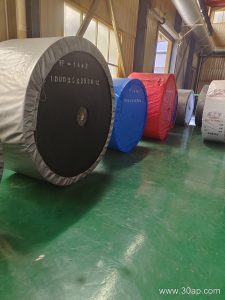
A high temperature conveyor belt is a rubber-covered belt engineered to carry hot materials without losing its carcass strength or delaminating. It is not simply a standard belt with a different label. The compound, the fabric or steel reinforcement, and the bonding system are all selected to survive continuous heat exposure. In everyday plant language it may be called a heat-resistant conveyor belt, and both names describe the same product family. The belt remains the main subject here; other belt types appear only when a comparison helps explain a choice.
How the Belt Is Built
The construction usually starts with a carcass of EP or NN fabric plies, or in heavier duties a steel cord core. A typical heat-resistant belt uses two to six fabric layers, depending on the load and the pulley centres. The cover is where heat resistance is most visible. Common cover gauges include 4+2 mm, 5+2 mm, and 6+2 mm, with the first figure being the top cover and the second the bottom. These are reference values, not universal requirements. A manufacturer may adjust the compound to resist heat ageing, and the buyer should confirm the actual grade offered.
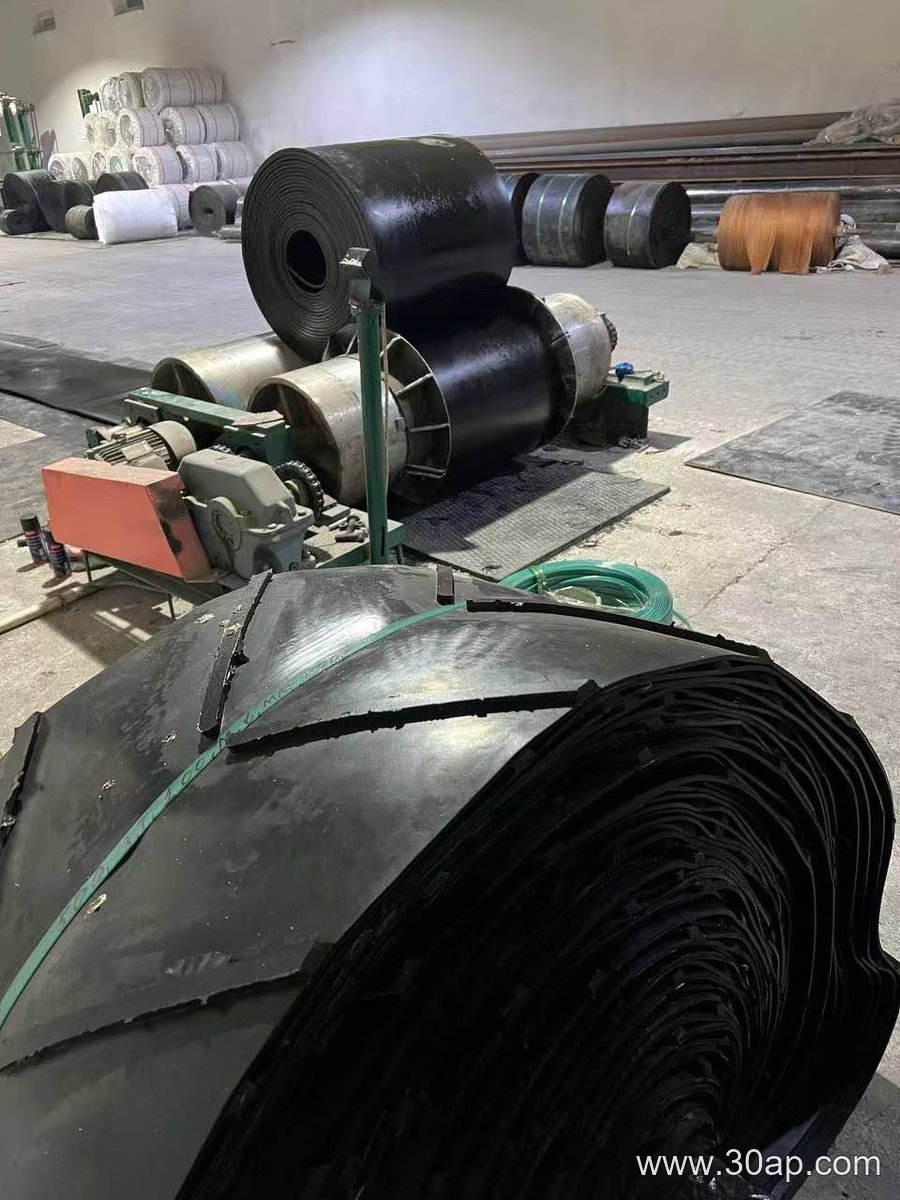
Bonding between plies matters as much as the cover. Heat accelerates adhesion failure, so the skim coat and the friction between layers must tolerate repeated thermal cycling. The belt edges are usually sealed to prevent hot fines from working into the carcass. In some designs a breaker fabric sits under the top cover to spread impact from hot lumps.
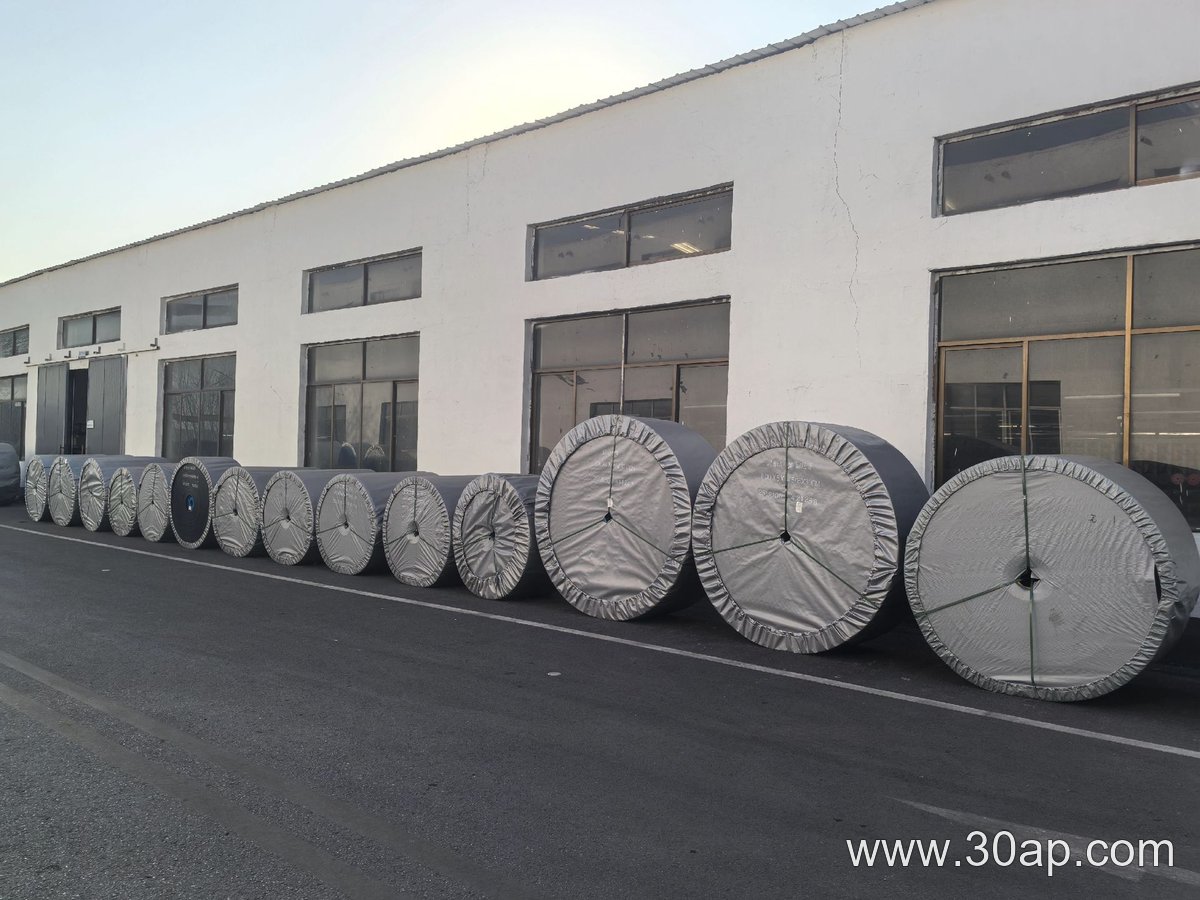
Where Heat-Resistant Belts Are Used
These belts appear wherever conveyed material leaves a process hot. Cement plants use them under clinker coolers and in raw mill circuits. Steel mills move sinter, pellets, and hot coke. Foundries handle sand and castings. Power stations convey ash and sometimes hot limestone. Other users include fertiliser plants, lime kilns, and waste-to-energy lines.
On the conveyor itself, the belt runs over a drive pulley, a tail pulley, and bend pulleys that change direction. These are separate components with distinct jobs and are not interchangeable. The belt also passes over idler rollers that support the load, and the whole structure is held by a conveyor bracket or frame. Heat affects these parts too: a hot belt can radiate into the pulley lagging and the idlers, so the surrounding equipment should be rated for the same temperature range.
Why Heat Resistance Is Not One Property
A buyer may see belts described as heat-resistant, high-temperature, or anti-heat. They are not identical. Some compounds resist short peaks, others resist continuous moderate heat, and some resist both heat and oil. The right choice depends on the actual material temperature, the lump size, the belt speed, and whether the heat is steady or cyclic. For example, a belt carrying hot sinter at 150 degrees Celsius continuously faces a different duty from one that receives a brief spill of hot ash. A PVC or PVG belt may be suitable in some warm environments but is generally not the first choice for high-temperature service, because the thermoplastic cover softens sooner than a heat-resistant rubber compound.
What a Buyer Should Check
- Temperature profile: continuous temperature, peak temperature, and how often peaks occur.
- Material: lump size, abrasion, oil or chemical content, and whether fines are present.
- Belt construction: number of plies, cover thickness, and the heat grade of the compound.
- Belt width and strength: common widths include B800, B1000, and B1200, while strength grades such as EP200 or EP315 may appear in specifications. These are examples, not fixed matches.
- Pulley and idler compatibility: the drive pulley, tail pulley, and bend pulleys must suit the belt tension and the thermal load. A wider belt does not automatically dictate one pulley diameter; that relationship is set by the conveyor design, not by width alone.
- Edge condition and splicing: hot service punishes poor splices, so the splice method should be agreed before installation.
Installation and Maintenance Notes
Alignment is critical. A belt that runs off-centre rubs the conveyor bracket and wears its edges, and heat makes that wear faster. Idler rollers should turn freely; a seized roller creates a hot spot that can damage the cover. Keep the belt clean, because baked-on material insulates the surface and raises its internal temperature. Inspect the cover for cracks, hardening, or exposed fabric. A heat-resistant belt often fails first at the edges or at the splice, not in the middle of the cover.
Storage also matters. Rolls should be kept out of direct sun and away from strong heat sources, because rubber continues to age before it is even installed. When a replacement is ordered, the buyer should give the supplier the working temperature, the material, and the conveyor layout rather than only a belt width. That information allows the manufacturer to propose a suitable heat grade, cover thickness, and carcass without over-specifying or under-specifying the belt.
What a Conveyor Idler Quotation Actually Covers
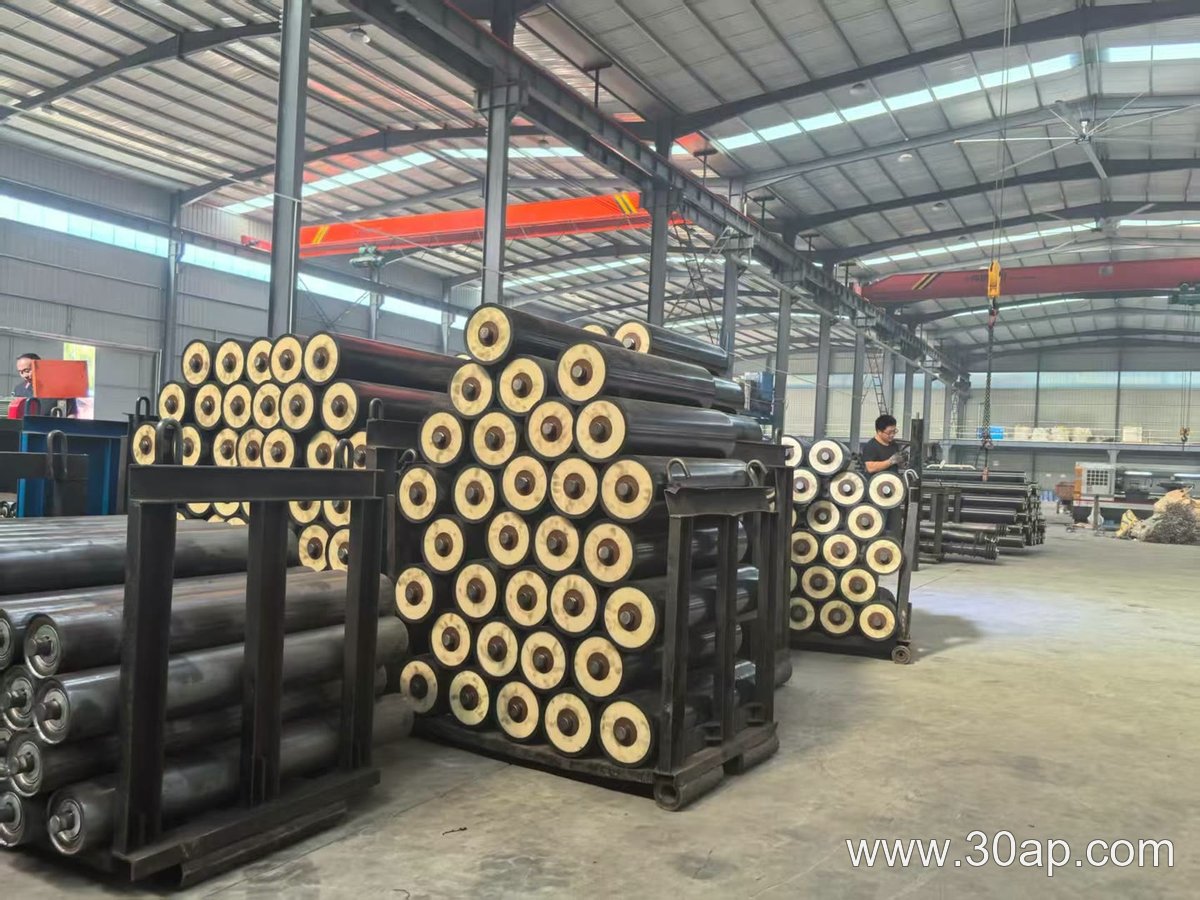
A conveyor idler quotation is a priced offer for the rolls that support the belt along the carrying and return sides of a conveyor. The idler roller is a separate item from the drive, tail, and bend pulleys, which transmit power or change belt direction. A quotation for idlers should list the roller type, diameter, shell length, shaft details, bearing seat, sealing arrangement, and the bracket or frame that holds each group. Without those details, two offers can look identical on price while describing very different hardware.
When you request a quote, describe the conveyor, not just the part. Belt width, trough angle, material lump size, capacity, and operating environment all influence the choice. A supplier who understands the application can propose the right group instead of a generic roll.
How an Idler Is Built and Where It Fits
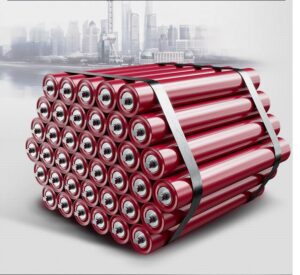
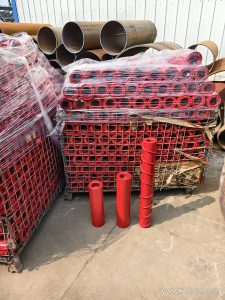
A typical idler has a steel tube shell, a through shaft or stub shaft, bearing housings at each end, and a seal system to keep dust and water away from the bearings. Common bearing sizes include 6204, 6205, 6305, 6306, 6308, and 6310, but the bearing is selected together with the roller diameter and load, not by belt width alone. Roller diameters are often quoted as Ø63, Ø76, Ø89, Ø102, Ø108, Ø127, Ø133, Ø159, Ø178, Ø194, or Ø219, depending on belt width and duty.
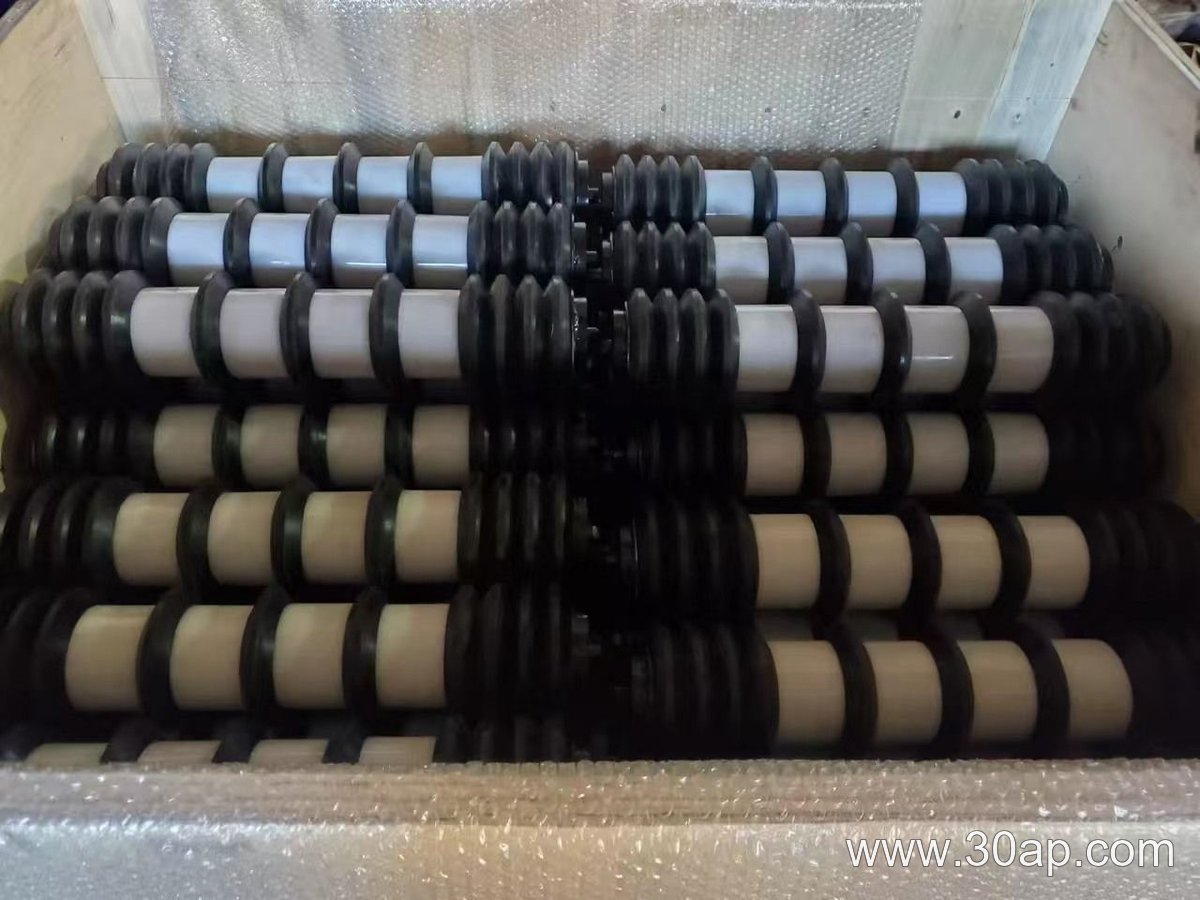
Shell surfaces vary. Steel tube is the standard choice for general service. Nylon, ceramic, and rubber-ring surfaces are used where abrasion, build-up, or impact is a concern. A rubber-ring impact idler, for example, absorbs the fall of large lumps at the load point, while a plain steel roll in the same position may dent or wear quickly.
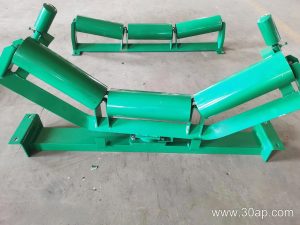
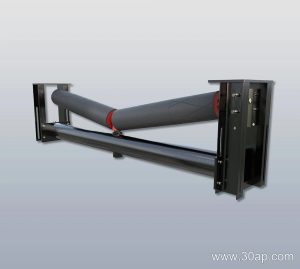
Idler groups come as single-roll, two-roll, or three-roll troughing sets. A three-roll troughing idler is common on the carrying side, with the trough angle usually 20, 30, 35, or 45 degrees. The wing rolls and center roll can have different lengths, so a quotation should state each roll length rather than only the belt width. Return idlers are often flat or V-shaped, and a V-return helps center the belt on the return strand.
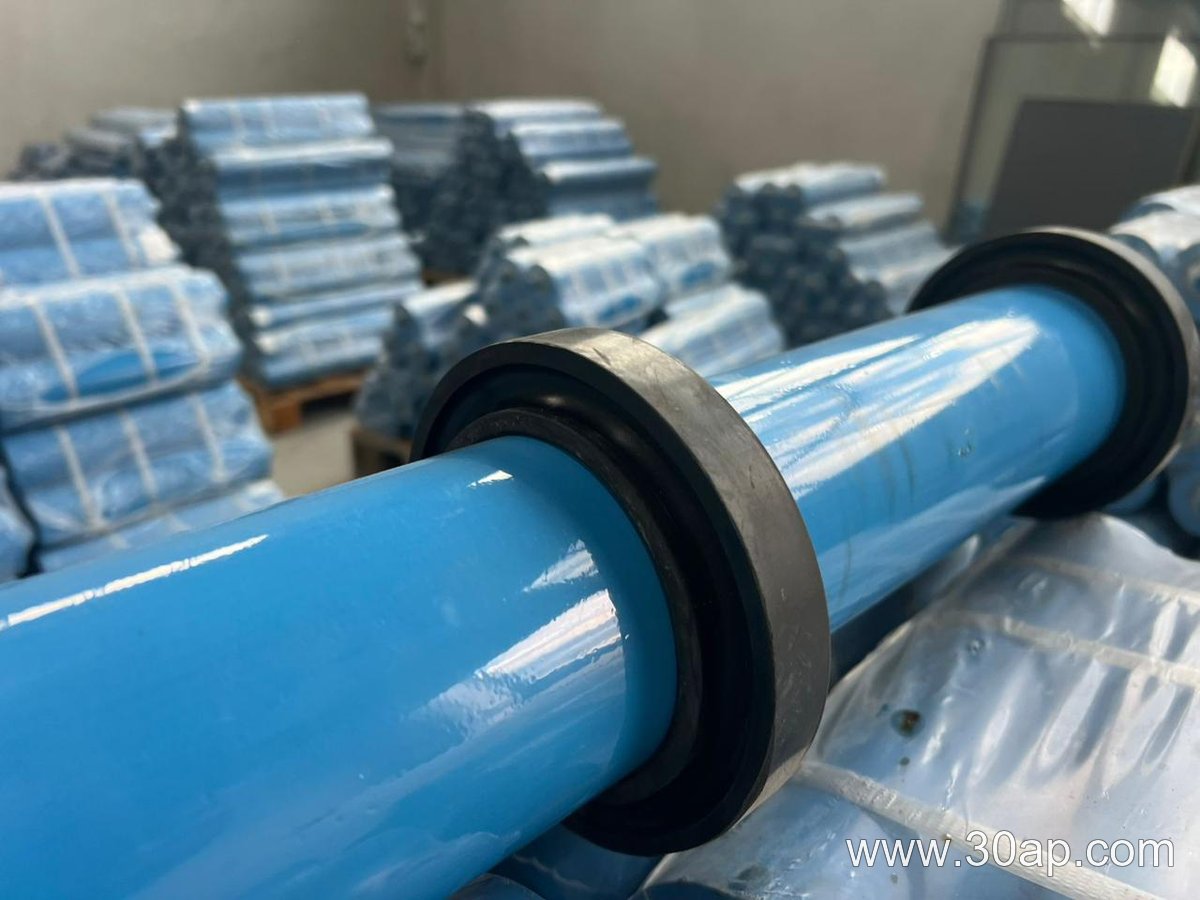
The idler sits in a conveyor bracket or frame that bolts to the conveyor stringer. That bracket determines the trough angle and the roll spacing, so it is part of the quotation, not an accessory that can be ignored.
Common Applications and Site Conditions
Quarry and aggregates duty is one of the most demanding settings for idlers. Crushed rock, dust, and frequent load impact wear the shell and seals, so impact and abrasion-resistant rolls are often specified at the loading zone. In a coal handling plant, idlers on the carrying side may need extra sealing against fine coal dust, while return rolls handle a lighter load.
At a sand and gravel line, the material is abrasive and can be wet, which makes shell wear and bearing protection the main concerns. The same idler quotation logic applies, but the surface form and seal class change with the site. A self-aligning idler may be added on a long conveyor where the belt tends to wander, and a training idler with a slight forward tilt is another way to correct tracking.
What to Check Before You Compare Quotes
Ask each supplier to confirm the following, item by item:
- Idler type and position on the conveyor
- Roller diameter and shell length for each roll
- Shaft diameter and end fitting
- Bearing size and seal type
- Shell material and surface form
- Trough angle and group arrangement
- Bracket or frame model and mounting dimensions
- Quantity per conveyor and spare allowance
A quotation that only says “idlers, 100 pcs” is not enough to compare. The same belt width can accept more than one roller diameter and more than one bearing size, so a price difference may come from a lighter bearing, a thinner shell, or a simpler seal. Belt width does not fix the pulley diameter or the idler shaft diameter; those follow the load and the design.
Match the Idler to the Duty, Not Just the Belt
Load, speed, lump size, and environment decide the specification. A heavy-duty three-roll troughing set with a 35-degree trough and a 159 mm roll is a different product from a light return roll on the same conveyor. Both may appear in one conveyor idler quotation, and both should carry their own specification line.
Spare Parts and Lead Time
Idlers are wear items. A practical quotation often includes a recommended spare quantity for the carrying side, where wear is fastest, and for the return side. Lead time, packing, and marking should also be stated, because a quotation without delivery terms is only half a purchasing document.
Getting a Useful Quote
Send the conveyor layout, belt width, capacity, material, trough angle, and the positions where idlers are needed. Note whether the application is a quarry, a coal plant, a sand and gravel line, or another bulk handling site, and mention any impact, dust, or wet conditions. If you already have a roller diameter or bearing size in service, include it so the new quotation can match the existing frames.
A clear request produces a clear conveyor idler quotation. The goal is not the lowest number per piece, but a set of rolls that fits the belt, carries the load, and keeps the conveyor running between maintenance stops.