What a Mining Trough Idler Does on a Conveyor
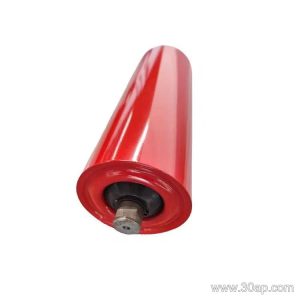
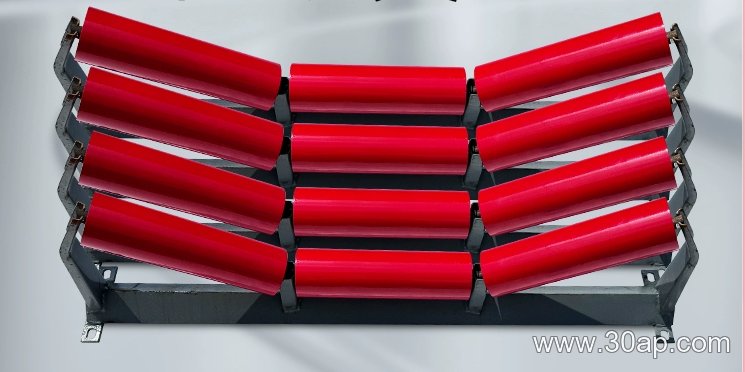
A mining trough idler is a load-bearing roller assembly that supports the conveyor belt on the carrying side and shapes it into a trough. The word trough refers to the cross-sectional profile the belt takes when it sits in the idler set. In a three-roll arrangement, the two side rollers angle upward while the centre roller stays roughly horizontal, so bulk material rests in a shallow or deep channel instead of spilling off a flat belt.
This component is also called a troughing idler or troughing roller. Those names describe the same product. A trough idler is not a drive pulley, a tail pulley, or a bend pulley. A conveyor pulley turns the belt and transmits power at the ends of the system, while a trough idler only carries the belt and the material between those points. The two families serve different purposes and should not be ordered interchangeably.
How the Assembly Is Built
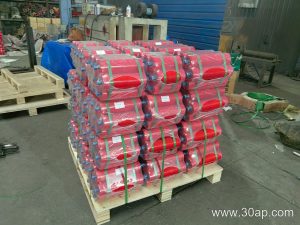
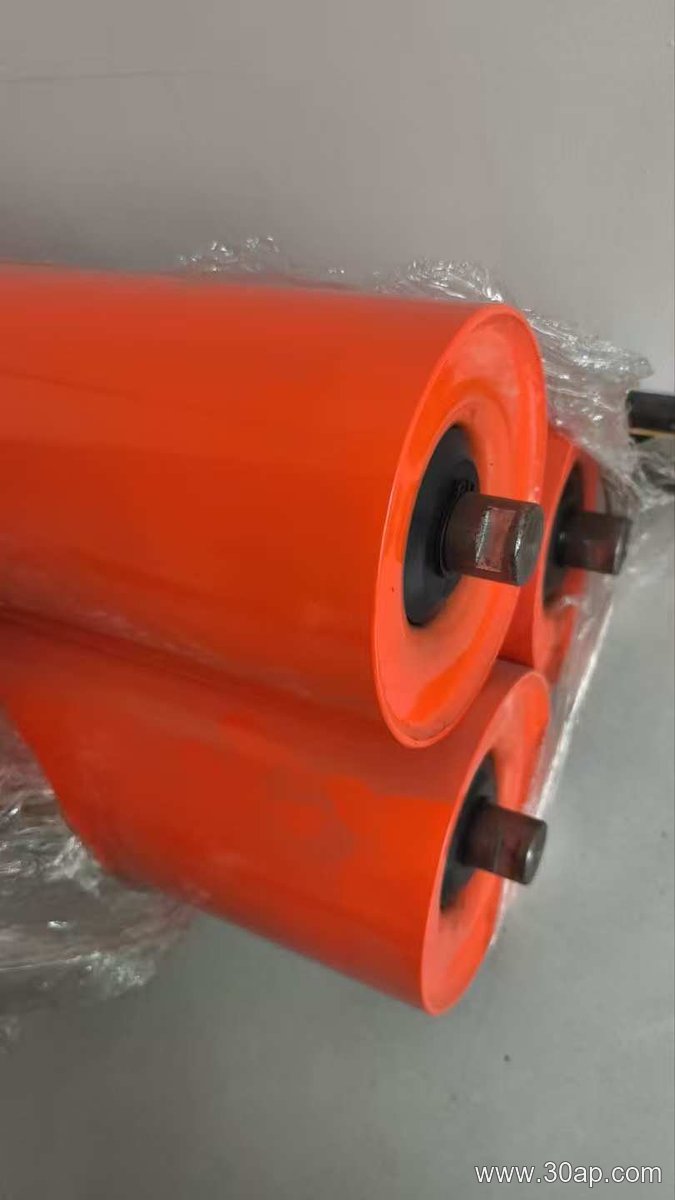
A typical troughing roller consists of a steel tube shell, a shaft, bearing housings at each end, and a sealing arrangement to keep dust and fine particles out. The roller surface may be plain steel, nylon, ceramic-coated, or fitted with rubber rings, depending on the duty. Rubber rings are often chosen where impact from falling lumps is a concern, while plain steel suits general conveying of drier, less abrasive material.
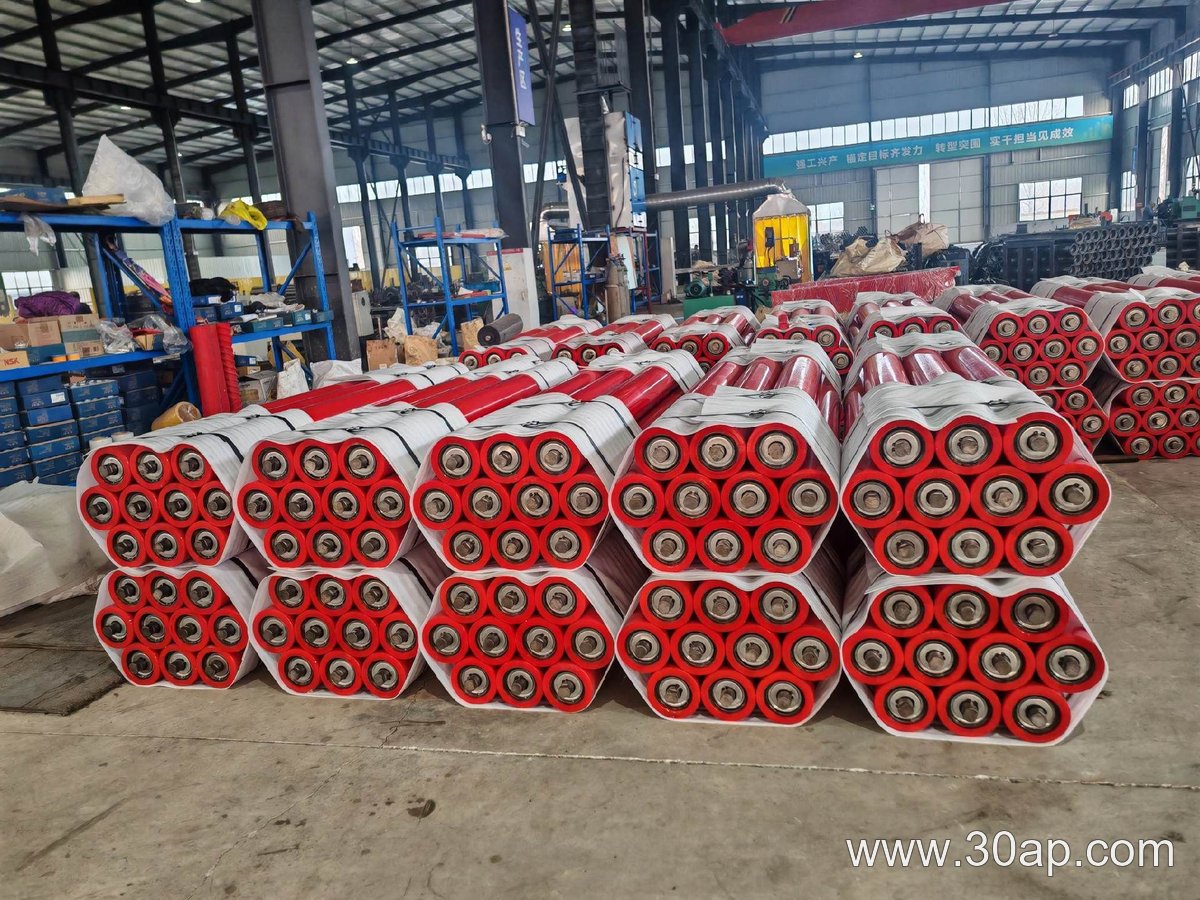
Bearings are usually deep-groove ball bearings. Common sizes include 6204, 6205, 6305, 6306, 6308 and 6310. A larger roller diameter does not automatically mean a particular bearing size, and a given bearing number is not tied to one shell diameter. Bearing selection follows the load, speed, and expected service life of the conveyor.
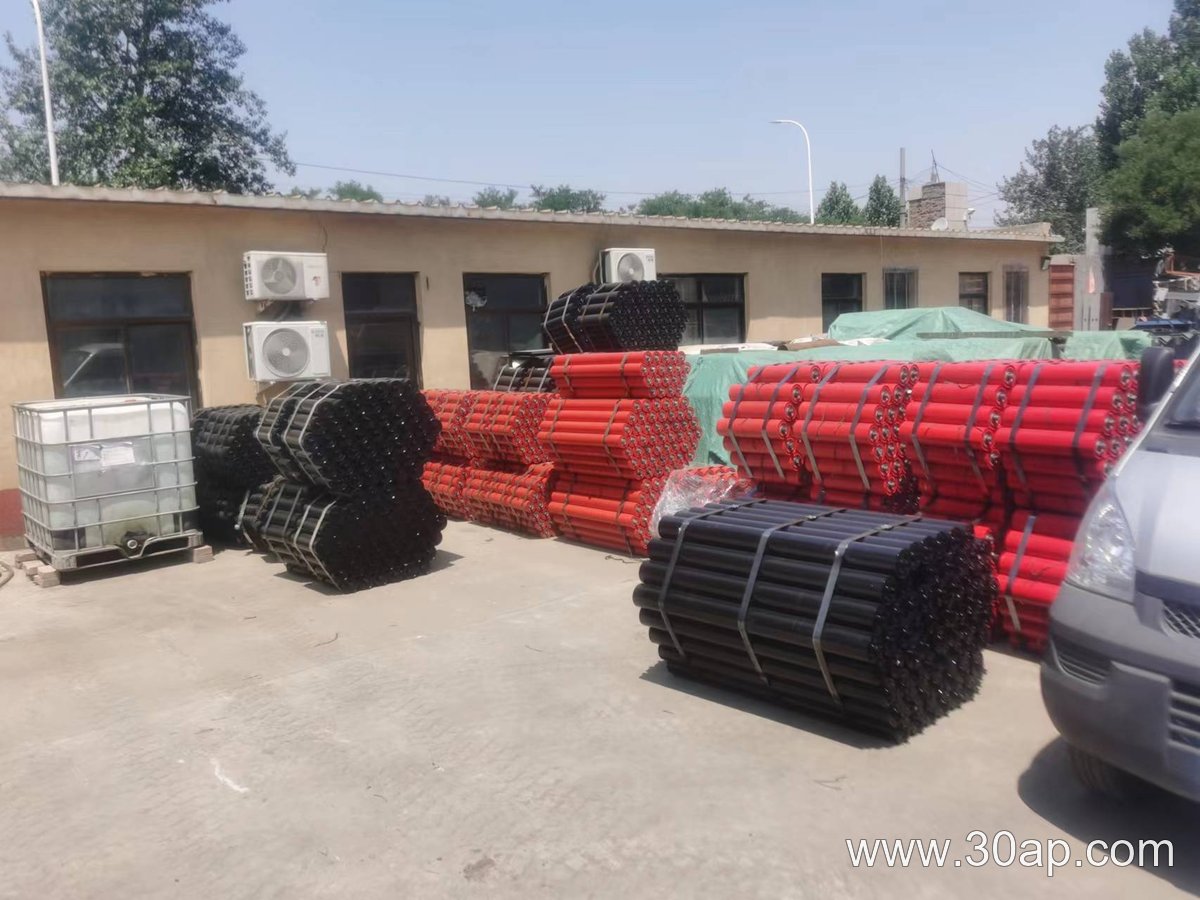
The idler set is held in place by a conveyor bracket or frame. The bracket keeps the rollers at the designed trough angle and allows the assembly to be replaced as a unit. A conveyor belt runs on top of the rollers, and the idler set rotates under the moving load. Friction in the bearings and seals is the main source of running resistance in the carrying section.
Roller Diameter, Belt Width, and Trough Angle
Roller diameter and belt width are separate decisions, though they are often considered together. Standard diameters range from about 63 mm up to 219 mm, with 89 mm, 102 mm, 108 mm, 127 mm, 133 mm, 159 mm and 178 mm being common in bulk handling. Belt widths range from B400 up to B2400. There is no rule that one belt width must pair with one roller diameter. A B1000 belt may use different roller diameters depending on load, speed, and the design of the idler set.
Trough angle is another key variable. Common angles are 20, 30, 35 and 45 degrees. A deeper trough holds a larger cross-section of material and helps keep the load centred, but it also increases the bending of the belt at the side rollers. The correct angle depends on the material’s angle of repose, the belt’s flexibility, and the throughput required.
Roller length is set by belt width, trough angle, and the number of rollers in the set. In a three-roll troughing set, the centre roller is usually shorter than the side rollers for narrow belts, and the lengths change as the belt gets wider. For example, a B800 belt may use a centre roller around 315 mm long, while a B1400 belt may use one around 530 mm. These are common examples, not fixed pairings. Side rollers and centre rollers can differ, and the exact figures are confirmed by the conveyor designer.
Where Trough Idlers Are Used
These idlers appear in many bulk material handling circuits. In a limestone quarry, they carry crushed rock from the primary crusher to the stockpile. In a coal preparation plant, they support the belt through washing and sizing stages. They are also found in sand and gravel lines, copper and iron ore concentrators, and port loading systems.
The working environment is often abrasive and dusty. Fine particles can work into a bearing if the seal is poor, which leads to premature seizure and a stopped roller. A seized roller drags on the belt, raises power consumption, and can wear through the belt cover. That is why seal design and bearing protection matter as much as shell thickness.
What Buyers Should Check
- Confirm the trough angle and the number of rollers in the set, since a three-roll troughing idler is not the same as a two-roll or single-roll arrangement.
- Check the roller diameter and shaft size against the existing bracket, because a replacement must fit the frame without modification.
- Ask about the sealing method for the intended environment. A quarry face and a clean grain terminal do not need the same level of dust protection.
- Consider the roller surface. Rubber rings can absorb impact at transfer points, while ceramic or nylon surfaces may suit different wear conditions.
- Review the bearing specification and lubrication. A larger bearing is not always better if the housing and shaft are not matched to it.
Installation and Maintenance Notes
Alignment matters. If the idler set is not square to the belt centreline, the belt may drift to one side and wear the roller ends. Rollers should turn freely by hand before the belt is started. During operation, listen for unusual noise and watch for material build-up around the brackets.
Replacement is usually straightforward. The conveyor is locked out, the belt is lifted slightly if needed, and the worn idler is removed from its bracket. Because troughing idlers are consumable components, keeping a small stock of common sizes on site can reduce downtime. The correct spare is the one that matches the original trough angle, roller diameter, and shaft fit, not simply the closest size on the shelf.
What Makes a Large Pulley Different
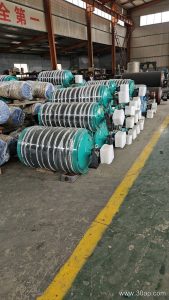
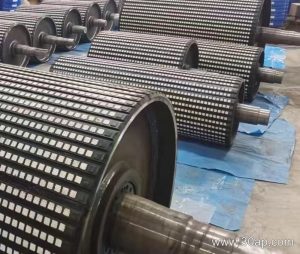
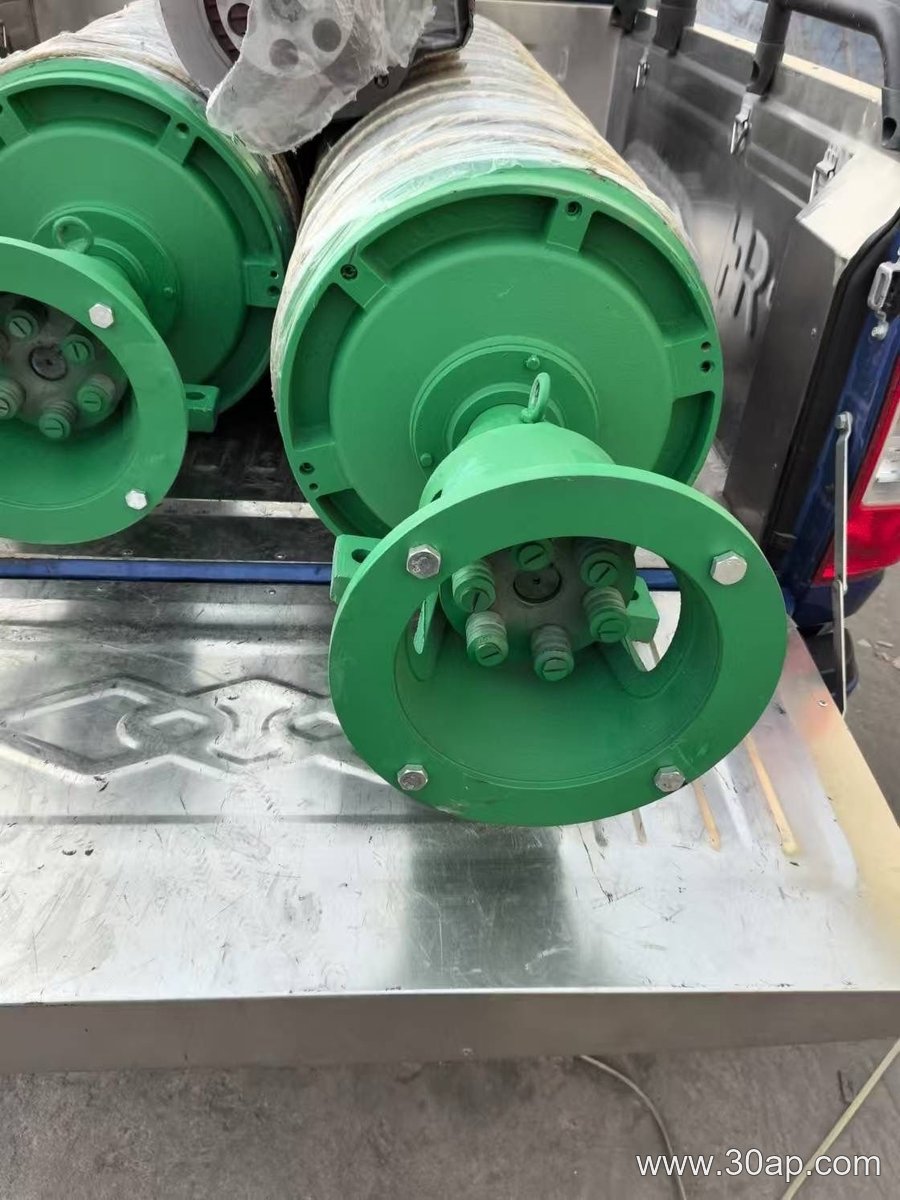
A large pulley is a conveyor pulley with a diameter that is significantly bigger than the standard sizes used on light or medium duty belts. In practice, this usually means diameters from Ø630 upward, and it is common to see Ø800, Ø1000, Ø1250, or even larger on high-capacity systems. The exact size is not fixed, because the right diameter depends on belt tension, shaft load, available space, and the torque the drive must transmit. A large pulley is not simply a scaled-up small pulley; its wall thickness, hub design, shaft diameter, and bearing selection all change to handle the higher forces.
The product is also known as a large conveyor pulley or a heavy duty drum pulley. These are accurate equivalent names for the same item. Within a conveyor, drive pulleys, tail pulleys, and bend pulleys each do a different job, and a large pulley can serve in any of those positions, but the names are not interchangeable. A drive pulley transmits power to the belt, a tail pulley changes the belt direction at the loading end, and a bend pulley redirects the belt without driving it. This article focuses on the large pulley itself, whatever its position.
How a Large Pulley Is Built
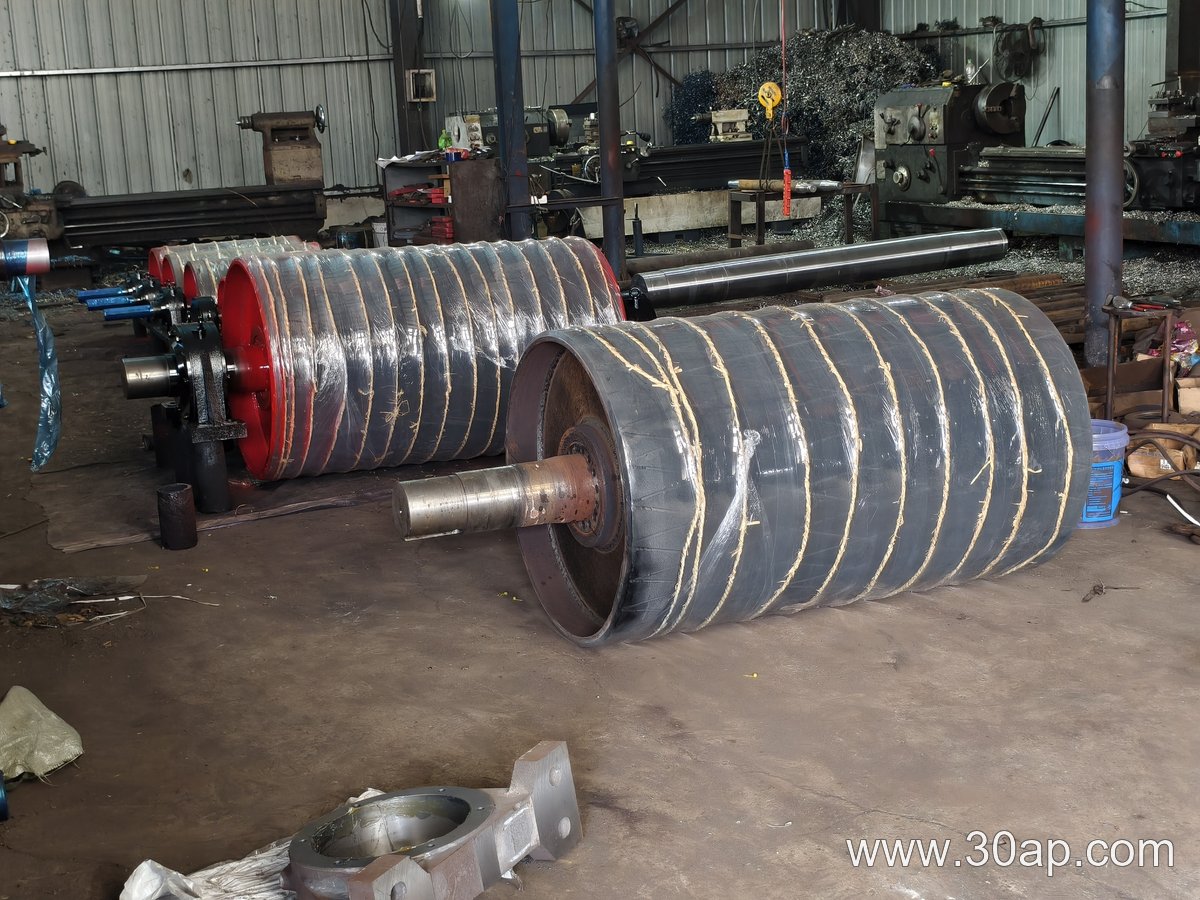
The core is a cylindrical shell, usually made from rolled steel plate and welded along the seam. For large diameters, the shell is often machined after welding to keep it round and true. End discs or conical heads are welded inside the shell to connect the shell to the hub. The hub is bored to fit the shaft, and the shaft is sized by torque and bending load, not by belt width alone. Common shaft diameters for large pulleys include Ø120, Ø140, Ø160, Ø180, and Ø200, but a specific belt width does not automatically dictate one shaft size.
Bearings are mounted on the shaft ends, often in plummer blocks that bolt to the conveyor frame. The pulley surface may be plain, or it may carry a rubber lagging. Lagging types include hot vulcanized rubber, cold bonded rubber, diamond grooved rubber, herringbone rubber, ceramic lagging, and plain rubber sheet. Lagging thickness commonly falls in the range of 8, 10, 12, 15, or 20 mm. The choice depends on grip requirements, material carried, and whether the pulley is driving or non-driving.
Where Large Pulleys Are Used
Heavy duty conveyors in quarries, copper mines, and iron ore plants often rely on large pulleys because the belt tensions are high and the tonnage is heavy. In a coal preparation plant, a large drive pulley may be needed to move a wide belt carrying wet coal. In a port bulk terminal, large pulleys help handle fast belt speeds and long conveyors. The same product appears in cement plants for clinker transport and in power stations for coal feeding.
Large pulleys are not limited to mining. A crushing and screening line may use a large tail pulley to keep the belt tracking well under a heavy load. A tunnel boring project may need a large bend pulley to route the muck belt around tight spaces. The common thread is that the belt is wide, the load is heavy, or the conveyor is long enough that a small pulley would cause excessive belt stress or premature fatigue.
Matching the Pulley to the Belt and the Job
Belt width and pulley diameter work together but are not locked in a one-to-one relationship. A B1200 belt might run on a Ø1000 pulley in one conveyor and a Ø800 pulley in another, depending on the belt construction, the wrap angle, and the required tension. Similarly, a B800 belt could use a Ø500 or Ø630 pulley. The shell face width is usually wider than the belt itself; for example, a B1200 belt often runs on a pulley face around 1400 mm, and a B1400 belt on a face around 1600 mm. These are typical proportions, not universal rules.
When selecting a large pulley, the buyer should confirm the belt width, the required diameter, the shaft diameter, the bearing type, the lagging surface, and the mounting arrangement. It also helps to know whether the pulley is a drive, tail, bend, or tension pulley, because the duty cycle and the load profile differ. A tension pulley may need a different bearing housing than a drive pulley of the same size.
Surface and Lagging Choices
For a drive pulley, lagging improves friction between the pulley and the belt. Diamond or herringbone grooving helps channel water and fine particles away from the contact area. Ceramic lagging is chosen where abrasive material or high slip risk is present. For a non-drive pulley such as a bend pulley, plain or lightly lagged surfaces are often enough, because the main goal is smooth belt travel rather than power transmission. The wrong lagging can cause belt misalignment or excess wear, so the surface should match the job.
Installation and Maintenance Notes
- Check that the pulley is aligned with the conveyor centerline before tightening the mounting bolts.
- Inspect lagging for cuts, glazing, or missing segments during scheduled shutdowns.
- Monitor bearing temperature and vibration to catch early signs of wear.
- Keep the pulley face clean and free of material buildup that can damage the belt.
A large pulley is a long-term investment in a conveyor system. It is not a place to cut corners, because a failure can stop the entire line. Buyers should ask for the design conditions, the shaft and bearing ratings, and the lagging specification. If the pulley will work with a conveyor belt, idler roller, or conveyor bracket from the same system, those interfaces should be confirmed early. A well specified large pulley will run smoothly for years, while a mismatched one will cause belt tracking problems and unplanned downtime.
What a Heavy-Duty Steel Conveyor Bracket Does
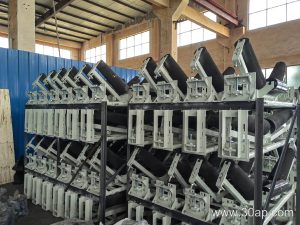
A heavy-duty steel conveyor bracket is the structural support that holds idler rollers in position along a conveyor frame. It carries the weight of the conveyor belt, the material on it, and the roller assemblies themselves. In high-tonnage operations, that bracket is not a minor accessory; it is part of the load path. If it flexes or corrodes, the belt tracks poorly and rollers wear faster.
The same component is also called a heavy-duty steel idler bracket or roller support bracket. These names describe the same product. The bracket works together with the conveyor belt, idler roller, and conveyor pulley to keep the line running straight and stable.
How the Bracket Is Constructed
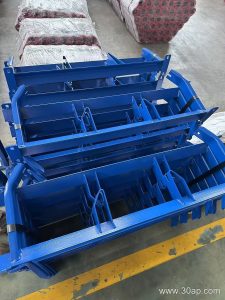
Most heavy-duty versions are fabricated from angle steel, channel steel, or folded steel plate. The choice depends on the load, the belt width, and the environment. A folded plate design can save weight while keeping stiffness, whereas a channel section is often preferred where impact and vibration are high.
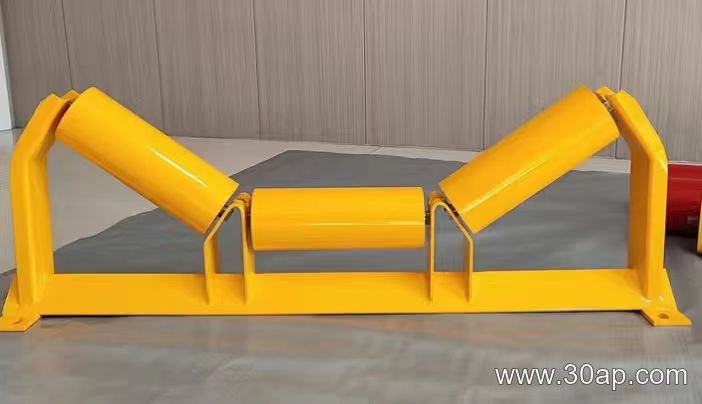
Typical features include:
- Reinforced mounting slots for roller shafts
- Welded or bolted cross beams sized to the belt width
- Gussets or ribs at high-stress corners
- Hot-dip galvanized or painted finishes for corrosion resistance
Installation hole spacing and cross beam length change with belt width and trough angle. They should never be treated as a fixed number across all conveyors.
Trough Angle and Roller Fit
Trough angle determines how deeply the belt sits in the idler set. Common trough angles include 20, 30, 35, and 45 degrees. A 35 degree trough is widespread in aggregate and coal handling, while 45 degrees is used where material containment matters more than belt life. Adjustable brackets let maintenance crews change the trough angle between these values without replacing the whole frame.
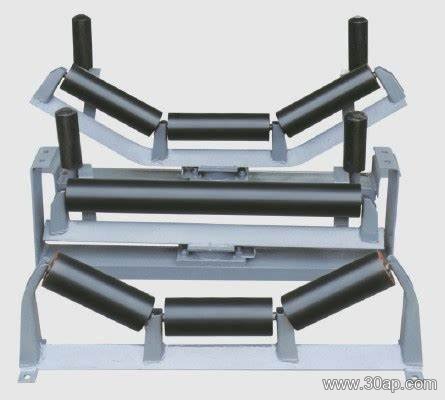
Roller diameter is a separate decision. Common idler roller sizes include Ø89, Ø108, Ø133, Ø159, and Ø194. A B800 belt, for example, may run with a 35 degree trough and Ø108 rollers, but that is not the only valid combination. Belt width, trough angle, and roller diameter are matched by the conveyor designer, not by a universal rule.
Where These Brackets Are Used
Heavy-duty steel brackets appear in crushing and screening circuits, where impact loads are constant. They are also common in tunnel muck removal, fertilizer plants, and grain silos. In each setting, the bracket must resist dust, moisture, and occasional spillage.
The bracket is not the same as a drive pulley, tail pulley, or bend pulley. Those are conveyor pulleys that transmit power or change belt direction. A heavy-duty steel conveyor bracket is a stationary support for idlers. Mentioning a pulley here only clarifies the difference; the bracket remains the subject.
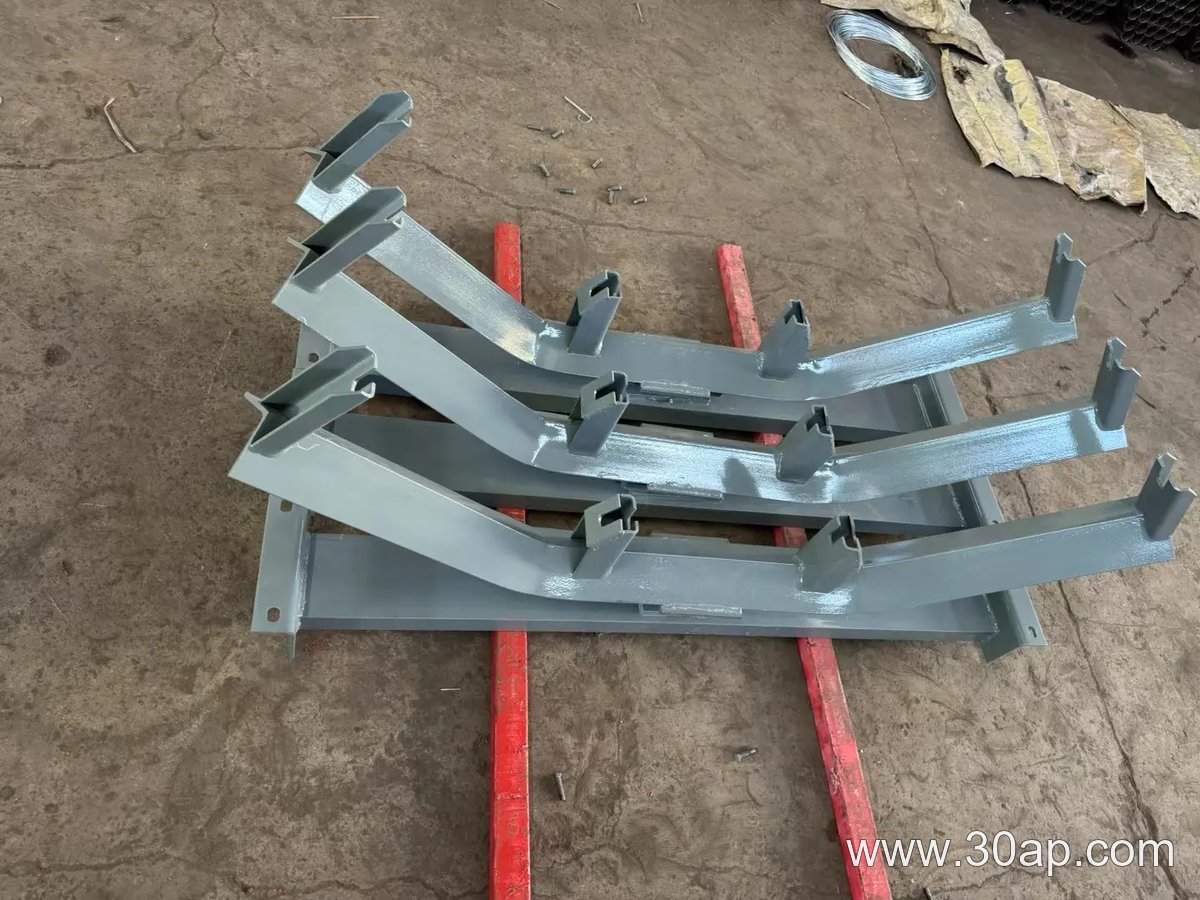
Fixed Versus Adjustable Designs
Fixed brackets hold rollers at one preset trough angle. They are simple, rigid, and economical for lines that rarely change. Adjustable brackets allow the angle to be tuned on site. That flexibility helps when a conveyor handles different materials or when belt training needs correction.
Other bracket types include impact brackets for loading zones, self-aligning brackets for belt tracking, and return brackets for the empty belt strand. Each has a specific role. A heavy-duty steel conveyor bracket may be built as any of these, but the heavy-duty version emphasizes thicker material and stronger welds.
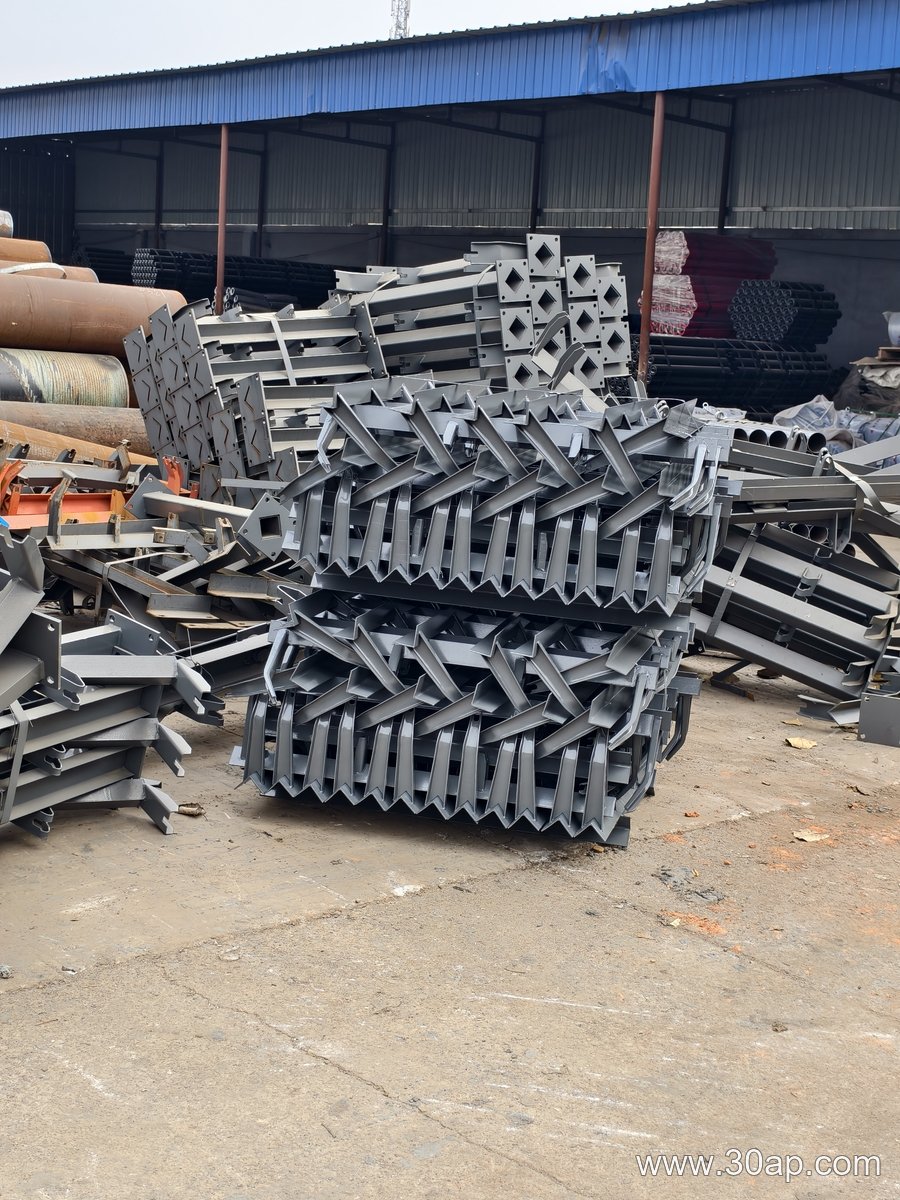
What Buyers Should Check
Before ordering, confirm the belt width, trough angle, roller diameter, and mounting pattern required by the existing frame. Ask whether the bracket will be used in a loading impact zone, because that may call for a reinforced or impact-rated design. Check the finish against the site environment. A wet coal plant and a dry grain silo have different corrosion concerns.
Also verify that the bracket fits the idler roller shaft and that the cross beam matches the conveyor frame spacing. A bracket that is strong but dimensionally wrong will still cause downtime. Buyers should request drawings or dimensional data rather than relying on a generic size chart.
Maintenance Notes
Inspect brackets for cracks, bent ears, and loose bolts during routine roller changes. A bent bracket can tilt the idler roller and cause the conveyor belt to drift. Replacing a worn bracket early is usually faster than correcting belt misalignment later. Keep spare brackets on hand for critical conveyors, especially those handling abrasive material.
When replacing a bracket, match the trough angle and roller diameter of the original unless the conveyor design is being changed on purpose. Mixing bracket types along one conveyor can create uneven belt support.
A heavy-duty steel conveyor bracket is a small part of the total conveyor, but it decides how well the belt, rollers, and pulleys work together. Choosing the right construction, angle, and fit for the application keeps the line running with fewer surprises.
What an NN200 Conveyor Belt Is
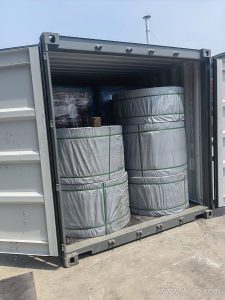
An NN200 conveyor belt is a fabric-reinforced rubber belt built on a nylon-nylon carcass. In many catalogues the product also appears as an NN200 nylon conveyor belt, because both the warp and weft yarns are nylon. The number 200 refers to the nominal tensile strength of the carcass, usually expressed in newtons per millimetre of belt width per ply. In practical terms, it sits in the lower-to-middle range of nylon belt strengths, above lighter EP and NN grades and below heavy-duty steel cord constructions.
This is not a single recipe. An NN200 belt is a platform: the cover compound, number of plies, cover thickness and edge construction are chosen for the job. That is why two belts with the same NN200 carcass can behave very differently in the same plant.
How the Belt Is Put Together
A typical construction has three main parts.
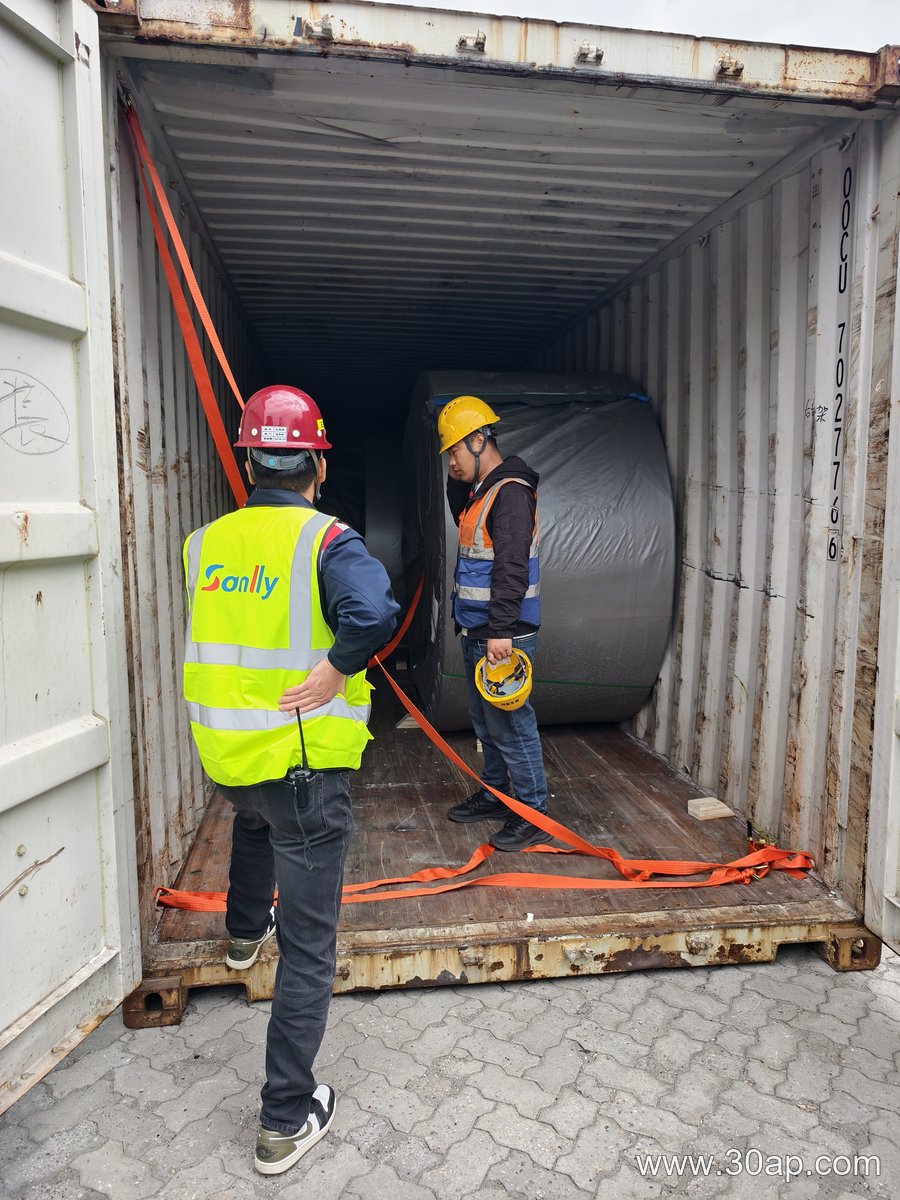
- The carcass, usually two to six plies of nylon fabric bonded with rubber skim. More plies raise breaking strength and transverse rigidity but also add weight and reduce flexibility around smaller pulleys.
- The covers, top and bottom. Common cover gauges include 3+1.5, 4+2, 5+2, 6+2 and 8+3 mm, though any figure is a design choice rather than a universal standard.
- The edges, either cut and sealed or moulded. Edge treatment matters when material is sharp, when the belt is heavily misaligned, or when the belt runs at high speed.
Nylon stretches more than polyester under the same load but handles impact and flexing well. That trade-off is the reason an NN carcass is often chosen for crushers, screens and short-to-medium centres where shock loading is present.
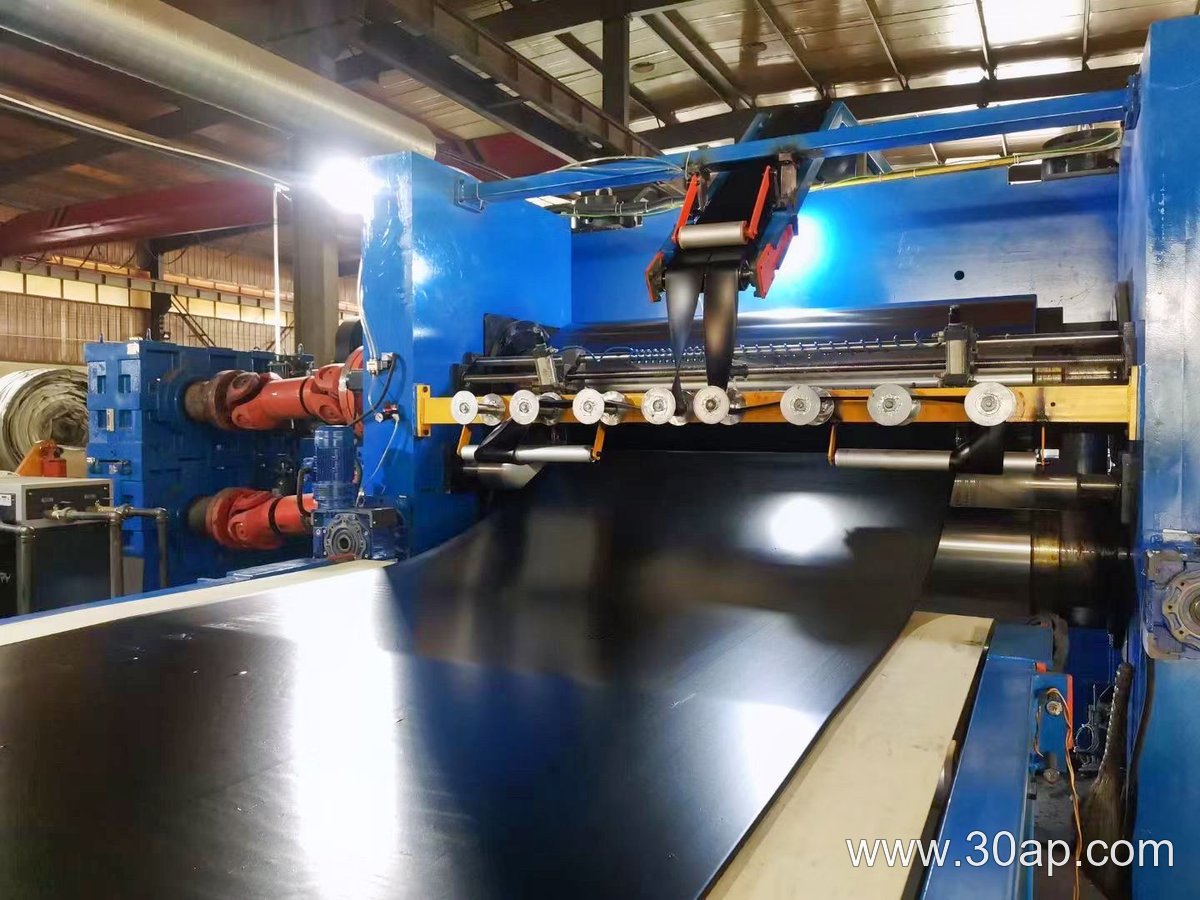
Where It Fits on a Conveyor
An NN200 belt is at home on bulk handling lines carrying crushed stone, sand, gravel, coal, fertiliser, grain and similar loose materials. It also appears in package handling and light mining duty. It is less suitable where the belt must be almost inextensible, or where the centre distance is very long and take-up travel is limited; in those cases a higher-modulus carcass such as steel cord is often considered instead. That is a comparison, not a replacement for the main subject.
The belt does not work alone. A conveyor pulley at the drive end and a tail pulley at the return end transmit and redirect the load. Between them, idler rollers support the belt and its cargo. Conveyor brackets hold those idlers and pulleys in alignment. Drive, tail and bend pulleys are separate duties and are not interchangeable; a bend pulley, for example, only changes direction and is not a drive pulley. When the belt is being specified, the pulley diameters, trough angle and idler spacing all interact with belt stiffness and ply count.
Cover Grade Is as Important as the Carcass
Buyers often focus on the NN200 strength rating and overlook the cover. The cover is what actually meets the material. Relevant options include abrasion-resistant, heat-resistant, oil-resistant, flame-retardant, antistatic, cold-resistant and acid-alkali-resistant compounds. There are also patterned surfaces such as chevron or herringbone for inclined conveying, and corrugated sidewall belts for steep inclines or space-limited routes.
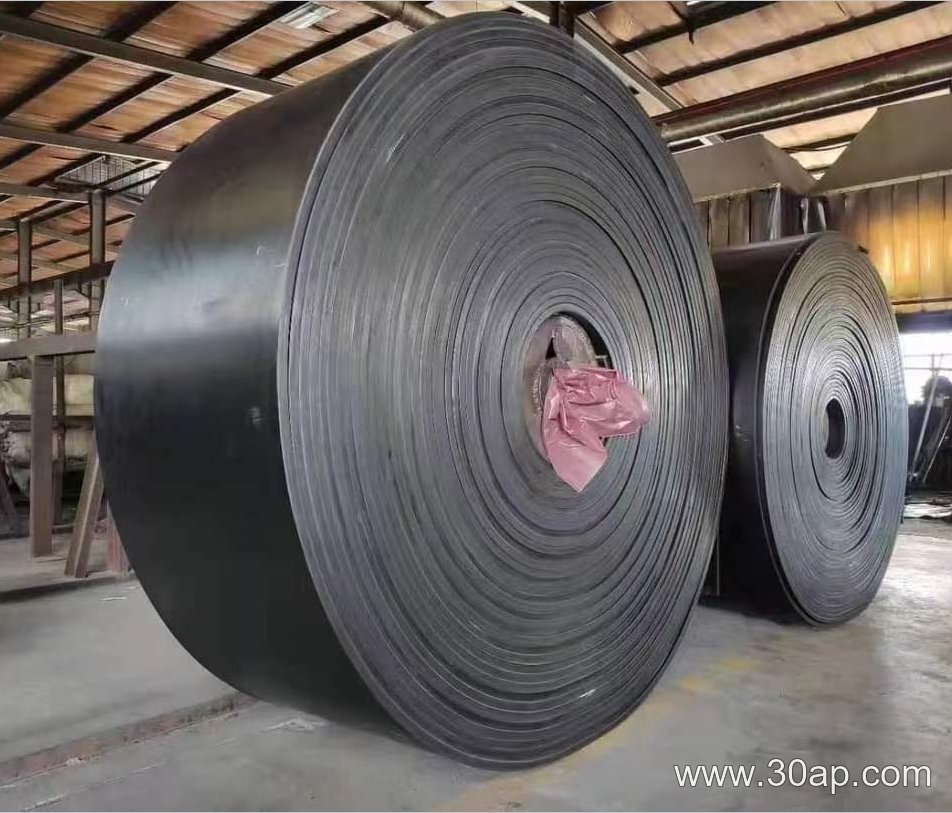
Matching the cover to the duty is usually more valuable than buying extra carcass strength. A heat-resistant cover on a clinker line, or an oil-resistant cover where lubricant drips onto the belt, will often extend service life more than an oversized nylon carcass.
Widths, Strength and What the Numbers Mean
NN200 belting is supplied in a range of widths. Common belt widths include B500, B650, B800, B1000, B1200, B1400, B1600, B1800 and B2000. These are reference values used across the industry, and different manufacturers offer different subsets. The right width comes from the required tonnage, lump size, troughing angle and the space available on the conveyor frame.
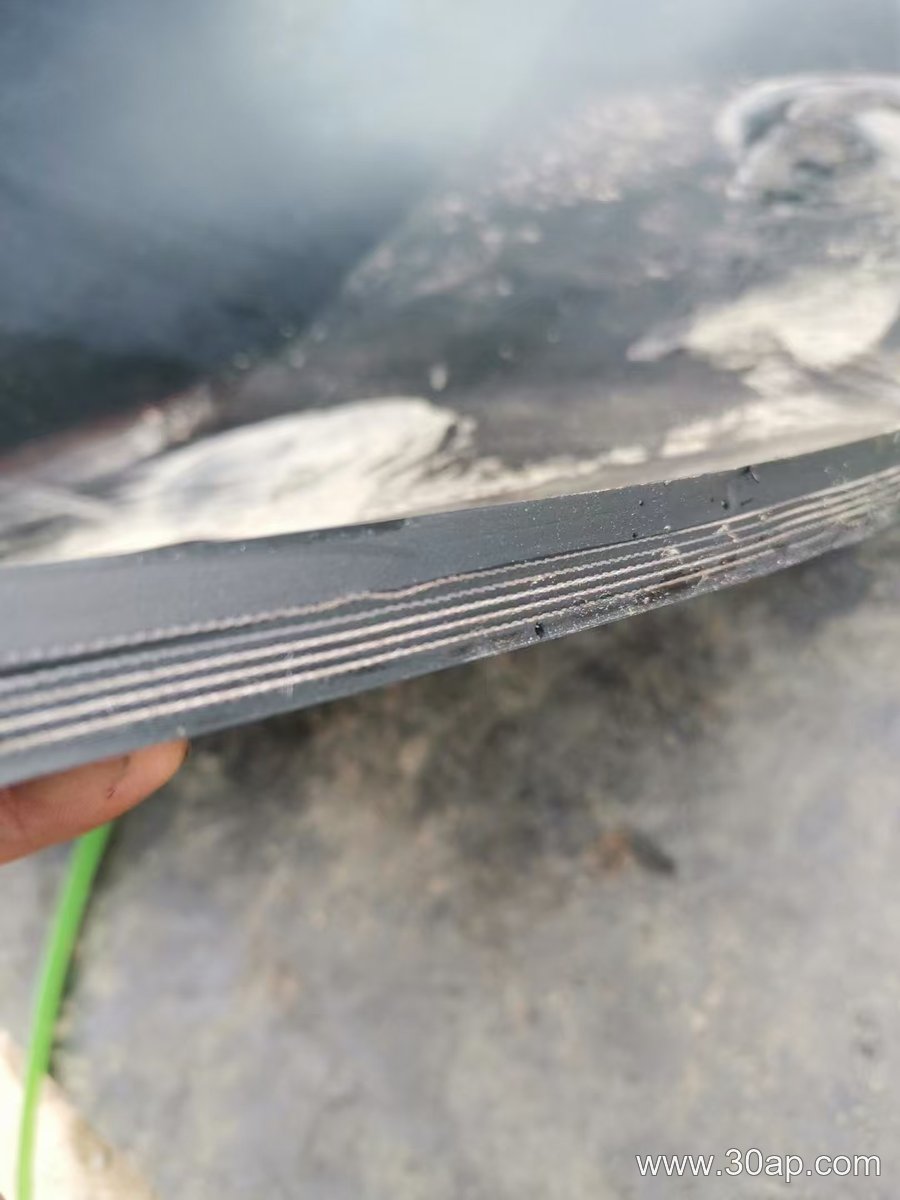
Do not assume that one belt width pairs with one pulley diameter. Pulley diameter is set by the carcass type, ply count, belt tension and the required wrap angle. A wider belt may run on a smaller-diameter pulley than a stiff, multi-ply belt of the same width, or the reverse. Likewise, shaft diameter cannot be derived from belt width alone; it follows from torque, bending load, bearing selection and the pulley face length. The product data sheet for the actual belt, plus the conveyor design, is the only reliable basis.
Selection and Use Notes
- Confirm the actual peak tension, not just the average. Starting, surge and blocked-chute conditions can raise tension well above steady state.
- Match ply count to impact. More plies help with lumps, but a belt that is too stiff can mistrack on small pulleys.
- Check the minimum pulley diameter recommended for the chosen NN200 construction. This is a supplier figure, not a rule of thumb.
- Keep idler rollers turning freely. A seized idler can damage the cover long before the carcass is worn.
- Align the structure. Crooked conveyor brackets and skewed pulleys cause edge wear that no cover grade can prevent.
- Store belts away from direct sunlight, ozone sources and excessive heat, and support rolls so the edges are not creased.
What a Buyer Should Ask
A useful enquiry for an NN200 conveyor belt covers the material being carried, lump size, capacity in tonnes per hour, centre distance, incline angle, belt speed, ambient and material temperature, and whether oil, chemicals or fire risk are present. It also helps to state the drive pulley diameter, the tail pulley diameter and the available take-up travel, because those constrain the acceptable belt stiffness.
Ask for the carcass construction, ply count, cover gauge and cover grade in writing. If the belt will be spliced on site, confirm the recommended splice method and whether the covers are suitable for vulcanised or mechanical joining. None of these details are universal; they follow the design of the conveyor and the duty the belt must survive.
Treat catalogue strength ratings as a starting point, not a guarantee for every application. An NN200 belt chosen with the right cover, ply count and width, and matched to properly sized pulleys and idlers, will usually outlast a stronger belt that was specified without looking at the whole conveyor.