What the idler shaft actually does
On a belt conveyor, the idler shaft is the stationary axle that carries the rotating shell of an idler roller. The shell turns on bearings mounted on this shaft, while the shaft itself is locked against rotation by the conveyor bracket at each end. In practice the shaft is a short, stiff length of round bar with machined seats for the bearings and flats, grooves or drilled ends for fixing. It is easy to overlook, but the shaft sets the position of the roller, carries the belt load into the frame, and controls how well the whole idler assembly keeps its alignment over years of service.
Because the shaft does not rotate, wear concentrates at the bearing seats and at the fixing points rather than along the full length. That is why tolerances on the seating diameters and the straightness of the bar matter more than the cosmetic finish of the middle section.
How an idler shaft is built
Most shafts start as cold drawn or turned round bar in mild steel or a medium carbon grade. The ends are machined to fit the bracket slot or the fixing clamp, often with a milled flat so the shaft cannot spin. Bearing seats are turned to a close tolerance and, on better designs, ground. A shoulder or a retaining ring keeps the bearing in place axially.
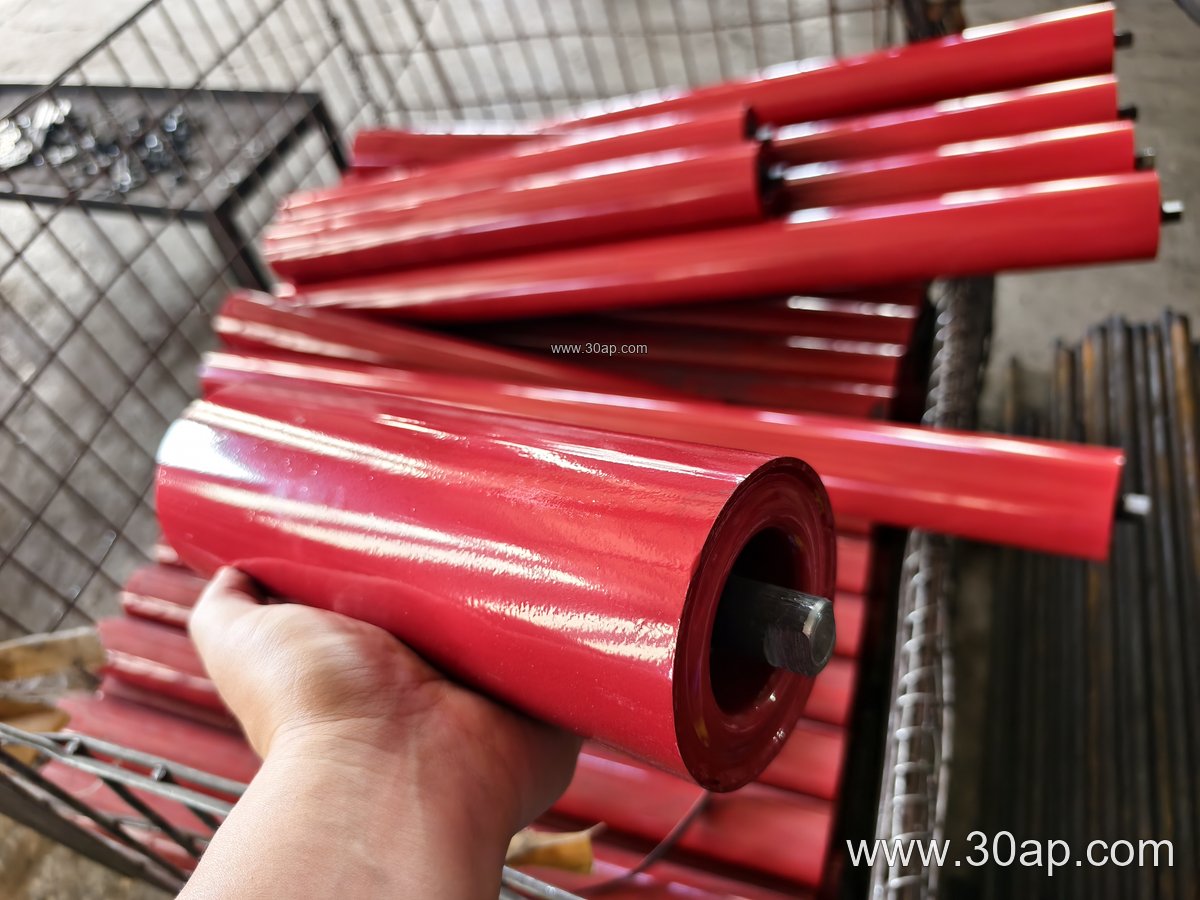
Common shaft diameters track the roller diameter rather than the belt width alone. A light idler roller with a Ø63 or Ø76 shell usually takes a smaller shaft, while a heavy troughing roller at Ø159 or Ø178 needs a noticeably thicker axle. Bearing bore and shaft diameter must of course agree: a 6205 bearing needs a 25 mm seat, a 6308 needs 40 mm, and so on. These are design relationships, not fixed rules, and the final choice belongs to the conveyor designer.
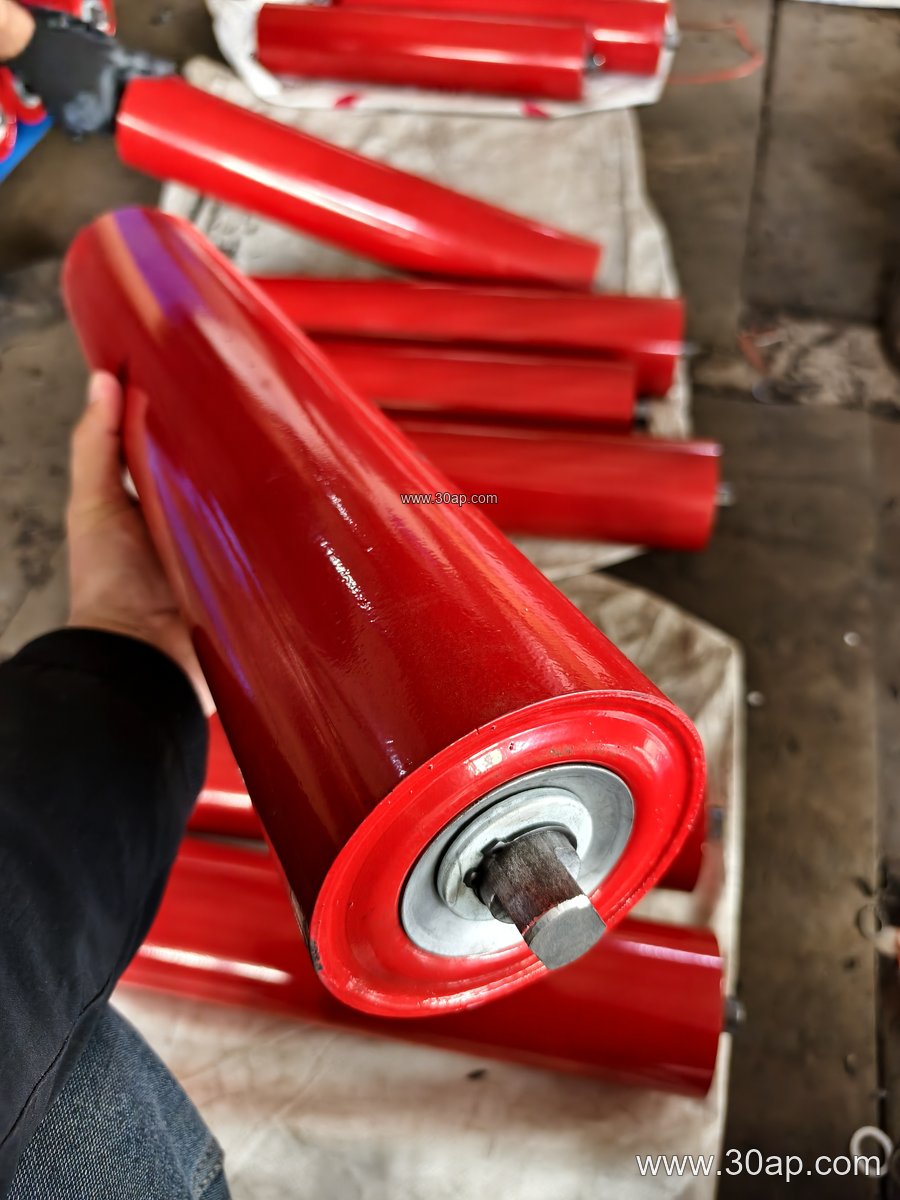
- Bar material and straightness grade
- Bearing seat diameter and tolerance
- End fixing style: flat, groove, drilled hole or threaded end
- Corrosion protection, from painted ends to full galvanizing
Where these shafts are used
Idler shafts appear wherever a belt is supported: in a quarry or sand and aggregate line, in a cement plant clinker hall, in a coal washing plant, and along the coal handling route of a power station. Troughing idlers on the carrying side, flat return rollers underneath, and impact rollers at the loading point all rely on the same basic axle principle, though the shaft diameter and end fixing change with the duty.
The environment shapes the specification. In a coal mine or a coal mining application, flame retardant conveyor belt and anti-static conveyor belt are normal, and the idler shaft is often supplied with plated or painted ends to resist damp conditions. In a port or a ship loading terminal, salt air pushes buyers toward galvanized shafts. Around a crusher, a rock conveyor or an ore conveyor, dust and shock loads argue for larger shafts and better sealing. The shaft itself is not the sealed part, but a stiff, straight axle helps the seal run true.
Sizes and matching with the rest of the conveyor
Shaft length follows the roller length, which in turn follows belt width and trough angle. A three-roll troughing set on a B800 belt commonly uses rollers around 315 mm long, while a B1400 set may run near 530 mm; the side rollers and the centre roller can differ, so the shaft for each position is a separate item. The table below shows typical reference values only.
| Belt width | Typical roller length, three-roll trough | Typical roller diameter range |
|---|---|---|
| B500 | about 200 mm | Ø63 to Ø89 |
| B650 | about 250 mm | Ø76 to Ø108 |
| B800 | about 315 mm | Ø89 to Ø133 |
| B1000 | about 380 mm | Ø108 to Ø159 |
| B1200 | about 465 mm | Ø108 to Ø178 |
| B1400 | about 530 mm | Ø133 to Ø194 |
| B1600 | about 600 mm | Ø133 to Ø219 |
Note that belt width does not dictate a single shaft diameter. A wide, slow belt carrying light material and a narrower, fast belt carrying heavy lump feed can end up with very different axles. Buyers should always quote the roller drawing or the bracket interface rather than a belt size alone.
Buying points worth checking
First, confirm the end fixing. A shaft that fits the conveyor bracket loosely will hammer itself loose within weeks. Second, ask for the bearing seat tolerance and the shaft straightness limit in writing; these two numbers decide whether the roller runs quietly. Third, match the material and coating to the site: a wash plant, a fertiliser store and a tunnel muck line each ask for something different, and a coated shaft costs far less than repeated roller changes.
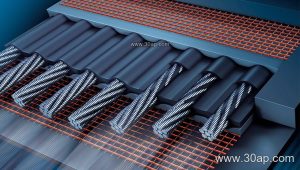
Finally, keep spare shafts with the spare rollers. When a bearing seizes, the shaft is often scored beyond reuse, and a matching replacement keeps the line running. For owners of a long overland system using steel cord conveyor belt or a multi-ply fabric core belt, a small stock of shafts in the two or three most common roller sizes is usually enough. Details of compatible rollers and frames can be reviewed at www.morningbelt.com alongside the belt and pulley schedule, so the shaft is ordered against the correct bracket, not guessed from the belt width.