What a Ø63.5 Conveyor Idler Is
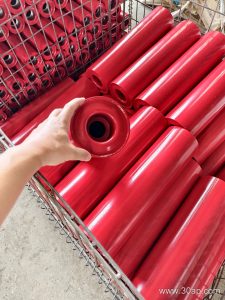
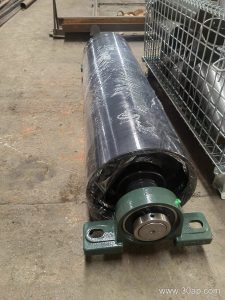
A Ø63.5 conveyor idler is a small-diameter carrying roller used in belt conveyor systems. The number refers to the roller shell diameter in millimetres, which sits at the lower end of the common idler range. These units are often called small-diameter idler rollers, and they are typically paired with narrow belts or light-duty conveyor sections where a compact profile is more useful than a heavy, large-diameter roll.
Unlike a drive pulley, a tail pulley, or a bend pulley, an idler does not transmit power to the conveyor belt. It supports the belt, guides it, and lets it travel with low rolling resistance. The Ø63.5 conveyor idler belongs to the idler roller family, so it should not be confused with a conveyor pulley, which is a powered or redirecting drum with a different role in the system.
How the Roller Is Built
The basic construction is straightforward. A steel tube forms the outer shell, and the ends are fitted with bearing housings. Inside, a shaft runs through the roller, and bearings support the rotating shell. Common bearing sizes in this part of the market include 6204 and 6205, though the exact bearing is selected by the manufacturer based on load, speed, and service life targets.
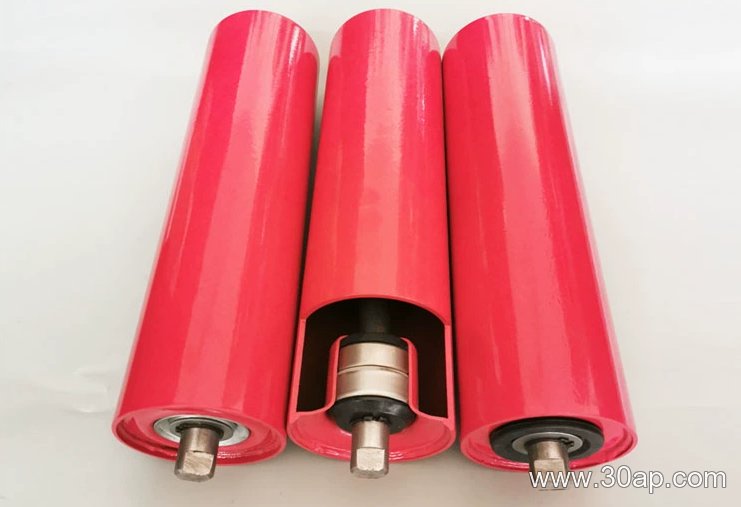
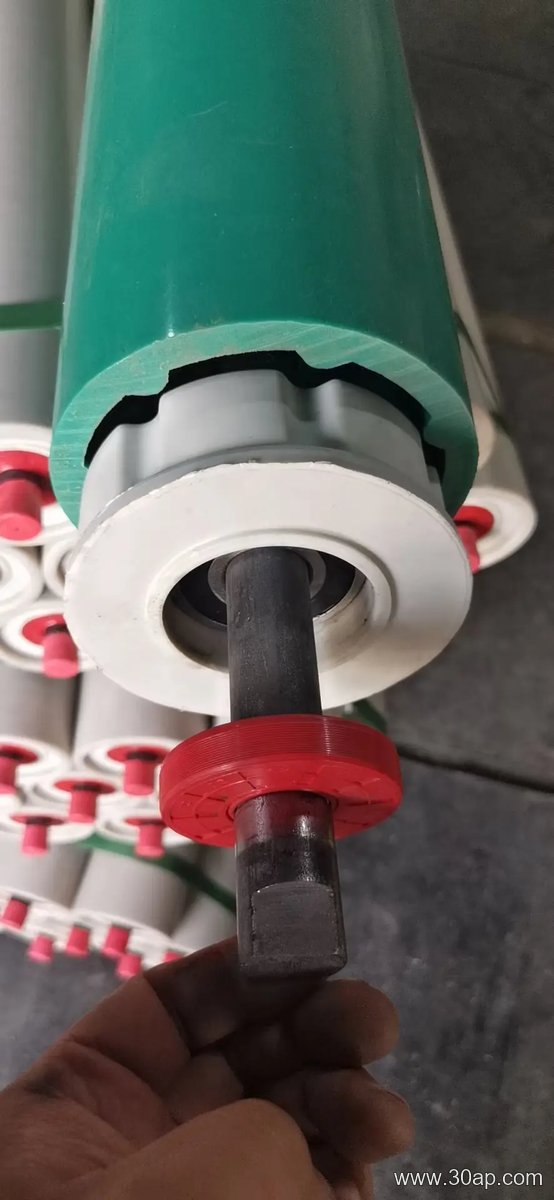
Seals are a critical detail. Dust, fines, and moisture are the main enemies of any idler roller, and a labyrinth seal or a multi-stage seal arrangement helps keep contamination out of the bearing cavity. Grease retention also matters, because a roller that loses lubricant will fail early. For abrasive environments, some designs add a rubber-covered or ceramic-coated surface, but a standard steel shell remains the most common choice.
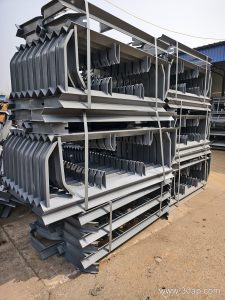
The shaft ends are mounted in conveyor brackets or frames. The bracket holds the roller at the correct height and angle, so the idler can support the belt without rubbing or binding. Tolerances on the shaft and housing affect how freely the roller turns, and a poorly aligned bracket can shorten roller life even if the idler itself is well made.
Where a Ø63.5 Idler Fits
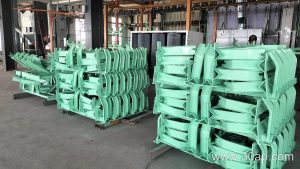
Because of its small diameter, this roller is often found on narrow belt conveyors such as B400, B500, or B650 systems. It can be used as a carrying idler in a troughing set, as a return idler under the belt, or as a transition idler near a pulley where the belt changes shape. In a three-roll troughing arrangement, the side rollers and centre roller may have different lengths, so the roller length is not fixed by the diameter alone.
Troughing angles of 20 degrees, 30 degrees, and 35 degrees are common, and the choice affects how the belt cradles the material. A 45-degree trough is also used in some applications, but it is not universal. The idler diameter and the trough angle are separate decisions, and one belt width can be matched with more than one pulley or roller diameter depending on the conveyor design.
Typical places where a small idler like this appears include:
- Sand and gravel lines with narrow belts
- Concrete batching plants
- Small crushing and screening circuits
- Light-duty return runs in a range of bulk handling operations
In a quarry or a concrete plant, the conveyor may be short and the belt relatively narrow, so a compact roller keeps the structure low and reduces the weight carried by the frame. The same roller can also appear in a fertilizer or grain handling line where the material is less abrasive but the belt still needs consistent support.
Specifying the Right Idler
When choosing a Ø63.5 conveyor idler, the buyer should start with the belt width and the conveyor layout. The roller length must suit the belt and the troughing set, and the shaft must fit the existing bracket. It is not correct to assume that a given belt width always uses one shaft diameter or one roller length; those values come from the conveyor designer and the idler manufacturer.
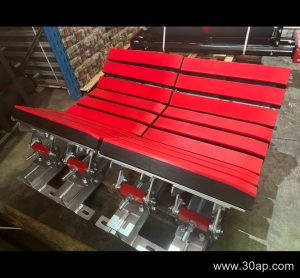
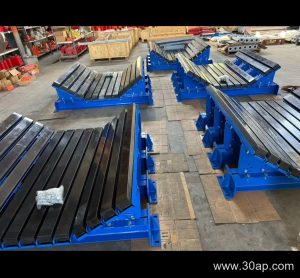
Load and speed also matter. A small-diameter roller turns faster than a larger one at the same belt speed, so bearing selection and seal quality become more important. In a dusty or wet area, a well-sealed bearing housing will usually outlast a cheaper unit. For impact zones, a buffer idler with rubber rings may be a better choice than a standard roller, but that is a different subtype and not a replacement for the main carrying idler in every position.
Maintenance is mostly about inspection. A worn roller may stop turning, develop a flat spot, or leak grease. If the belt starts to wander or the roller makes noise, the cause may be a seized bearing, a bent shaft, or a misaligned bracket. Replacing a damaged idler early prevents belt edge damage and reduces the chance of a larger failure.
Buyer Checklist
- Confirm the roller diameter is Ø63.5 mm and the length matches the conveyor frame
- Check the shaft ends and bracket fit before ordering
- Ask about bearing size, seal type, and shell material
- Match the idler type to its position: carrying, return, transition, or impact
- Keep spare rollers on hand for critical short conveyors
A Ø63.5 conveyor idler is a small but important part of a belt conveyor. It is not a drive pulley, a tail pulley, or a bend pulley, and it should be selected as an idler roller with the correct length, bearing, and seal for the job. When the diameter, load, and environment are considered together, the roller will support the belt smoothly and help the whole conveyor run with less downtime.