What a High-Strength Conveyor Idler Does on the Line
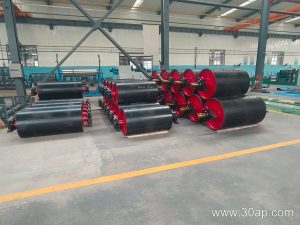
A high-strength conveyor idler is the load-bearing roller that supports the conveyor belt along its carrying and return runs. In a quarry, a coal preparation plant, or a power plant coal yard, the belt may carry sharp rock, wet aggregate, or hot clinker, and the idler has to keep the belt tracking without collapsing under impact. The term covers a family of heavy-duty rollers built with thicker shells, reinforced bearing housings, and stronger sealing than light-duty units. It is not the same component as a conveyor pulley: drive, tail, and bend pulleys transmit motion and change belt direction, while idlers simply support the belt and the material on it.
How the Roller Is Built
Most high-strength idler roller designs start with a seamless steel tube shell, machined at both ends to accept bearing housings. The shaft is usually cold-drawn steel, and the bearings are deep-groove ball bearings such as 6205, 6305, 6306, or 6308, selected according to load and speed rather than matched to one belt width. Labyrinth seals and grease retention features keep dust out in crushing and screening circuits. Roll surfaces may be plain steel, nylon, ceramic, or rubber rings; rubber-covered impact idlers are common under crusher discharge points where lump size is large.
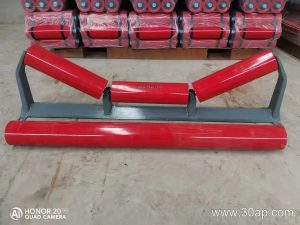
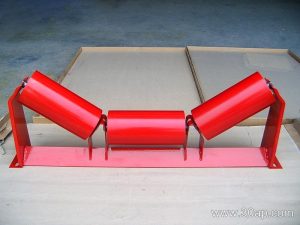
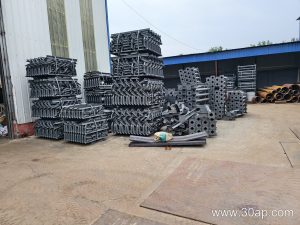
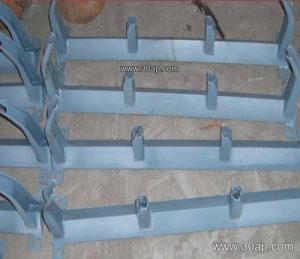
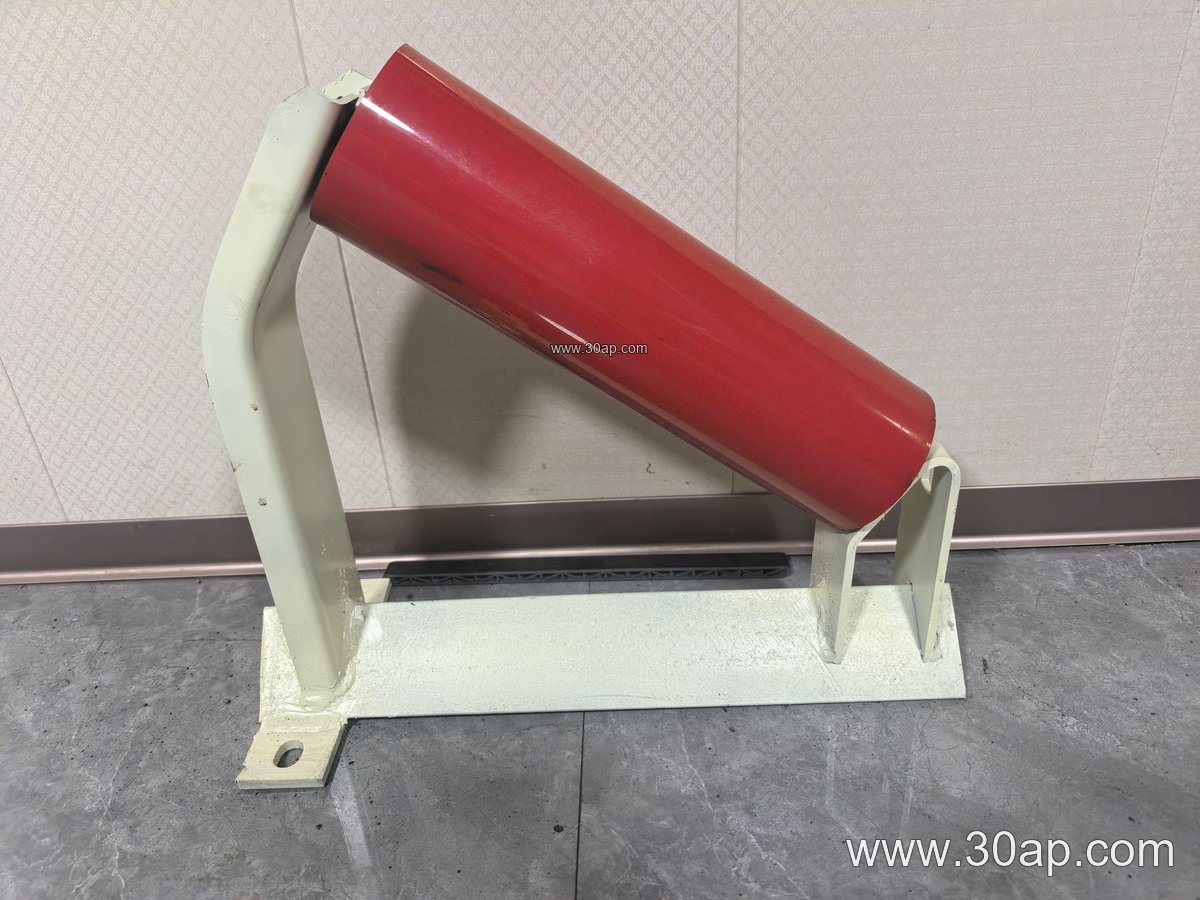
The idler sits in a conveyor bracket or frame, and a set of two or three rollers forms a trough that shapes the belt. Common trough angles are 20, 30, 35, and 45 degrees. A small forward tilt of about 1.5 to 2 degrees is sometimes used on training idlers to help center the belt.
Where It Fits in Bulk Handling
Heavy-duty conveyor idlers appear wherever the belt carries abrasive or heavy material. In an iron ore or copper ore terminal, three-roll troughing sets support a wide, thick conveyor belt at high tonnage. In a cement plant, return idlers and V-return rollers keep the belt clean on the lower strand. In a tunnel muck removal line or a fertilizer granulation plant, sealed idlers resist fine dust and moisture.
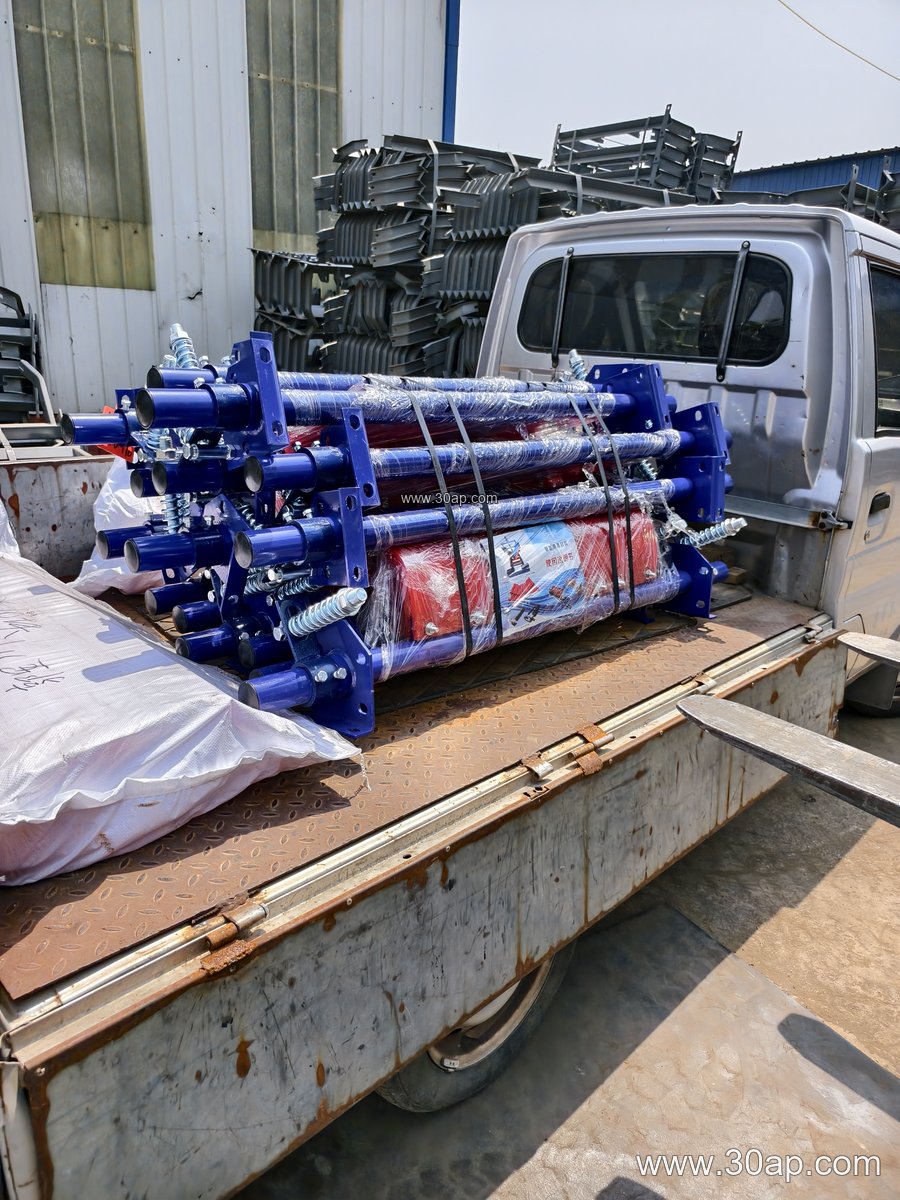
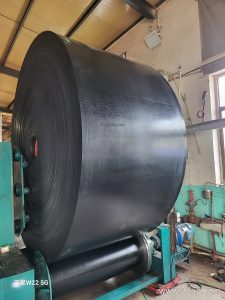
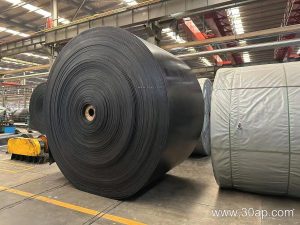
They work alongside other components rather than replacing them. A conveyor pulley at the head drives the belt; the idlers between head and tail carry it. Fabric core belts such as EP conveyor belt or NN conveyor belt grades, and steel cord conveyor belt constructions like ST1000 or ST1600, all rely on correctly spaced idlers to avoid sag between supports.
Common Reference Dimensions
The table below shows typical reference values. Actual roller length depends on belt width, trough angle, and roll arrangement; side rollers and center rollers can differ. These are examples, not fixed matches.
| Belt width | Typical idler diameter | Example roller length, three-roll trough |
|---|---|---|
| B500 | Ø76 to Ø89 | about 200 mm |
| B650 | Ø89 to Ø108 | about 250 mm |
| B800 | Ø89 to Ø108 | about 315 mm |
| B1000 | Ø108 to Ø133 | about 380 mm |
| B1200 | Ø108 to Ø133 | about 465 mm |
| B1400 | Ø133 to Ø159 | about 530 mm |
| B1600 | Ø133 to Ø159 | about 600 mm |
| B1800 | Ø159 to Ø178 | about 670 mm |
| B2000 | Ø159 to Ø194 | about 750 mm |
Larger diameters such as Ø194 and Ø219 are used in very heavy stations, and shaft diameter is set by the bearing and load calculation, not by belt width alone. A 1200mm wide conveyor belt does not automatically dictate one pulley diameter or one shaft size.
Choosing the Right Duty Level
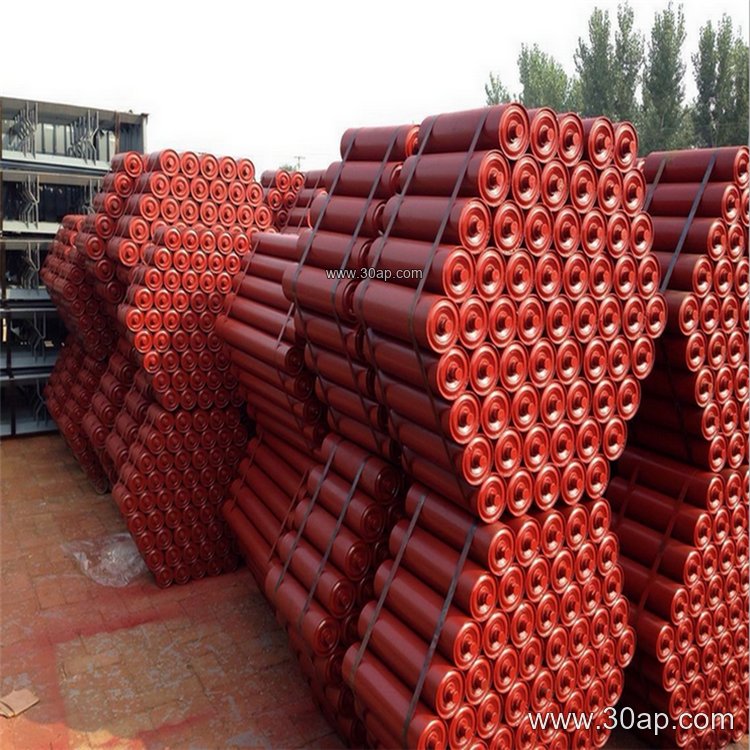
Buyers should match the idler to the actual service: material lump size, belt speed, loading impact, ambient temperature, and whether the environment is wet or dusty. Impact zones under a crusher often call for rubber-ring impact idlers; long overland runs may use training idlers at intervals to control misalignment. Spacing along the belt is a design decision, and it changes with belt tension and load.
Check the bearing fit, seal type, and shell wall thickness rather than only the outside diameter. A roller that looks similar from outside may have a lighter bearing or a simpler seal. For abrasive duties such as quarry conveyor belt or aggregate conveyor belt service, abrasion resistant conveyor belt grades and robust idlers should be considered together, since belt life and roller life affect each other.
Maintenance Notes
- Listen for squealing or rumbling bearings during walk-around inspections.
- Replace seized or dragging rollers promptly; a locked idler can damage the belt cover.
- Keep material build-up off return rollers to reduce belt misalignment.
- Check that idler frames and brackets remain square after heavy impact events.
For more on matching rollers with conveyor belt, conveyor pulley, and conveyor bracket choices, review the system layout before ordering replacements. A high-strength conveyor idler is a small part of the total cost but a major factor in uptime, so specify it with the same care as the belt itself.