What a Copper Ore Conveyor Belt Has to Handle
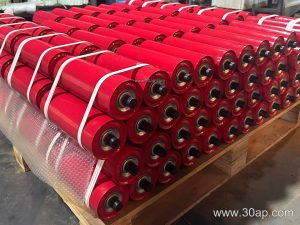
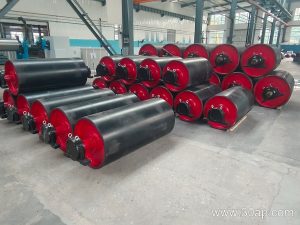
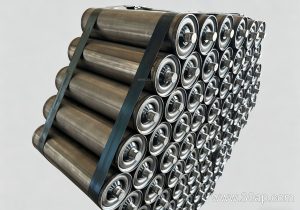
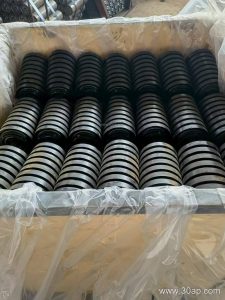
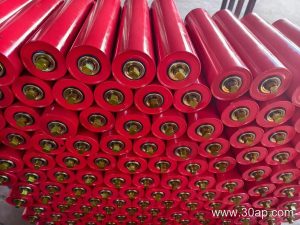
Copper ore is heavy, abrasive, and often sharp-edged after blasting and crushing. A copper ore conveyor belt therefore sits at the demanding end of bulk handling: it carries lumpy sulfide or oxide ore, sometimes damp and sticky, sometimes dry and dusty, from primary crushing toward stockpiles, grinding circuits, or transfer towers. In a copper concentrator the belt is part of a continuous chain that includes the conveyor pulley at the drive, idler roller sets along the carry side, and a sturdy conveyor bracket system holding everything in line.
The same belt family also appears in related industries such as coal mines, cement plants, power stations, and sand and gravel yards, but copper duty usually means higher density, more impact at the loading point, and a greater need for cut and gouge resistance.
Construction of the Belt
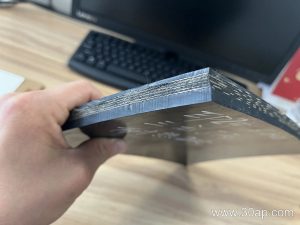
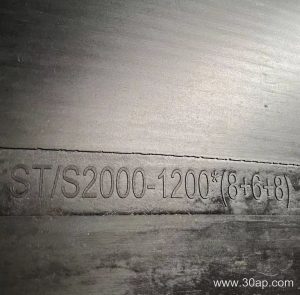
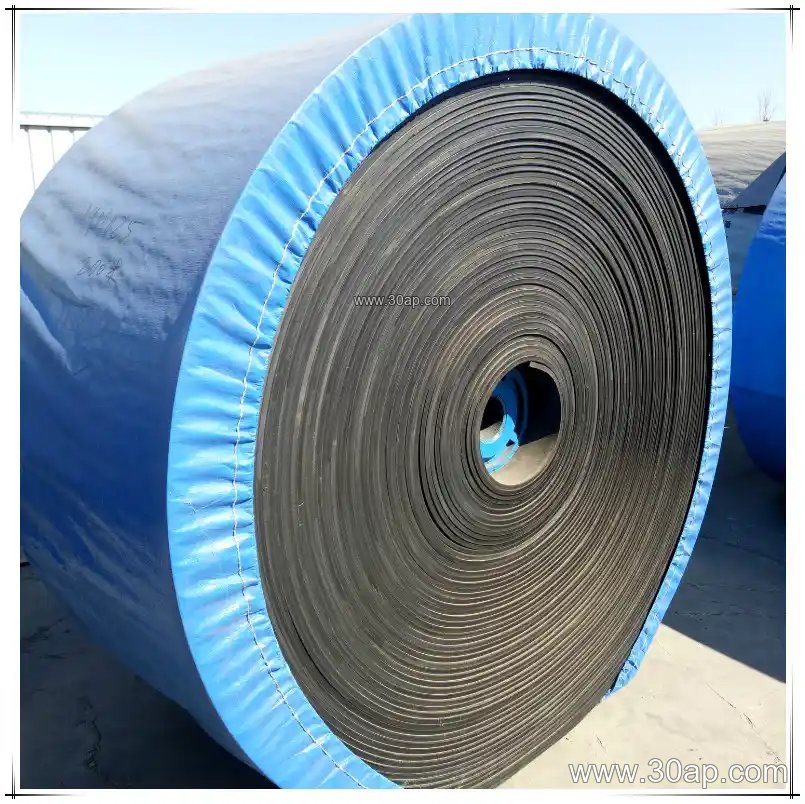
A copper ore conveyor belt is a composite product. The carcass provides tensile strength and troughability, while the rubber covers protect the carcass from impact, abrasion, and moisture.
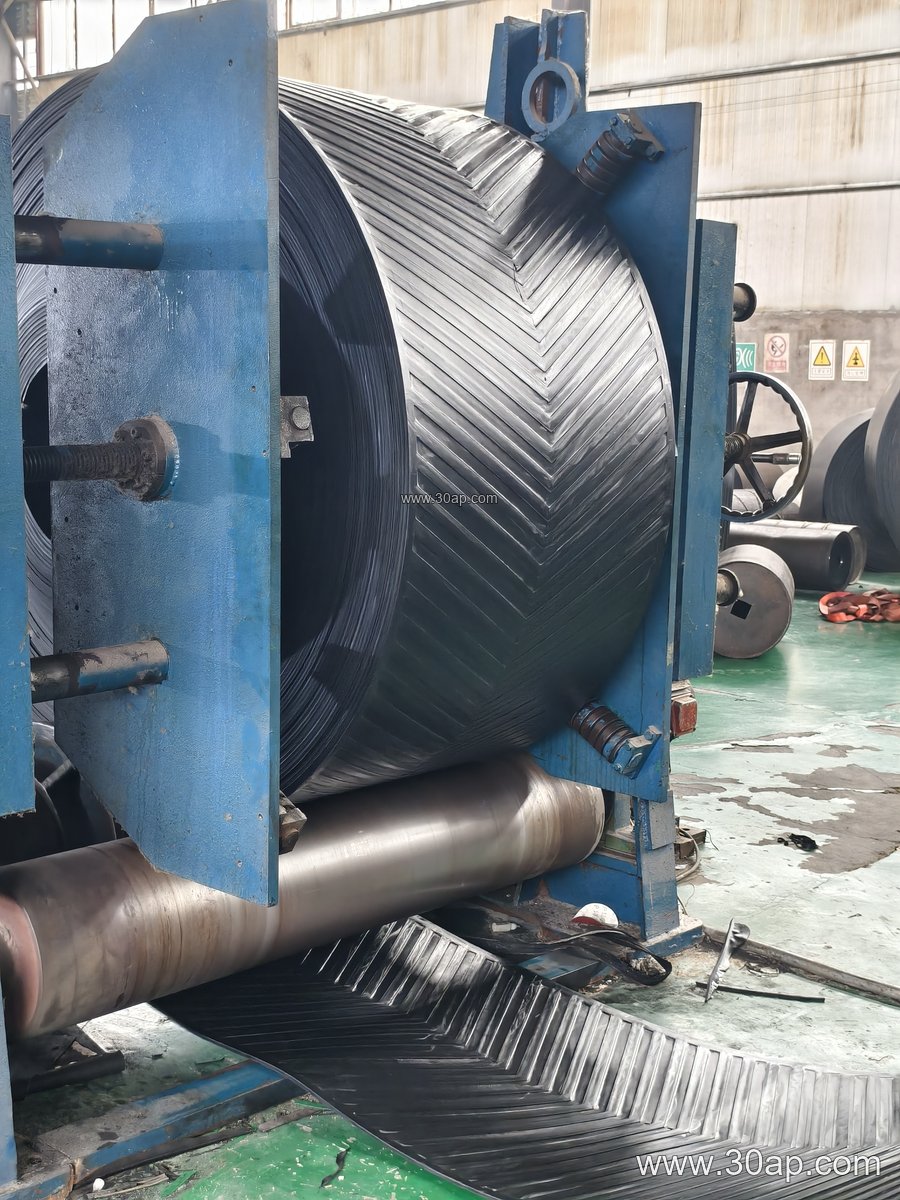
- Carcass types: EP fabric (polyester warp, nylon weft), NN nylon fabric, and steel cord. Steel cord belts are common on long overland lines and high-tonnage trunk conveyors; EP and NN belts suit many plant and yard conveyors.
- Cover compounds: abrasion-resistant rubber is the default for ore; heat-resistant, oil-resistant, flame-retardant, antistatic, and cold-resistant grades are chosen when the duty calls for them.
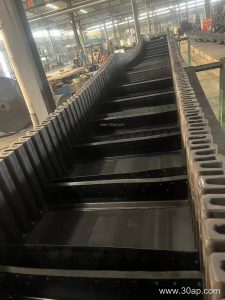
- Surface forms: plain surface for normal troughed conveying; chevron or patterned surfaces on inclines where material would otherwise slide back; corrugated sidewall belts where space is tight and steep lifting is needed.
Cover thickness is usually expressed as top plus bottom, for example 6+2 mm or 8+3 mm. Thicker top covers extend service life at impact points and transfer chutes, but they add weight and stiffness.
Typical Specifications at a Glance
The values below are reference ranges only. Final selection depends on the conveyor design, ore lump size, drop height, and operating hours.
| Parameter | Common reference values |
|---|---|
| Belt width | B650, B800, B1000, B1200, B1400, B1600, B1800, B2000 |
| Strength grade | EP200, EP315, EP400, EP500, EP630, EP800, EP1000, EP1250 |
| Cover thickness | 4+2, 5+2, 6+2, 8+3 mm |
| Carcass layers | Typically 2 to 6 plies for fabric belts |
| Special grades | Abrasion-resistant, flame-retardant, antistatic, heat-resistant, oil-resistant, cold-resistant, acid and alkali resistant |
Note that belt width and pulley diameter are matched by conveyor design, not by a fixed rule. A B1000 belt may run over different pulley sizes on different conveyors, and shaft diameter is determined from torque and load calculations rather than width alone.
Where It Fits in the Copper Flow
In a typical copper mine and concentrator, belts move ore at several stages: primary crushing discharge, coarse ore stockpile feed, reclaim under the stockpile, and transfer to the grinding circuit. Each point has its own priorities. The crusher discharge belt needs impact resistance and a thick top cover. The reclaim belt may need a wider width for tonnage. An inclined transfer may call for a chevron pattern. Around the drive, the conveyor pulley must be sized to the belt tension, and idler roller spacing on the carry side should be tight enough to support heavy ore without sagging between sets.
Other industries use the same product logic. A cement plant handling clinker, a coal mine moving run-of-mine coal, or a sand and gravel yard feeding a wash plant all balance abrasion resistance, cover thickness, and carcass strength in a similar way.
Buyer Checklist
- Confirm the ore characteristics: lump size, density, moisture, and whether the material is sharp or sticky.
- State the conveyor layout: horizontal, inclined, or curved; loading method; and transfer chute height.
- Specify the required tensile grade and cover thickness with the conveyor designer, not by habit.
- Decide whether flame-retardant or antistatic properties are required by the site.
- Check that the pulley, idler roller, and conveyor bracket plan matches the belt width and tension.
- Ask for the splice method and edge condition, since these affect belt life on long copper ore lines.
A well-matched copper ore conveyor belt is not simply the thickest option. It is the one whose carcass, cover compound, and surface form suit the specific transfer point, and whose supporting components are designed around the same duty.