What a Single Drive Pulley Does
A single drive pulley is the powered drum that moves a conveyor belt. It receives torque from a motor and gearbox, grips the belt through friction, and pulls the loaded belt toward the discharge end. Unlike a dual-drive arrangement that shares power between two drums, this configuration uses one driven pulley to handle the entire pull. That makes it a common choice for medium-duty lines where simplicity, lower component count, and easier maintenance matter more than extreme power distribution.
In daily language, people may call it a drive drum, head pulley, or simply the drive roller. It sits at the head end of the conveyor, often with a bend pulley or tail pulley completing the loop. The belt wraps around it, and the arc of contact determines how much traction the drum can develop. More wrap means more grip, which is why a snub pulley is sometimes added near the drive to increase contact angle.
How the Drum Is Built
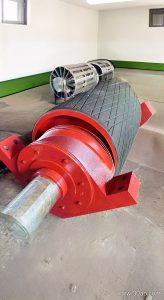
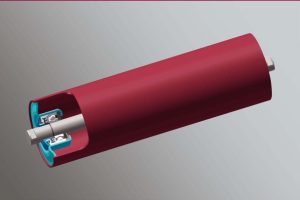
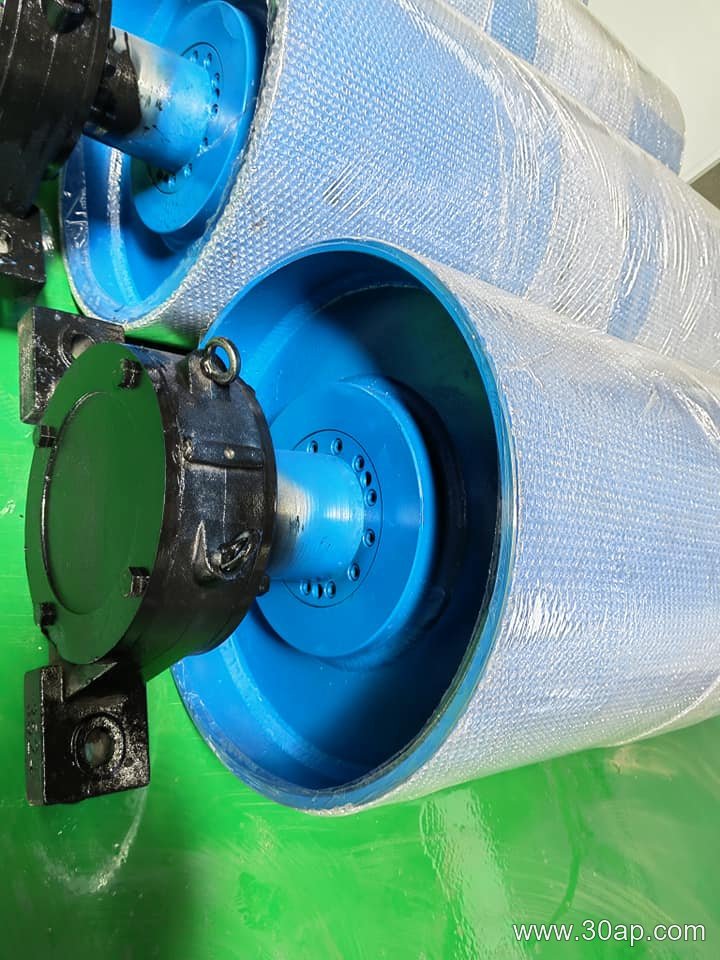
A typical unit starts with a cylindrical shell, usually made from seamless steel pipe or rolled plate. The shell is machined at both ends to accept end discs or hubs. A shaft runs through the center, supported by bearings on each side. The shaft may be keyed or shrink-fitted to the hubs, depending on load and design.
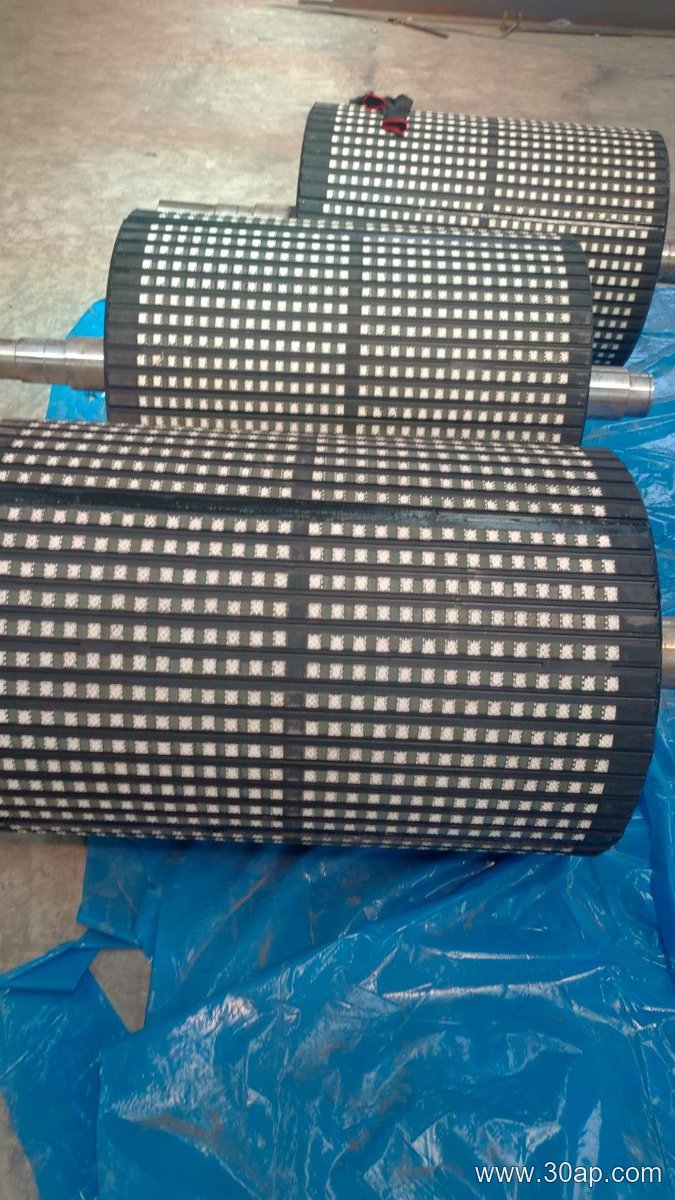
Lagging is a key feature. Rubber, ceramic, or polyurethane lagging is bonded to the shell surface to raise the coefficient of friction between the drum and the belt. In wet or dusty conditions, lagging with grooves or herringbone patterns helps channel water and fines away from the contact area. Without proper lagging, a single drive pulley can slip under load, especially when the belt carries wet sand or clay.
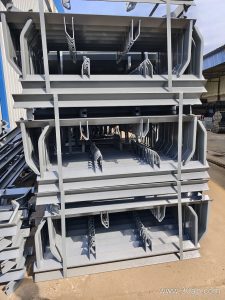
Bearing housings, sealing, and lubrication points complete the assembly. Some designs include a torque arm or a base plate that bolts to the conveyor frame. The conveyor bracket that holds the pulley must be rigid enough to resist the belt tension and the torque reaction without flexing.
Where It Fits in a Conveyor
The drive pulley is not the only drum on a conveyor. A typical system also includes a tail pulley for tensioning, a bend pulley to change belt direction, and a take-up wheel pulley that maintains belt tension as the belt stretches or contracts. The take-up wheel pulley may be a separate drum connected to a screw or gravity take-up, or it may be integrated into the tail assembly.
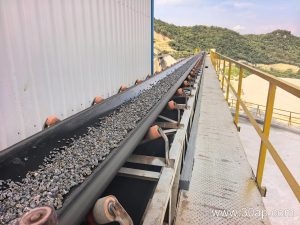
In a sand and gravel plant conveyor pulley, the drive drum often faces abrasive dust and variable loads. The belt may carry washed sand, crushed stone, or gravel. Here, the pulley shell must resist wear, and the lagging must keep grip even when the belt is damp. A mining belt conveyor pulley faces even harsher conditions: heavy ore, sharp rocks, and continuous operation. In such cases, the shell thickness, shaft diameter, and bearing selection are sized with a generous safety factor.
For larger tonnages, a 630mm diameter conveyor pulley is a common size for head drives on wide belts. It provides enough surface area for belt contact and enough shell stiffness to resist bending under high tension. The exact diameter depends on belt width, speed, and the required torque, so it is always matched to the application rather than chosen by habit.
Common Variations and Related Parts
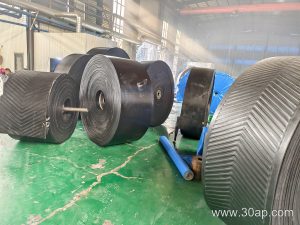
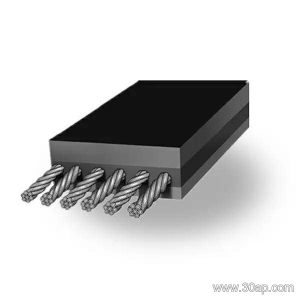
While the single drive pulley is the focus, a conveyor relies on many other components. The conveyor belt itself may be EP, nylon, steel cord, heat-resistant, or patterned, depending on the material and the route. A steel cord belt is used for long, high-tension lines, while a patterned belt helps on inclines where material might roll back.
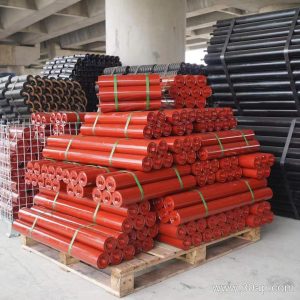
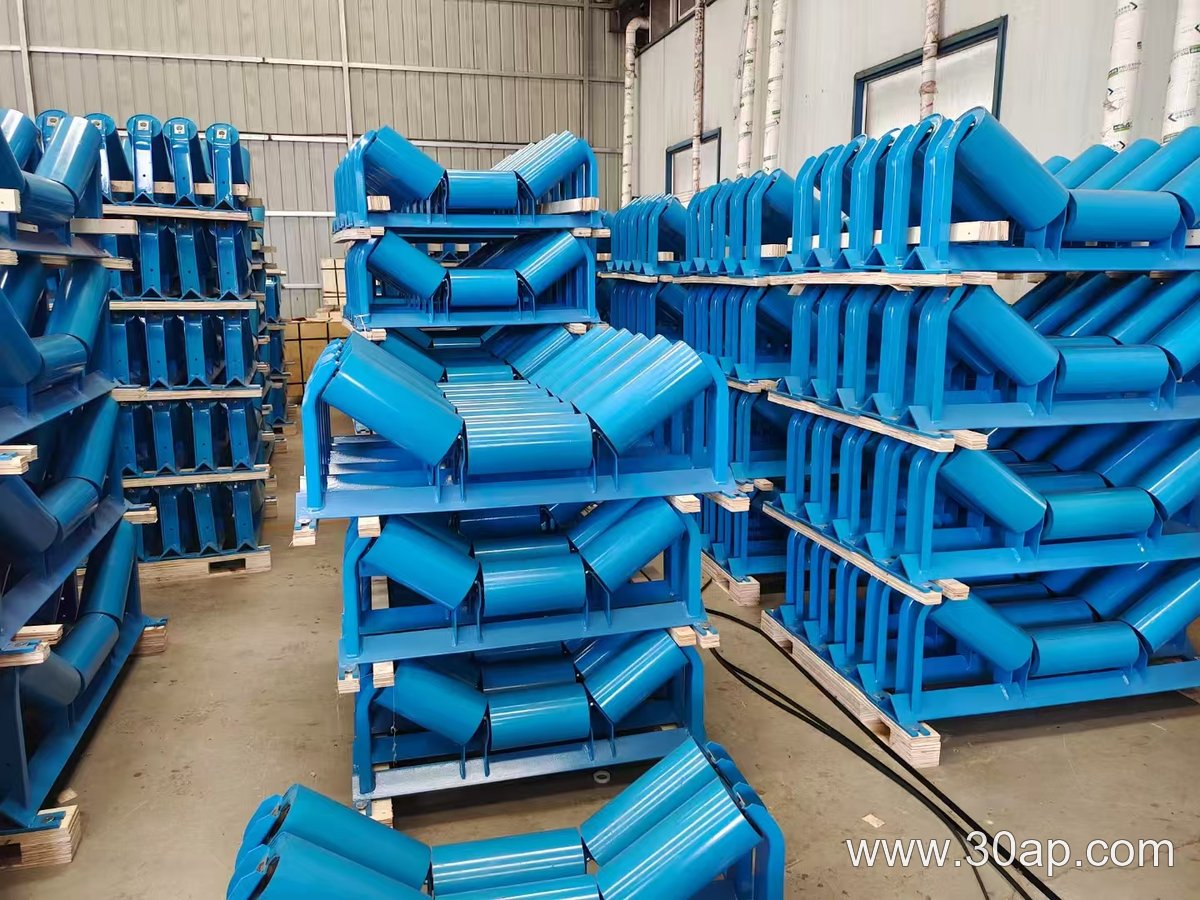
Idler rollers support the belt along the carrying and return runs. A troughing idler shapes the belt into a trough to hold bulk material, while a return idler supports the empty belt. Impact idlers are placed at the load point to absorb the falling material’s energy, and spiral idlers help shed sticky fines. These rollers are held by conveyor brackets, which may be fixed, adjustable, or designed for a specific trough angle.
The drive pulley works with the belt, not in isolation. If the belt is misaligned, the drum may wear unevenly. If the take-up is too loose, the drive will slip. If the lagging is worn, the belt may polish the shell and lose traction. A well-designed system balances all these parts.
What a Buyer Should Check
When specifying a single drive pulley, start with the belt width, belt speed, and the maximum tension the belt will see. These determine the required torque and the radial load on the shaft. The pulley diameter should be large enough to avoid excessive belt bending stress, especially for steel cord belts. The face width should match or slightly exceed the belt width.
Ask about the shell material and thickness, the shaft material and diameter, and the type of lagging. For abrasive or wet conditions, rubber lagging with a grooved pattern is often preferred. For high-torque applications, ceramic lagging may offer better grip and longer life. Check the bearing type, sealing arrangement, and lubrication method. In dusty plants, good sealing is critical to keep grit out of the bearings.
Also consider the mounting. The pulley must fit the existing conveyor bracket or base. If the drive is new, confirm the motor and gearbox mounting, the coupling type, and the space available for maintenance. A pulley that is too heavy or too large may require structural changes to the conveyor frame.
Finally, think about the overall conveyor layout. A single drive pulley is simple and reliable, but it has limits. If the belt is very long, heavily loaded, or inclined steeply, a dual-drive or a drive with a snub pulley may be more suitable. The goal is to match the drive to the duty, not to force a single drum beyond its capacity.
Maintenance and Long-Term Care
Regular inspection keeps a drive pulley working. Check lagging for wear, glazing, or missing chunks. Look for belt tracking issues, which often show up as uneven wear on the drum face. Listen for unusual noise from the bearings and check for grease leakage. If the pulley is slipping, first check belt tension and loading, then inspect the lagging and the take-up system.
Keep the area around the drive clean. Material buildup on the shell or on the return side can cause misalignment and vibration. In a quarry or cement plant, washdown and dust suppression help, but the pulley itself should be sealed against fine particles. When replacing a pulley, record the old dimensions, shaft size, keyway, and lagging type so the new unit fits without guesswork.
A single drive pulley is a straightforward component, but it sits at the heart of the conveyor’s power transmission. Choosing the right size, build, and lagging for the site conditions will extend belt life, reduce downtime, and keep material moving.